
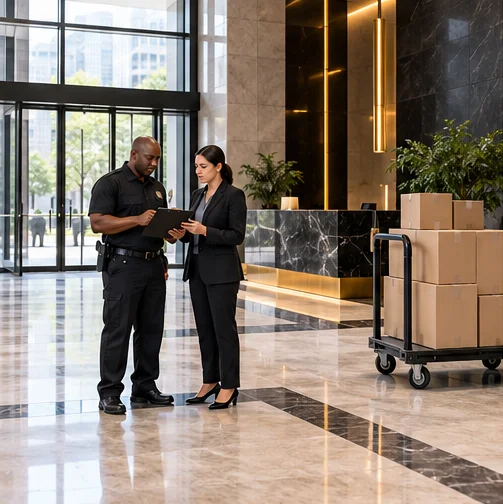
A commercial tenant move is a temporary change in how a building operates. People arrive in groups, furniture crosses shared areas, a freight elevator may be reserved, and the normal reception team may not know the movers. The useful security question is not simply whether a truck has arrived. It is whether the people, route, time window and authority still match the plan management approved.
This playbook helps NYC office and mixed-use property managers coordinate an agreed commercial move. Hotels can adapt the same process to scheduled furniture or back-of-house equipment moves. It is an operational planning framework, not a lease interpretation, eviction procedure, engineering inspection or assurance of compliance. Management should reconcile it with the property's rules, contracts, emergency plan and applicable requirements before use.
Give the move one accountable coordinator
Name a management coordinator who can resolve changes during the actual moving window, not only during office hours. The tenant and moving company should each have their own responsible contact. Security needs a clear escalation route; it should not have to infer who can extend access, release assets or accept an unplanned truck.
Separate the decisions. Management approves the move and its conditions. The tenant identifies its people and property. Engineering handles equipment suitability and building-system questions. Security follows the approved access procedure and records discrepancies. A role assignment does not transfer a licensed or specialist task to someone without that authority.
- Identify the manager who can approve a changed time or route.
- Confirm who receives the moving crew on the tenant floor.
- Name the person responsible for freight-elevator arrangements.
- Set an escalation contact if the coordinator cannot be reached.
- Keep emergency communications separate from routine move updates.
The move reservation brief turns these responsibilities into a desk-ready record.

Confirm the reservation before treating it as permission
A calendar entry is not the whole approval. A useful reservation identifies the building entrance, tenant or suite, move direction, expected crew and vehicles, freight arrangements, starting and ending windows, and the conditions that remain unresolved. Label incomplete requests clearly rather than allowing them to look like confirmed bookings.
Property-specific rules matter. For example, 1133 Avenue of the Americas publishes its own contractor and vendor access procedures. Those procedures illustrate that buildings can specify entry points and registration arrangements; they are not universal rules for every NYC property. Use the current instructions for your building, not a neighboring property's handbook.
Curb access needs a separate check. An approved internal move does not reserve public street space. NYC DOT's loading-zone guidance distinguishes several types of loading locations and directs drivers to obey current posted signs and meter regulations. Give movers accurate entrance information without promising parking permission.
Match arrival to the approved plan
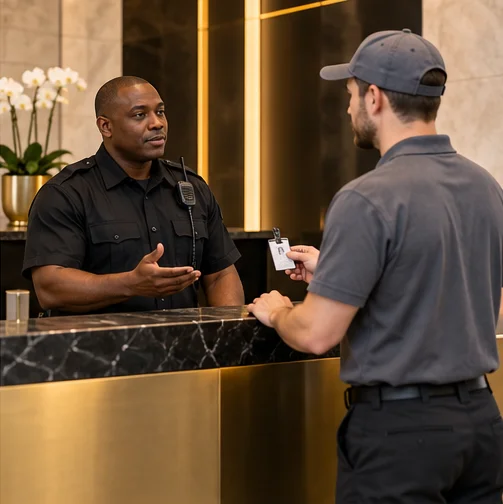
At arrival, compare the actual crew and destination with the booking using the property's approved verification process. A familiar uniform, a tenant name or a moving truck does not resolve a mismatch. Equally, a spelling difference should not automatically become an accusation. Contact the designated representative and document the decision.
The mover arrival verification guide provides a separate decision path for unexpected crew members, replacement drivers and missing tenant representatives. Limit access to what was approved; an entrance check is not permission to enter every floor or remove any item.
Release the route only when it is ready
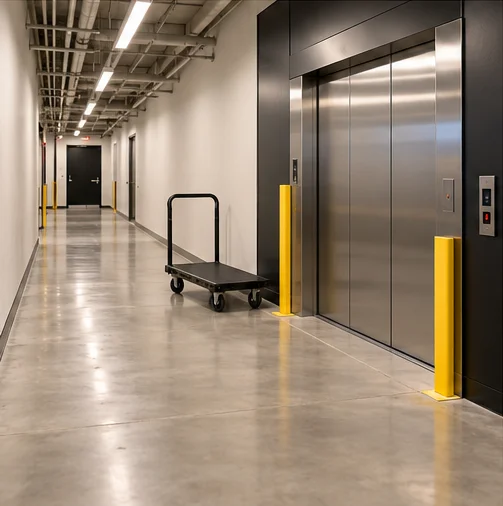
Before the move starts, walk the agreed path with the responsible building team. Consider normal occupants as well as the moving crew: doors, turning points, elevator approaches and shared corridors can become pinch points. Confirm where items may wait and where they must never be staged.
OSHA's exit-route standard prohibits temporary as well as permanent materials or equipment in exit routes. This is one baseline for covered workplaces, not a complete building-code review. The freight-route readiness check focuses on observations and coordination, leaving technical equipment decisions to qualified personnel.
If a route changes, revise the briefing rather than silently using a passenger entrance or a different elevator. Notify the people whose assignments depend on the old plan. Existing emergency procedures remain controlling during a move; routine moving activity must not delay an emergency response.
Separate removal authority from access authority
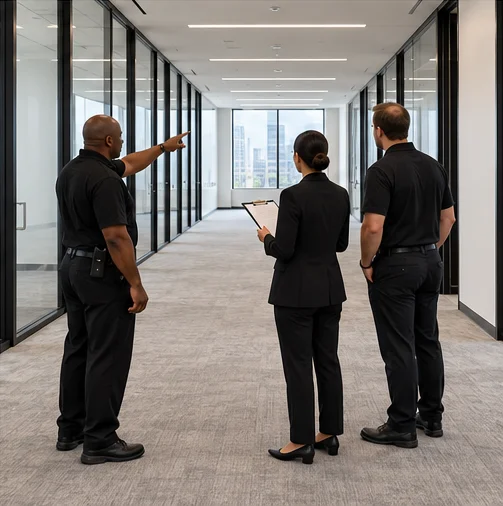
A crew member may be authorized to enter without being authorized to remove a particular asset. For move-outs or equipment collections, have the tenant and management define the applicable release process before the first load. A practical record identifies the relevant items or agreed category, approving representative, destination where appropriate, and the booking reference.
Use the commercial property removal authorization workflow for discrepancies. Avoid turning the security desk into a dispute-resolution tribunal. Refer ownership or lease disagreements to the designated management representative, while documenting observed facts rather than allegations.
Close the operation, not just the calendar slot
A truck departure does not prove that the building has returned to normal. Assign someone to confirm that the route has been cleared, access permissions have been reconciled, equipment has been handed back through the responsible team, and unfinished items have a named owner. Record actual completion separately from the planned end time.
Use the tenant-move operational closeout to distinguish finished work from unresolved exceptions. If damage or another incident is observed, link the relevant record instead of making unsupported statements about who caused it. The incident-record playbook covers that separate task.
Guardian Consulting provides security guard and fire-life-safety services. For a planned commercial move, discuss the property's operating needs and approved scope in advance rather than assuming existing coverage can absorb every additional duty.