

The moving company says Saturday. The tenant says the freight elevator is booked. Security has an email with no end time. Each statement may be accurate, yet the building still lacks a usable move reservation. The missing piece is a single brief that distinguishes a request from an approved operating plan.
This guide proposes a reservation record for agreed commercial tenant moves in NYC offices and mixed-use buildings. It does not set universal notice periods, insurance limits, fees or moving hours. Those come from the property's current rules and authorized management decisions. Use it within the tenant move-day security coordination playbook.
Start with the decisions the desk needs
A reservation should answer who is arriving, where they are permitted to go, when that permission applies and who can resolve a mismatch. A long chain of email attachments can contain this information without making it easy for the person covering the entrance to find.
- Move reference, tenant name, suite and building address.
- Move-in, move-out or an internal relocation between identified spaces.
- Date, approved start and finish, and any distinct vehicle-arrival window.
- Approved entrance, route and freight-elevator arrangement.
- Tenant representative, mover lead and management escalation contact.
- Outstanding conditions and the person responsible for resolving each one.
Keep the brief operational. Avoid adding unrelated employee records, financial disputes or copies of identity documents merely because they appeared in an earlier message. The FTC's business guidance supports limiting retained personal information to a legitimate business need and restricting access appropriately.
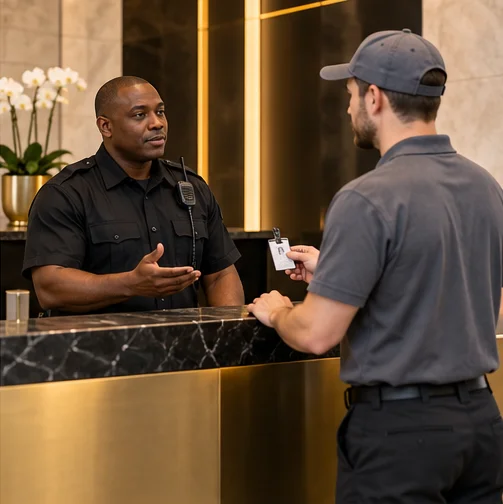
Label the booking state plainly
Use statuses staff can interpret without guessing. For example: requested, management review, approved with stated conditions, changed, canceled and operationally closed. These are suggested administrative labels, not a legal classification. Explain what each label permits at your property.
A requested booking should not appear on the desk sheet as approved. An approved booking with an unresolved condition should identify exactly what cannot begin until the condition is resolved. Avoid vague notes such as “okay if everything is fine.” Name the missing confirmation and who may supply it.
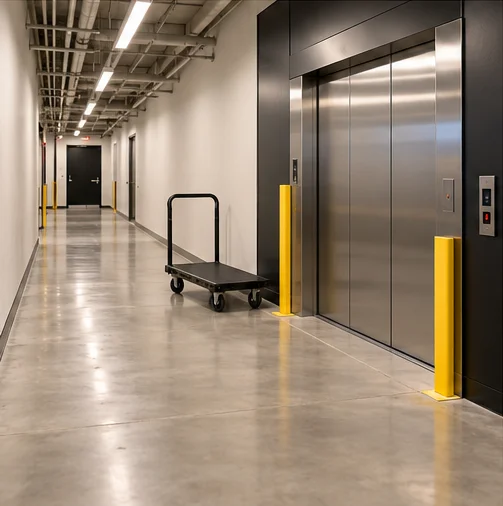
Confirm building conditions without inventing rules
Management should check the property's actual moving procedures and any relevant lease provisions. Ask the responsible team to confirm freight arrangements, required documentation, tenant access, supervision and any charges before promising them to a mover. Security should receive the outcome, not be asked to interpret an insurance certificate or negotiate a lease term at the door.
The move-in and move-out page for 1133 Avenue of the Americas is an example of a building publishing its own instructions. It is a useful reminder to find the right property's policy, rather than importing another building's notice period or process.
For hotels moving furniture, identify operational dependencies such as guest access and housekeeping work without assuming the office-tenant process applies unchanged. The approved scope should fit the actual activity and occupancy.
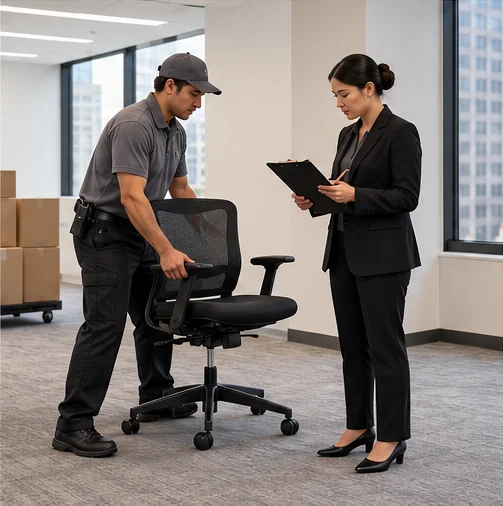
Separate the inside booking from the curb plan
The loading entrance and the legal place to stop a truck are related but different. Include the entrance address, approach instructions and a contact for arrival questions. Do not state that a freight reservation grants control of a public curb or allows a truck to ignore signs.
NYC DOT's loading-zone page explains different curb uses and says current posted signs and meter regulations control. Let the moving company resolve its vehicle and parking arrangements with appropriate sources. A desk brief should not turn a proposed curb location into an unsupported guarantee.
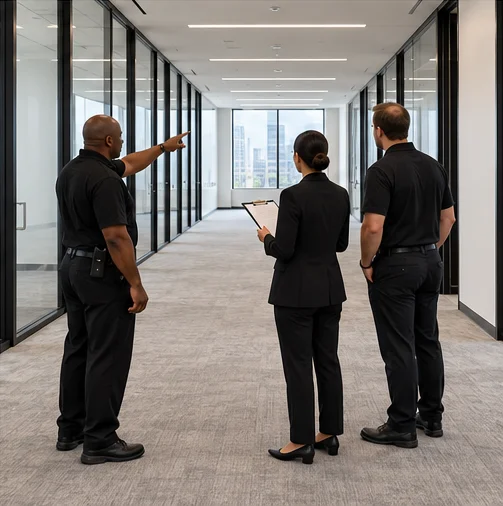
Test the brief with one realistic change
Before circulating it, ask: what happens if the crew arrives thirty minutes early, the mover changes its lead, or the tenant representative does not answer? The brief should point to a decision-maker and a safe process for resolving the exception. It should not silently authorize staff to expand access.
Use a hypothetical example: a Saturday move is approved for a particular suite and service entrance, but a second vehicle arrives carrying items for another floor. Treat that as a new question for management, not evidence that the entire moving company is unauthorized. Record the confirmed decision and communicate it to everyone relying on the original reservation.
The next stages are arrival verification and route readiness. Guardian Consulting's security services can be discussed against the completed brief so the assigned work is clear before moving day.