
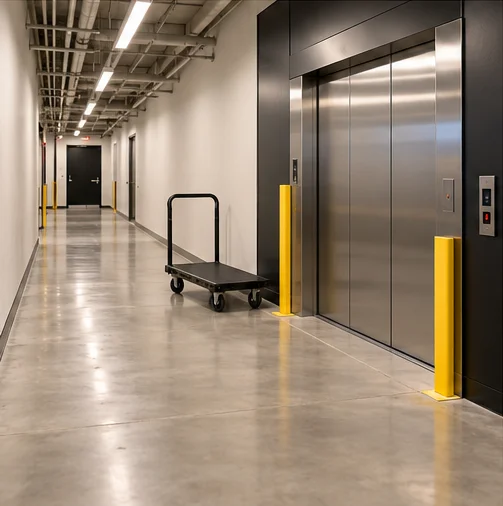
An elevator booking does not tell staff whether the path to that elevator is ready for a move. A rolling cart, a temporary barrier or another delivery can change the route after the reservation is approved. A short readiness check should establish who has reviewed the route, which conditions are unresolved and who can authorize a change.
This is an observational coordination guide for NYC commercial property teams. It is not an elevator inspection, equipment operating manual or substitute for a qualified professional's assessment. Use it alongside the tenant move-day security coordination playbook and the building's current emergency procedures.
Walk the actual route with its responsible team
Start at the agreed service entrance and trace the route to the destination. Include turns, doors, shared passages and the approaches on both sides of the freight elevator. Compare what is physically present with the approved reservation brief, rather than relying on an old floor plan alone.
- Is the agreed entrance available without sending people through an unapproved area?
- Does the route intersect routine occupant or guest traffic?
- Is there an approved place for items to wait outside required exit paths?
- Are floor protection and other temporary measures arranged by the responsible team?
- Does engineering know about any equipment question or observed defect?
- Can staff identify who approves a changed route or paused move?
Security can report an obstruction or discrepancy. It should not certify load capacity, repair a lift or determine whether an equipment defect is safe to operate. Give technical questions to the building's qualified personnel and follow their documented direction within the approved scope.

Keep exit routes out of the staging plan
Furniture often needs somewhere to wait. “Only for a minute” is not an adequate staging rule. Designate an appropriate holding area before the crew arrives and make sure everyone knows which routes must remain clear. Recheck after activity begins, when the initial layout may have changed.
OSHA 1910.37(a)(3) addresses unobstructed exit routes, including temporary materials and equipment. Applicability and other building requirements need property-specific review; this article does not calculate exit widths or approve a storage location. Its practical point is to keep the move from taking over the building's emergency routes.
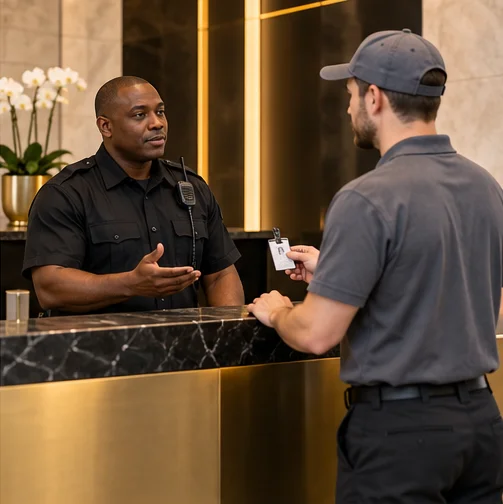
Separate pedestrians from the moving operation
A route may be clear when empty but difficult to use once movers and occupants arrive together. Consider how pedestrians will pass, how staff will communicate a temporary hold, and where carts can wait without creating a new obstruction. Use arrangements approved for the property; do not invent a sidewalk closure or direct vehicles into traffic as an informal workaround.
OSHA's loading-dock guidance highlights vehicle, pedestrian and dock-edge hazards in powered-industrial-truck settings. That material is not permission for security staff to operate equipment. Where such equipment is involved, the employer and qualified operators must control those activities through their own applicable procedures.
A hotel equipment move may require special coordination with guest services so guests are not directed into a service operation. An office move may intersect cleaning or another tenant's delivery. The readiness decision should account for concurrent activity, not just the booked crew.
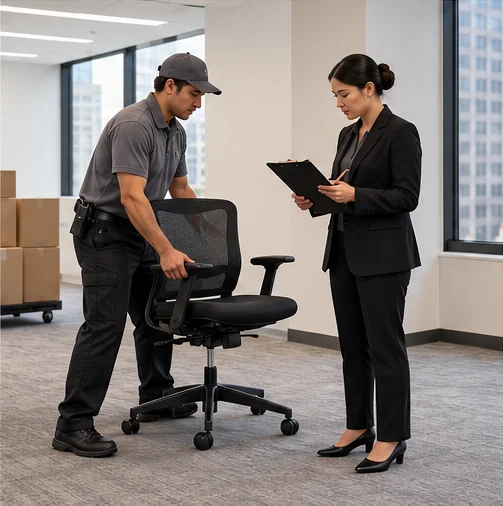
Define what happens when readiness changes
A new obstruction, unavailable elevator or unexpected delivery should trigger a clear notification and decision. Identify what activity is paused, who was contacted and what condition needs resolution. Avoid using “unsafe” as the only description when an observable fact can be recorded: for example, a cart is occupying the identified exit route, or engineering has not released the booked elevator.
The coordinator should resolve sequencing or arrange another approved window. Staff should not promise that the move can resume at a particular time unless the responsible person has confirmed it. If an actual emergency occurs, follow emergency procedures promptly rather than treating it as another scheduling exception.
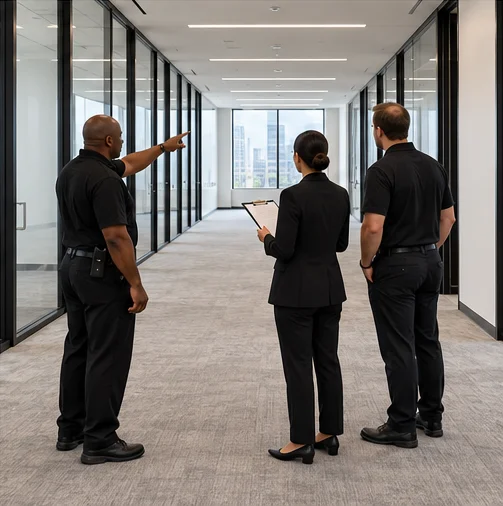
Hand the route back with evidence
At completion, distinguish the moving company's departure from the building team's acceptance of the route. Confirm the agreed observations, record unresolved matters, and send technical issues to engineering. Do not assign fault for damage on the basis of timing alone.
The operational closeout guide helps record the handback. Guardian Consulting's security guard and fire-life-safety services should be scoped around these coordination needs, while equipment operation, inspection and repair remain with the appropriate responsible professionals.