
The last truck departing is a useful milestone, but it does not answer whether the freight elevator has been handed back, the route is clear, temporary access has ended, or unresolved items have an owner. A move can be finished for the crew while still open for building operations.
Guardian Consulting recommends a short, documented operational closeout for commercial tenant moves. The purpose is to establish what is complete and who owns what remains. This proposed practice does not accept a lease surrender, waive claims, resolve ownership, or substitute for the property manager's contractual process.
Assign the handback before the move starts
Choose the people who will confirm the route, elevator, access, and exceptions. The security lead can coordinate the record; that does not make security the technical approver for every building system.
Agree in advance on:
- The engineering or designated operations contact for elevator handback
- The person checking the approved route and shared spaces
- The authorized administrator for temporary access changes
- The tenant representative responsible for remaining items
- The management contact receiving the final status and exceptions
Property procedures should determine the actual steps. Kew Management's published tenant guide, for example, sets out its own freight access and advance move arrangements. It is a useful illustration of building-specific coordination, not a universal NYC closeout standard. Kew Management tenant guide.

Walk the route and report observations
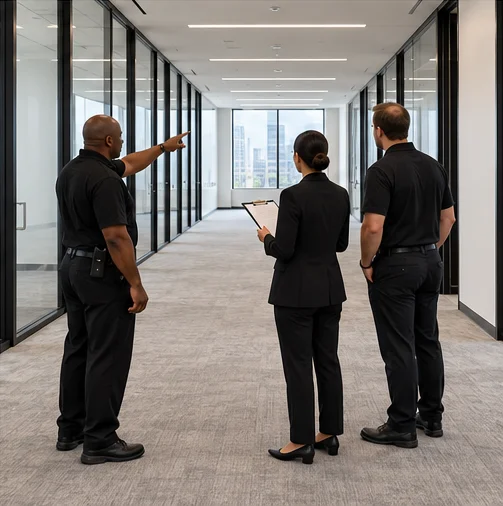
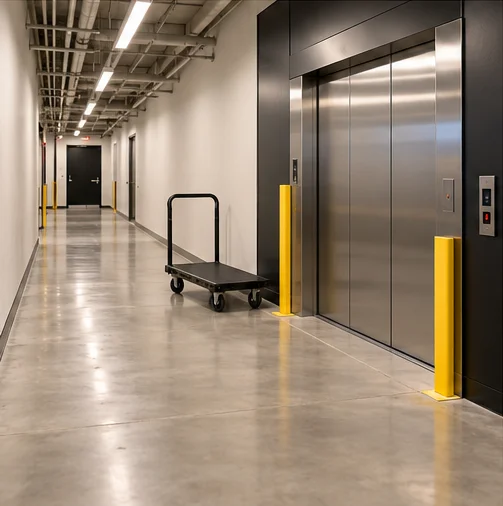
Start at the suite and follow the approved path through the service corridor, elevator landing, and loading area, using the earlier freight-route readiness check as a reference. Record whether cartons, dollies, packaging, or protective materials remain. Confirm that the assigned team has addressed obstructions and that routine circulation can resume under the property's procedure.
Describe conditions without making premature conclusions. “Scuff observed on the west corridor wall at 6:20 p.m.; management notified” is more useful than “movers damaged the building” when responsibility has not been established. Compare with approved pre-move documentation where available, keeping photos limited to relevant conditions and authorized records.
Separate observation from technical clearance
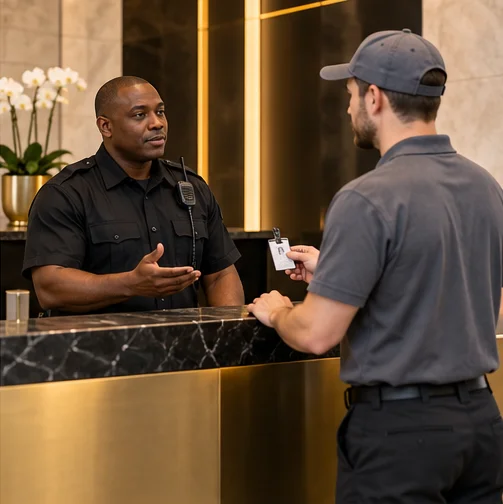
A security officer can report a door that does not close normally or a cab condition that looks unusual. Engineering or the property's designated qualified personnel should determine the operational response and handle equipment controls within their authority. Do not record an elevator as handed back merely because it is empty or appears to run.
Reconcile temporary access and property exceptions
Check the access issued through the mover arrival verification process. Account for temporary badges, keys, or escorted-access arrangements according to the approved plan. Have the authorized administrator confirm any scheduled access change; a request sent is not the same as a change completed.
Review the property removal authorization record. Identify assets left behind, pickups deferred, and disputed descriptions still awaiting management's decision. Do not relabel an unresolved asset as abandoned simply because the crew has left.
Use explicit completion states
A single “move complete” checkbox can hide several different outcomes. Guardian recommends a compact record with one of these states for each task:
- Complete: confirmed by the responsible person, with time
- Pending: a defined task remains, with an owner and next checkpoint
- Exception: the planned process changed, with management's instruction recorded
- Not applicable: the reason is stated
For example, the route may be clear while engineering's elevator handback is pending and two labeled cartons await tomorrow's authorized pickup. That is a useful status report. Marking the entire move closed would conceal the work the next shift needs to manage.
Send a bounded operational summary
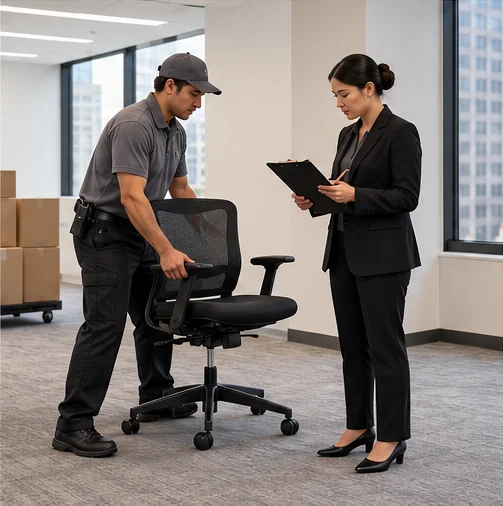
End with the departure time, confirmed handbacks, temporary-access status, and exceptions. Identify the next decision or check rather than promising an outcome nobody has approved. Keep lease acceptance, damage settlement, and other contractual decisions with management and its advisers.
Use this closeout alongside the broader tenant move-day security coordination plan. Guardian Consulting's security services can help teams build clear move-day responsibilities and handoffs.