
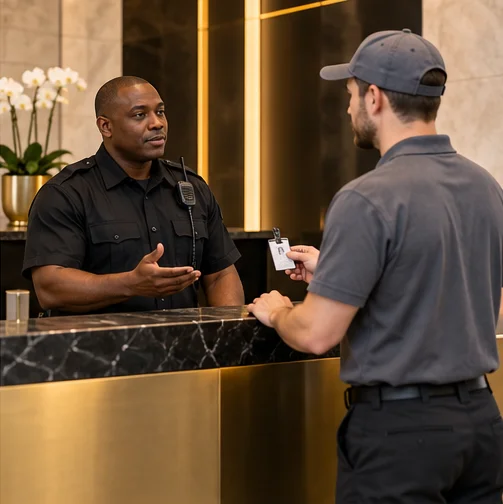
A moving crew arrives on time, names the correct tenant, and wears the expected company shirts. Those details help orient the desk, but they do not answer every access question. Is this the booked crew? Has the building approved this window? Who can authorize a substitute? What areas may the movers enter?
For a commercial tenant move, Guardian Consulting recommends answering those questions before directing carts toward a freight elevator. The workflow below is a proposed operating practice for property managers, tenant representatives, and security teams to adapt to their building. It is not a citywide requirement or legal advice.
Start with the booking already on file
Use the management-approved move reservation brief as the starting point, rather than reconstructing the arrangement from messages shown at the entrance. The desk should have a concise version containing:
- Tenant company, suite, date, and approved arrival window
- Moving company and expected crew leader
- Approved entrance, waiting location, and travel route
- Current roster or the building's agreed verification method
- Tenant and building contacts authorized to resolve changes
- Any outstanding condition management has marked as preventing access
A mover's booking confirmation is useful supporting information. It should not silently replace the building's own approval. Likewise, arrival during the reserved window does not confirm that the freight route is ready; obtain the designated operations contact's clearance.

Treat roster differences as questions to resolve
Staffing substitutions happen. A difference between the expected roster and the arriving crew should trigger a specific check, not an accusation or an improvised exception.
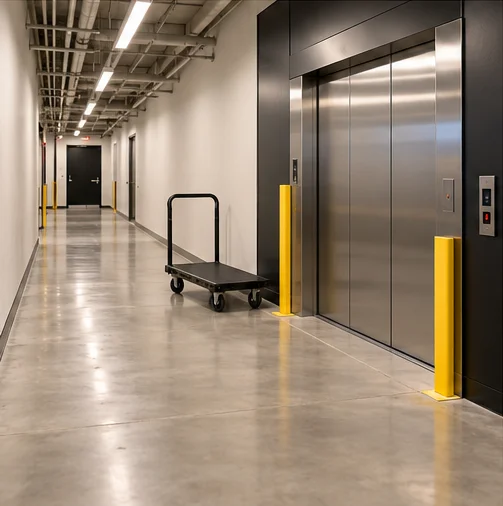
A practical mismatch sequence
- Identify the difference: replacement crew leader, additional worker, different carrier name, or changed arrival time.
- Explain the pending check calmly and use the approved waiting arrangement without obstructing exits or other tenants.
- Contact the representative listed in the approved move record.
- Obtain the decision from the person authorized for that kind of change.
- Record the decision, time, and scope before issuing access under the building's procedure.
If nobody authorized can be reached, escalate to the designated building supervisor. A busy loading area is a reason to use the exception plan, not to let the arriving crew define its own access.
Separate identity from authority
Identity verification asks whether a person matches the identity presented under the building's procedure. Authority asks whether that person may perform this move, enter this suite, or approve a change. A credential, recognizable uniform, or convincing explanation does not answer every authority question.
For a changed contact or unexpected instruction, use a callback number already established through management's approved record. Do not treat a number supplied only in the disputed message as independent confirmation. Ask a bounded question: “Are you approving this replacement crew leader for this tenant's scheduled move?” Then confirm whether building management must separately approve access.
Permission to enter also does not automatically settle which assets may leave. Carry that question into the separate commercial property removal authorization workflow.
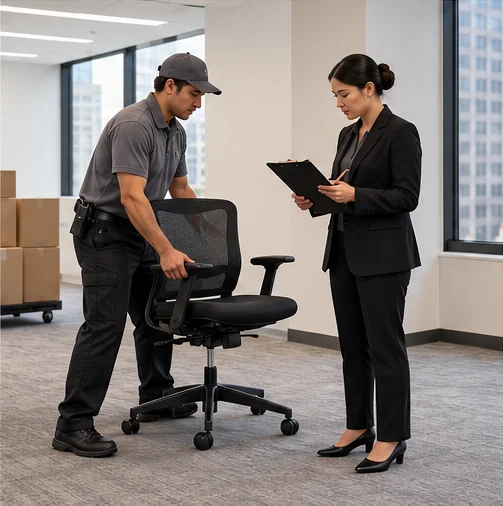
Keep verification records proportionate
The FTC advises businesses to avoid collecting sensitive personal information without a legitimate business need, restrict access, and retain information only as necessary. Its guidance supports a restrained approach to move records. FTC: Protecting Personal Information.
For this workflow, Guardian recommends recording the verification outcome rather than routinely copying identification documents. Avoid unnecessary home addresses, birth dates, or identification numbers. Establish the purpose and handling of any additional information in advance. Keep the roster away from public-facing sign-in surfaces.
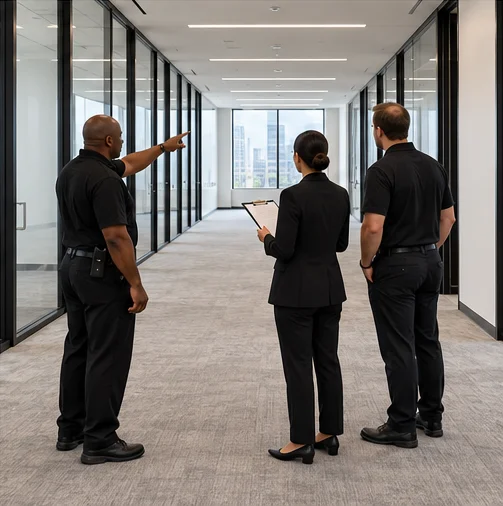
Carry the decision into the next handoff
Brief the receiving post on approved access and unresolved restrictions. At the end of the window, reconcile temporary access and remaining issues through operational closeout. For the full sequence, see tenant move-day security coordination in NYC.
Guardian Consulting's security services can help property teams plan these practical handoffs.