

A report may be finished while the information behind it is still scattered. A lobby officer has notes, a manager has photographs, a camera operator has a recording, and the next shift knows only that “management was notified.” For a New York City property or hotel, a useful handoff connects those pieces without turning the guard desk into an investigative office.
This is a proposed administrative workflow for routine property incident records. It is not legal advice, a forensic collection procedure, or a promise that a record will be admissible. Emergencies, medical assistance and responder access take priority. Follow the building's approved response plan and call emergency services when needed; documentation must not delay them.
For the broader operational sequence, see what to do after a security incident. This companion focuses only on the records package and its acceptance across shifts, rather than repeating the emergency-response checklist.
Separate response from record stewardship
Name two functions before an incident: the person directing the operational response and the person coordinating records. A small property may assign both to one manager, but the responsibilities still differ. The first deals with immediate conditions. The second makes sure a preservation request, an original account and an approved transfer do not disappear between shifts.
Give security staff a narrow role: record their own observations, protect information already entrusted to them, and notify the designated manager. Do not ask them to seize personal devices, conduct forensic examinations or promise disclosure to a requester. The NIJ crime-scene guidance is written for law enforcement and responsible responders; it is not authority for a private property team to conduct their work.
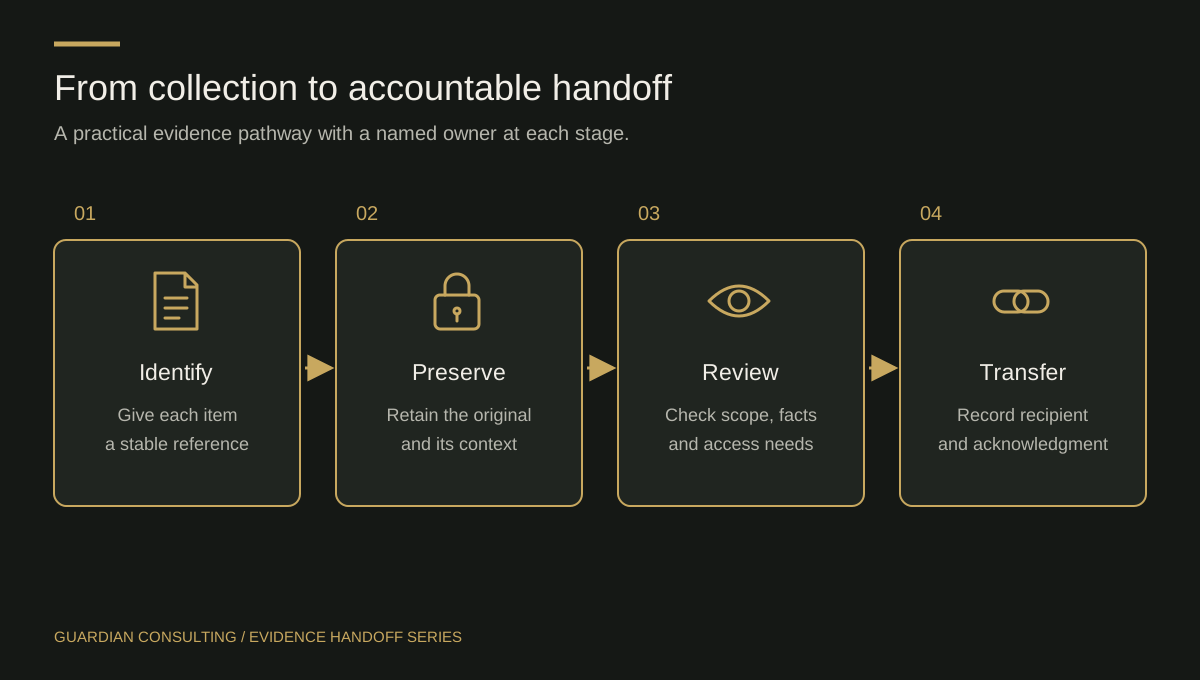
Start a source register before writing a conclusion
Use one incident reference across the report and its attachments. Build a register with a row for each source rather than one line saying “evidence attached.” An example register can contain:
- Item reference and plain-language description.
- Person or system that created it, if known.
- Event time, recording time and time zone when relevant.
- Current custodian and approved storage location.
- Preservation request, acknowledgment and outstanding action.
- Access restrictions and the manager responsible for release decisions.
Do not insert passwords, full identity-document numbers or public sharing links. A source may be unavailable: a camera might not cover the area, a witness may decline to give an account, or a file may no longer exist. Record that limitation and who checked it. An empty field should not quietly become an assertion that nothing happened.
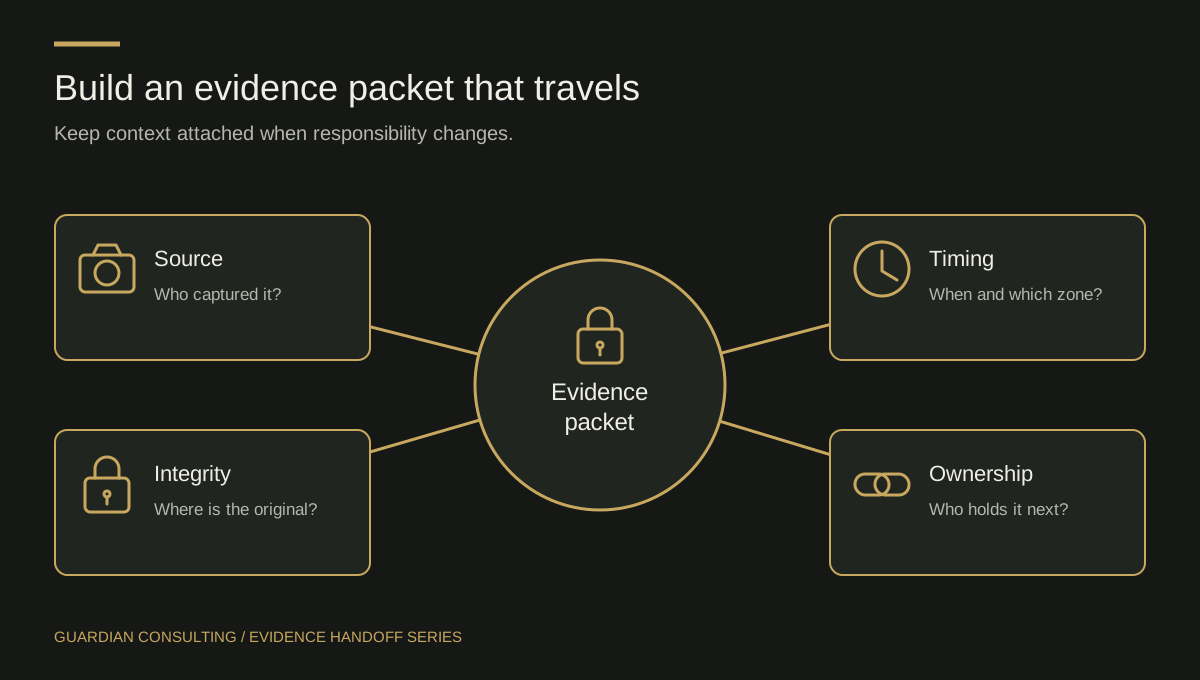
Give each source its own handling path
Use the CCTV preservation-request checklist to ask an authorized operator for a defined time and location. Use the factual-observation guide to keep firsthand observations separate from reports by others. The incident-photo guide addresses framing, approved devices and private details.
Once sources arrive, build a source-based chronology. Keep conflicting times visible until someone can resolve them; do not smooth them into a confident story. Before information leaves its approved location, use the transfer-register guide to identify the authorized recipient and receipt status.
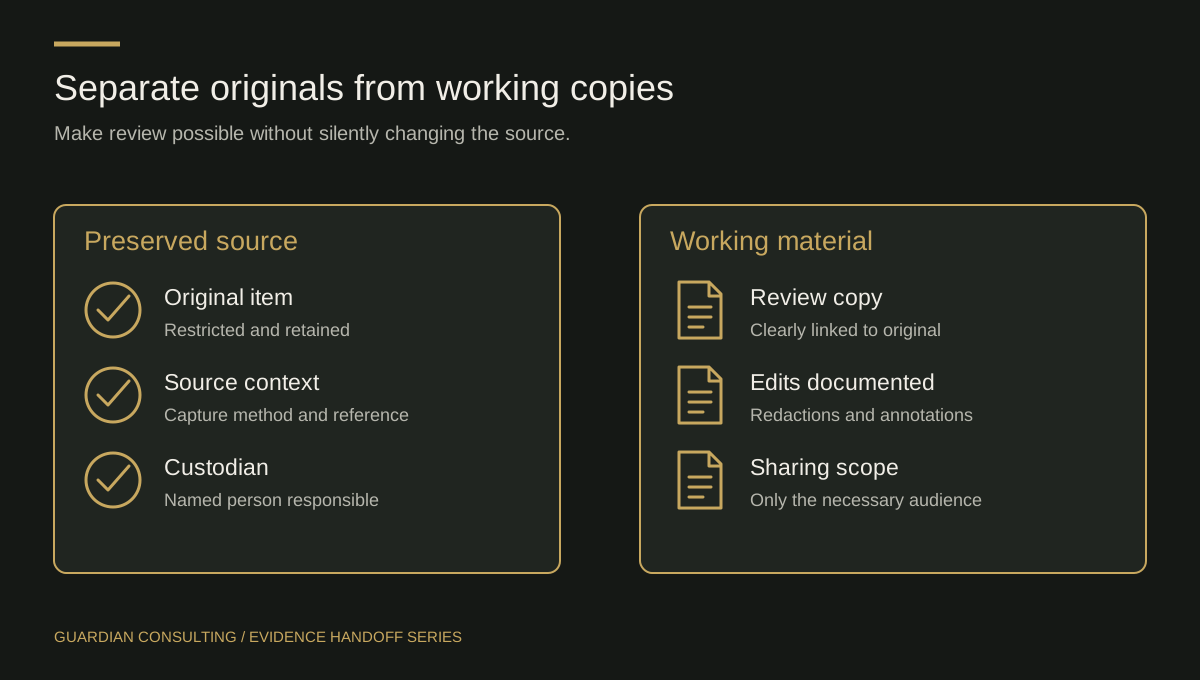
Make the shift handoff an exception review
Read the register with the incoming supervisor. Focus on unresolved items rather than retelling every detail. For each open item, name a person and the next check: “Camera operator has the request; manager will confirm acknowledgment before the next shift change” is actionable. “CCTV pending” is not.
A useful handoff checklist is:
- Confirm the current operational status separately from the records status.
- Identify any source that could be overwritten or become unavailable.
- State which preservation requests are acknowledged and which are merely sent.
- Confirm where originals and labeled working copies are stored.
- Record who accepted responsibility for each remaining action.
If an urgent request has not reached its owner, use the approved escalation contact. Do not alter a recorder, disable retention or use another person's account to make the paperwork look complete.
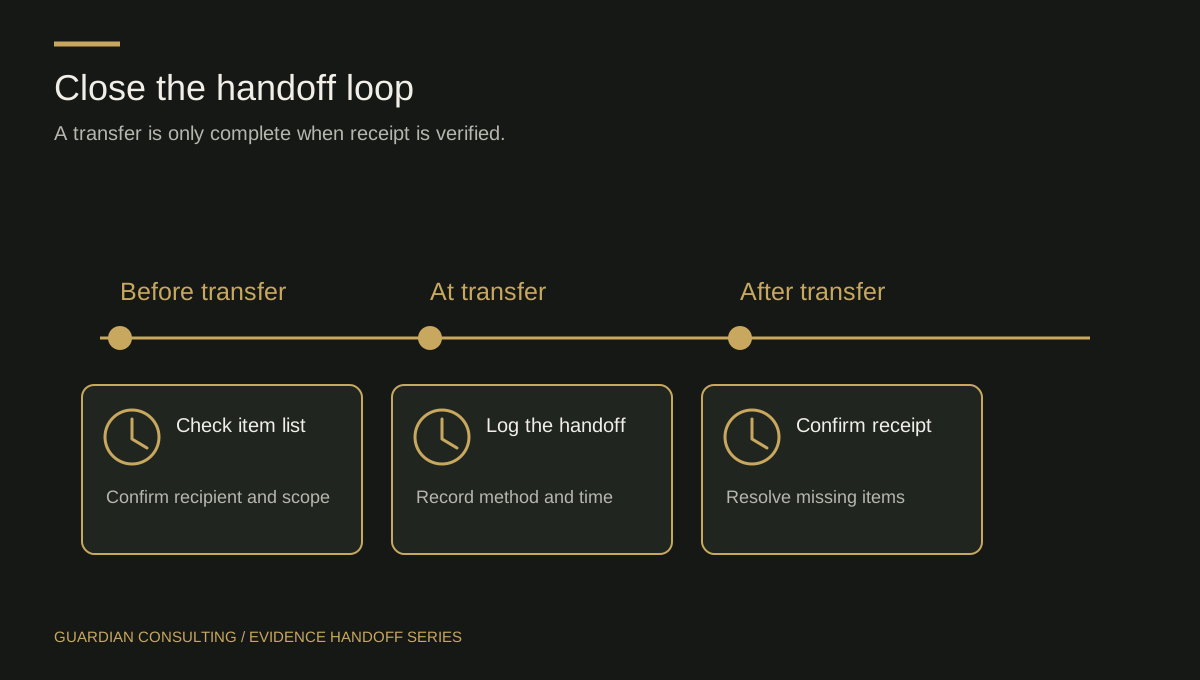
Close the package without declaring the matter closed
Administrative completion means the designated custodian has the expected items or documented gaps. It does not mean an investigation, insurance matter or complaint is resolved. Have management and counsel determine retention, preservation obligations and release decisions for the actual situation. A routine deletion schedule must not override an applicable preservation instruction.
The FTC business guide supports limiting unnecessary personal information and protecting retained records. It does not supply a universal incident-record retention period. This workflow adds a property-level acceptance check: can another authorized manager find each item and explain its status without contacting the original officer?
For a practical tabletop, use fictional records and deliberately omit one camera acknowledgment and one attachment. Ask the incoming supervisor to identify both gaps. Record the missing instruction, assign its revision, and repeat that part of the exercise. Guardian Consulting's security services can be discussed in the context of your property's approved responsibilities; the operating plan should define the actual scope.