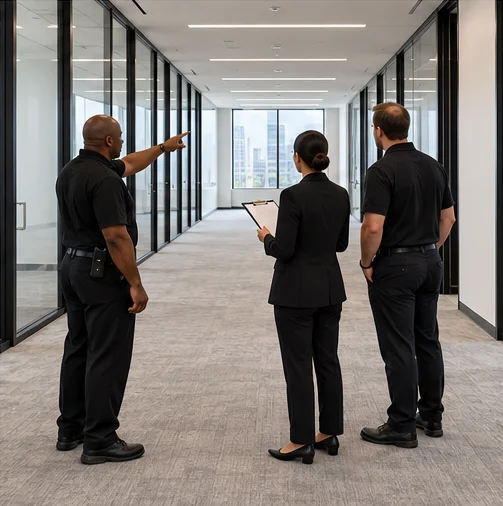
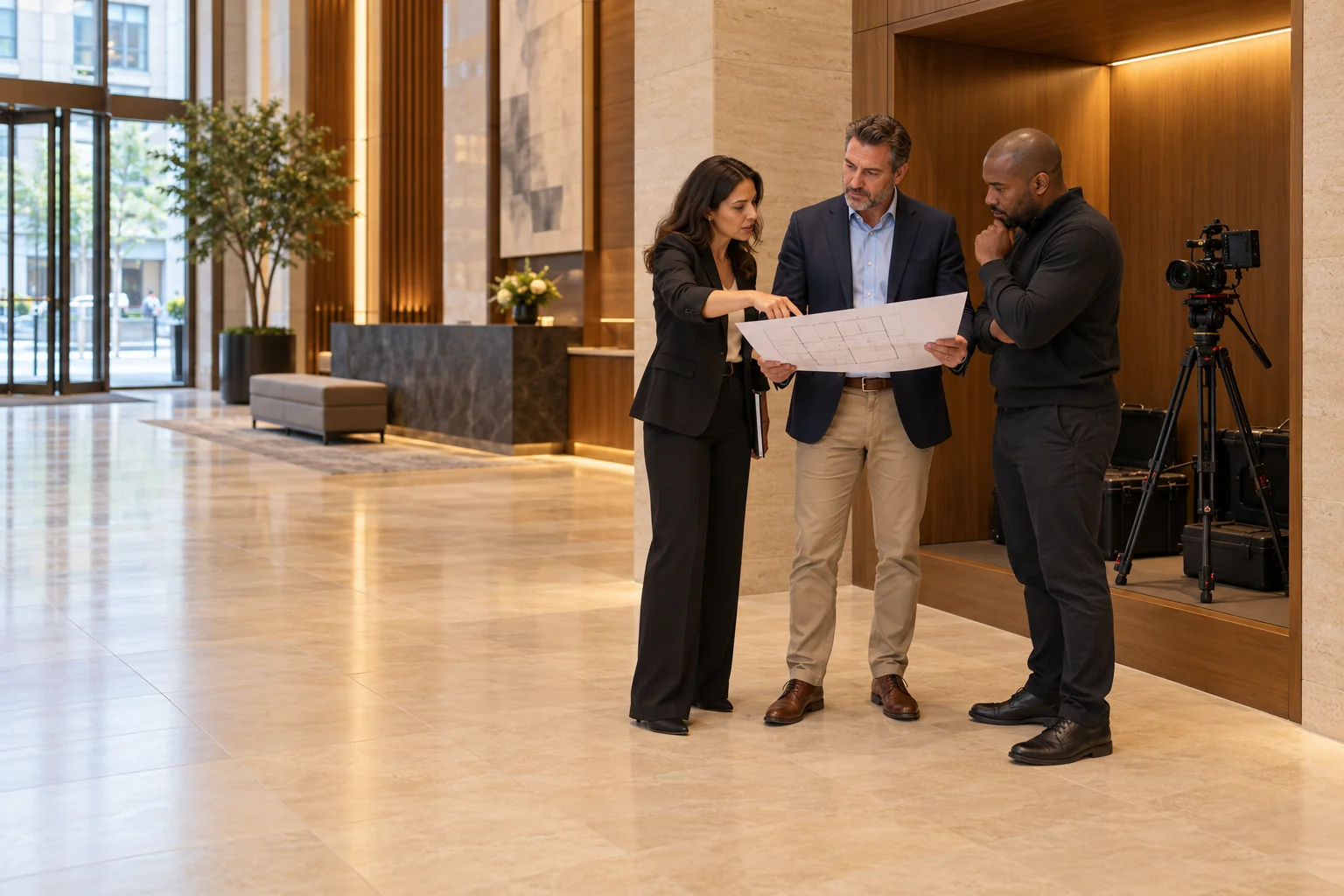
A commercial shoot in a hotel lounge or office lobby creates two operating schedules in one place. The production has setup, takes, breaks and wrap. The building still has arrivals, deliveries, appointments and people who need to use it. Property coordination works best when those schedules are compared before equipment arrives, rather than negotiated at the security desk.
This guide offers an original planning framework for an ordinary, management-approved private-location shoot. It is not legal advice, a filming permit determination, an emergency plan or an approval of production safety. Specialist activities, including effects, stunts and changes to building systems, require separate qualified review. A security assignment does not make a guard the production's technical supervisor.
Start with a bounded location and schedule
Ask the production's location contact for a usable description of the space, not simply the property address. Mark the room or area available for filming, the arrival entrance, the equipment route, the permitted holding area and the spaces that remain outside the arrangement. Record preparation and removal periods as well as camera time. An early setup crew and a late cleanup team both affect staffing.
MOME explains that use of private locations is negotiated between the property side and production, separately from the Film Office. Its private-location guidance is a useful starting point, not a replacement for the property's own authorized review.
Give the desk an approved operational extract rather than a stack of negotiations. It should answer three questions: who is expected, where may they go, and which person can resolve a discrepancy? Keep financial terms and unrelated personal details out of routine post instructions. Use the permission handoff checklist to keep authority separate from evidence of a scheduled visit.

Compare both timetables
- Identify the first approved arrival and the final removal window.
- Mark ordinary deliveries, appointments and maintenance that cannot simply disappear.
- Name the property representative and production contact for each working period.
- Note any area that has different permissions for scouting, preparation and filming.
- Agree how a proposed change reaches the authorized property decision-maker.
Make arrival a controlled handoff
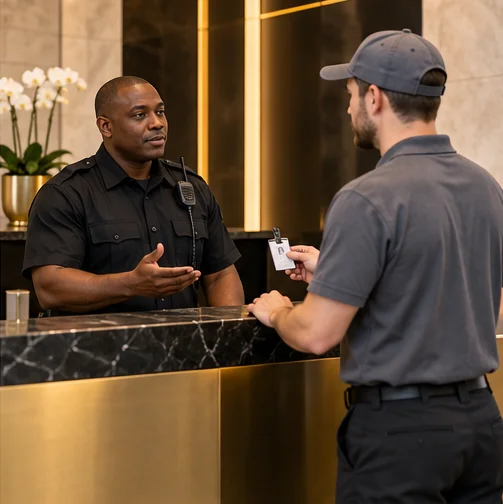
A production badge or call sheet may identify a person to the crew, but it is not by itself a building access decision. Agree how the location contact will confirm expected arrivals and how additions will be handled. The desk should not need to interpret a screenplay or expose an entire cast list to answer an access question.
Separate people, equipment and activity. An approved crew member may be permitted to enter while a newly proposed equipment load still needs facilities review. A scheduled camera setup does not automatically authorize a different room. The crew-arrival workflow gives a practical way to record the discrepancy without turning the entrance into an improvised production office.
Facilities should review the proposed use of building spaces and any technical support request before the relevant activity. Guards can report a changed condition and contact the named lead. They should not certify electrical loading, modify alarm arrangements or decide whether an effect is safe. Ordinary emergency procedures remain in force.
Keep occupants informed without oversharing
Occupants need the information that changes their day: affected area, dates and times, approved alternative access where relevant, and a contact for assistance or concerns. They do not necessarily need cast identities, room numbers, private schedules or commercially sensitive production material.
Give desk staff the same approved notice used by management. If production timing changes, update both the notice and the desk brief, with a revision time. Otherwise a resident can receive one answer at reception and a different answer from a notice still displayed nearby. Use the occupant-notice and concern handoff for a structured response.
Treat the frontage and wrap as separate decisions
A private interior arrangement should not be treated as permission to control a sidewalk or reserve street parking. Review the actual exterior plan with the production and responsible authorities. The frontage-boundary guide explains how to document that distinction without asking property staff to enforce an imagined permit.
Before the day starts, name the person who will accept the space back and arrange a comparison record of its initial condition. At wrap, distinguish equipment departure from restoration of normal building operations. Record any remaining furniture moves, cleaning, access changes or maintenance concerns with an owner and next check. The wrap-inspection checklist supports that final handoff.
Close the event only after the property has an understandable record: what was used, what changed, what was restored and what remains unresolved. That record can improve the next location brief without implying that the shoot produced a safety certification. For building-specific staffing discussions, review Guardian Consulting's security services; production and property approvals remain separate responsibilities.