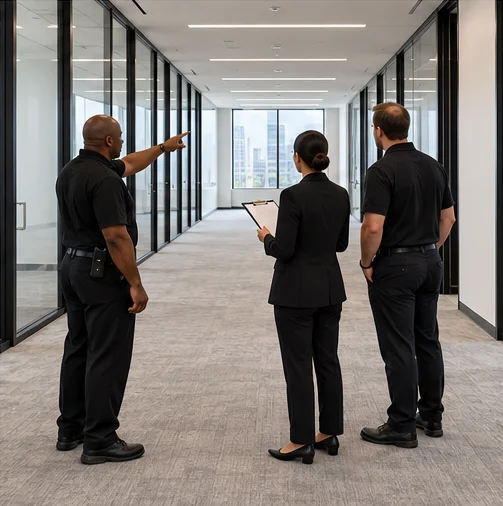

An occupant notice should help someone plan their day: what may change, when, and where to ask for help. Omitting a temporary entrance change leaves the front desk handling the same unanswered question repeatedly.
For managers coordinating an occupied NYC hotel or residential property, communication is part of the operating plan. This guide develops that part of the broader filming-day property coordination workflow. These are planning examples, not legal, privacy, safety, or technical advice; specific obligations and permissions need appropriate review.
1. Separate neighborhood notification from building communication
MOME's neighborhood guidance says directly affected merchants and neighbors should receive notification at least 48 hours before filming, including impacts associated with parking, base camps, and meal areas. Its sample resident letter is a starting point for production's notification. Review the current MOME neighborhood notification guidance.
A property's internal communication plan should also account for how its occupants receive information. A production letter outside may not reach an arriving hotel guest or a resident using another entrance. Agree who handles each audience and channel; do not assume that one person's distribution completes every communication task.
Private-location permission does not replace any required City permit; see MOME’s pre-production guidance. Likewise, an operational notice does not establish consent, filming rights, or compliance. Questions about those subjects should go to the property's authorized representative and qualified adviser, rather than being resolved through reassurance at reception.

Build a simple audience map
List residents or guests, commercial occupants, front-desk staff, security, housekeeping, maintenance, and scheduled vendors where relevant. For each group, assign an owner, channel, and update trigger. Keep the list focused on actual operational impacts.
2. Write the notice around practical changes
Begin with confirmed information. Identify the date, relevant time window, affected areas, expected changes to access or services, and a contact for operational questions. Distinguish filming hours from setup and removal if those activities affect occupants too.
Avoid promises such as “there will be no disruption” when the plan cannot support them. Explain the approved arrangement instead. If an alternative entrance is being used, the property team should confirm its suitability and describe the route clearly before issuing directions.
A useful notice drafting checklist includes:
- A recognizable property or management sender.
- A clear description of the activity, without unnecessary production detail.
- Confirmed dates and the relevant preparation, filming, and removal windows.
- The specific spaces or services affected.
- An operational contact and the hours that contact is monitored.
- A statement that material changes will be communicated through the established channel.
Keep public-facing notices free of unnecessary room numbers, occupant names, personal contact details, or complaint histories. Share operational information with the people who need it using the property's approved practices. This is a communication recommendation, not a conclusion about privacy law.
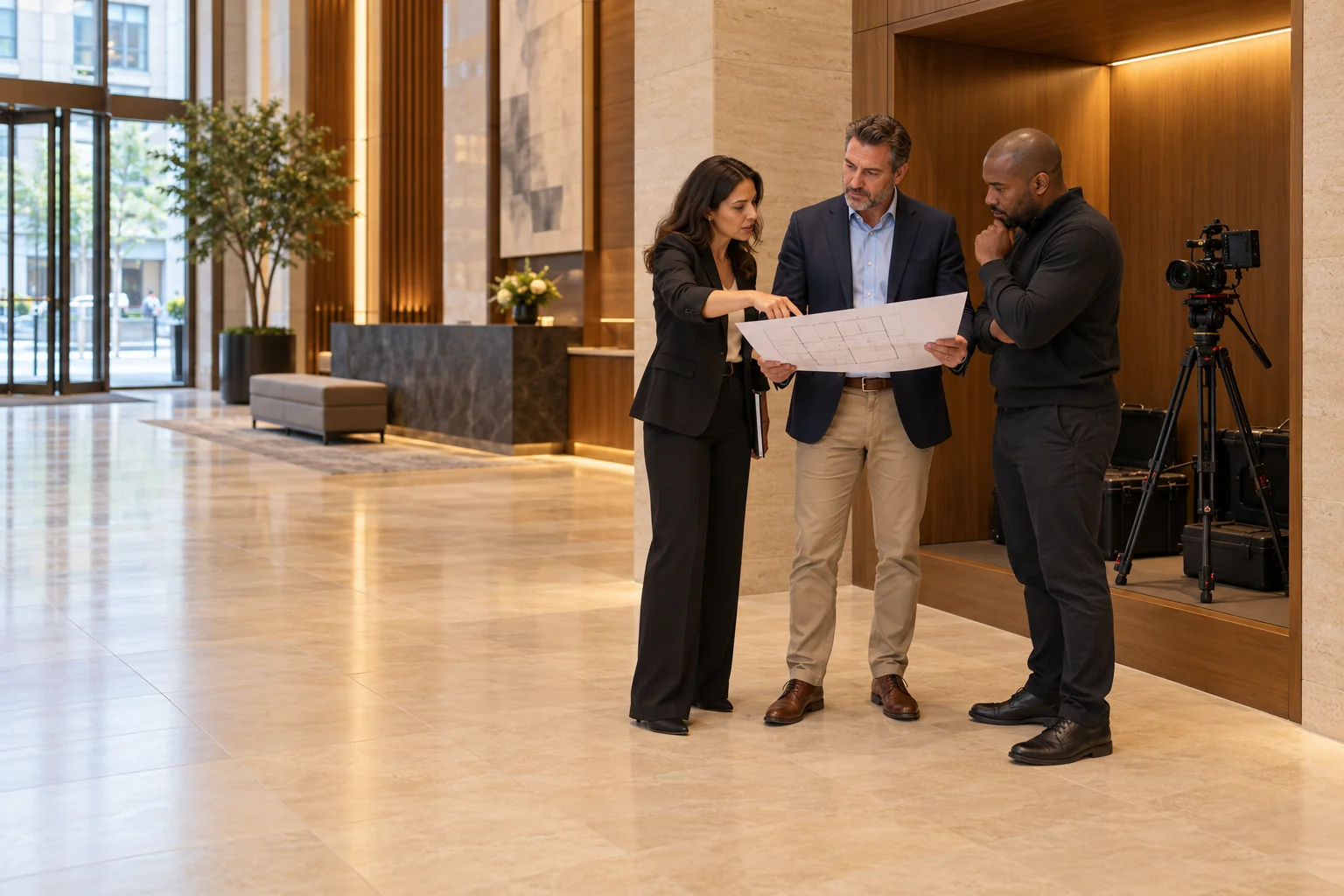
3. Make every complaint a clear handoff
The complaint recipient should understand the immediate issue, follow established emergency procedures when appropriate, and connect the concern to someone with authority to respond.
For routine operational concerns, use a short factual record: time received, affected area, issue described, current impact, assigned owner, action taken, and next update. Avoid recording speculation about the person's motives or unnecessary personal information.
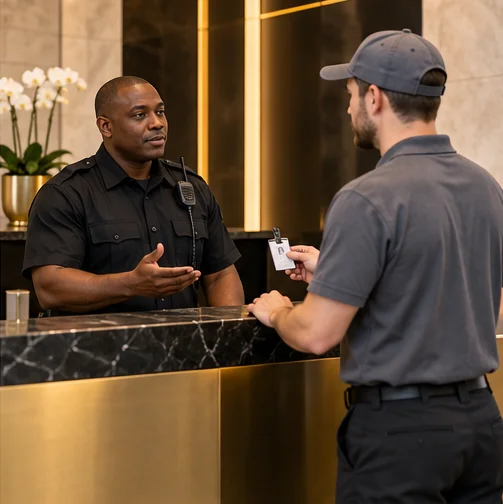
Example: unexpected corridor activity
A guest reports repeated equipment movement near a room. The desk records the location and time, contacts the manager on duty, and checks the approved movement plan with production. The authorized team decides what adjustment is possible. The desk then communicates the confirmed outcome or explains that review is still underway, without promising an unapproved change.
Make the receiving person acknowledge the handoff. An unanswered message in a group chat is not evidence that someone owns the issue. If the first contact is unavailable, use the agreed fallback and preserve the issue's status for the next shift.
4. Close the communication loop when conditions change
Set update triggers before filming starts. Examples include an extended equipment-removal window, a changed entrance arrangement, a delayed return of an amenity, or a recurring complaint that exposes a mismatch between the notice and actual activity.
Coordinate the underlying change through the crew arrival and equipment admission workflow, then communicate the verified effect. Do not send a revised time simply because it appeared in an informal production message; have the responsible property contact confirm it first.
At day-end, review unresolved concerns, promised updates, and continuing restrictions. Carry those items into the next shift with named owners. A calm, specific final update can be more useful than another general announcement that filming has ended.