
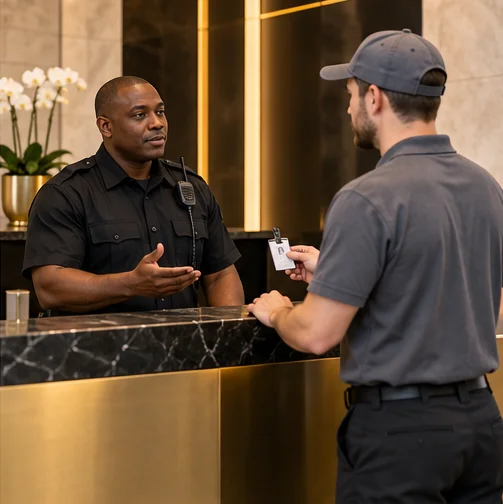
An early delivery meets the breakfast rush, a crew member uses the guest entrance, or an unexpected cart arrives. A clear filming-day admission process helps the property team respond without improvising access decisions at the desk.
This guide focuses on the arrival phase of filming-day property coordination in NYC. The workflows below are planning examples, not legal, safety, or technical advice. Adapt them with the property's authorized representatives and appropriate specialists.
1. Convert the location agreement into an arrival brief
Prepare one current operating brief for the production location contact, security, engineering, receiving, and the manager on duty. Identify who maintains it and distributes changes.
Include the production name, shoot date, property contact, production contact, approved spaces, access hours, and arrival sequence. Separate preparation access from filming hours and equipment removal. Otherwise, a crew call time may be mistaken for permission to enter earlier.
Private-property permission and City permitting are separate matters. MOME explains that private-location arrangements are negotiated with owners, while its Film Office permits address public locations and production parking. Permission to use an interior should not be treated as permission to occupy the curb or sidewalk. See MOME's private-location guidance and pre-production guidance.

Check the arrival brief
- Which entrance is approved for people, and which for equipment?
- Who can authorize an exception?
- Where can an arriving team wait without obstructing normal activity?
- Which elevator movements require coordination with building staff?
- What access ends when the designated property representative leaves?
2. Give people and equipment different check-in paths
Crew admission and equipment admission answer different questions. People need to know where to report and which areas they may enter. Equipment needs an agreed destination, route, and receiving contact.
For crew, use the property's normal approved visitor process. Ask production for the minimum information needed to apply that process, rather than requesting unnecessary personal records. Identify a production representative who can resolve an unlisted arrival. Do not leave the receptionist to infer authorization from a project name, branded jacket, or equipment case.
For equipment, prepare a practical movement list. Describe the type of delivery, approximate quantity, arrival window, receiving person, and intended room. Have production flag oversized or unusually heavy items for advance review by qualified building personnel. The loading team should not discover a compatibility question after a vehicle has started unloading.
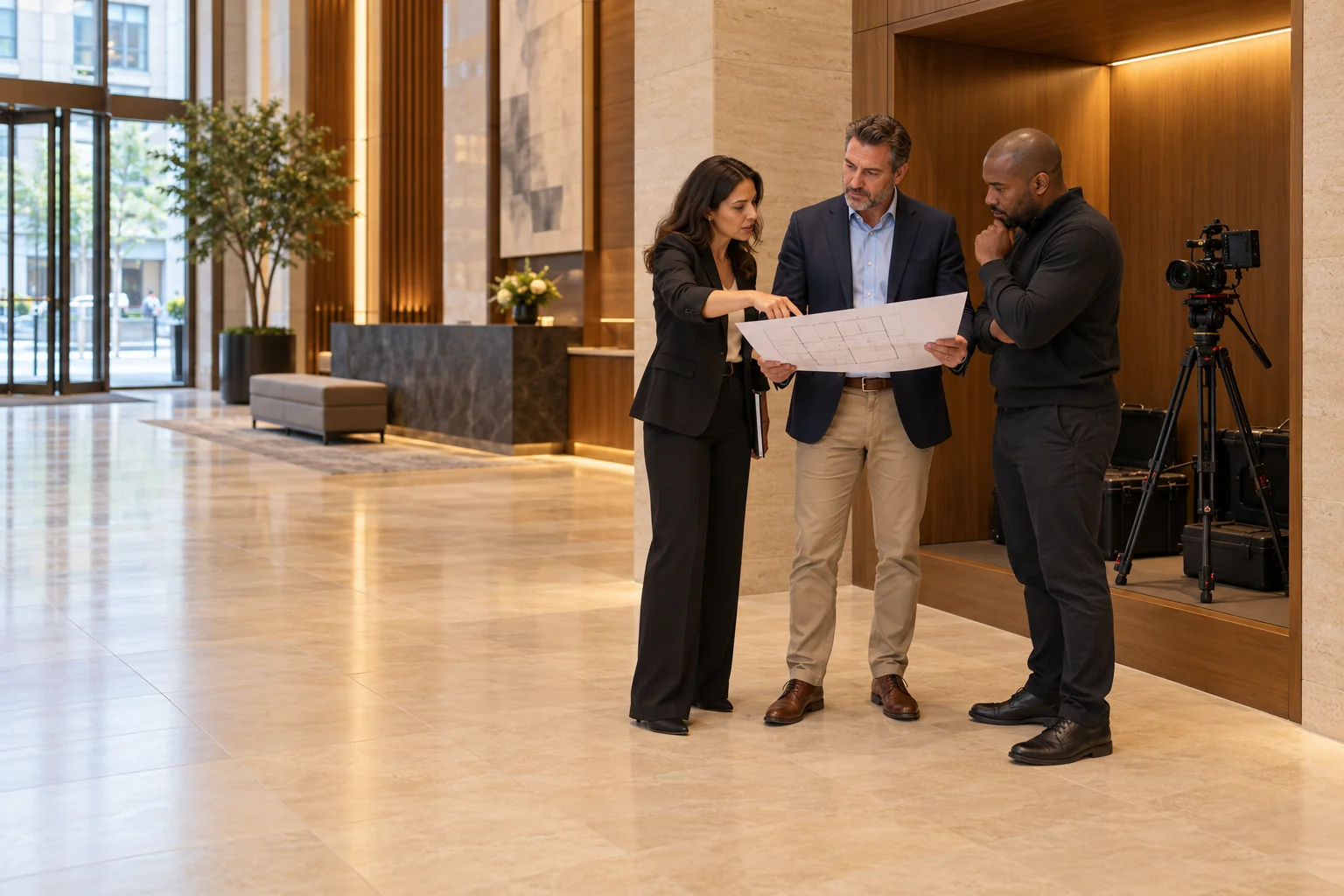
Example sequence
A production coordinator checks in first and confirms the receiving area is ready. A camera delivery follows during its agreed window. Furniture movement waits until the property contact confirms that the route is available. Adapt this illustrative sequence to the property.
Keep delivery completion separate from approval to set up. Receiving a case does not resolve whether a light, rig, electrical connection, or surface attachment is suitable. Those questions belong with the authorized people who can assess them.
3. Manage the route, not just the entrance
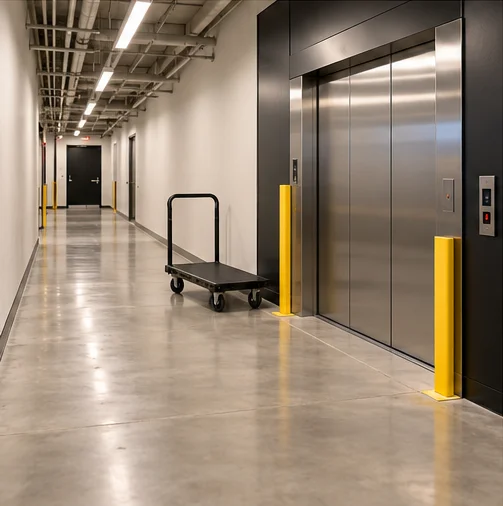
Walk the complete equipment route with the relevant property and production representatives before the arrival window. Include turns, thresholds, elevator lobbies, temporary holding points, and the final room. Decide who checks that the agreed protection is in place before movement begins.
Coordinate the sequence with existing activity: hotel checkout, housekeeping, resident deliveries, vendor appointments, or scheduled maintenance. A freight elevator allocation is less useful if receiving staff do not know which delivery it serves.
Use a short movement checklist:
- The receiving contact is present and reachable.
- The destination is ready for the agreed delivery.
- Approved protection and handling arrangements have been checked.
- The route remains available for normal property operations.
- The next movement has a named release point.
If conditions differ from the plan, pause the affected movement and contact the decision-maker. For immediate hazards or emergencies, use established property procedures rather than an informal filming escalation chain. This checklist does not establish code compliance or technical suitability.
4. Record exceptions and hand over the live picture
Expect changes, but make them visible. An exception log can record the time, requested change, affected area, person consulted, decision, and next action. Describe observations neutrally. “Unscheduled prop delivery waiting at receiving” is more useful than “production arrived unprepared.”
At a shift change, tell the incoming team what has arrived, what remains expected, which spaces are in use, and which decisions are unresolved. Include the current production contact and a fallback if that person cannot be reached.
Where arrival changes affect occupants, connect the decision to the occupant notice and complaint handoff process. Keep the next shift informed about both the agreed plan and actual conditions.