An interior filming agreement can become an exterior coordination problem when equipment, vehicles or waiting crew reach the building frontage. The property desk may be asked where a truck can stand, whether a sidewalk can be held or whether a resident must wait for a take. Those questions need defined responsibilities, not improvised answers based on a private room reservation.
This is a coordination guide for ordinary NYC property operations, not traffic-control instruction, legal advice or a permit interpretation service. Begin with the property filming-day plan and have the production resolve public-location permissions through the appropriate agencies.
Draw the boundary before equipment arrives
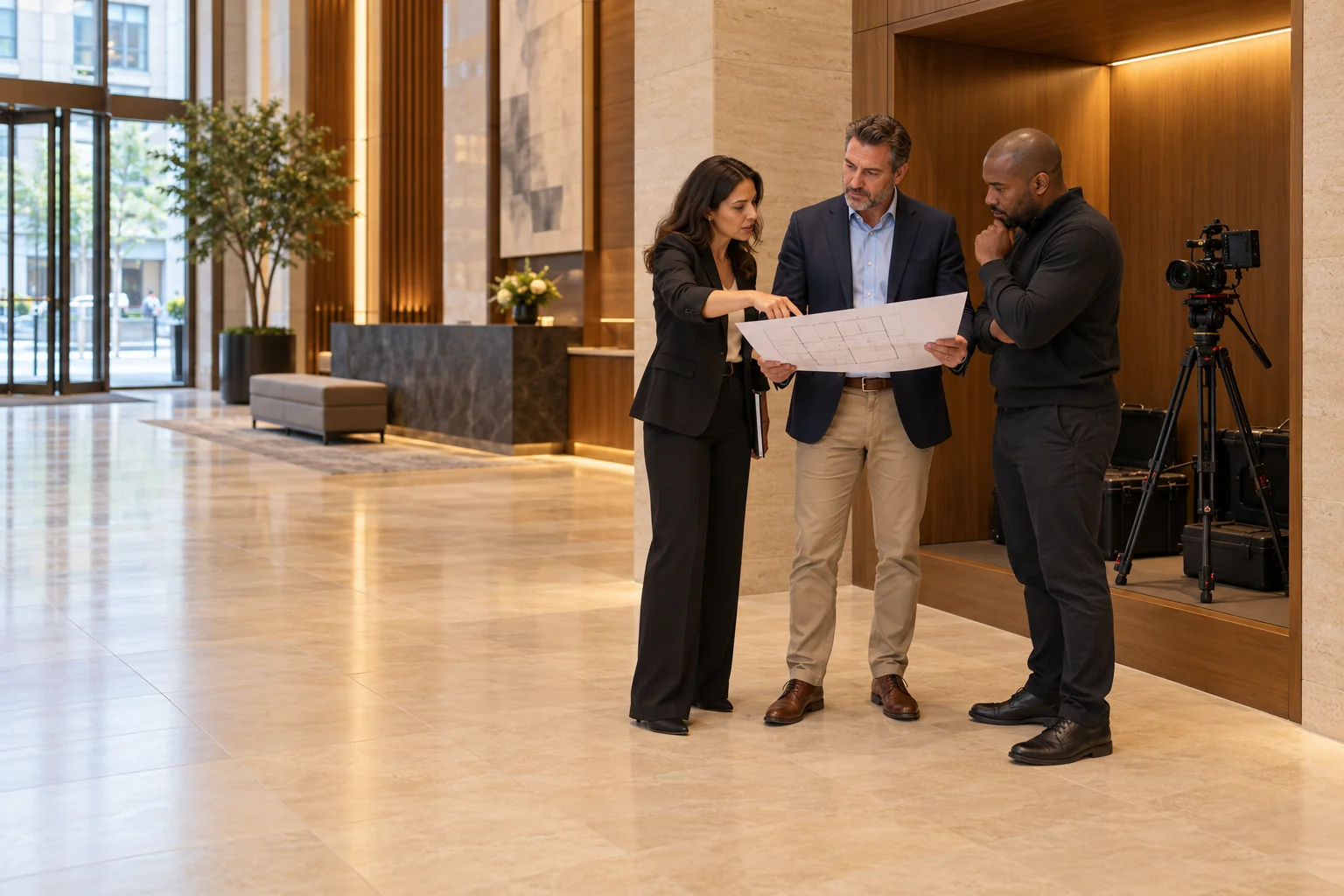
Ask for a simple frontage plan showing the private entrance, proposed unloading point, equipment waiting area and any public space the production expects to use. Have the responsible property representative identify which areas the building can authorize. A sketch is a coordination aid, not proof of ownership or permission.
The Film Office's permit guidance ties permit requirements to the actual activity, including equipment, exclusive use, specified production elements and requested vehicle privileges. It also identifies situations involving other authorities. A statement that filming is indoors does not resolve every associated exterior request.
Record questions separately from confirmed arrangements. If the plan shows a waiting area whose status is unclear, leave it unresolved until the relevant reviewer responds. Do not let a diagram become an instruction merely because it looks finished. The approval-handoff article explains how to identify the responsible decision-maker.

Distinguish production vehicles from personal arrivals
MOME's pre-production guidance explains that filming-permit parking privileges concern essential production vehicles, not crew members' personal cars. Property staff should therefore avoid promising a parking place to everyone on a crew list.
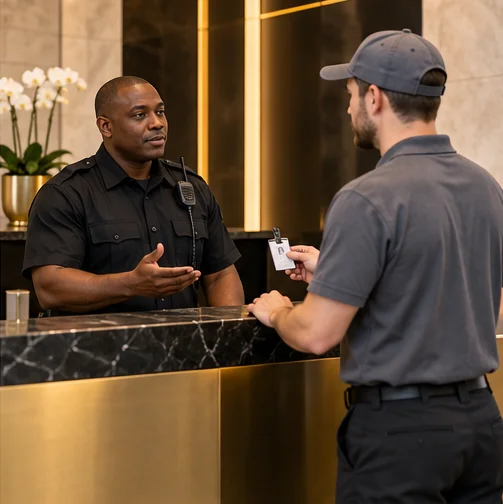
Request a concise vehicle coordination record from the production: arrival contact, expected type of delivery, intended interface with the building and the person responsible for resolving a change. The property desk can compare the arrival with its instructions without declaring that a vehicle has valid street privileges.
Questions for the pre-arrival discussion
- Which contact manages an early truck or a changed unloading sequence?
- Where should the driver seek direction without obstructing the entrance?
- Who confirms the building is ready to receive the equipment?
- Who handles questions about the production's street permissions?
- What happens if the planned exterior arrangement is unavailable?
Keep personal vehicle information out of the desk brief unless necessary for a defined task. A production's scheduling problem should not be solved by directing vehicles to stop somewhere the property has not authorized and cannot control.
Preserve an understandable occupant arrival
Review ordinary entrance use with facilities and the production contact. The intended result is a clear route and a consistent explanation for people using the building. Do not write a blanket instruction that all pedestrians must wait for filming. Questions about public movement or traffic control need the authorized production and agency process.
Property staff can report observed interference: the location, time and specific condition. “Equipment cases are occupying the agreed arrival space” is more useful than “the crew is causing trouble.” Pass the observation to the named contact, record the response and check whether the building-side issue was resolved.
Keep emergencies outside the production timing conversation. The property's existing emergency procedures govern staff response to immediate hazards. Guards should not enter the street to direct traffic or improvise a public-space enforcement role under this planning framework.
Reconcile changes and the final departure
If the production changes a vehicle, staging area or exterior activity, ask the responsible production contact to identify the revised arrangement and the relevant authority. Management should update only the building instructions it controls. Avoid implying that a revised private-property email amends a City permit.
During departure, separate the clearance of private access areas from any production responsibility outside them. Record remaining equipment, waste or interference in terms the appropriate contact can act on. Do not mark the entire frontage restored solely because the camera crew has left.
Use the wrap inspection for the property's own acceptance record and the occupant handoff for unresolved concerns. Clear boundaries make it easier to route a problem promptly without expanding the authority of either the security desk or the property manager beyond what was actually assigned.