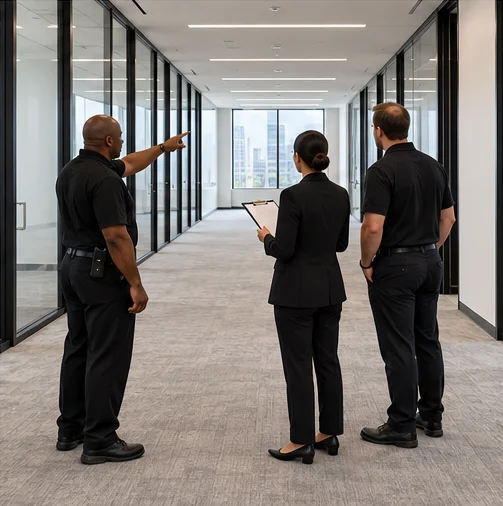

A production representative arrives with a permit, a location email and a schedule. Each may be useful evidence, but they do not necessarily answer the same question. The building team needs a clear private-property authorization, while the production may also need City permission for particular public-location activities. Confusing those documents leaves desk staff making decisions they were never assigned to make.
This article is an operational handoff method for NYC property and hotel managers, not legal advice or a determination that a project needs no permit. Use it within the broader filming-day coordination plan. Questions about permits, agreements and insurance belong with the relevant authority and qualified advisers.
Identify the authority behind each document
The NYC Film Office's permit guidance distinguishes activities that require its permit from certain limited filming that does not. Whether the production meets those conditions should not be guessed from the camera's size or the crew's description of the shoot as small.
A private-building decision is a different matter. MOME's private-location guidance describes arrangements between the property side and production and encourages appropriate review. Property staff should identify who has authority for the proposed location, including shared spaces, before converting a request into an arrival instruction.
Create a review register with four fields: document or decision, the question it answers, the responsible reviewer and the scope accepted. For example, a production's location contact confirms expected people; the property manager confirms the approved area; the designated insurance adviser reviews insurance documentation. Do not label every row simply approved, because that obscures what was reviewed.
An example of a useful distinction
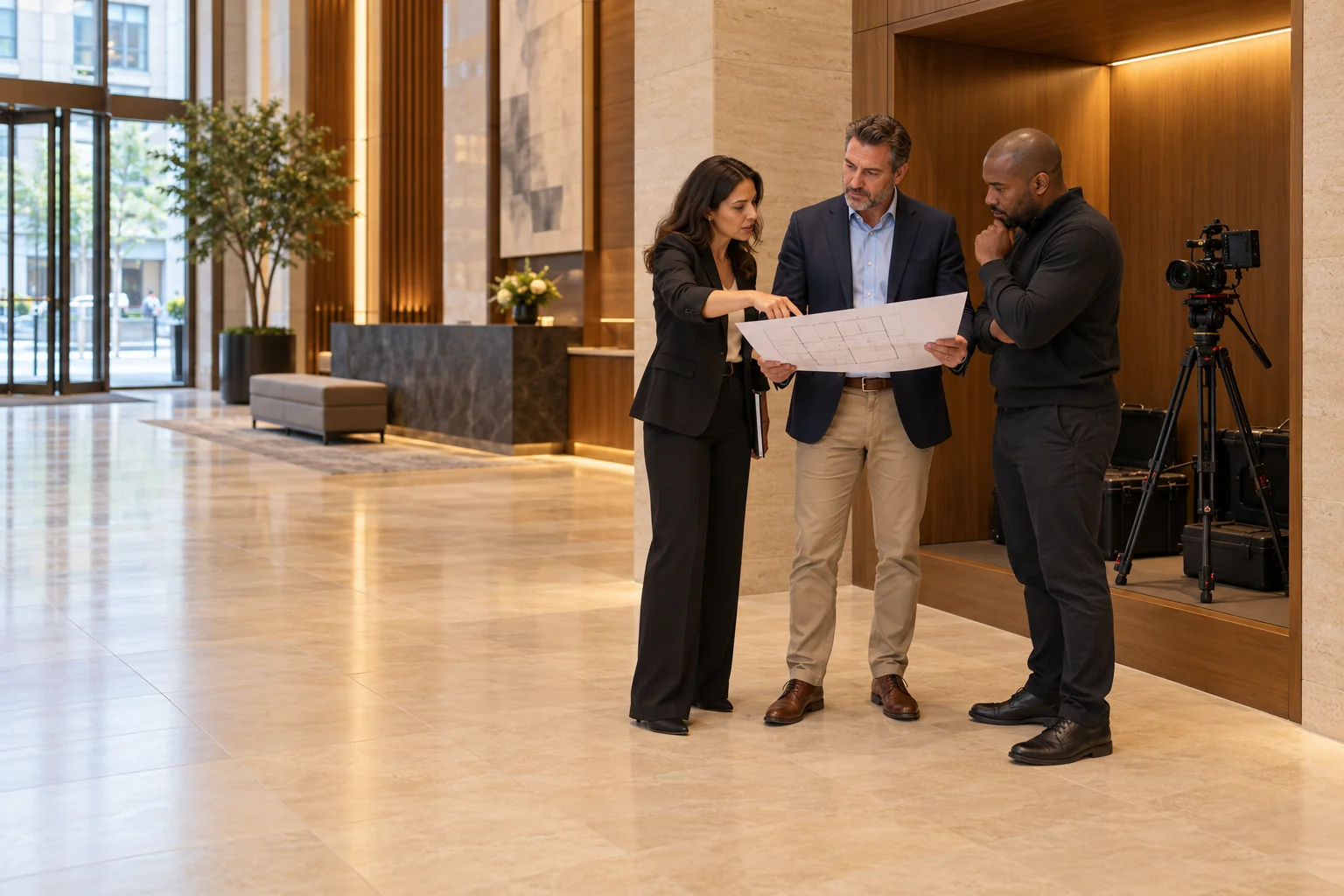
A scout visit might authorize two named visitors to view one room during a specified period. It does not automatically authorize bringing a crew back the next morning. Record the scout visit as a separate activity until the property issues the later instruction. This is a planning example, not a report of a Guardian assignment.
Convert approval into an operational extract
Once the authorized reviewers finish, prepare a brief for the desk. Reference the underlying record so management can retrieve it, but avoid distributing financial terms, signatures, full insurance files or private production details where they are unnecessary.
- Property-side approver and date of instruction.
- Production company and reachable location contact.
- Approved spaces and explicitly excluded areas.
- Arrival, setup, filming and removal windows.
- People-verification method and handling of roster additions.
- Equipment route and facilities contact for changed loads or arrangements.
- Named decision-maker for schedule or location changes.
Make the wording executable. “Production approved” is not a direction. “Contact the location lead to confirm arrivals not on the current list before admitting them to the reserved area” gives the desk a bounded decision. The crew-arrival article develops that workflow without treating a badge as universal access.

Keep conditions and changes visible
Use a revision identifier and effective time on the extract. If an approval is conditional, state the condition and the person who can confirm it is resolved. Do not send the desk a partly complete packet with the expectation that staff will infer which conditions no longer matter.
A request to add a room, extend the night or stage equipment outside should return to its appropriate reviewer. Preserve the current instruction until a new one is authorized. Record who requested the change, when it was received, who decided and which staff received the revised direction. Do not overwrite the earlier version without a trace.

Test the handoff before the first arrival
Run a short desk review using three fictional situations: an early arrival, an unlisted crew member and a request for an extra holding room. The objective is not to test the officer's legal knowledge. It is to find missing contacts and ambiguous instructions while the responsible manager is available.
Confirm that the escalation contact is reachable during the actual working window. Include a backup for breaks and shift changes. If nobody can decide a discrepancy, record that gap before activity starts rather than treating silence as permission.
The completed handoff should leave staff able to distinguish verification, admission and approval of changed work. That protects the integrity of the agreed process without claiming that a desk checklist proves contractual, insurance or regulatory compliance. Finish by aligning this extract with the occupant notice, so authorized operational changes do not leave the building communicating an outdated plan.