
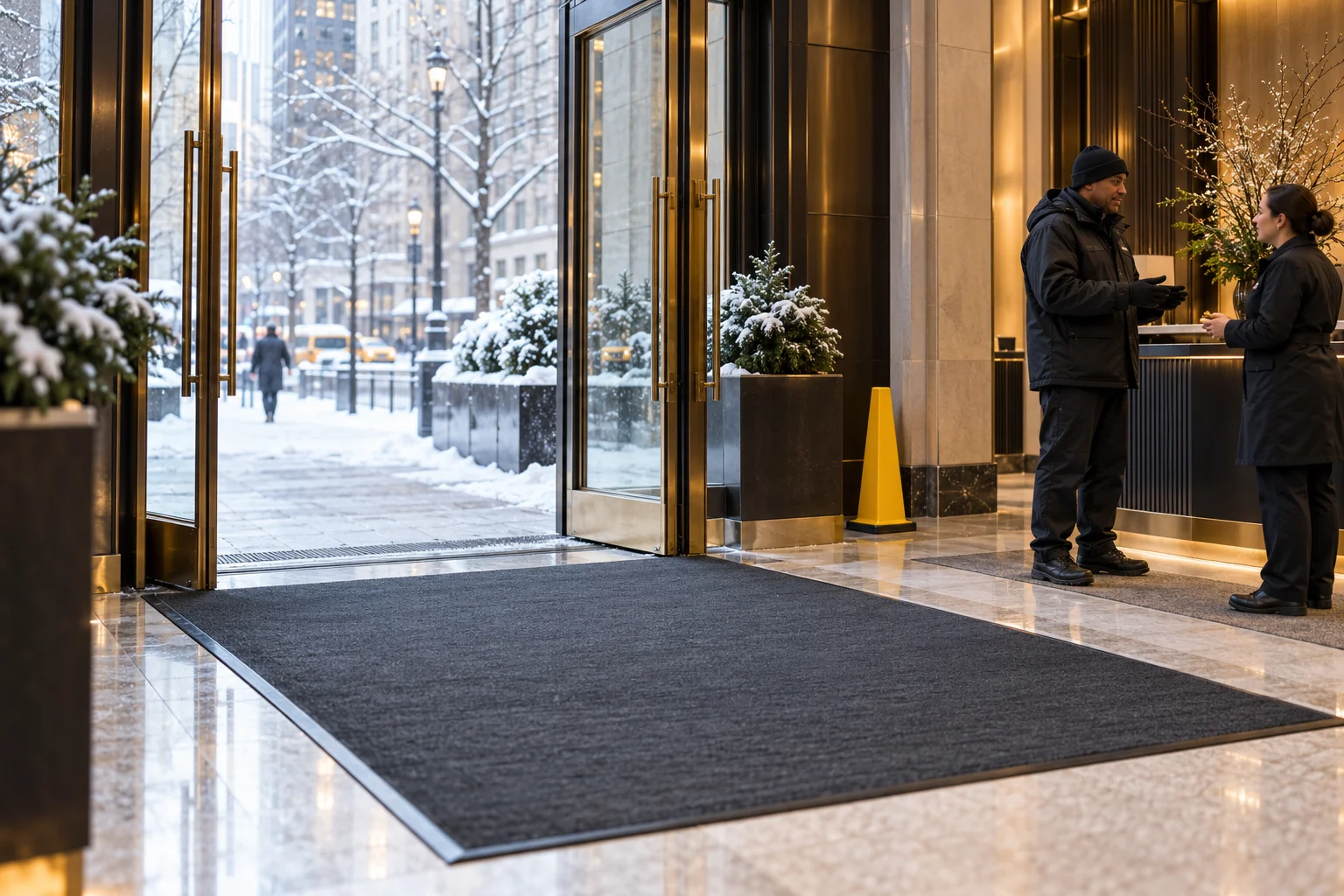
A winter entrance is a shared operation, not simply a shoveling assignment. The sidewalk crew may finish while slush continues to enter the lobby. A security officer may report an icy approach while the contractor believes the job is closed. Property managers need a way to connect those observations with a responsible person and a verified next step.
This guide concerns coordination at NYC offices and hotels. It is not a snow-removal method, a legal opinion or a substitute for the building's emergency plan. The workflows below are suggested management practices; trained maintenance personnel select materials and perform technical work. A security post does not automatically become a maintenance assignment during a storm.
Map the entrance as one journey
Start with the actual route from the adjoining sidewalk through the vestibule to reception. Include the accessible approach, staff entrance and loading entrance where they serve different users. Mark transitions: a curb ramp, a canopy edge, the threshold, an entrance mat and the first stretch of interior flooring.
The point is to identify responsibility changes. A clear sidewalk does not prove the interior is dry; a dry lobby does not prove the exterior route is usable. Have facilities and security review the same entrance names so a report about the “east door” cannot be mistaken for a different location.

Assign owners before assigning checks
Name the person who receives observations, the team that performs corrective work and the manager who authorizes operational changes. Give each role a backup contact. Confirm coverage during overnight hours rather than copying a daytime contact list into the winter plan.
- Security: observe from safe positions, report conditions and carry out approved communication measures.
- Facilities or cleaning: assess and address surface, matting and maintenance conditions within their competence.
- Management: resolve scope gaps, arrange resources and approve service changes.
- Supervisors: retain required post coverage and pass unresolved issues between shifts.
Use the snow-contractor handoff brief to define where an exterior service ends and who receives its completion report. A contract boundary should not become a gap in communication.
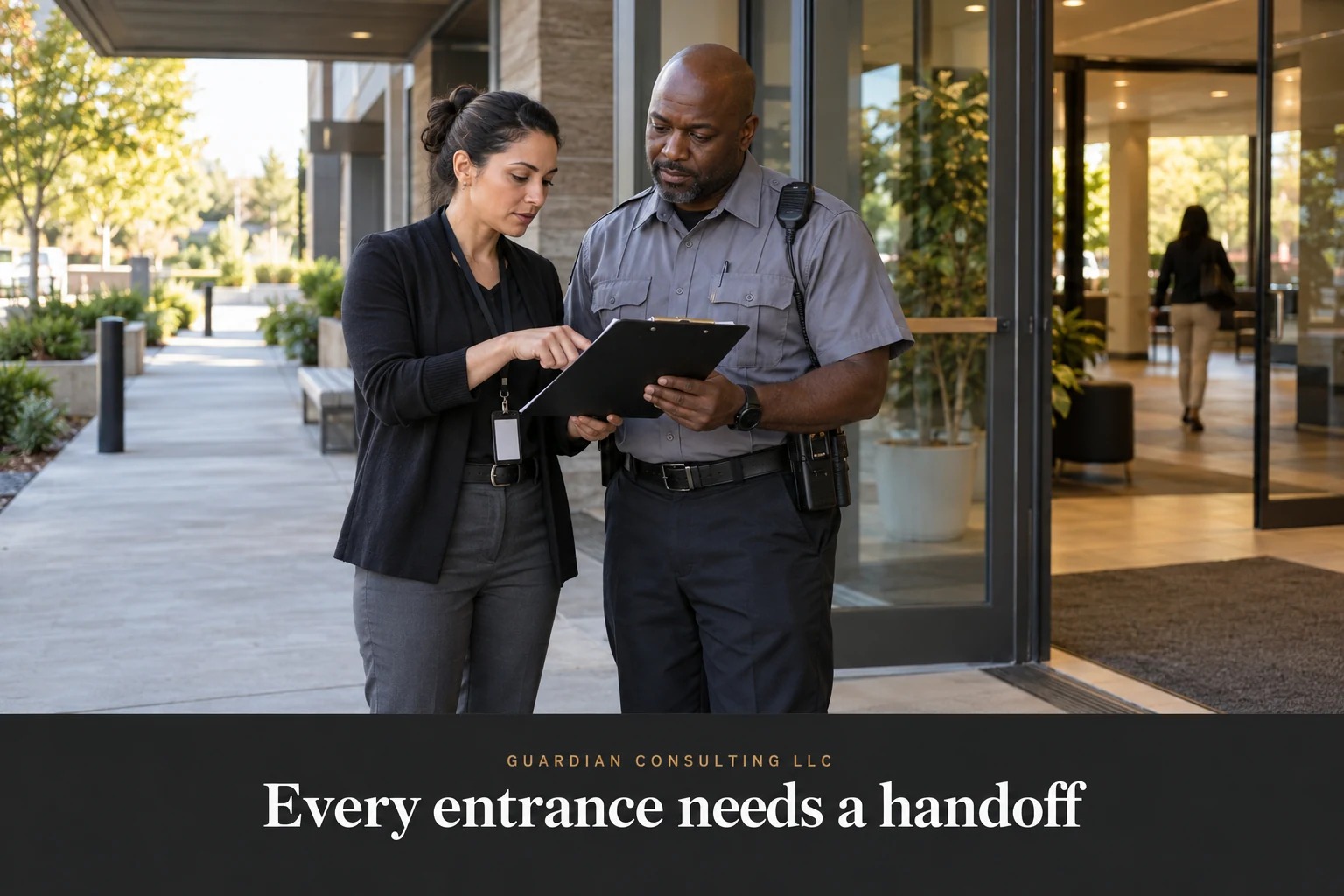
Establish a forecast-to-action decision
Identify the official forecast or alert source the duty manager reviews and the action it can trigger, such as confirming contractor availability or checking supplies. The National Weather Service's winter preparation guidance provides preparation context. A forecast is not an observation that a particular entrance is safe or unsafe.
Keep the dated decision separate from the actual condition log. “Winter plan activated at 16:00” tells the next shift something different from “water observed beyond the vestibule mat at 16:20.” This distinction prevents preparations from being reported as completed corrective work.

Connect five practical workstreams
Use the supporting guides for distinct decisions rather than repeating one large checklist:
- Wet-lobby and mat observations help an officer give cleaning a precise location and condition.
- Contractor arrival and completion handoffs distinguish an arrival from verified work.
- NYC sidewalk deadline tracking separates the official timing rule from uncertain site observations.
- Overnight refreeze handoffs preserve unresolved conditions when the first crew leaves.
- Post-storm entrance reviews identify whether repeated observations point to a planning gap.
Each tool needs a receiving owner. Do not collect additional logs merely to make a folder look complete.

Preserve service without inventing safety assurances
Give visitors factual, approved directions and a way to request assistance. Do not announce that an entrance is “ice-free” based on a brief glance or promise that a delayed contractor will arrive at an unconfirmed time. If management changes normal arrival arrangements, communicate the approved route consistently across reception, security and tenant contacts.
NYC Emergency Management's business preparedness guidance supports planning around critical operations and recovery. Apply that planning approach to the entrance while keeping building-specific fire-life-safety duties with the designated qualified personnel.
Before the first winter event
- Confirm entrance names and service boundaries.
- Verify the current after-hours contact chain.
- Agree who records the snowfall-end time and checks the applicable city rule.
- Confirm who assesses mats and interior moisture.
- Rehearse one unresolved-condition shift handoff.
Guardian Consulting's security services are a starting point for discussing security-team coordination. The building's approved plan, actual contracts and responsible professionals determine the final division of work.