
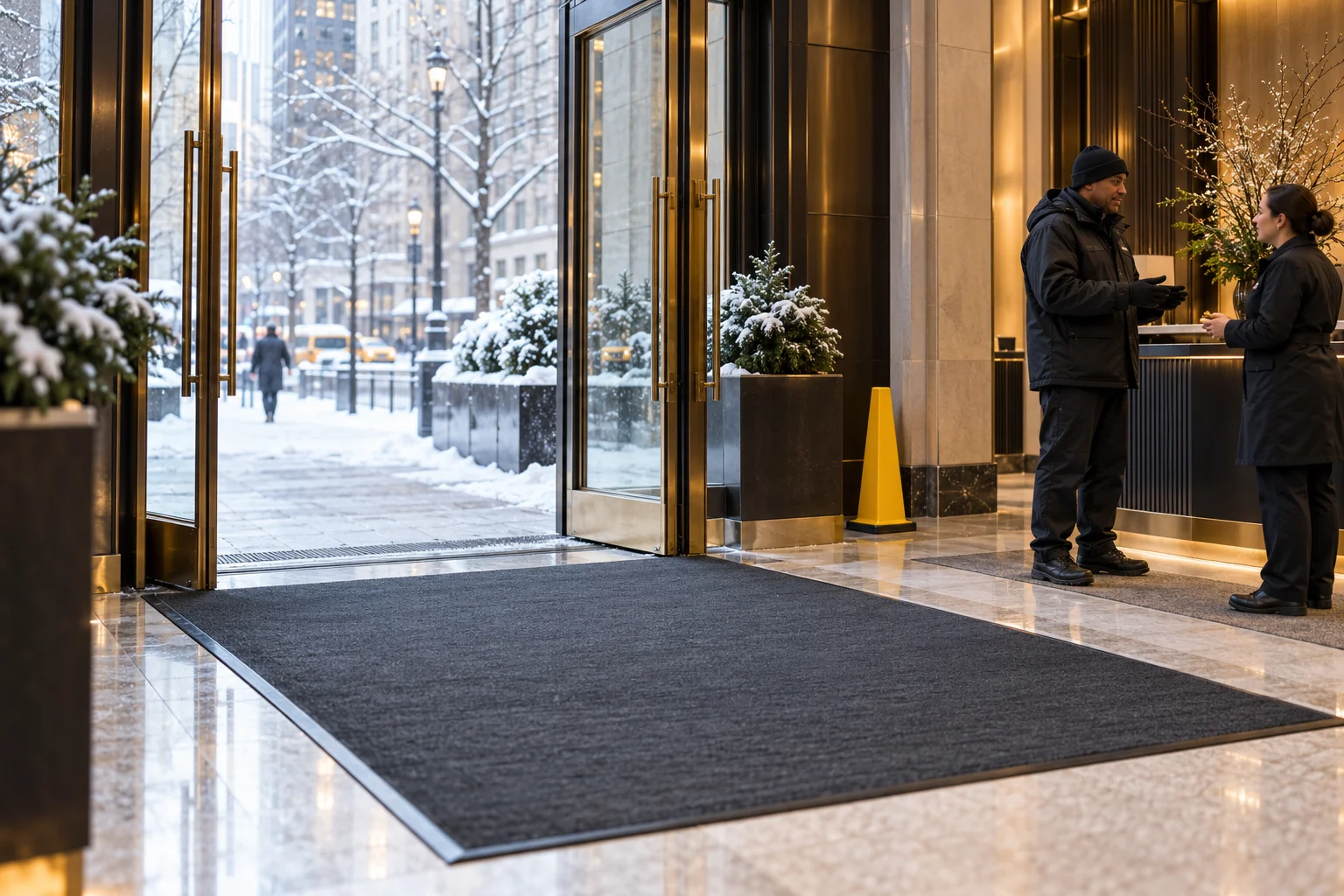
A message saying “the lobby is wet” may be true but still leave the receiving team uncertain about where to respond. Water can sit near the outer door, extend beyond a mat or reach a separate elevator approach. A useful observation identifies the location, the visible condition and the action already taken without guessing the cause.
This reporting workflow is part of the winter entrance readiness plan. It covers observation and coordination, not cleaning-product selection or a slip-resistance assessment. Security staff should not test a surface by deliberately sliding a foot across it or walking into a suspected hazard.
Describe the smallest useful location
Use the entrance name and a recognizable fixed reference. “Inside the west vestibule, beyond the inner edge of the entrance mat” is more actionable than “front lobby.” If the property uses numbered entrance zones, include that identifier in both the report and the maintenance request.
State the observation time, not just the time the message was sent. When the officer is reporting a visitor's account rather than a direct observation, make that clear. A reported near fall and a personally observed puddle may require different follow-up even when they concern the same area.

Record visible conditions without diagnosis
Describe moisture, pooled water, loose grit, a raised mat edge or a mat that has shifted from its normal position. Avoid unsupported conclusions such as “defective flooring,” “wrong chemical” or “safe now.” Those conclusions may require a qualified assessment.
A practical report contains:
- Exact entrance and affected part of the route.
- What was directly seen or reported, with the distinction stated.
- Whether people are continuing to approach the area.
- Who was notified and how acknowledgment was received.
- Approved temporary measures and their current owner.
For covered workplaces, OSHA's walking-working surfaces standard addresses orderly surfaces, inspection and correction of hazardous conditions. It does not make an individual guard the flooring specialist. Management must align responsibilities with the actual workplace and service contracts.

Keep temporary measures within the approved plan
A warning sign alone is not evidence that a condition has been corrected. Follow the property's approved response and obtain a maintenance or management response. If a temporary measure changes pedestrian movement, check with the responsible person that it does not create another obstruction or direct people into an unassessed area.
Do not move heavy matting alone, apply an unfamiliar product or disconnect entrance equipment as an improvised fix. A maintenance task needs the right person, equipment and instruction. Keep security coverage intact while the qualified team responds.
Verify the response without certifying the floor
When the responder reports completion, record what they say they did and the time. If the officer can observe the area safely, note the visible result separately: for example, that a previously raised edge now appears flat. Do not convert that observation into a technical certification or a guarantee against falls.
If water returns after work, create a new observation linked to the earlier report. The recurrence may tell facilities that the current arrangement is not keeping pace with tracked-in moisture. It is not proof that the earlier worker failed to perform the task.

Pass unresolved work to the next shift
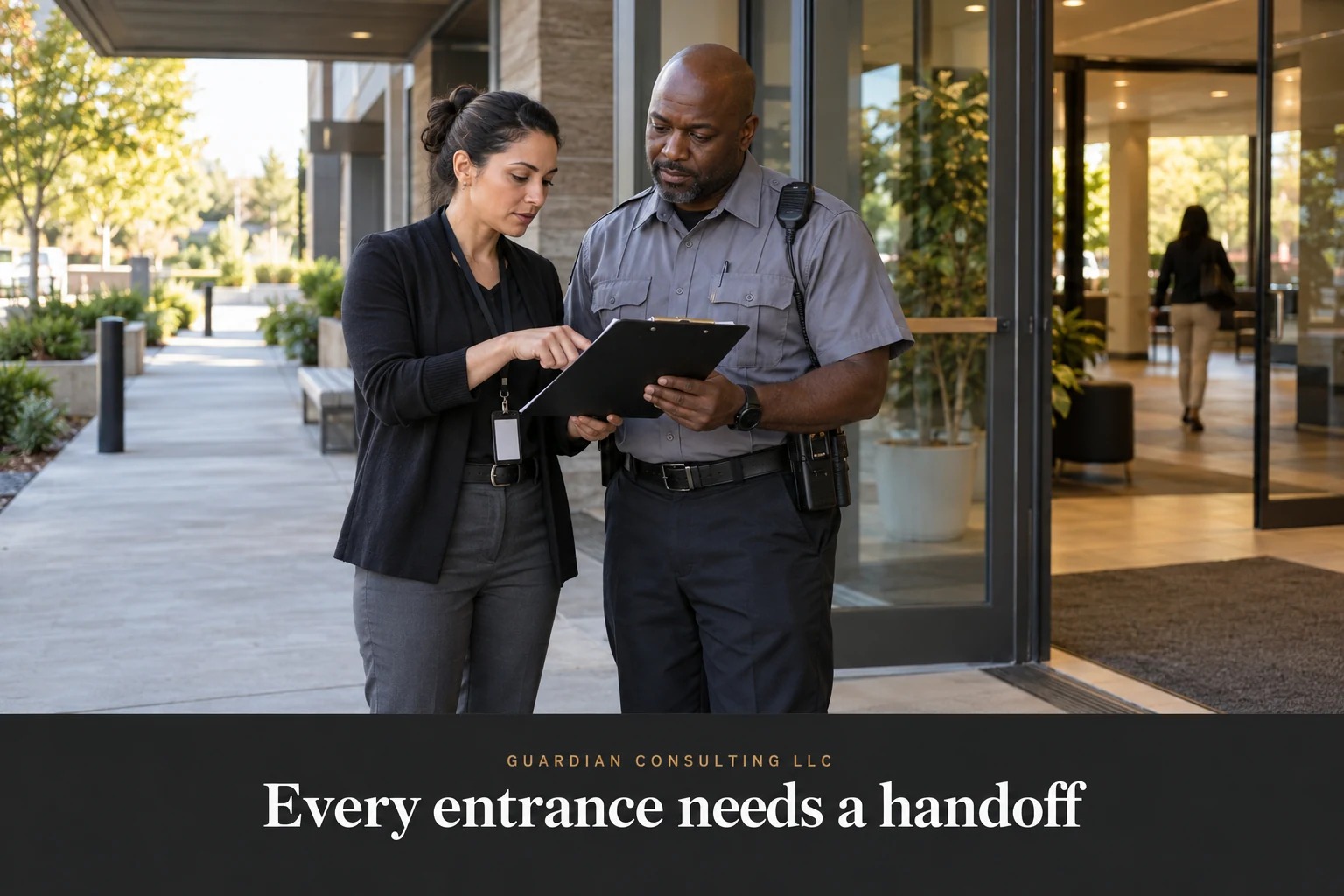
Hand over the location, latest visible condition, responsible owner and next review point. “Cleaning called” is incomplete if nobody knows whether the call was answered. Use the overnight refreeze handoff where exterior conditions could continue feeding moisture through the entrance.
Avoid copying visitor names or unrelated incident details into an open maintenance channel. When an incident occurs, follow the building's separate incident process and preserve factual records. Do not delay emergency assistance to complete the condition log.
Review patterns after the event
Use a post-storm review to distinguish a one-time spill from repeated transition-zone problems. Compare observations with cleaning acknowledgment and completion times, without inventing a universal response-time target.
OSHA's winter-weather guidance highlights snow and ice walking hazards. For the interior handoff, the practical question is narrower: did a specific observation reach someone able to act, and was the result checked rather than assumed?