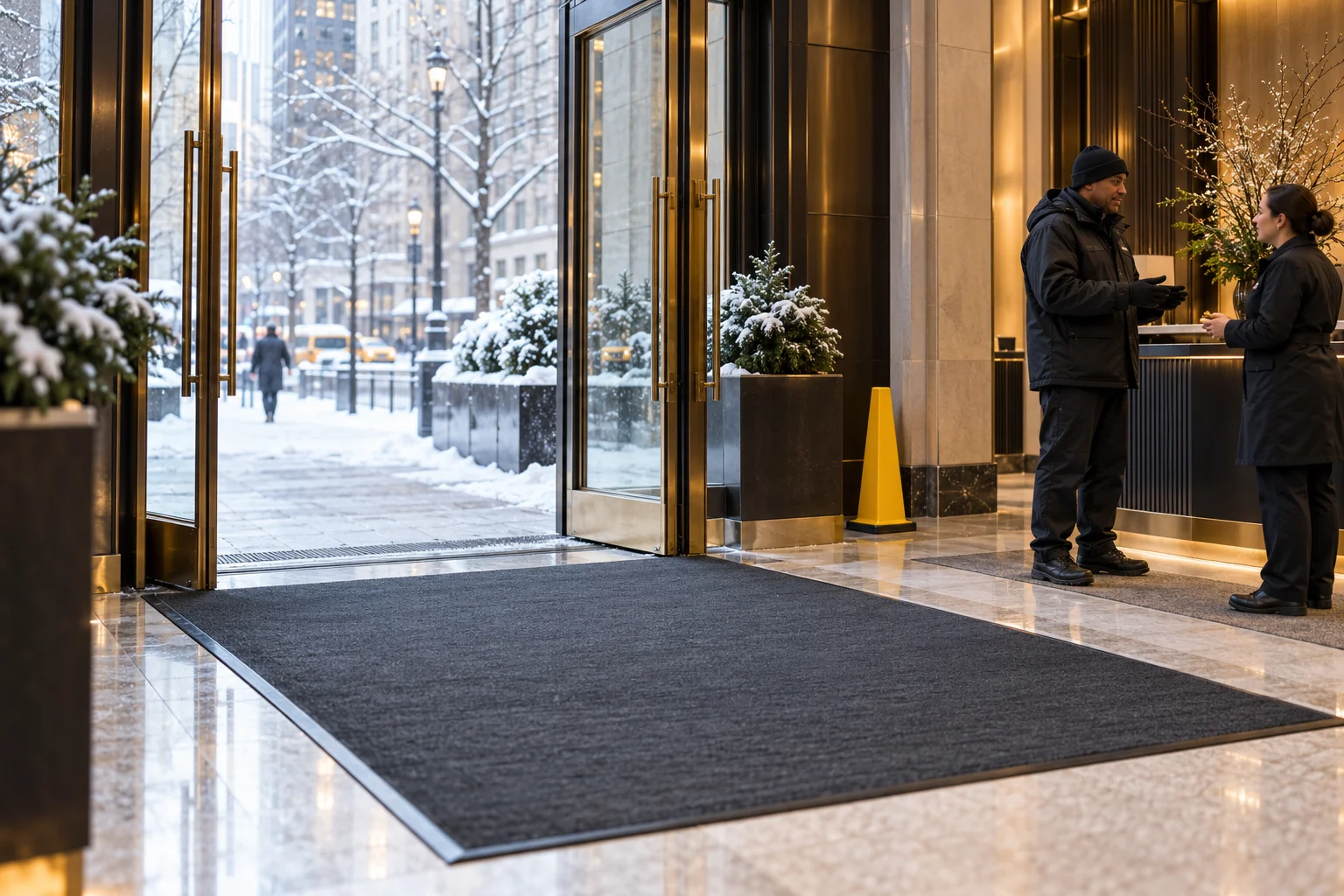
A cleared entrance at the end of one shift can look different later. Moisture, continued foot traffic and changing weather make a single completion message a poor substitute for an ongoing property response. The overnight handoff should preserve what is known, what remains uncertain and who is responsible for the next action.
This is the shift-transition component of the winter entrance readiness plan. It is not an instruction to expose officers to unsafe walking conditions or replace a qualified maintenance assessment. The supervisor must maintain required post coverage while arranging any additional observations.
Start with the last confirmed condition
Name each affected entrance and give the time of the latest direct observation. Distinguish it from a contractor's report and from a weather forecast. “Crew reported completion at 22:10; west approach not subsequently observed” is honest and useful. “All clear” hides both the scope and the missing check.
Do not ask the incoming officer to infer conditions from a photograph alone. The image may show only one area and one moment. Where photos are part of the approved process, identify their time and location and avoid capturing visitors or private information unnecessarily.

Carry forward the open issue
For each unresolved item, pass four pieces of information: the specific condition, the receiving owner, the last acknowledged action and the next agreed review point. “Facilities notified” is not enough if the person did not answer or the caller used an outdated contact list.
Use a short handoff sequence:
- Identify the entrance and safe observation position.
- State the latest direct observation and its time.
- Identify any report that has not been independently checked.
- Name the responsible contact and confirmed response status.
- State what the incoming shift should do if the condition persists or worsens.
The next review point is set by the property's actual risk assessment and staffing plan. Do not invent a universal fifteen-minute or hourly rule for every entrance.

Keep weather awareness separate from site findings
Use current official weather information for planning. The National Weather Service's winter safety resources explain winter hazards and preparation. They cannot establish whether a particular mat, ramp or threshold is currently safe.
If conditions appear to change, notify the designated manager with the new observation. A forecast temperature alone is not a measured surface condition. Similarly, a warmer forecast is not authority to close an open maintenance item without a site review.
Retain staffing and communication boundaries
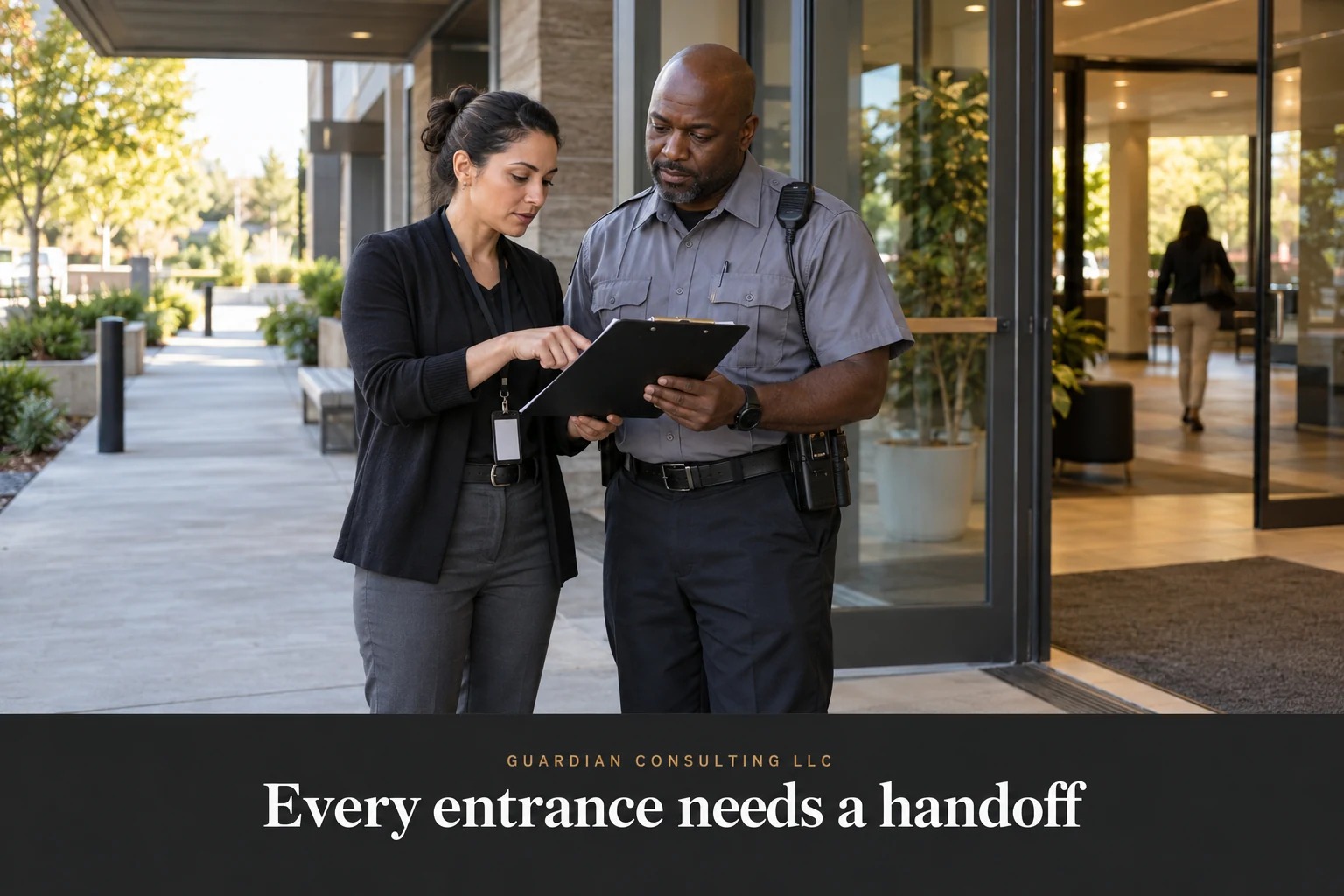
If the incoming relief is delayed, the supervisor needs both the coverage issue and the unresolved entrance issue. Do not solve one by leaving another required post unattended. Record the actual handoff recipient; a message left in a group chat is not evidence that a particular person accepted responsibility.
If visitors need different arrival directions, use the current management-approved message. Avoid promising an unconfirmed contractor return time or making blanket assurances about an entire sidewalk. The wet-lobby reporting guide helps keep interior observations specific while the exterior issue remains open.

Reopen a condition when new evidence warrants it
A new report after a documented completion is a new event, not something to conceal to preserve a tidy log. Link the observation to the earlier work so management can see the sequence. Keep factual language: what changed, when it was seen and who received the report.
For covered workplaces, OSHA's exit-route maintenance standard requires exit routes to remain unobstructed. Temporary winter arrangements should not compromise that objective. An officer should escalate an obstruction rather than improvise a change to required exits or door hardware.
Hand the morning team a usable summary
Before the shift ends, summarize open locations, confirmed response plans and records needing management review. Connect any recurring condition to the post-storm review. A good summary enables the next team to act without rereading an entire night's messages or assuming that silence meant resolution.