

A planned elevator interruption is an operations project as well as a maintenance job. The contractor may know which equipment is being worked on while the lobby desk knows only that an elevator is unavailable. Between those two descriptions sit important questions: which destinations remain reachable, who approves assistance, what information may be given to occupants, and who confirms the next change?
This guide proposes a coordination method for NYC hotel and property managers. It covers planned service interruptions, not entrapment rescue, equipment operation, engineering design or emergency evacuation. It is an original management framework, not a claim about a Guardian client or a substitute for a building-specific legal and technical review.
Define the interruption in building terms
Start with a map of service, not just a car number. Identify the affected elevator using the property's actual naming convention, the bank and floors it serves, the expected work window, and the service that management says will remain available. A second car in the lobby may not serve the same destinations. A service elevator may have restrictions that prevent it from becoming an ordinary passenger alternative.
Ask the responsible manager to resolve these differences with the elevator professional before the desk receives instructions. Record unknowns explicitly. The outage briefing worksheet turns the scope into a shift-ready reference rather than a forwarded contractor email.

Assign decisions before the work begins
Name a building representative who owns the interruption and a backup who can actually respond during the work window. Identify the contractor contact, security supervisor, occupant-communications owner and person handling accessibility requests. These roles may belong to different organizations in a hotel, mixed-use property or multi-tenant office.
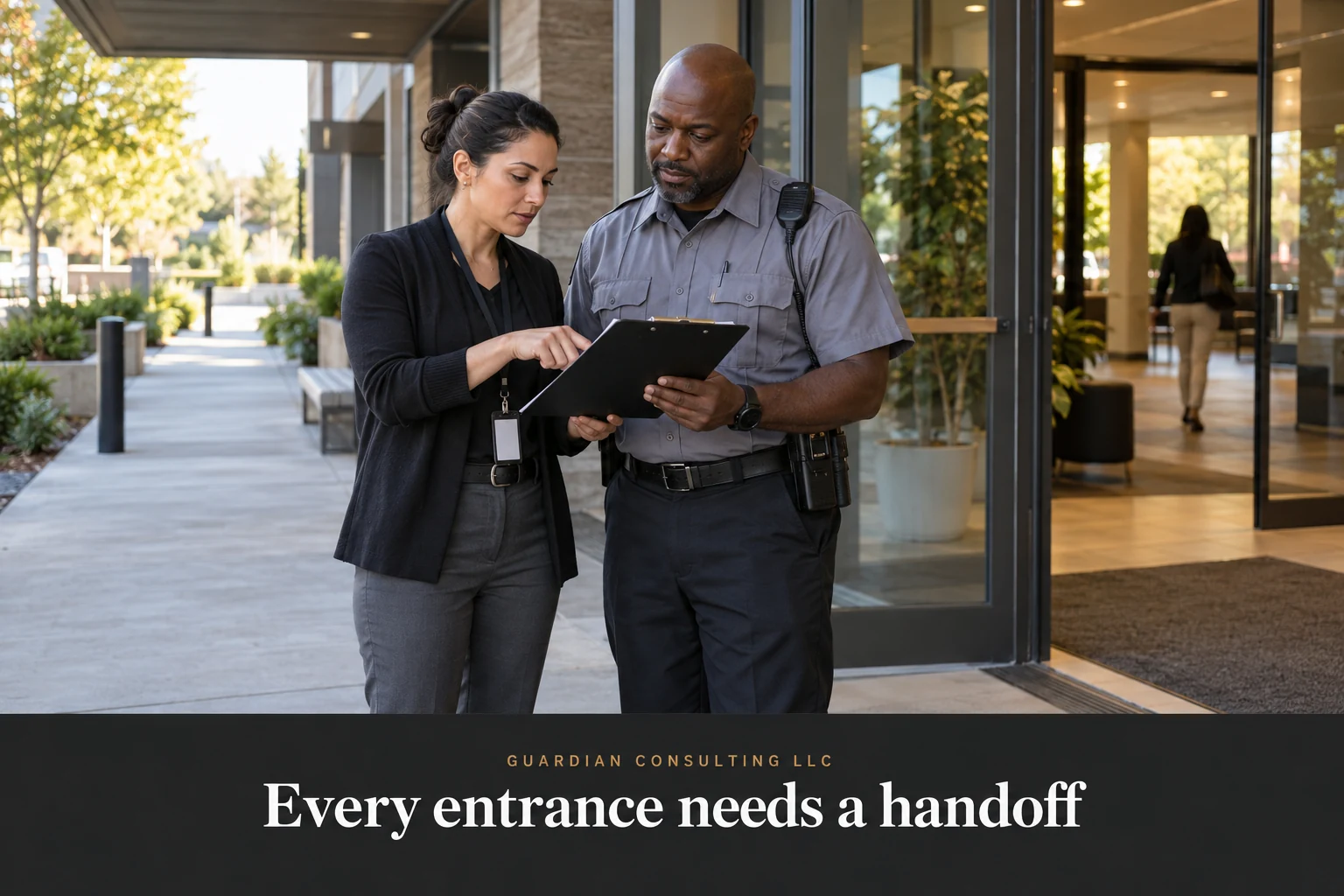
Separate permission to enter the building from permission to begin technical work. Likewise, distinguish a contractor's estimated completion from the property's authorization to tell occupants that service is restored. The contractor arrival guide helps the desk make those handoffs without assuming engineering authority.
Prepare occupants for the usable options
The useful notice explains the affected service, current expectations, a contact route and when the next update will appear. It should not promise that another route is accessible merely because it is open. Confirm practical details with the property's responsible specialists, including whether the alternate service reaches the intended floor and is available at the time people need it.
NYC DOB's owner guidance on elevators describes maintenance and occupant-notification responsibilities. Have the owner or designated compliance professional determine the requirements for the actual occupancy and work type. This operational plan does not establish the applicable notice deadline or certify that a notice satisfies it.
Use the service-status communication guide for consistent updates and the assistance-request guide for a private route to a decision-maker.

Check the lobby arrangement before peak arrivals
Review where people will wait, where questions will be handled and how arriving visitors learn about the interruption before joining the wrong queue. Coordinate with the hotel's front desk or tenant hosts where arrivals can be staggered. Keep temporary signs and any approved queue arrangement from conflicting with ordinary circulation or emergency routes.
OSHA's exit-route maintenance standard requires unobstructed employee exit routes. A waiting line or temporary service notice is not a reason to disregard the property's egress plan. Route concerns to facilities and the appropriate life-safety lead; security should not redesign an exit arrangement independently.
Use a live status record during the interruption
A practical record separates three things: what was reported, what was confirmed and what is still undecided. Record the source and time of each update. An arrival estimate, a repair estimate and an actual return-to-service authorization are different events.
- Identify the affected service and current approved instruction.
- Record the latest confirmed update and its source.
- Keep unresolved access requests with an assigned owner.
- Set the next update time, even when completion is unknown.
- Carry the record to the incoming shift rather than relying on memory.
If the scope expands, stop treating the original brief as current. Ask the owner to review occupant impacts and the communication plan again. If an emergency develops, follow the emergency procedure and obtain emergency assistance without waiting for this administrative process.

Close the interruption deliberately
Use the return-to-service handoff to reconcile technical release, management direction, occupant notices and open assistance requests. A quiet lobby is not evidence that every affected person has received an update.
At the next management review, identify one concrete improvement: a confusing car label, an unreachable backup or a notice that reached employees but not visitors. Assign an owner and retest that step before the next planned job. Discuss security coordination with Guardian where post orders and supervision need to fit the property's maintenance arrangements.