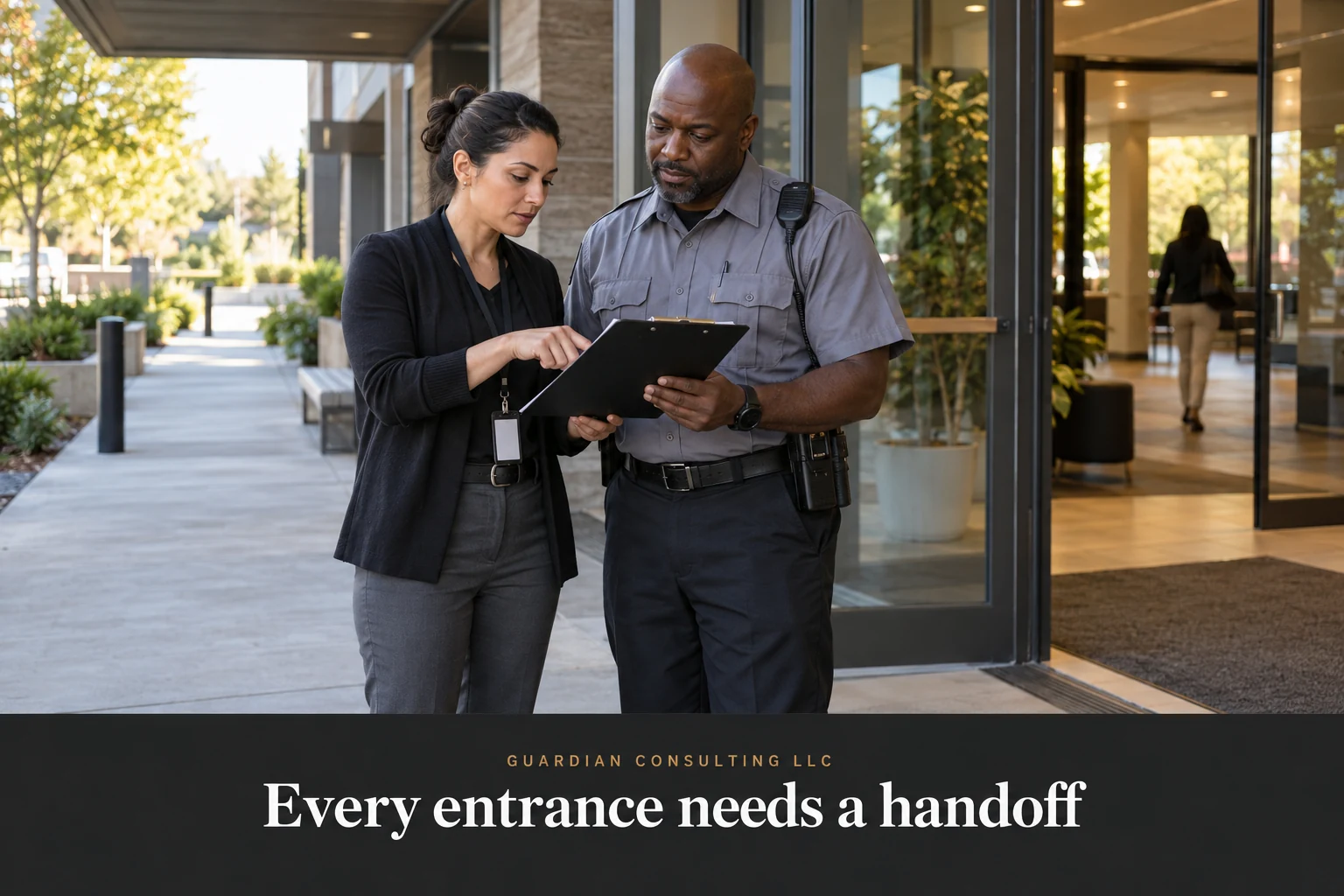
When an occupant says an elevator outage prevents them from reaching a destination, the desk needs a clear handoff. Repeating “use the stairs” does not resolve the request. Neither does promising a workaround that management has not approved. The practical task is to understand the requested help, reach the person authorized to arrange it and keep the request from disappearing between shifts.
This is an operational companion to the planned elevator downtime guide. It does not decide legal eligibility, prescribe medical assistance or replace an emergency plan. Hotels, residential properties and commercial buildings need their own reviewed accommodation procedures.
Ask about the task the person needs to complete
Use a private, respectful conversation to establish the destination and assistance requested. The desk usually needs to know what the person is trying to do, not their medical history. Ask how they prefer to receive the next update. Do not require someone to explain a condition in front of other occupants merely to reach the responsible manager.
A person may need to attend an appointment, enter their room, retrieve something or leave a floor. Those are different operational needs. Record the request accurately without assuming that another person's solution will work for them. Do not infer that a person can use stairs from their appearance.

Route the request to a named decision-maker
The outage plan should identify the role that can authorize arrangements and a reachable backup. In a hotel, the front-office manager may need to coordinate with engineering and other staff. In an office building, management may need the tenant host. The security desk should not be left to negotiate a solution outside its authority.
Send the relevant facts through the approved channel and obtain acknowledgement. A forwarded message without an accepting recipient is still an open handoff. Record who accepted the request and what update the person should expect. The desk briefing worksheet should make this escalation route available before the interruption begins.

Keep the assistance record separate from the public status
Maintain a limited private record containing the request reference, time, preferred contact method when needed, receiving role, next update and disposition. Keep a public lobby message focused on elevator service, not individual circumstances. Avoid broadcasting names, room numbers or assistance details over a channel that other occupants can hear.
The FTC's business data-protection guide recommends limiting retained personal information to what the business needs and protecting what it keeps. Apply the property's approved retention and access rules. A temporary outage does not justify creating an informal medical-information spreadsheet.

Suggested handoff fields
- Request reference and received time.
- Destination or task affected, stated by the person.
- Assistance requested, without speculative diagnosis.
- Responsible manager and acknowledgement time.
- Next update and approved contact route.
- Outcome, unresolved point or further referral.
Check whether the proposed arrangement is usable
When management supplies an option, communicate it accurately and ask whether the person understands the next step. Do not certify an alternate route yourself. The relevant team must check the actual destination, availability, access conditions and suitability rather than assuming that another elevator solves every case.
The Department of Justice's Title III primer discusses public accommodations, including hotels, and maintaining accessible features. Different laws and facts may apply to residential housing. Use the property's designated accessibility or legal contact to review obligations; do not treat this article as a universal accommodation decision.
Continue the handoff when the shift changes
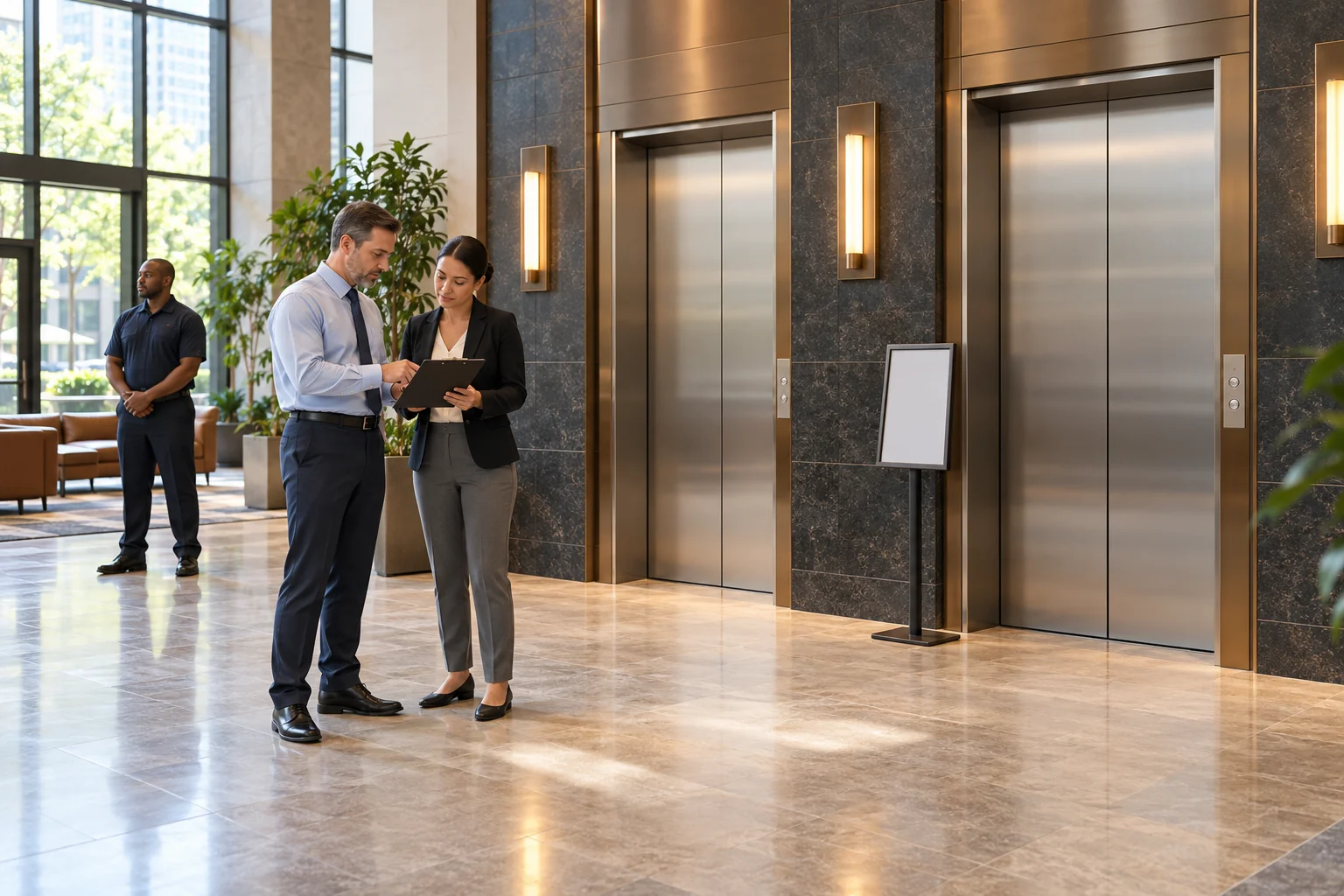
An incoming shift needs the current owner and next update, not a retelling of private details. Review open requests in the authorized system. If a promised update is overdue, contact the assigned manager rather than copying the old estimate to the occupant. Keep the person informed when the answer is not yet available.
When service returns, do not assume every request is automatically resolved. Someone may have changed an appointment or still need an update. Use the restoration handoff to ensure the receiving manager closes the request appropriately. Review any recurring process gaps without naming occupants in a general team discussion.