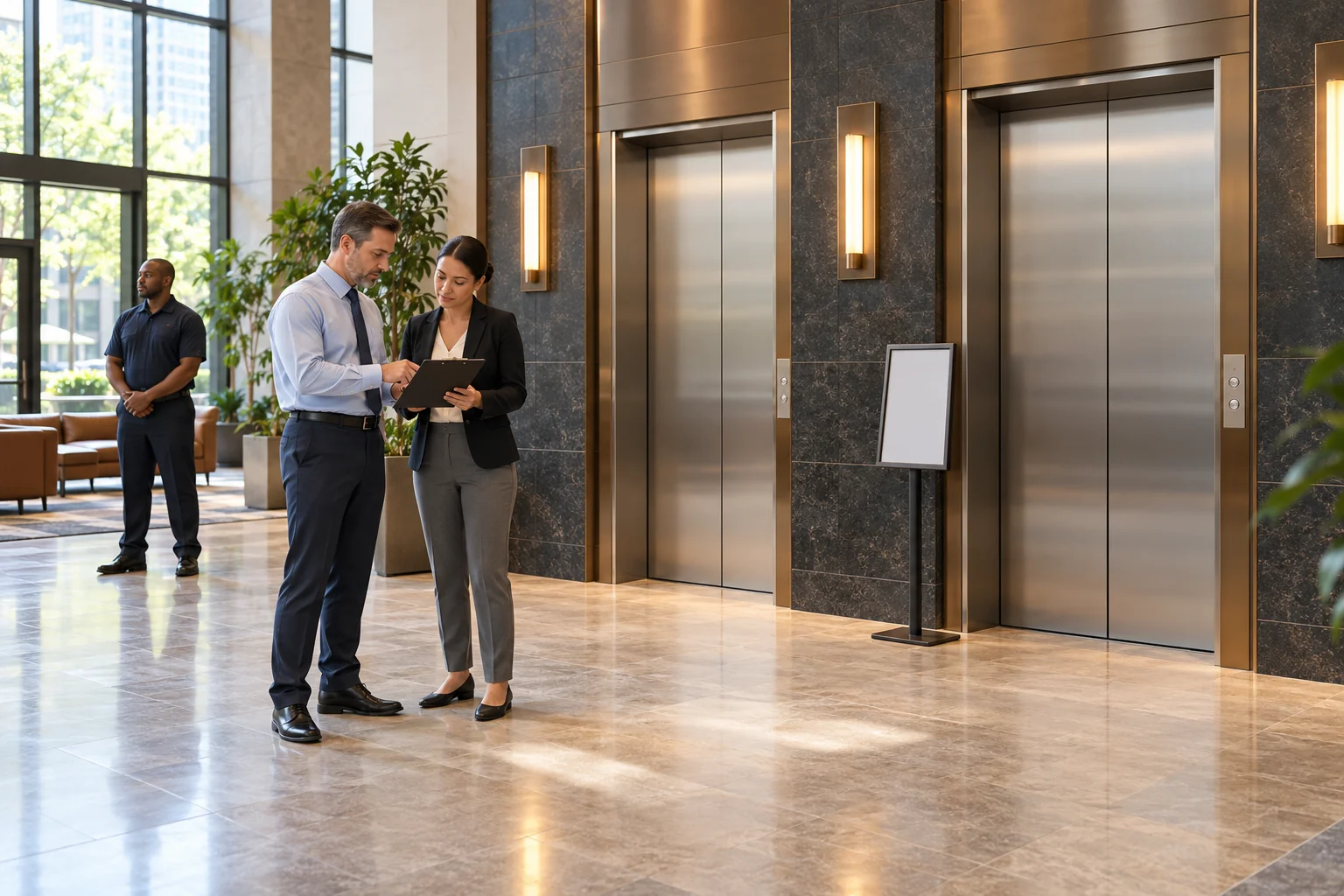
The end of planned elevator work has several separate milestones: technical work finishes, any required release conditions are satisfied, management confirms the operational instruction, and occupants receive the update. A security desk should not collapse those milestones into “the contractor left, so the elevator is back.”
This proposed handoff record closes the planned elevator downtime coordination process. It is not an elevator inspection checklist, a commissioning procedure or authorization to operate equipment. Qualified elevator personnel and the responsible building authority determine technical readiness and applicable release requirements.
Identify the exact service being released
Confirm the elevator bank, car label and floors covered by the update. Partial restoration should be described as partial restoration. If one car returns while another remains unavailable, the desk needs a revised service description, not a blanket “all clear.” Use the same identifiers as the original work brief.
Record the source and time of the instruction. If a technician reports completion, pass that report to the designated building representative. Ask for the operational direction the desk is authorized to communicate. An estimate that has elapsed is not evidence that a release occurred.
Keep technical evidence with its proper owner
Management should retain the relevant work, inspection and release records in the established maintenance system. The desk record can reference the responsible person or work identifier without copying specialist documents into an informal log. Do not ask officers to decide whether a technical certificate is sufficient.
DOB's elevator owner guidance notes that certain hazardous violations require Department reinspection before public use resumes. That is one reason an apparent repair or a contractor's departure cannot be treated as universal permission to reopen. The applicable conditions must be resolved by the responsible professionals for the particular equipment and work.

Obtain a clear operational instruction
A usable handoff says what service management confirms is available, what restrictions remain, which notices should change and who handles any further problem. If these points are incomplete, keep the issue open with the work owner rather than filling the gaps with an assumption.
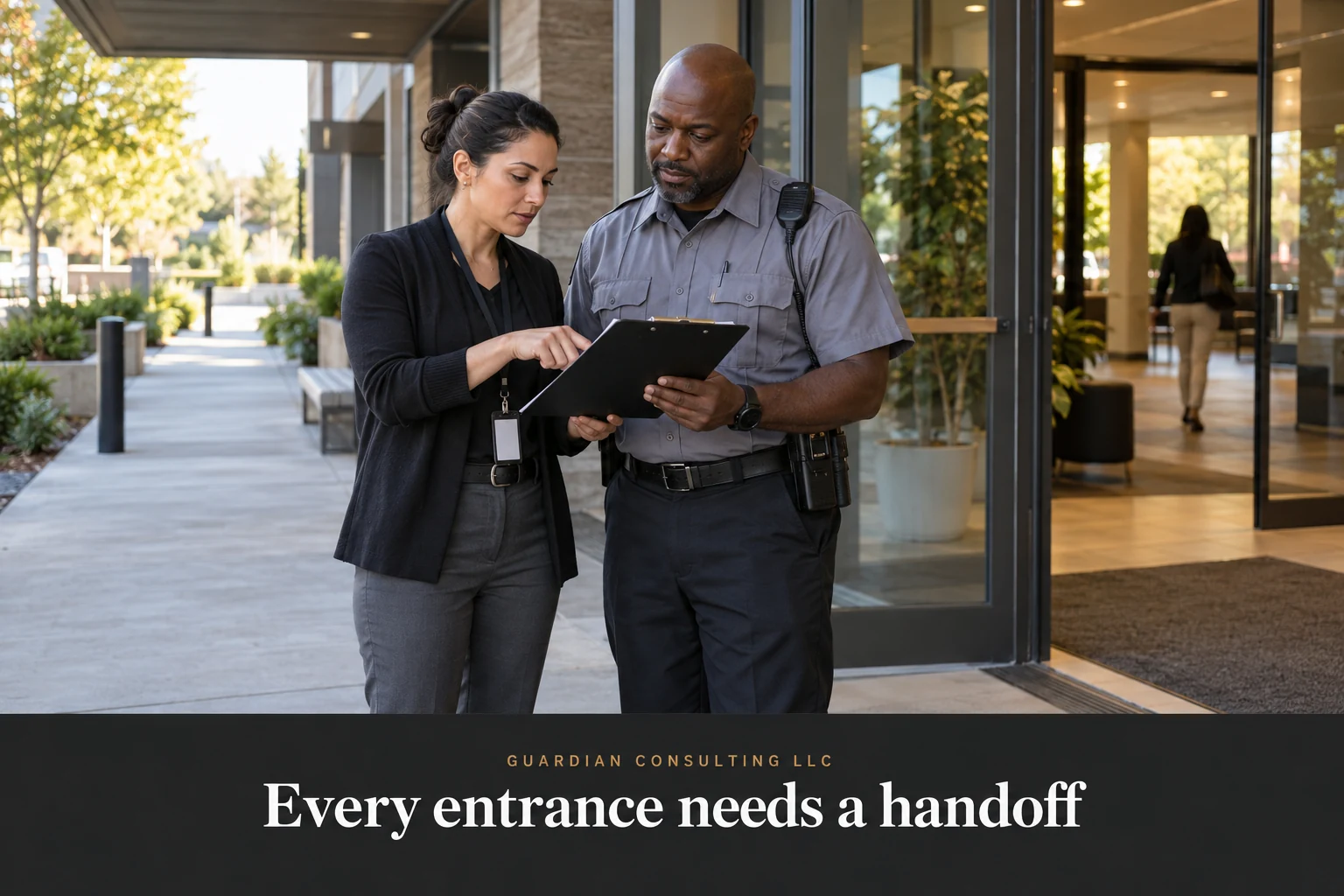
Suggested closure fields
- Affected service and work reference.
- Reported work-completion time and source.
- Authorized building instruction and received time.
- Remaining restrictions or unresolved conditions.
- Notice-update owner and completed channels.
- Assistance-request owner and outstanding items.
The record should distinguish a completed coordination step from a pending one. For example, management may have confirmed service while a digital notice still awaits correction. Record both states accurately so the next shift knows what remains.
Synchronize the occupant-facing messages
Use the status-notice checklist to update approved signs, desk wording and other channels. Check secondary entrances and remote reception points that may still be displaying the earlier message. Keep old notices from continuing to direct people away from restored service.
Only authorized personnel should remove technical restrictions or barriers. The desk may confirm that the assigned owner has addressed them, not independently decide they are unnecessary. If the visible conditions conflict with the instruction, contact the building representative before improvising directions.

Review open assistance requests privately
Service restoration does not necessarily close every occupant request. Someone may still be waiting for a call, an appointment arrangement or information about reaching a destination. Have the responsible manager review the limited private record described in the assistance-request guide.
Do not announce personal details to prove that a request has been handled. Record acknowledgement and disposition in the approved channel. If a person cannot be reached, leave the request with an identified owner under the property's procedure rather than marking it complete automatically at the end of a shift.
Handle a new concern as a new report
If a fresh concern is reported after restoration, record the observation, source and time and contact the responsible team. Do not dismiss it because the earlier work order was closed. Do not diagnose a mechanical fault or promise that the elevator is safe based on a desk observation.
NYC DOB's elevator issues page directs emergency situations to 911 and cautions against forcing elevator doors. Follow the building's emergency process when needed; a maintenance closeout must never delay emergency assistance.
Carry one useful correction into the next job
Compare the actual handoff with the planned desk brief. Identify a specific process defect, such as an ambiguous car label or a notice channel with no owner. Assign the correction before the next interruption. This makes the review useful without claiming that an administrative record certifies equipment condition or guarantees future performance.