

An elevator notice can be accurate when printed and misleading two hours later. A contractor's estimated finish changes, a second bank is affected, or the person answering the phone has an older update. The solution is a controlled status message with a known owner, not more confident language.
This guide covers the operational wording and distribution of planned-outage updates at NYC hotels and properties. It complements the elevator downtime coordination plan. It does not supply a legally complete notice template or determine which legal notice periods apply to a building.
Give every update a source and a time
Begin with the affected service and the time the information was confirmed. Name the internal role approving the update. Distinguish the scheduled work period from the next communication time. If completion is uncertain, say that the estimate is being reviewed and provide the next update point rather than repeating an expired finish time.
For example, an illustrative internal entry could say: the contractor reported a revised estimate at 11:20 a.m.; management is reviewing it; the desk will receive another update by noon. That is not a public promise that the elevator will operate at noon. It is a commitment to provide information.

Answer the occupant's immediate questions
A useful operational message tells people what is affected, what management has confirmed remains available, where to obtain help and when to check again. Avoid internal equipment abbreviations unless they also appear clearly at the building. Do not describe a route as accessible until the responsible team has verified it for the intended use.
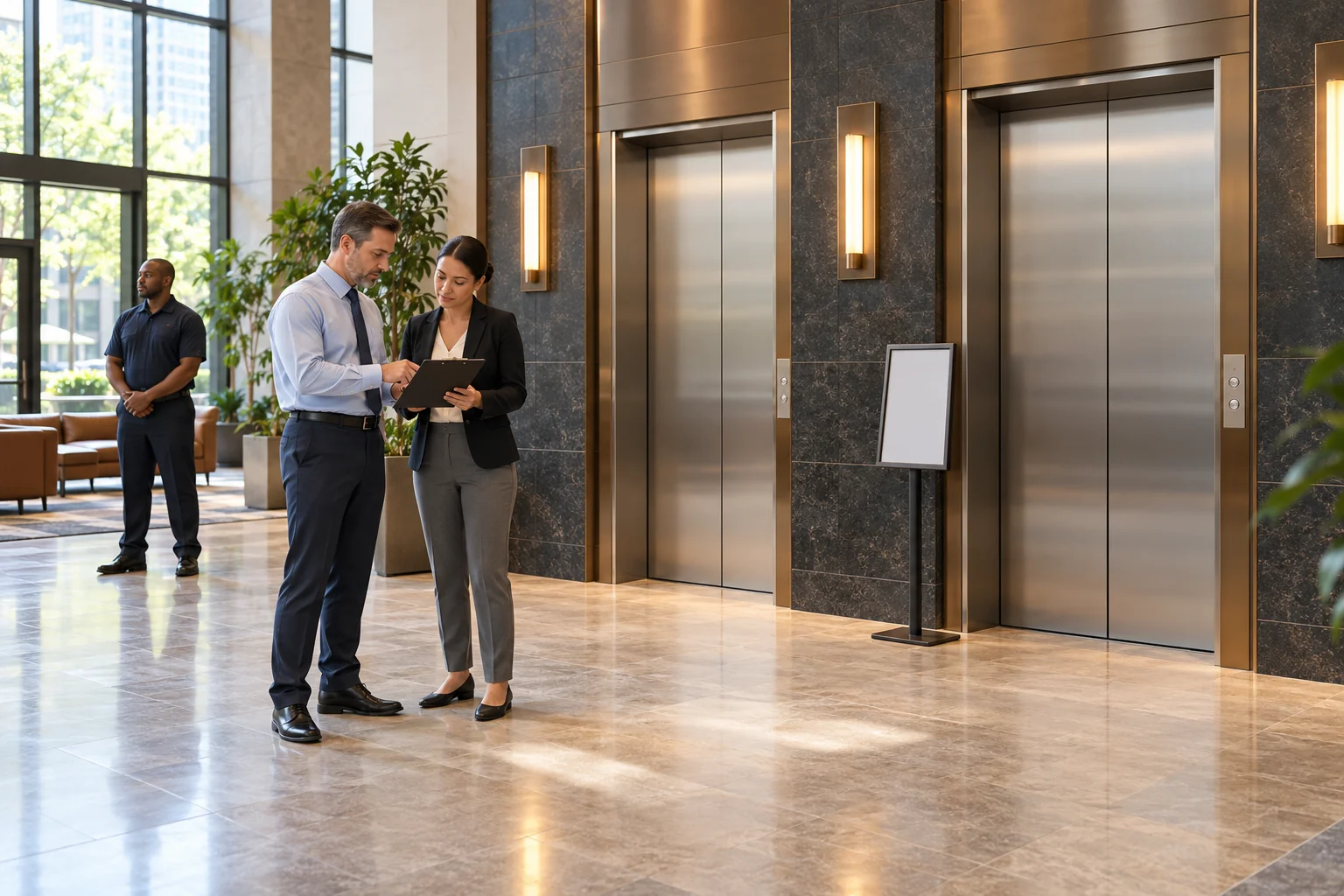
Keep the message readable at the place it will be used. A paragraph that works in an email may be too dense on a small lobby sign. Use a short headline, brief status and a clear assistance contact. Keep private information about individual occupants off public notices.
Review these fields before release
- Correct building, entrance and elevator bank.
- Effective date and time of this update.
- Confirmed scope and any remaining service.
- Estimate clearly identified as an estimate.
- Assistance contact and next update point.
- Approval owner and distribution locations.
Match channels without assuming identical audiences
Identify the people who receive building emails and those who do not: visitors, delivery personnel, arriving hotel guests and staff from other shifts. Coordinate with tenant hosts or hotel reservations where management approves advance communication. Keep the desk's spoken explanation aligned with the published update.
The Department of Justice's effective communication guidance explains that covered entities must communicate effectively with people with communication disabilities. The appropriate method depends on the interaction. A posted text notice alone is not a universal answer; follow the property's reviewed communication arrangements and provide a route to assistance.

Separate legal timing from operational updates
NYC's occupant-notification provisions for elevator work distinguish categories of work and outages in R-1 and R-2 occupancies. Have the responsible professional verify current applicability, timing and language requirements for the specific job. Do not borrow another property's deadline or assume an office, hotel and apartment building have identical obligations.
A legal notice can coexist with frequent operational updates. Keep them coordinated rather than modifying required wording casually at the security desk. Where work changes, send the revised facts to the person who owns the formal notice process.
Retire old messages at each status change
Use a distribution checklist covering the actual locations and channels used. When management approves a change, update each one and record completion. An obsolete sign near a secondary entrance can continue sending people to an unavailable bank after the main lobby has corrected its instructions.
For a website or digital screen, check the visible result rather than treating a submitted update as displayed. For a printed notice, verify the installed copy and its timestamp. Keep a controlled record of the change without collecting unnecessary photos of occupants.
End with a confirmed restoration message
Do not remove the notice simply because a technician leaves. Follow the return-to-service handoff and obtain management's confirmed instruction. Then communicate what service is available and how unresolved requests will be handled.
Review repeated questions from occupants after the interruption. If several people asked whether a particular floor remained reachable, add that field to the next desk brief. The goal is a message people can act on, with uncertainty made visible and decisions owned by the right team.