An elevator contractor can be expected at the building without every detail of the visit being authorized at the security desk. The crew may arrive earlier than planned, request access to an additional area or describe work that differs from the desk brief. A good arrival process identifies those differences and reaches the building representative before they become conflicting instructions.
This guide addresses access coordination for planned elevator work, not equipment servicing or technical supervision. Use it with the elevator downtime coordination plan. Security staff should follow approved post orders and the authority assigned to them, while the owner and elevator professionals handle technical and regulatory decisions.
Compare the arrival with the approved visit
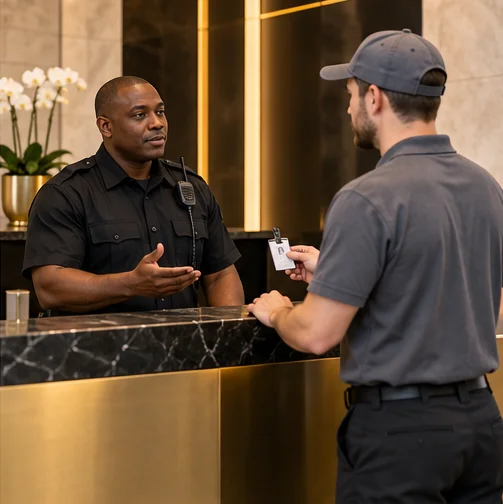
Check the company, expected contact, work reference, arrival window and designated building representative using the property's ordinary contractor process. Verify a changed contact through a trusted channel already held by management rather than relying solely on a number supplied at the door.
Keep the identity and authorization checks proportionate to the approved policy. Do not invent document demands or retain unnecessary identification copies. Where the visit is not on the expected list, contact the responsible manager. The purpose is to resolve an exception, not to make a technical judgment about an unfamiliar worker.
Have management own credential and scope review
NYC DOB's licensing information provides routes for elevator-agency licensing and skilled-trade information. The owner or designated facilities professional should perform the relevant qualification and authorization review before the job. A logo on a vehicle or a visitor badge is not that review.
The desk should know which person has completed the approval and how to reach them if the arriving team or scope differs. Do not ask a security officer to interpret a permit or decide whether a worker's credential covers the proposed task. Record the discrepancy and route it to the person with that responsibility.

Make the access boundary explicit
Identify the approved entry point, escort arrangement if any, areas authorized for the visit and method for managing any issued key or access credential. Access to the lobby does not imply access to every service space. Keep restricted areas under the property's established controls.
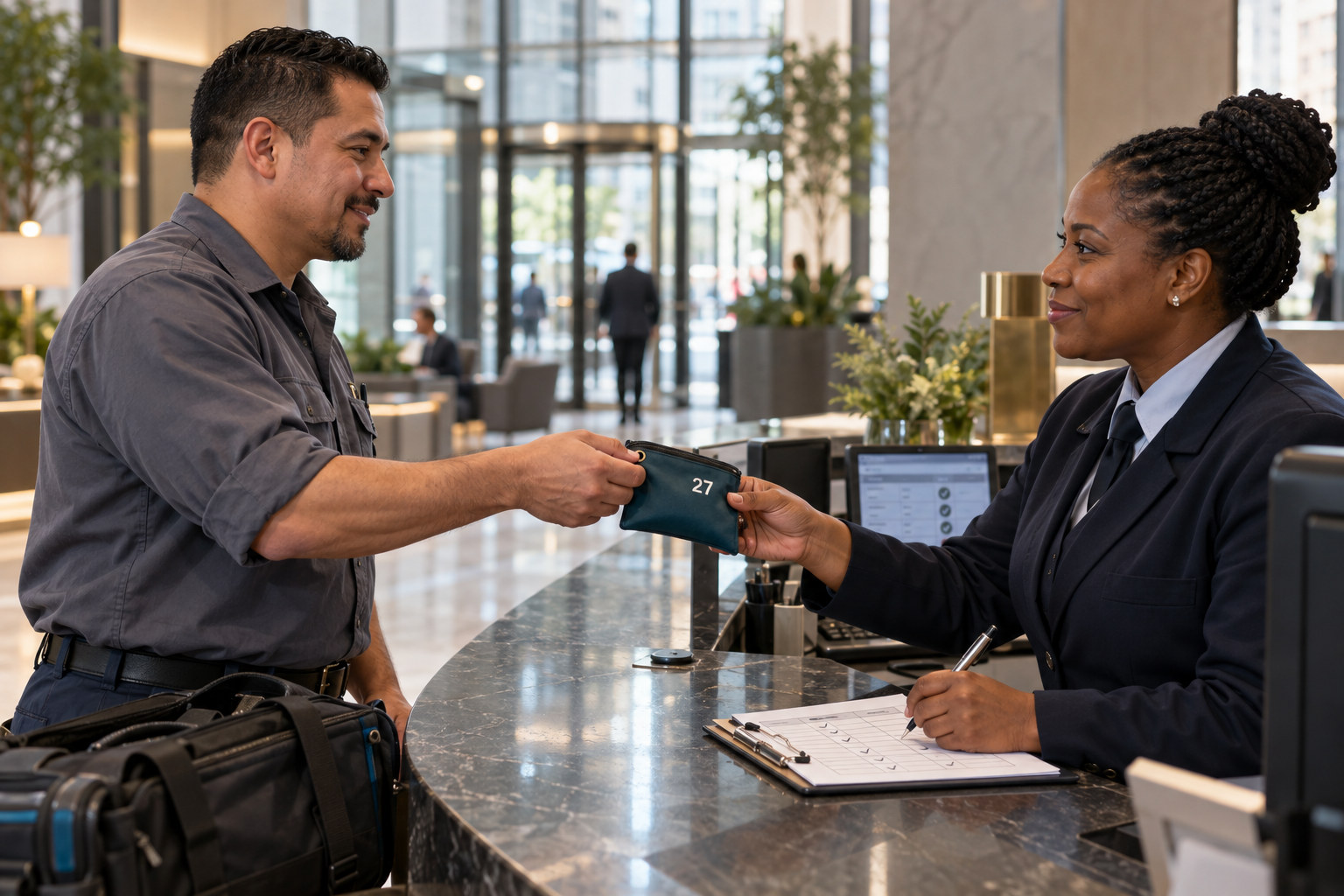
Use the existing contractor key checkout and return workflow where physical access items are issued. Record the authorized recipient and return expectation. Do not publish sensitive access details on an occupant notice or put access codes in a general work-status message.
The desk arrival record
- Expected company and work reference.
- Arrival time and building representative notified.
- Any difference from the approved visit.
- Management decision and time received.
- Access items issued under the established procedure.
- Departure, unresolved access items and handoff owner.
Keep technical work outside the security role
Do not reset a controller, remove a lockout or barrier, enter a shaft or machinery area, or operate equipment on a contractor's casual request. Refer such requests to the building representative and authorized technical personnel. The desk's coordination role should remain clear even when the contractor is under schedule pressure.
If the crew reports that another car or floor will be affected, log the report and contact management. The outage brief and occupant communications may need revision. Staff should not expand a public announcement from incomplete technical language or tell occupants that every elevator is unavailable without confirmation.
Record milestones without translating them into guarantees
Useful milestones include crew arrival, management acknowledgement, a revised estimate received and departure. Keep those facts separate from technical testing, inspection or release decisions. A worker saying the repair is finished may still be describing a stage before the building can announce ordinary service.
Ask the responsible building representative for the current approved instruction. Use the status-notice process to keep the desk and occupants aligned. When the work finishes, follow the return-to-service handoff rather than treating a signed visitor log as closure.

Review exceptions after the visit
Check whether the planned contact was reachable, the work reference matched and issued access items were accounted for. Escalate unresolved items through the normal process. If an unexpected access request was legitimate, management can update the next visit's brief; if it was not approved, record the decision without speculation about motives.
These observations improve future coordination while leaving engineering judgments with qualified personnel. Guardian's security services can be discussed in terms of site-specific access procedures and supervision, without implying that a guard assignment replaces elevator maintenance expertise.