

The weakest point in a contractor key loan is often the last five minutes. Work is finished, the site contact has left, and a different worker drops a pouch at the desk. A rushed “returned” entry can conceal a missing key or leave an electronic permission active beyond the approved job.
A practical NYC property procedure treats temporary access as a complete transaction: authorization, issue, custody, return, and verified closure. Use this workflow alongside the broader key and credential control program. The examples below are operating recommendations, not a claim that one form satisfies every building's obligations.
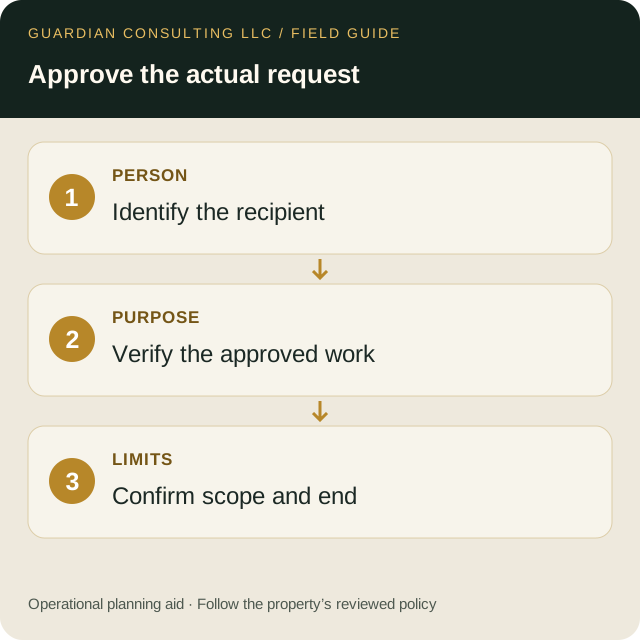
Confirm the specific authorization before issue
Identify the person receiving the credential, the sponsoring company or tenant, the approved work reference, the permitted access, and the start and end conditions. Use the contact route already established by the property. A name on a work order should not automatically authorize access to every service area.
When the request differs from the approved scope, stop the issue step and seek the appropriate decision. Examples include a new worker, a different door group, or work continuing beyond the original time. The desk should be able to explain who can approve a change and how the decision will be recorded.
NIST SP 800-53 PE-2 and PE-3 provide a framework for verifying physical access authorization and securing keys and other physical access devices. The property must adapt the framework to its own systems and responsibilities. It does not make the lobby officer a technical access administrator or substitute for a work permit where one is required.
Create a custody record that can be reconciled
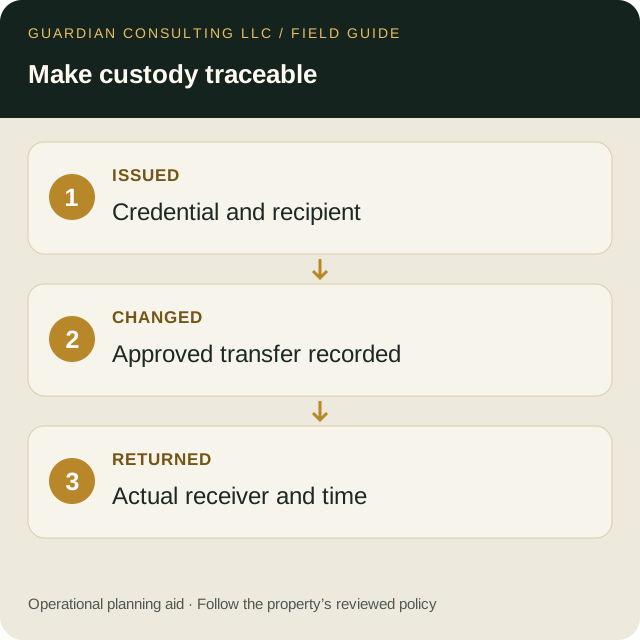
Use an internal credential or sealed-pouch identifier and record the authorized recipient, issuer, issue time, expected return condition, and exception contact. The record should make it possible to determine who has the item now. Avoid labels that reveal detailed master-key capability to anyone who finds the key.
Explain whether transfer to another person is permitted. If it is, specify the approval and recording process. Keep the original holder as the last authorized custodian. Record any reported transfer or change in actual possession as a separate event, distinguish confirmed facts from reports, and flag any unauthorized transfer until it is resolved. A team change should not be handled by silently replacing the name on the original issue entry.
- Match the actual item to its register entry before handing it over.
- Explain the approved return point and what to do if it is closed.
- Keep contact information limited to what the task requires.
- Record permitted changes as new events so the history remains understandable.
The FTC's business data-security guidance recommends collecting only information needed for a legitimate purpose and controlling access to it. Do not add ID photocopies, personal documents, or unrelated information to a loan record simply because the form has space.
Define the overdue handoff before the loan becomes overdue
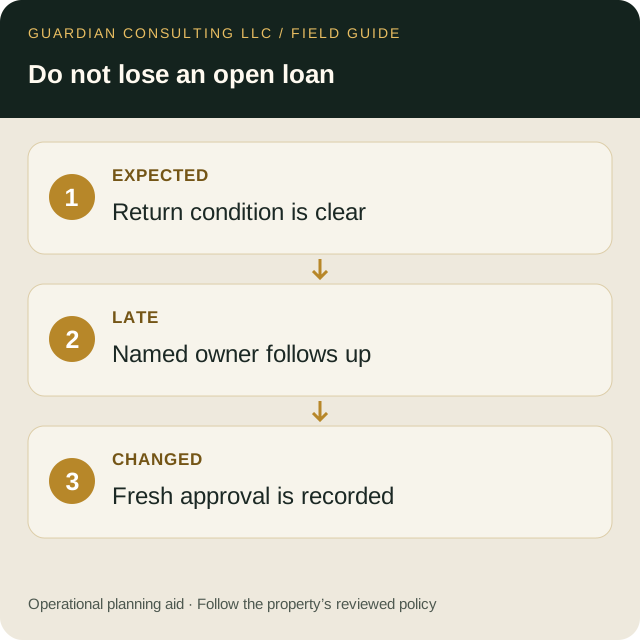
The outgoing shift should identify open loans, expected return conditions, pending approvals, and the person responsible for follow-up. “Vendor still here” is too vague if several teams have access. Use the credential identifier and approved work reference, while keeping sensitive access details in the restricted register.
When a return is late, use the property's escalation process. Confirm the current work status with an authorized contact, record attempts to reach the holder, and obtain a decision about continued access. Do not erase the original due time or imply that an unanswered call grants an extension.
A missing high-access key is more than an overdue administrative task. Route it to the missing master-key response workflow when the facts warrant that escalation. Staff should not wait until the next scheduled review to report a potentially consequential loss.
Verify the return, then close the permission
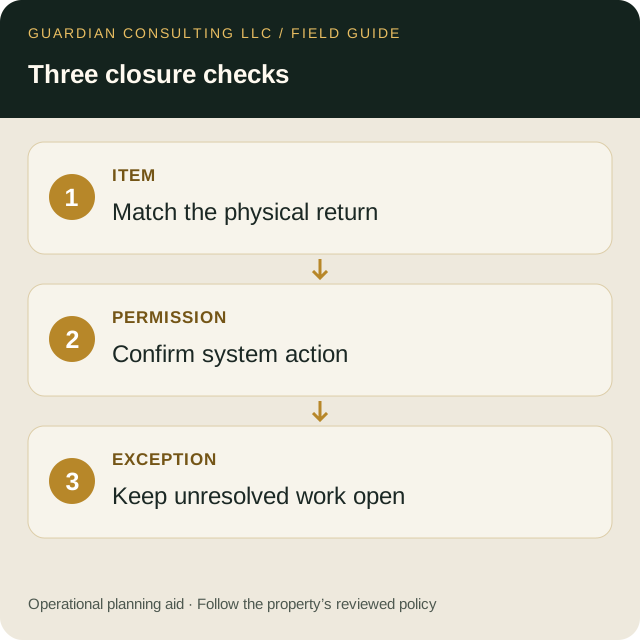
At handback, compare the returned item with the issue record using the property's approved identification process. Record who returned it, who accepted it, the time, and any discrepancy. If the returner differs from the recorded holder, preserve that fact and resolve the custody history rather than assuming it was an authorized transfer.
For a pouch containing multiple items, follow the approved check that establishes the expected contents without exposing sensitive key details. A pouch on the desk is not proof that every issued item is inside. If electronic access was part of the loan, the authorized operator should confirm the required expiry or revocation action separately.
| Final check | What the record should show |
|---|---|
| Physical item | Matched return or clearly assigned discrepancy |
| Custody | Actual returner and receiving staff member |
| Permission | Applicable system action and confirmation |
| Exception | Owner, decision, and next check if unresolved |
Learn from exceptions without losing the history
Review repeated late returns, unapproved transfers, mismatched items, and missing sponsor contacts. The useful question is which part of the process failed in practice. Changing a form will not help if no one is assigned to review open loans at the shift boundary.
Use the periodic access review to sample completed loans and still-open items. A closed record should be supported by evidence; an unresolved item should remain visible to its owner. That gives property management a more reliable picture than a daily count of how many keys left the cabinet.