A missing master key creates two immediate questions: what access could be affected, and who has authority to decide the response? The front desk may know when the key was last signed out. The access-system owner may hold the restricted access hierarchy. The property manager must bring those facts together without spreading sensitive details or waiting for a perfect reconstruction.
This guide is an escalation and documentation workflow for NYC property and hotel teams. It belongs within a reviewed key and credential control program. It does not provide instructions for defeating a lock, testing unauthorized access, or selecting a rekey design.
Record what is known without guessing
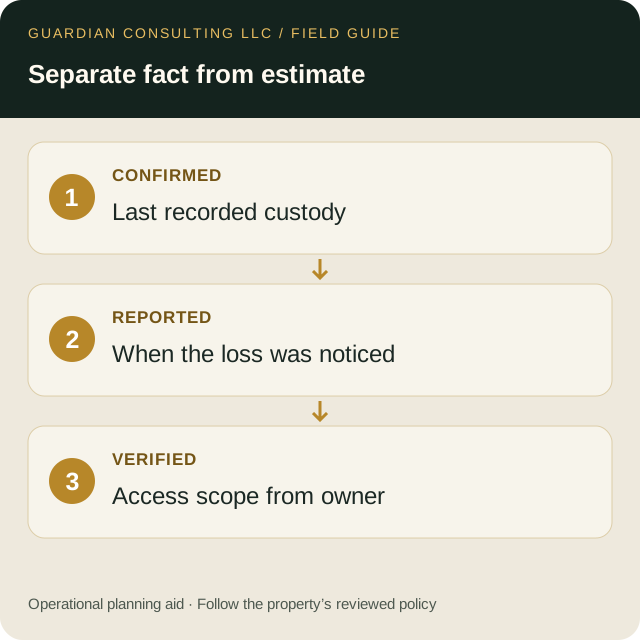
Open an incident record promptly under the property's procedure. Capture the internal key identifier, reporter, time the loss was noticed, last confirmed holder and handover, and the difference between confirmed facts and an estimate. “Last signed out at 08:10” is different from “probably lost after lunch.” Both may matter, but they should not be written as equally certain.
Use restricted records to establish the access scope. A key described casually as “the master” may have a narrower or broader function than the reporter believes. Record who verified the scope and where the authoritative information is held. Do not put key-cut photographs, duplication details, or a complete door list into a general shift email.
- Preserve the original issue and return entries.
- Record each transfer of custody that can be confirmed.
- Identify any associated electronic credential separately.
- Route sensitive scope details only to people who need them for the response.
Escalate to the people who can decide
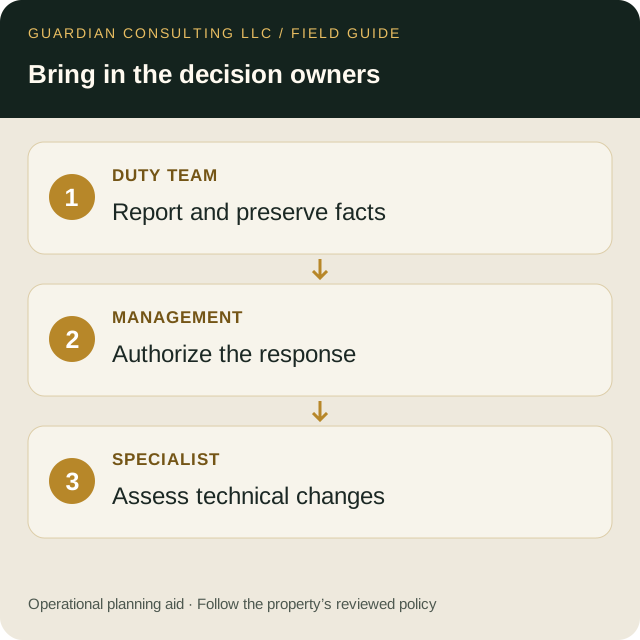
The contact chain should name the duty manager, security supervisor, access-system owner, and qualified locksmith or service provider as relevant. An on-duty officer can report and follow approved protective measures; they should not have to decide a building-wide hardware change alone.
NIST SP 800-53 PE-3 identifies lost keys and compromised combinations among triggers for changing keys or combinations within its control framework. It does not tell this property which cylinders to change or establish a universal deadline for every NYC building. The authorized team must assess the actual credential, access exposure, occupancy, and existing requirements.
If there are signs of intrusion, threats, or an emergency, follow the property's emergency procedure and contact emergency services as appropriate. A routine lost-key form must not delay urgent action. If there is no immediate emergency, document the decision owner and next review time rather than leaving the report as an unassigned note.
Separate temporary measures from the permanent decision
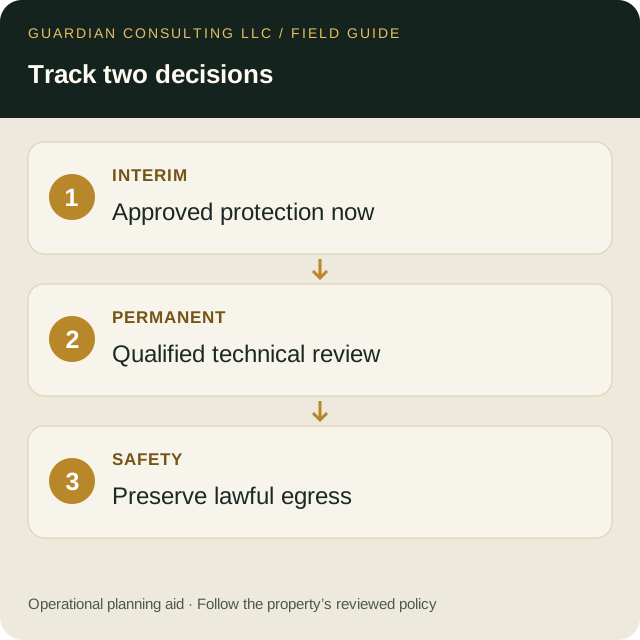
Management may need interim coverage or restricted handling of affected areas while the technical assessment proceeds. Use only measures approved for the site. Record what was authorized, by whom, when it began, and what condition will end it. A temporary measure should not quietly become the permanent solution because the original report was forgotten.
Any proposed change to a door or its controls needs review for egress, accessibility, emergency access, and occupancy-specific requirements. NYC Building Code Chapter 10 governs means of egress and contains detailed door provisions. Staff should not add improvised locks, obstruct an exit, or disable a safety function to compensate for the missing key.
For an electronic credential, the authorized system operator can determine the applicable suspension or revocation action and confirm its result. For a physical key, a badge-system screen cannot establish that the physical exposure has ended. Keep these workstreams distinct in the incident record.
Keep a decision log that survives the shift change
The next shift needs an operational summary, not the entire investigation. Include the incident reference, current status, approved instructions, responsible contact, and next check. Preserve sensitive supporting material in its designated location. If a decision is pending, name who is expected to make it.
| Open question | Assigned owner | Closure evidence |
|---|---|---|
| What access is affected? | Authorized system or key-record owner | Verified scope reference |
| What interim measures apply? | Property decision-maker | Approved instruction and review time |
| What technical change is needed? | Qualified provider with management | Documented recommendation and authorization |
| Did the approved action occur? | Responsible operator and reviewer | Completion record and approved verification |
Use the contractor loan-key process when the missing key originated in a temporary issue. Keep the custody discrepancy visible even if a replacement was supplied to finish essential work.
Close the incident on evidence
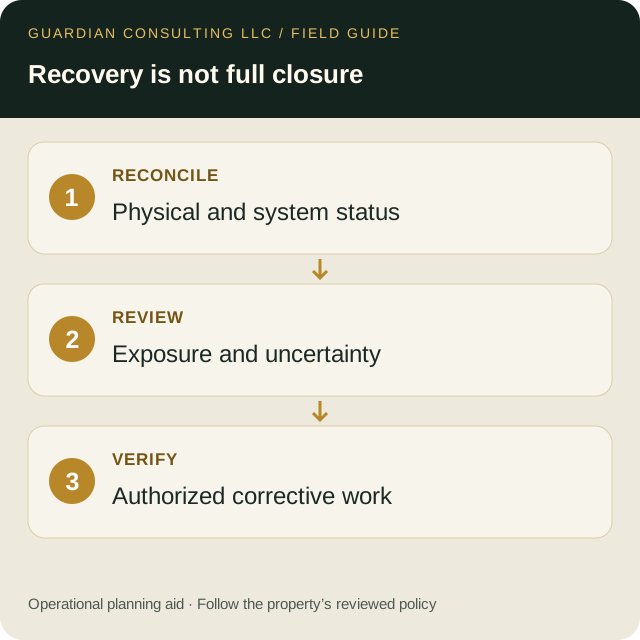
Before closure, reconcile physical recovery, electronic permissions if relevant, the technical recommendation, authorized work, verification, and any remaining uncertainty. Record who accepted any residual risk under the property's governance and within applicable legal and contractual requirements. Management approval cannot waive those requirements. Do not label a locksmith visit, a recovered pouch, or a completed form as a blanket compliance certificate.
Then correct the contributing process gap. That may be a confusing key identifier, an unrecorded transfer, a weak overdue-return escalation, or an outdated contact list. Use the access-review worksheet to check whether the same problem appears elsewhere. The purpose is to make the next discrepancy easier to detect and resolve, without claiming that every future loss can be prevented.