

A property can account for every guard on a roster and still be unable to explain who holds a key that opens several floors. Physical keys, employee badges, contractor credentials, and hotel room keys move through different hands and systems. The risk appears where those records stop agreeing: an assignment ends, a loan runs past its return time, or a replacement is issued without resolving the original credential.
For NYC property and hotel managers, a useful key-control program connects authorization, custody, system status, and follow-through. It answers a small set of questions with evidence: who approved access, what was issued, what it permits, when it should end, and who verified the final state. This guide provides an operating framework to adapt with management, the access-system owner, and qualified security and life-safety professionals.
- Name one accountable owner for the program and a backup for each shift.
- Separate the person approving access from the person handing over a credential where staffing allows.
- Track unresolved keys, permissions, and exceptions through to verified closure.
For a wider review of the building, start with the corporate physical security assessment checklist. This guide focuses specifically on operating the key and credential lifecycle after the access risks and responsibilities have been identified.
Start with the access decision
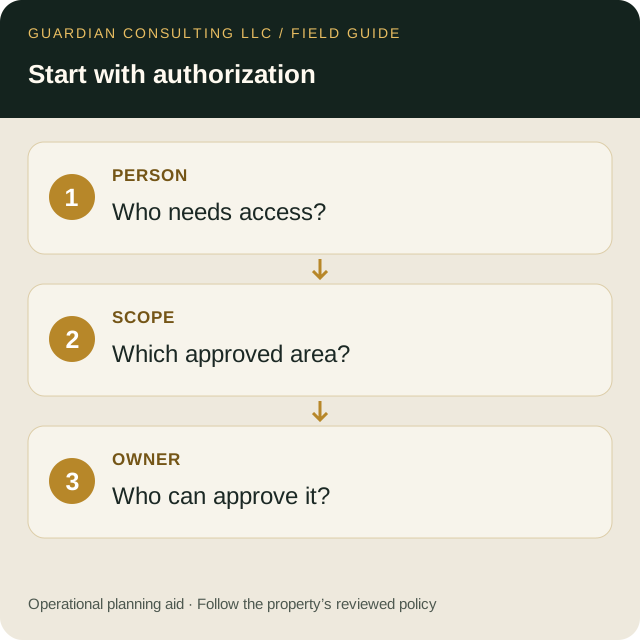
Before choosing a cabinet or a form, define who may authorize each category of access. A tenant representative might approve a visitor to that tenant's space but lack authority to approve a mechanical-room key. A hotel's guest-registration record may support a room-key decision while a contractor work order supports a different, limited access request. The desk needs the appropriate approval route for each situation.
Record the authorized person or role, permitted area, purpose, start and end conditions, and approving role. Avoid an informal rule that a familiar face always gets the same key. Familiarity can help staff recognize a person; it does not establish that a former assignment remains current.
NIST SP 800-53, controls PE-2 and PE-3, offers a useful reference for authorized-person lists, physical access controls, key security, and inventories. It is a security-control framework, not a standalone NYC hotel or building mandate. Its organization-defined frequencies and timeframes must be set through the property's own requirements and risk decisions.
Keep four records connected
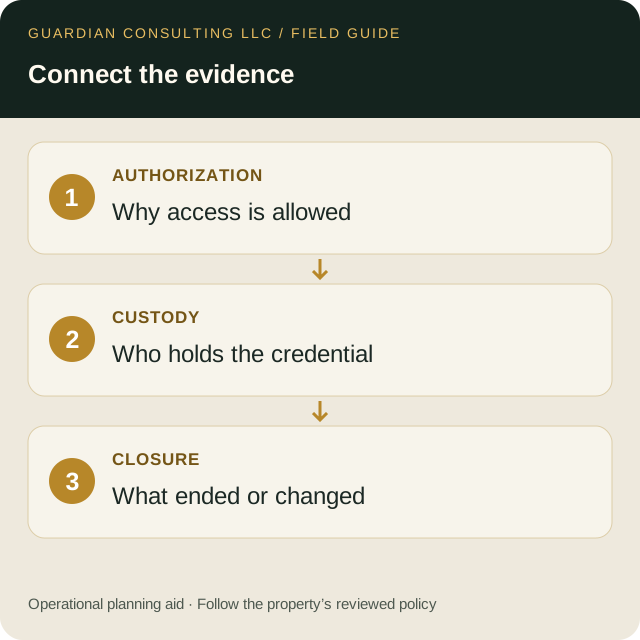
The authorization record explains why access is allowed. The credential register identifies the key, badge, or other device. The custody record identifies the current holder. The system or closure record shows what actually happened to the permission. A single tool can hold all four, but staff should be able to distinguish them.
Use an internal credential identifier rather than placing a detailed access map on a key tag. Keep sensitive door groupings and master-key details in restricted records. Assign a designated custodian for secure key storage, specify who may enter that storage, and require an authorized, recorded decision before additional copies or replacements are issued. The public-facing handover receipt needs enough information to identify the loan without exposing the building's access design.
| Record | Question it answers | Evidence to retain under policy |
|---|---|---|
| Authorization | Why is this person entitled to access? | Approval, scope, end condition |
| Credential | What exact device was issued? | Internal identifier and controlled classification |
| Custody | Who has it now? | Issue, transfer, and return acknowledgment |
| Closure or change | Does actual access match the current authorization? | Return, replacement or change evidence; unresolved-item decision |
This distinction helps at shift changes. “Contractor completed work” is an activity update. It is not evidence that the loaned key came back or that the temporary badge expired correctly.
Make temporary access expire operationally
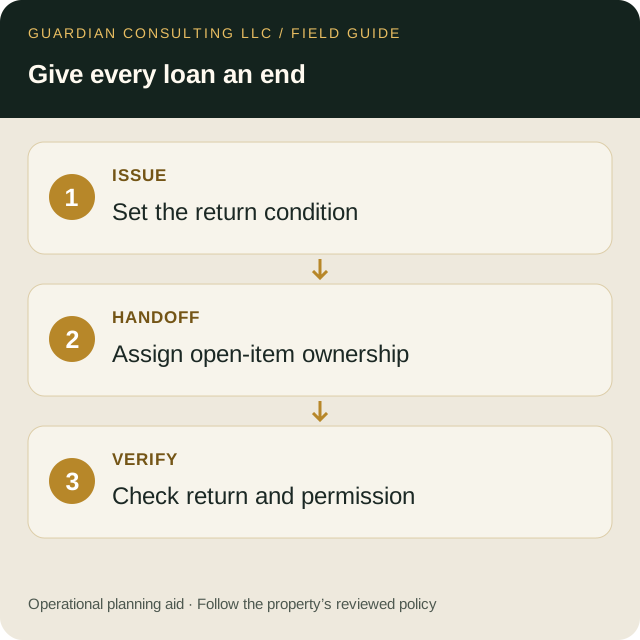
A temporary credential needs an owner who will notice if it remains open. Set the approved return or expiry condition when issuing it. If work changes, obtain a fresh decision from the appropriate approver instead of silently extending the original permission.
The contractor key checkout and return workflow follows one loan from approval to physical return. It includes the awkward cases: another employee returns the pouch, the authorized contact is unavailable, and the work continues after the expected handback. These are custody exceptions to resolve, not reasons to erase the original record.
Electronic expiry can be helpful, but it is not a substitute for checking the result. A badge with a scheduled end and a metal key on the same ring require different closure evidence. Test the access-system behavior using an approved test process, not by asking staff to try entry into sensitive areas without authorization.
Connect access to people and assignment changes
A person can remain employed while moving to a role that no longer requires the same access. A contractor can finish a project while their company still works elsewhere in the building. Define triggers for changed roles, temporary leave arrangements where applicable, contractor completion, and departure as well as lost credentials.
The offboarding access checklist explains how to coordinate the authorized effective time, credential return, system changes, and independent confirmation. Keep employment details restricted. Security generally needs the identity, relevant permissions, approved timing, and escalation contact, not the underlying personnel narrative.
Hotel guest replacements call for a separate desk procedure. The replacement room-key guide focuses on current entitlement, private verification, and escalation when the usual evidence is unavailable. It should not be folded into a general “lost employee badge” form.
Treat a missing high-access key as an unresolved exposure
A missing master or other high-access key requires prompt escalation under the property's incident procedure. Management needs the credential identifier, last confirmed custody, time reported, access scope from restricted records, and actions already taken. Do not circulate a photograph that exposes key cuts or attach a full door map to a broad distribution list.
The missing master-key response guide separates immediate protective decisions from the technical assessment. An authorized access-system specialist or locksmith evaluates appropriate changes; the property coordinates the impact on occupants, responders, and operations. Recovering the original key later does not, by itself, answer whether exposure occurred.
Any proposed hardware, locking, or access-control change must preserve lawful egress and applicable accessibility and fire-safety requirements. NYC Building Code provisions contain occupancy-specific rules and exceptions. A desk team should escalate a concern, not improvise door modifications from an online article.
Review access with evidence
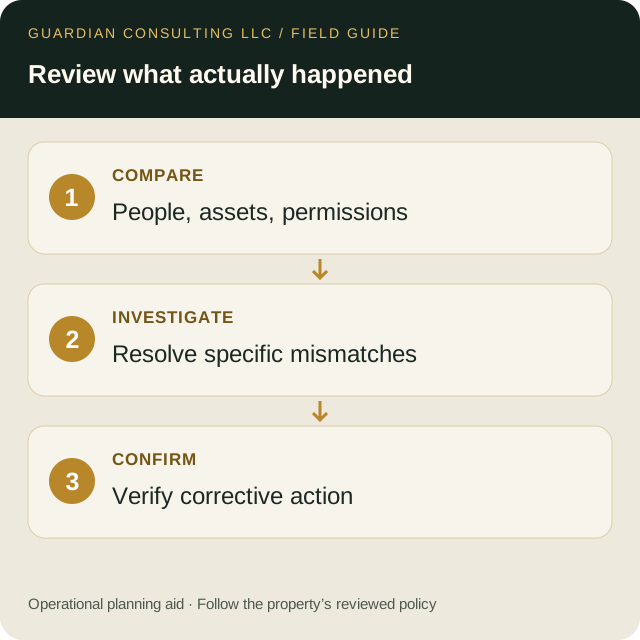
An access review is a reconciliation exercise. Compare current authorized roles with issued credentials, physical holdings, system permissions, and open exceptions. A clean spreadsheet is not proof that the devices and settings match it. NIST SP 800-53A describes assessment methods that combine records, interviews, and tests; it is useful as a model for checking evidence rather than accepting a statement of completion.
Use the periodic access-review worksheet to define scope, select samples, record exceptions, and verify corrections. Choose frequency based on the property's requirements, turnover, exposure, and observed problems. A high-change contractor area may need a different review rhythm from a stable staff office. This guide does not prescribe a legal monthly or quarterly interval.
Run a small pilot before broad rollout
Choose one manageable credential category, such as temporary vendor badges. Confirm the approver, register, handover point, return process, and exception owner. Follow several ordinary issues and returns, plus a fictional overdue-return exercise. Ask the incoming shift to explain every open item using the records alone.
- Can staff identify the current holder without searching personal messages?
- Does each temporary issue have an authorized end condition?
- Can the access-system owner confirm the current permission state?
- Does a discrepancy stay assigned until someone verifies the correction?
Keep the pilot's findings separate from a claim that the whole property is compliant. Guardian can help property teams assess the handoffs, post instructions, and supervision that make a key-control process usable day to day. Technical system changes and legal determinations remain with the appropriately qualified and authorized professionals.