

A guest asks for a replacement room key. They know a room number, are in a hurry, and say their identification is upstairs. The service task is straightforward; the authorization decision may not be. A useful desk procedure separates who the person is, whether they currently have permission for that room, and what the replacement does to existing credentials.
For NYC hotels, this guide is a recommended operating workflow to adapt to the property's brand standards, registration practices, installed lock system, accessibility arrangements, and management policy. It is part of the broader key and credential control program. It does not claim that NYC law prescribes one universal replacement-key identification method.
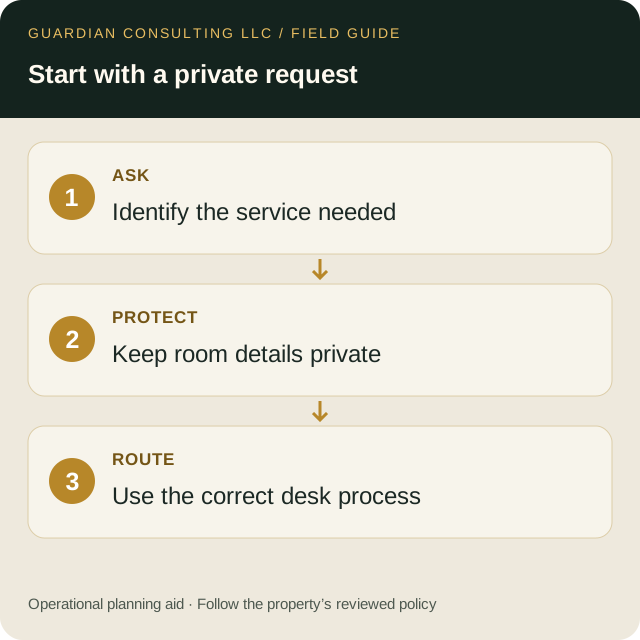
Keep the conversation private and specific
Ask for the information needed to locate the current stay through the hotel's normal process. Avoid announcing room numbers or displaying guest records to bystanders. A calm explanation of the next step helps preserve service while the desk completes the required checks.
Distinguish the task being requested. A guest who has forgotten a key, a person requesting access to another guest's room, and a registered guest changing phones may need different actions. Do not treat “we are together” as a complete authorization record. Escalate disputed or unclear entitlement through the hotel's approved management route.
Public hotel guidance illustrates why brand and system procedures matter. Hilton's Digital Key instructions say guests requesting a Digital Key may need an identification check at the front desk, and give a specific process for changing devices. Those are Hilton's instructions for its service, not a rule for every hotel's physical cards.
Confirm identity and current room entitlement
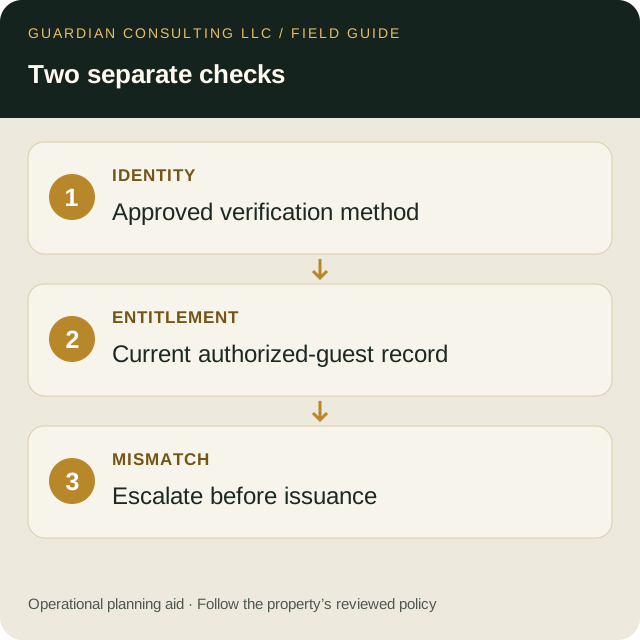
Follow the hotel's accepted identification and verification procedure, then compare the result with the current authorized-guest record. Identity alone does not establish entitlement to a particular room, and knowing details about a stay does not automatically establish identity.
The staff member needs a clear escalation route when the record is inconsistent, an added guest is not listed, or the requested access extends beyond the recorded entitlement. Only authorized staff should change the guest record or approve an exception. Preserve a factual account of the decision without including unrelated guest information.
- Confirm the current stay and authorized guest through approved records.
- Use the property's accepted verification method.
- Resolve a mismatch before issuing access through an exception process.
- Record who made an exception decision and its authorized scope.
The workflow should be usable across shifts. A night team needs a reachable supervisor or other approved decision-maker, not a policy that depends on someone who is only available during daytime office hours.
Provide an approved path when ordinary evidence is unavailable
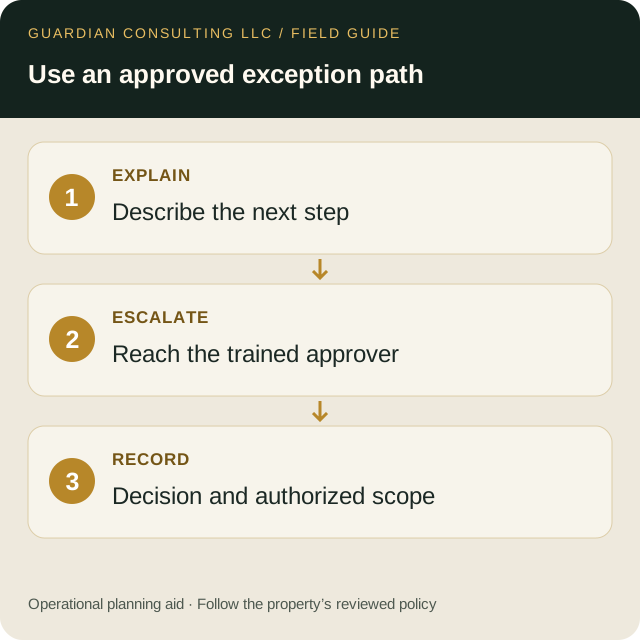
Missing identification should lead to the hotel's reviewed alternative-verification process. The desk should know which trained role may handle the exception, what evidence that role may use, and how the decision is recorded. Do not invent an alternative in the moment or provide a general instruction to let a person into the room first to retrieve evidence.
Where a guest needs an accessible communication method or assistance using an interface, apply the property's approved arrangements. Keep the verification purpose the same while using a suitable way to complete the interaction. The staff-assisted check-in guide discusses how to preserve authorization while changing the interaction method.
A medical emergency, immediate threat, or welfare concern needs the hotel's emergency procedure. It should not be handled as an ordinary replacement-card exception, and routine paperwork should not delay appropriate emergency contact.
Confirm what the replacement changes
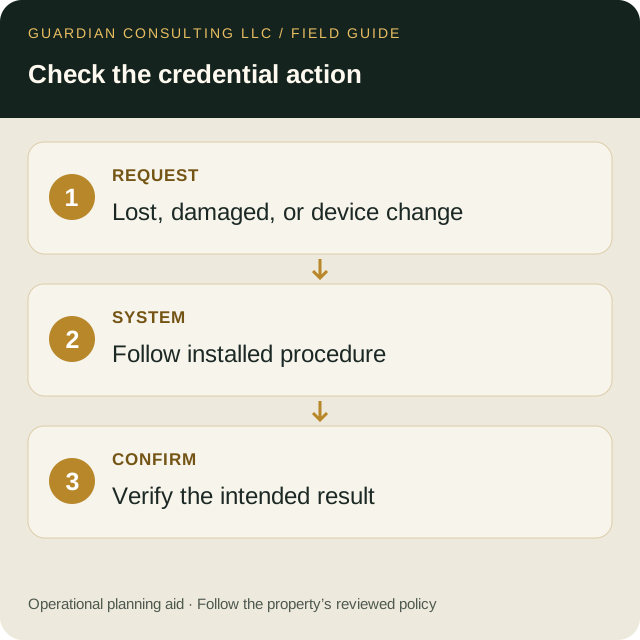
Different lock and mobile-key systems handle replacement, duplicate issuance, expiration, and revocation differently. Have the authorized operator follow the installed system's procedure and confirm the intended result. Do not promise that every old card stops working merely because a new one was issued.
Clarify whether the request concerns a misplaced key, a lost key, a damaged card, or a device change. The relevant system action and escalation may differ. If a lost credential may affect access beyond one guest room, route the report to the appropriate security and management process rather than treating it as a routine reprint.
| Decision | Evidence the desk needs |
|---|---|
| Identity | Approved verification completed or authorized alternative |
| Entitlement | Current guest record supports the requested room access |
| Credential action | Correct issue, replacement, or other approved system step |
| Exception | Decision-maker, scope, and necessary follow-up |
Staff should never try to solve a card problem by modifying door hardware or defeating a lock. Any proposed door or access-system change requires appropriately qualified review and must preserve applicable egress and life-safety requirements.
Record the outcome without creating an ID archive
Keep a concise record of the request category, staff member, verification outcome, authorized exception if any, and credential action, consistent with the hotel's policy. Do not routinely copy passports, retain full ID numbers, or add personal documents to a replacement-key log without an established legitimate need and reviewed safeguards.
The FTC's guide for businesses recommends minimizing personal information, limiting retention to what is needed, and protecting the information retained. It does not prescribe a universal retention period or a specific hotel replacement-key form.
Supervisors can review a sample of replacement transactions for unresolved entitlement questions, inconsistent exception handling, and missing confirmation of the credential action. Use the access-review guide to document the scope and evidence. The practical goal is a process that remains courteous, private, and accountable when the lobby is busy or the usual verification path is unavailable.