A tabletop can reveal whether a desk procedure is usable without asking a real visitor to experience its gaps. The purpose is to test the instructions and handoffs, not to simulate a disability or grade employees on medical knowledge.
This exercise is an original operational template for the accessible lobby security playbook. The scenarios are fictional. They do not describe Guardian clients or measured results. Review the exercise with property management and the person responsible for accessibility before using it.
- Use fictional appointment details and assigned roles.
- Ask participants to show the current instruction.
- Record an owner, due date, and repeat-test result for a correction.
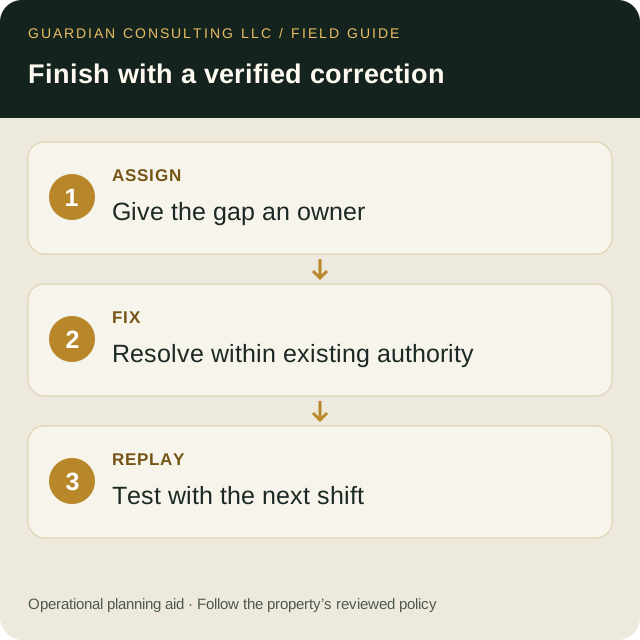
Set a narrow exercise boundary
Choose one entrance, one ordinary appointment type, and the current desk instructions. Use invented visitor names and host details. State that this is a routine-arrival exercise; if a participant introduces an emergency, pause and refer that issue to the separate approved emergency plan.
Assign a facilitator, a desk participant, a host-contact participant, and an observer. In a small team, one person can read the scenario and record observations while another explains the desk actions. No one needs to wear a blindfold, borrow a mobility aid, or imitate another person's speech or hearing.
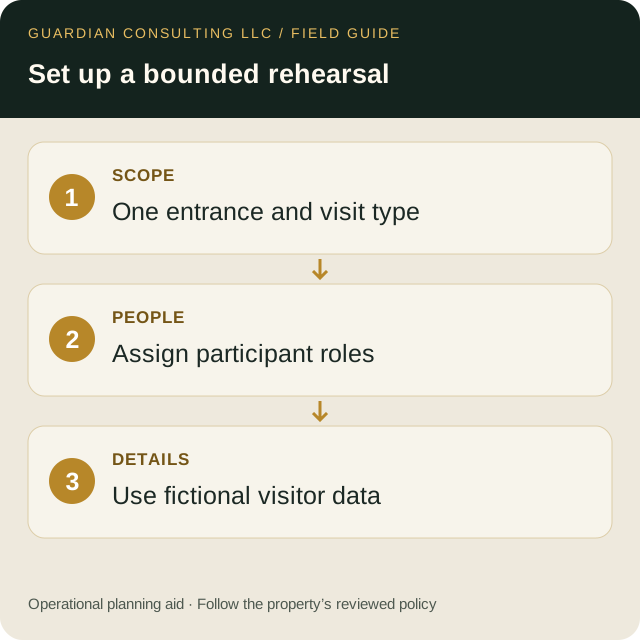
Scenario one: the interface is the obstacle
A visitor has a confirmed appointment but cannot complete the kiosk interaction. The host has not yet been contacted. Ask the desk participant to locate the approved staff-assisted process and explain how host authorization will still be obtained.
The observer records whether the participant identifies a usable alternative, collects only the necessary information, uses their own authorized staff access, and explains the next step. If the instructions are missing, the exercise has found a process gap. Use the kiosk fallback worksheet to assign the correction.
Scenario two: the conversation method changes
The fictional visitor asks to exchange the routine arrival details in writing. During the conversation, an issue arises that the current method does not resolve. Ask the participant to locate the contact who can arrange suitable assistance and explain what happens while that contact responds.
Watch for direct communication with the visitor, a clear description of the unresolved task, and a reachable escalation route. The exercise does not establish that writing is sufficient for every interaction. Review the communication guide and the property's approved arrangements before evaluating the response.
Scenario three: the published route is unavailable
The host's appointment message names the normal entrance, but a planned project has moved arrivals to an approved alternative. The incoming shift has an older desk card. Ask the participants to identify the authoritative instructions and the person who must reconcile the conflicting messages.
The successful outcome is a verified instruction and an accountable correction, not an improvised physical shortcut. Use the temporary entrance handoff to record the route owner, version, and restoration step.
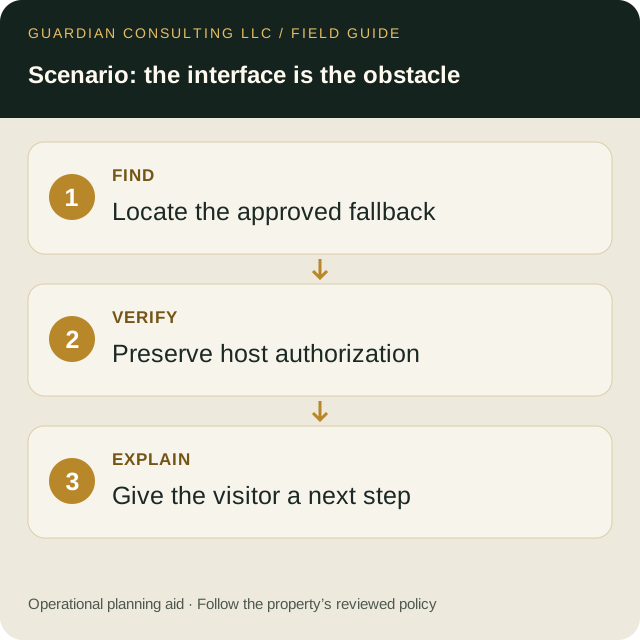
Score evidence, not confidence
| Observation | Record |
|---|---|
| Instruction located | Document title and current version |
| Decision made | Which approved step the participant selected |
| Contact reached | Correct role and tested contact route |
| Visitor next step | Clear instruction that can be acted on |
| Gap found | Missing instruction, resource, or ownership |
| Correction verified | Owner, due date, and repeat-test result |
A confident answer is not proof that a contact number works or that a route was approved. Ask participants to show the instruction or demonstrate the relevant lookup using test information. Avoid recording unnecessary personal details in the exercise notes.
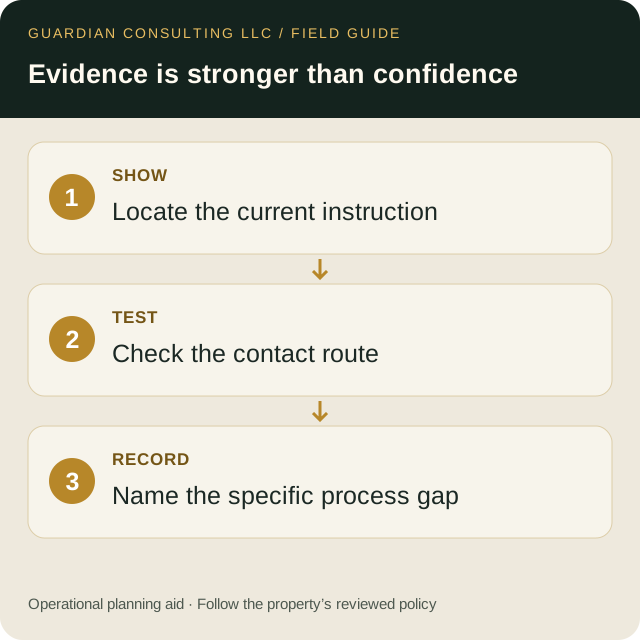
End with one tested correction
Choose the most consequential gap that the team can resolve with its existing authority. Update a contact card, reconcile a conflicting instruction, or obtain the missing management decision. Then replay that part of the scenario with the next shift.
Keep larger changes assigned to their owners instead of declaring the entire program complete. The main playbook provides the shared structure; this tabletop checks whether it survives the ordinary details of an actual arrival.