
A tabletop can reveal a gap in reception continuity without switching off a live system. Its value comes from asking staff to locate and explain the approved process, then recording where that process becomes unclear. It is not a penetration test, a surprise inspection of employees or proof that a building complies with every applicable requirement.
Use this exercise with the visitor-management outage plan. Keep live post coverage intact and agree the session with the responsible property team. Fictional visitors and sample forms are enough to test the decisions without exposing real visitor records.
Define a small service boundary
Choose one entrance, one visitor category and one failed function. For example, the appointment lookup is unavailable while the building telephone remains usable. Do not start with a scenario that simultaneously removes power, communications, doors and staff unless a qualified exercise lead has deliberately set that wider scope.
Assign a facilitator, a desk participant, a management decision owner and a note-taker. The facilitator supplies the scenario; the participant explains the actions using actual approved instructions. A missing instruction is a finding, not an invitation to invent a policy during the test.
Scenario one: the expected visitor arrives
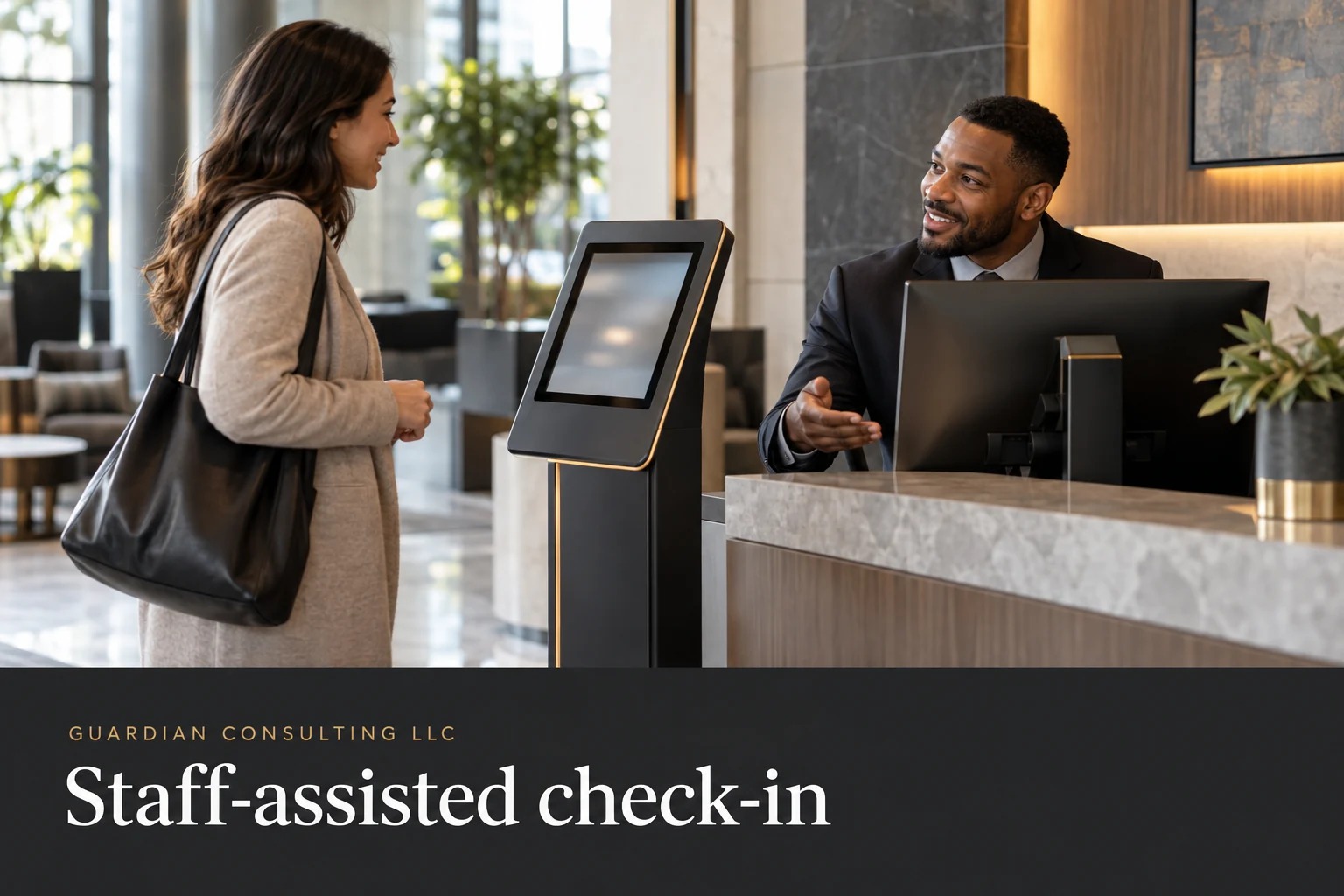
Describe a fictional visitor with a scheduled meeting and an invitation screenshot. Ask the participant to locate the downtime kit, identify who activates it and explain which approved contact route confirms the host. Observe whether appointment information is kept separate from permission to enter.
- Can the participant find the current instruction?
- Is the activation owner identifiable?
- Does the backup contact route depend on the failed system?
- Is the waiting process clear and respectful?
- Is the approval recorded without unnecessary personal data?
Use the host-approval guide to frame the decision questions. Score the availability and clarity of the process, not the participant’s ability to guess what management intended.

Scenario two: the host cannot be reached
Add a second fictional arrival whose host does not answer. Ask who can decide the next step and how the visitor receives an update. Then describe a request for assistance at check-in. The discussion should preserve the security objective while identifying an approved usable alternative.
Do not test staff by pretending to be a real visitor at a live entrance or by calling an actual tenant unexpectedly. Keep the exercise administrative. NYC Emergency Management’s business preparedness resources offer broader planning context for organizations coordinating their people and services.

Scenario three: the system returns mid-arrival
Tell participants that the technical team has restored appointment lookup, but notification status is still being checked. Ask who chooses the cutover point and what happens to the arrival already in progress. This tests whether “available” and “fully verified” are being treated as the same state.
Walk through the reconciliation guide using two fictional completed visits and one unknown departure. The participant should preserve uncertainty rather than insert an invented departure time to make a report look complete. Ask who receives the paper records at the end.

Review the record design
Complete a sample manual visitor log and give it to a different participant. Can that person distinguish an approved entry from a waiting visitor? Can they identify the receiving owner and the next action without seeing unrelated personal information?
The FTC’s Start with Security guidance supports examining what information is collected and who needs access. Apply that lens to the sample form. Remove unnecessary fields through the approved review process rather than adding more details whenever the exercise becomes confusing.
Finish with a bounded correction
Record each gap, the responsible owner, the approved corrective action and a target review date. Separate an instruction change from a technology change; the latter may need a different approval and provider. Do not mark an item complete because a meeting was held or a ticket was opened.
Repeat the affected step after the correction using a new fictional example. Keep a short record of what was demonstrated and what remains untested. Guardian Consulting’s security services provide a starting point for discussing property-team coordination, while the building retains responsibility for its own approved policies and technical systems.