
A visitor may have a genuine meeting and still arrive while the building cannot retrieve its current appointment list. The desk needs a calm way to establish permission without turning urgency, familiarity or a screenshot into an automatic exception. The aim is to preserve the property’s approval process while giving the visitor a clear explanation.
This workflow belongs within the visitor-management outage plan. It concerns office or hotel meeting visitors, not replacement hotel room keys, law-enforcement requests or emergency responders, which require their own established procedures.
Separate identity, appointment and permission
These are related but different questions. Identity checks follow the property’s approved policy. An invitation can help locate an intended appointment. Host permission establishes whether the visit may proceed under current instructions. A single piece of evidence should not silently answer all three questions.
Record the failed system function and tell the visitor which verification step is taking longer. Avoid technical speculation or disclosing internal security details. A practical explanation is that the desk is confirming the host through the building’s approved alternative process and will provide an update when that step is complete.

Use a trusted contact route
The fallback should identify a directory or contact source that management has approved and kept current. A number supplied at the desk by the visitor may be useful context, but it should not automatically replace an independently maintained route. If the approved directory cannot be reached, escalate to the named backup owner rather than improvising a new verification method.
- Identify the intended host or authorized tenant contact.
- Use the approved directory or backup route.
- Confirm the scope of the visit and any escort requirement.
- Record the decision and the approving role.
- Keep unresolved arrivals in the approved waiting process.
The downtime kit should make this route available before an outage. NYC Emergency Management’s business preparedness resources support planning responsibilities and coordination ahead of interruptions; the precise admission rules remain the property’s decision.

Handle an unreachable host consistently
Define who may authorize an exception and which situations require the visit to wait, be rescheduled or be declined under policy. A senior-sounding job title, repeated calls or an impatient queue should not create a new authority level. The officer should not be left to invent exceptions under pressure.
Give the visitor a realistic next step without promising an admission time. If a host responds through a route outside the approved process, ask the supervisor how to validate that response. Document what was received and what remained unverified. Do not label the visitor deceptive merely because the system or contact process failed.
Preserve access needs and safe waiting
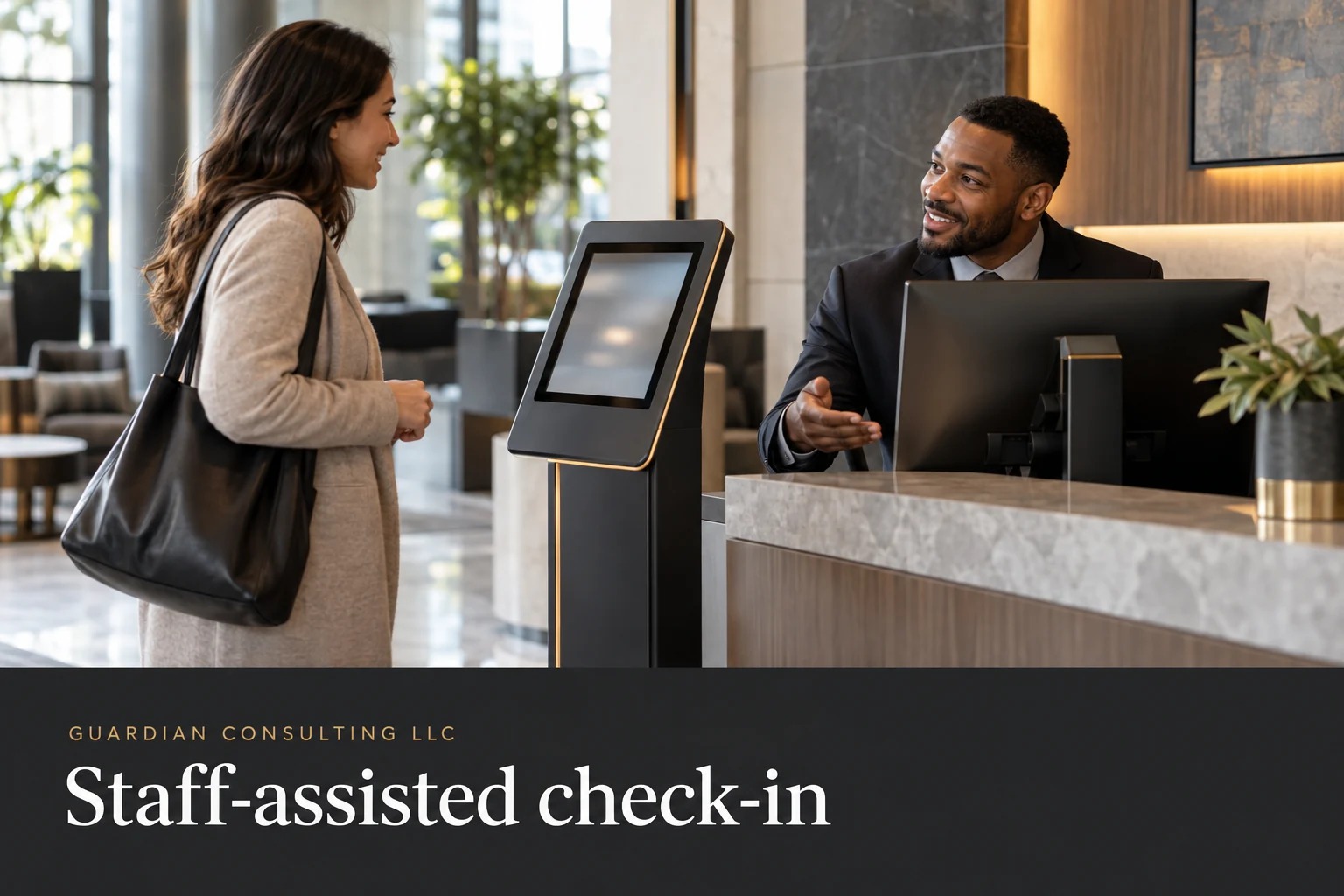
An unavailable kiosk should not be treated as evidence that a person cannot be served. Use the property’s approved staff-assisted check-in alternative, while preserving the same authorization objective. Ask what communication assistance is useful rather than assuming a preference.
Keep waiting arrangements within the building’s approved layout. Do not obstruct exit routes, move barriers into accessible paths or prop doors to make the queue easier. Any proposed change to the entrance arrangement needs the appropriate property review. The visitor-system outage does not replace fire-life-safety procedures.

Capture only the decision needed
In the temporary visitor record, identify the approval, time, staff member and relevant limitation. Do not include unrelated personal details from the host conversation. FTC information-protection guidance is a useful basis for reviewing unnecessary collection and access to records.
If a host authorizes an escorted visit, the handoff is not complete until the approved receiving person takes responsibility under the property’s process. A badge or handwritten pass alone does not establish that handoff. Record an unresolved escort as unresolved.
Carry the outcome into recovery
When the system returns, preserve the approval history through the reconciliation workflow. Do not retroactively mark every waiting visitor as admitted. Separate visitors who entered, left before approval or were redirected. That distinction makes the outage record useful to the next shift and the later review.