
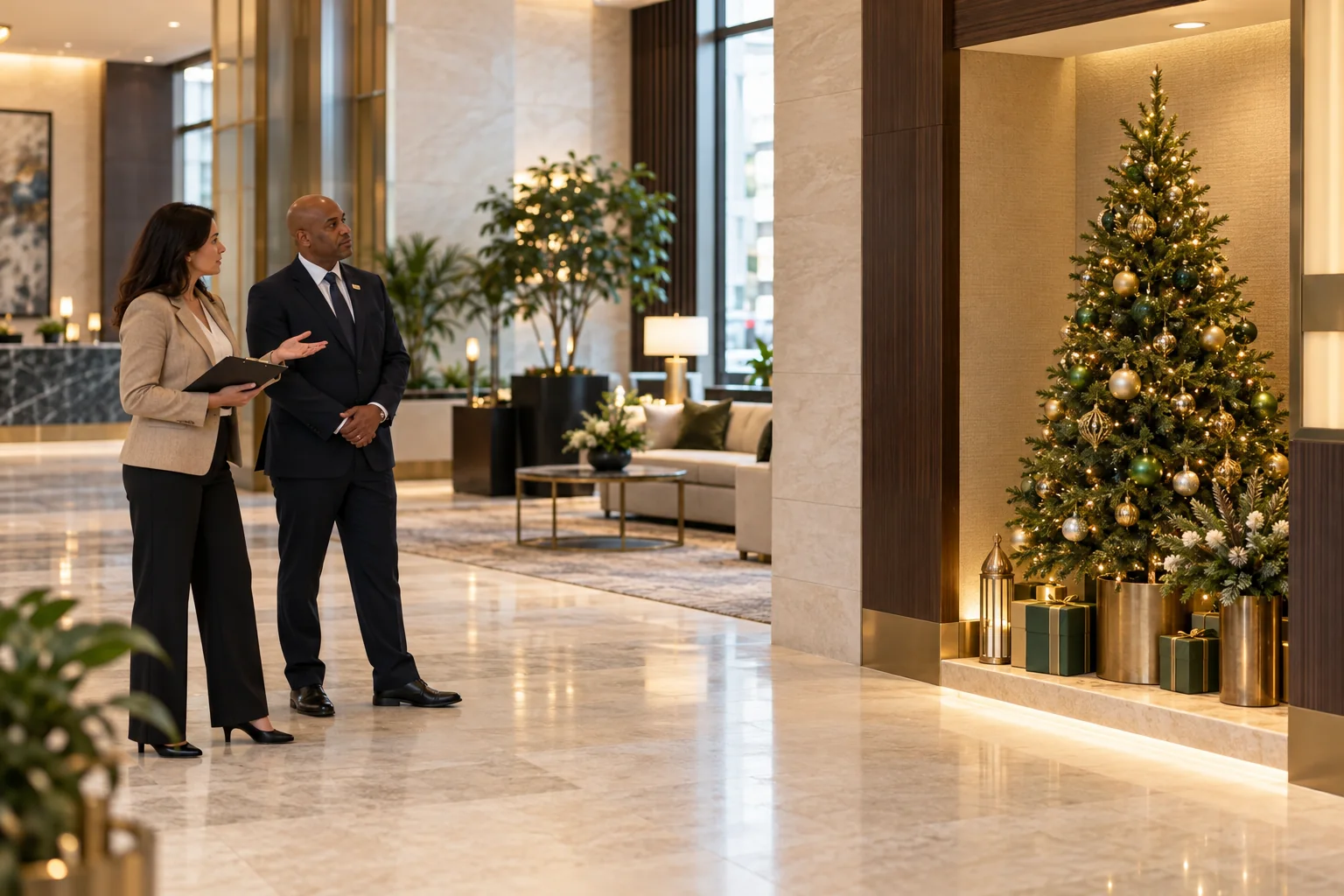
A seasonal display changes a lobby's operating conditions, not just its appearance. Installers arrive, furniture moves, electrical equipment is introduced and visitors may gather for photographs. For NYC hotel and property managers, the useful question is not whether the display looks finished. It is whether the people responsible for the space have agreed how it will be installed, used, checked and removed.
This guide proposes a coordination process for ordinary indoor seasonal displays. It is not a design approval, fire-code interpretation or electrical inspection. Larger installations, events, open flames, special effects and work affecting building systems need separate review by the appropriate qualified professionals and authorities.
Start with the display, not the delivery date
Create one record for the proposed display. Include the exact location, dimensions, materials, powered components, installer, delivery window and planned removal date. Name a property-side decision-maker who can approve changes. A vendor booking and an invoice do not establish that a particular installation is suitable for a particular lobby.
Ask the facilities and fire-life-safety team to review the actual proposal before it reaches the security desk. Where the building has a Fire & Life Safety Director, include that role within its established responsibilities. Do not assign a guard the job of determining material acceptability or calculating electrical capacity.
For a practical document list, use the seasonal display approval packet. Keep the accepted version available to the people admitting the installer, rather than circulating several conflicting email attachments.

Review the space as people actually use it
A display footprint includes its base, protective barrier, power arrangement and the people who stop around it. Walk the proposed location during an ordinary busy period. Consider reception queues, accessible circulation, doors, signs and access to safety equipment. A photograph taken in an empty lobby may hide a conflict that appears during check-in.
The FDNY's current Fire Code collection includes separate chapters on decorations and means of egress. Its December 15, 2025 Christmas-tree reminder states that trees displayed in indoor common areas, including hotel, residential and office lobbies, must be artificial and flame resistant. Do not transfer a private-home decorating practice into a shared lobby without review.
Use the display-layout review to turn the chosen location into a usable operational boundary. This does not replace an applicable code analysis.
Make arrival and installation two separate decisions
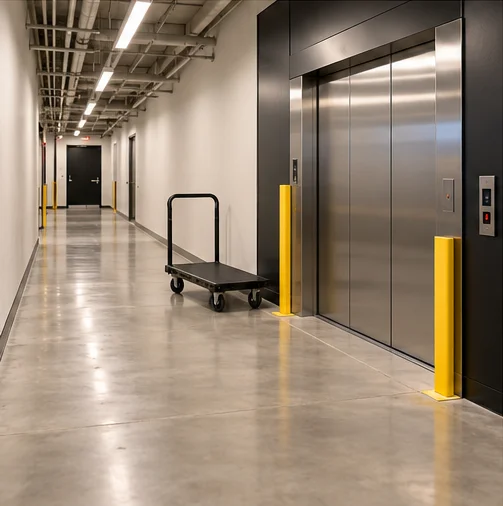
Security can verify that a scheduled vendor has arrived and contact the approved property representative. That is different from authorizing installation, a substitute product or a change of location. If the delivered item differs from the accepted record, refer the difference to the decision-maker before work proceeds.
- Confirm the named property contact is reachable during the work window.
- Identify the approved delivery route and temporary staging location.
- Agree how packaging will leave the public area.
- Record who accepts the completed installation and who can authorize changes.
- Set an escalation route for an unexpected obstruction or unsafe condition.
The installer access brief separates desk verification from technical supervision. Arrival, setup and acceptance should not collapse into a single “vendor done” entry.

Keep the display under observation
After acceptance, assign a simple condition-check routine appropriate to the location. Look for changes: a base moved into circulation, packaging left behind, a cord displaced, a newly obscured sign or an unstable-looking component. Record what is visible and refer it to the responsible team. Do not move a heavy installation or handle damaged electrical equipment to make the checklist look complete.
The electrical-condition observation guide explains how to report concerns without diagnosing them. Keep unresolved items visible at shift change, including the person contacted and the next agreed update.
Plan removal before the display opens
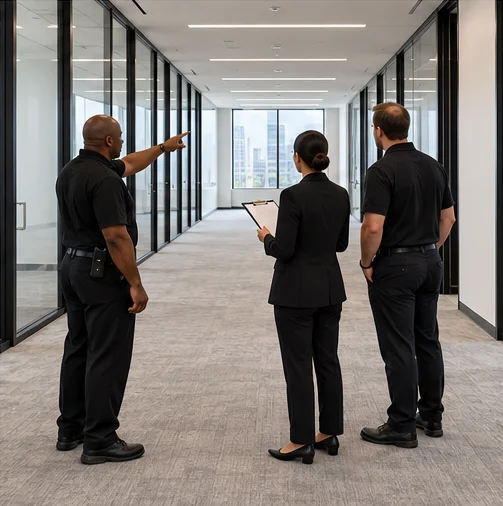
Name the removal owner and reserve the return visit. Include packing waste, temporary barriers, floor protection and any facilities work needed afterward. Removal is complete only when the property has accepted the restored space, not merely when the vendor's truck leaves.
Use the display removal and restoration checklist to close the record. Retain the final accepted arrangement and operational lessons so the next season starts with verified information, not an old assumption.
Manager's completion check
- Proposal and material information reviewed by the appropriate building team.
- Location and circulation reviewed for the actual operating conditions.
- Installer brief issued with a reachable decision-maker.
- Condition observations assigned with an escalation path.
- Removal and restoration responsibilities recorded.
Guardian Consulting's security services include security guards, fire watch and Fire & Life Safety Directors where appropriate. A property-specific discussion should define the role of each service rather than treating a decorative display as an automatic staffing requirement.