
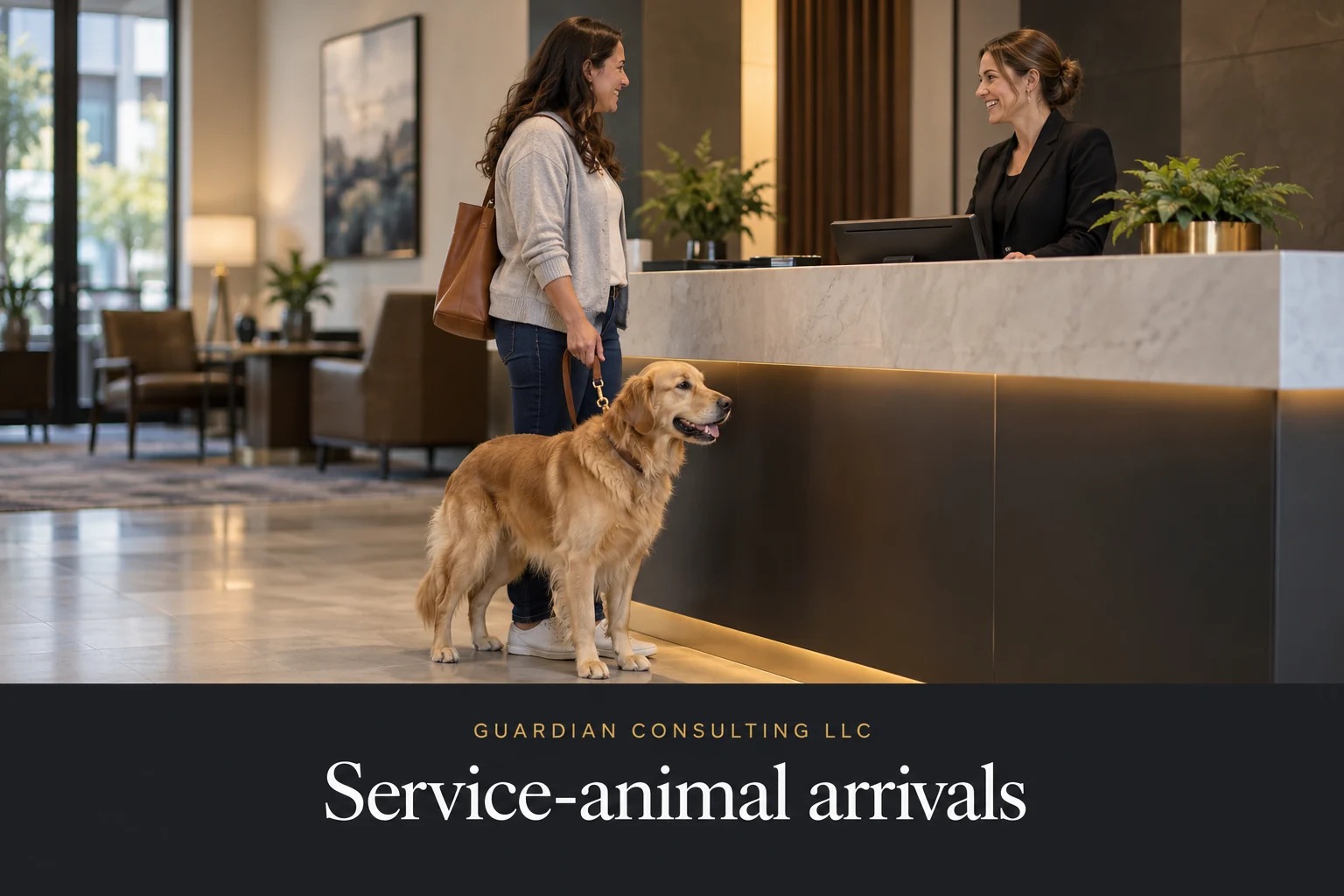
A desk employee sees a visitor arriving with a dog and needs to apply the building's instructions. A general no-pets notice does not provide enough guidance. Property management should give staff a reviewed service-animal procedure that fits the facility and the activity taking place there.
This guide addresses public-facing settings covered by the ADA, as described in federal guidance. It is not a housing accommodation guide. Residential and mixed-use properties should obtain qualified advice about the rules applying to each situation rather than copy a public-accommodation checklist into every resident interaction. Connect this review to the accessible lobby security playbook.
- Confirm the policy scope before using the desk card.
- Keep appointment authorization separate from the animal question.
- Use reviewed wording and the designated management contact.
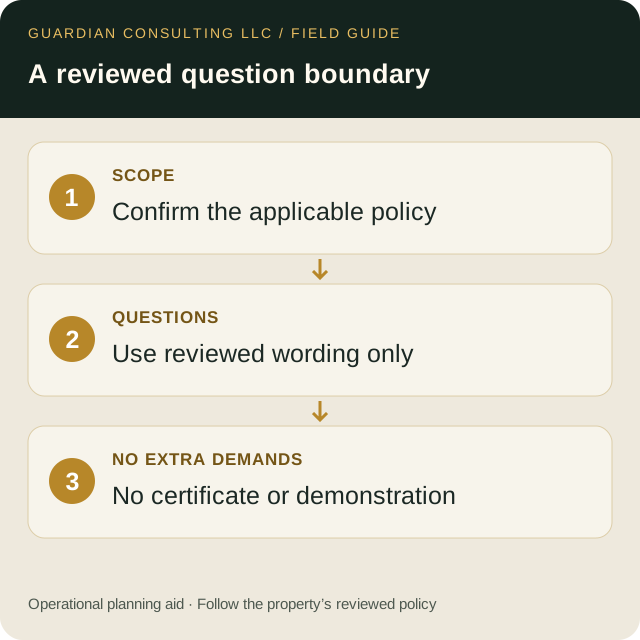
Give staff a precise, reviewed question boundary
DOJ says that when the service an animal provides is not apparent, staff may ask whether the dog is required because of a disability and what work or task it has been trained to perform. They may not ask about the person's disability, require medical documentation or service-animal certification, or require a demonstration. If the role is apparent, do not ask the two questions as a routine extra checkpoint. Read the DOJ service-animal FAQ when preparing the site's policy.
Put the reviewed wording and escalation contact on a card. The objective is consistency: an employee should not add a certificate requirement because a previous visitor happened to carry a card or because an online seller advertises registration documents.
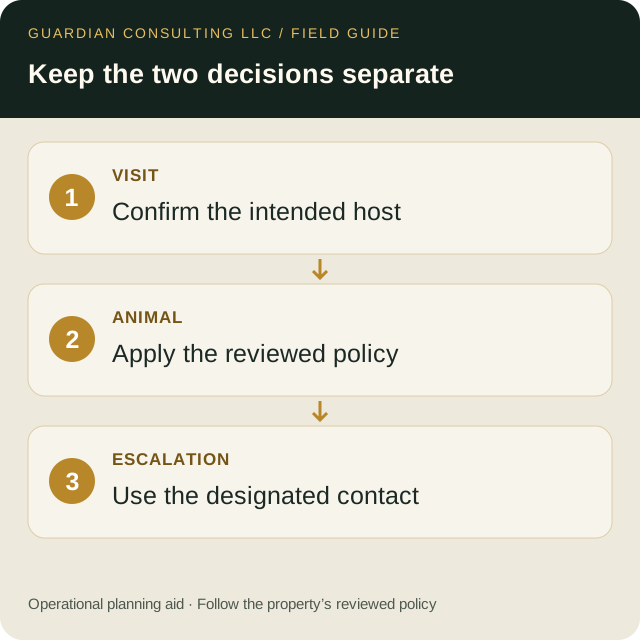
Separate appointment authorization from the animal question
Continue the property's applicable visitor-authorization process. Confirming the intended host is a different task from deciding whether an animal is a service animal under the relevant rules. Keep those decisions separate in the desk instructions so neither becomes a pretext for unnecessary questioning.
A supervisor can rehearse this distinction using fictional appointment details. Ask staff to identify which normal check-in steps remain and which extra demands should not be introduced. Do not use actual visitor records or ask employees to disclose their own disabilities for a training exercise.
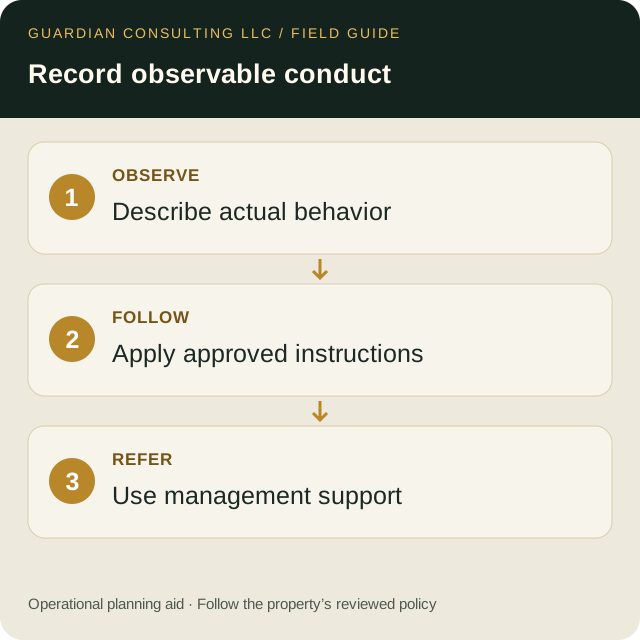
Escalate conduct concerns using observed facts
DOJ describes limited grounds for removal, including an animal that is out of control when its handler does not take effective action, or an animal that is not housebroken. Allergies or fear of dogs are not valid reasons to deny access. Staff need the property's reviewed procedure and management support; they should not improvise removal or physically intervene based on this article.
Document observable behavior and the steps taken under approved instructions. Avoid speculative labels about the animal or handler. The policy should also address how the individual can obtain the service without the animal when removal is justified. Refer unusual situations to the designated management contact.
Build a policy review card
| Field | What the policy owner should supply |
|---|---|
| Scope | Which public-facing activity this procedure covers |
| Questions | Reviewed wording and when questions are appropriate |
| Prohibited demands | Documentation, demonstration, and disability inquiries |
| Escalation | Duty manager and backup contact |
| Conduct concern | Approved response and documentation process |
| Separate rules | Who handles residential or other accommodation questions |
The table is an operations template, not an exhaustive statement of law. DOJ guidance also discusses subjects such as miniature horses, staff responsibilities, and specific settings. Read the full guidance and obtain a property-specific review rather than compressing every exception into a desk employee's memory.
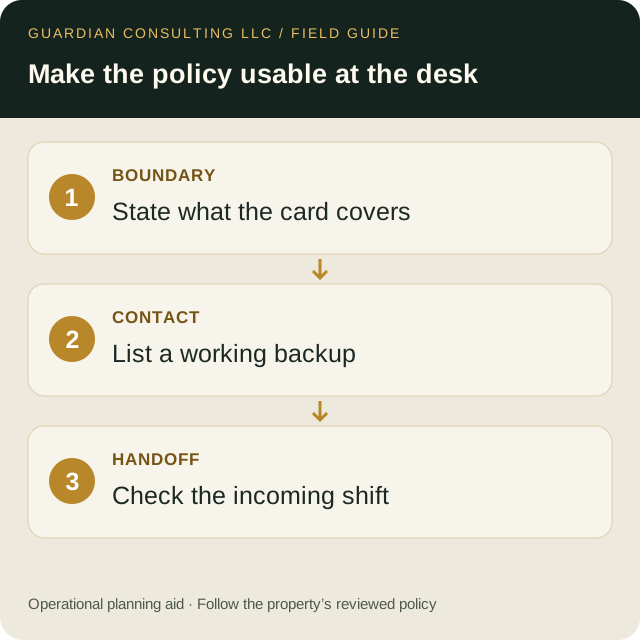
Check the handoff before closing the review
Ask an incoming employee to locate the card, explain its scope, and identify the backup contact. If those steps are unclear, the policy is not ready for a busy arrival. Use the lobby tabletop to test the handoff, and return to the main playbook for the broader visitor process.