

A lobby that looks clear at noon can present a different arrival experience after sunset. A canopy fixture may be on while the address is difficult to find. A courtyard may appear bright from the desk while a person approaching from the sidewalk encounters glare. For NYC property and hotel managers, a useful lighting review connects those observations to a named decision-maker and a verified correction.
This guide is an operational framework for ordinary entrance and walkway lighting. It is not an electrical inspection, lighting design specification or certification that a property meets code. Emergency lighting, exit routes and equipment faults require the appropriate building personnel and qualified professionals. Security staff should not open panels, change controls or improvise repairs.
Define the route and the job
Start with one arrival route rather than a request to inspect every light. Include the public approach, property boundary, entrance identification, check-in point and relevant internal transition. Note where responsibility changes between the property, a tenant, a neighboring operator and public infrastructure. A report about a streetlight and a report about a canopy fixture may require different recipients.
Ask what someone needs to accomplish at each point: find the correct entrance, see the walking surface, read an instruction or communicate with the desk. This makes the report useful without pretending that an observer has measured illumination. Identify whose arrival is being considered, including visitors who do not already know the building.
- Mark the start and end of the review.
- Record the operating hours and ordinary arrival pattern.
- Identify the facilities contact and after-hours backup.
- Separate routine observations from conditions requiring immediate escalation.
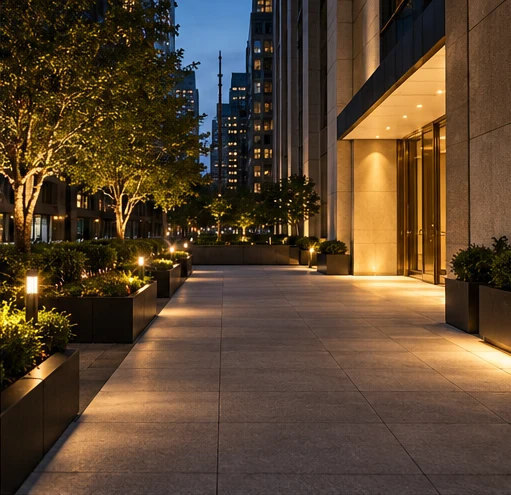
Observe under representative conditions
Use the dusk walkthrough worksheet to capture time, weather, direction of travel and the observed condition. A photograph supports the description but does not reproduce human vision reliably; exposure and processing can make a dark scene appear brighter. Avoid photographing residents, guest details or neighboring interiors.
Do not manufacture a fault by switching off lights. Observe the normal operating sequence and ask facilities to arrange any technical testing. The Department of Energy exterior-lighting controls guidance addresses planning and specification of controls. It is background for qualified review, not permission for a guard to alter settings.

Turn observations into decisions
A report should distinguish a fixture that appears off from a route that is difficult to use. Several working fixtures can still leave an awkward transition, while an apparently unlit fitting may be intentionally inactive under a control sequence. State what was observed and leave diagnosis to the responsible person.
The lighting maintenance ticket guide provides a structure for that handoff. Assign an owner, acknowledgment time and next checkpoint. If an entrance cannot be used safely, follow the property's emergency or urgent escalation procedures rather than leaving the issue in an ordinary work queue. Use the temporary lighting outage coordination guide for the operational handoff while qualified personnel assess the condition.
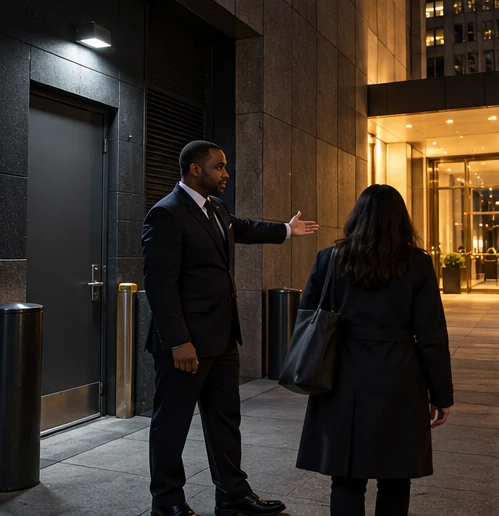
Include glare and neighboring impacts
Brightness alone is not an acceptance test. Review whether a person can see the intended task from the approach direction without an uncomfortable bright source dominating the view. DOE's glare resource explains why glare deserves its own assessment. Security observations should identify the viewpoint and task; a qualified lighting professional decides the technical remedy.
Use the glare and light-spill report when the complaint concerns direction or neighboring impact. Do not promise to turn off a light before facilities determines what it serves. A decorative fixture, ordinary security light and required safety lighting are not interchangeable categories.
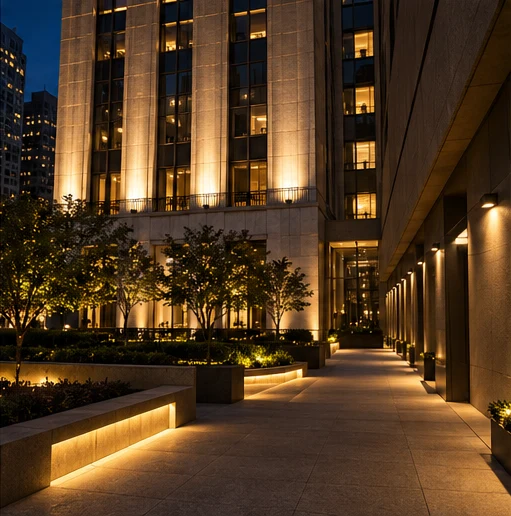
Verify the operational result
A completed work order confirms a maintenance action, not necessarily a satisfactory arrival experience. Arrange a nighttime repair verification after the relevant operating condition returns. Compare the same location and task, record remaining limitations and obtain the responsible person's decision.
For workplace exit routes, OSHA 1910.37 addresses adequate lighting and maintained safeguards. That federal workplace rule does not substitute for a building-specific NYC code review. Keep required system testing and formal acceptance with qualified personnel.
Guardian Consulting's security services can support clear observation, reporting and coordination responsibilities. The useful outcome is an accountable operating record, not a claim that additional light guarantees incident prevention.