
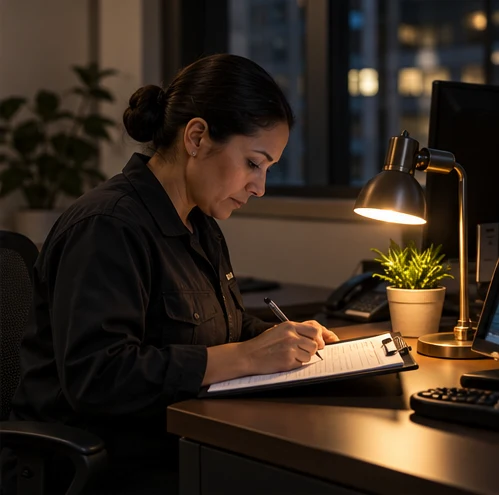
“Light out by the entrance” is a starting point, but it may not tell facilities which entrance, which fitting or what happened to the arrival route. A better ticket reduces the need for a technician to reconstruct the observation from a shift log. It also preserves the difference between a reported condition and a confirmed diagnosis.
This guide covers the reporting handoff in the after-dark lighting review. It is not an instruction to undertake electrical work. Security should identify the condition and notify the responsible contact; technical investigation and repair remain with authorized qualified personnel.
Identify the place and the asset
Use the property's established entrance name, level and location reference. Add an existing fixture identifier when visible from a safe position. If no identifier is available, describe the location relative to a fixed feature rather than a temporary object such as a parked vehicle.
State whether the fitting appears to belong to the property, a tenant or public infrastructure. If ownership is uncertain, say so. Do not route a request directly to an outside contractor on the assumption that the nearest visible light is covered by the building's maintenance agreement. The manager should resolve responsibility and any required authorization.
- Exact location and safe access reference
- Date and time observed
- Observer's role and contact route
- Condition seen, without an unsupported diagnosis
- Arrival or work task affected
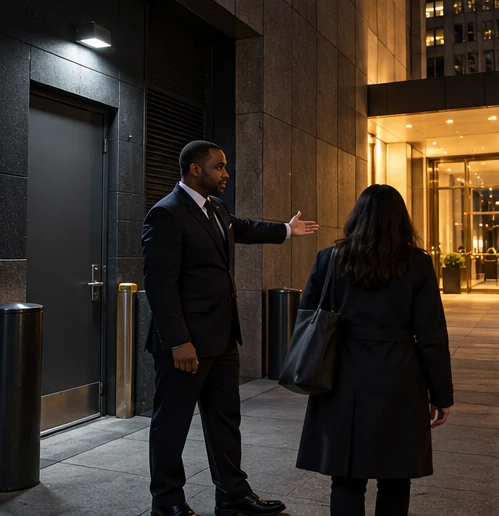
Separate facts from possible explanations
Write “canopy fitting nearest the east door appeared unlit at 18:20 and 18:40” rather than “photocell failed.” Include whether neighboring fixtures appeared lit. If a tenant reported the issue, label it as a report until someone verifies it. Preserve the original wording where useful and record subsequent observations separately.
A lighting control sequence can explain why conditions differ across time. DOE's controls guidance concerns technical planning and specification; the ticket should request that facilities compare observed behavior with intended operation. It should not prescribe a control change from the security desk.
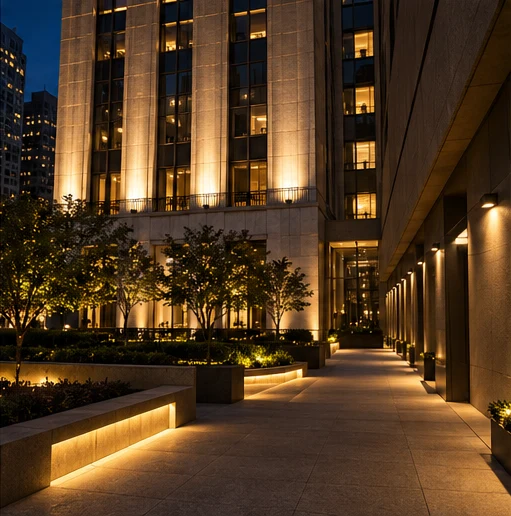
State the operational concern
Explain the affected task: finding the entrance, reading an approved notice or seeing the normal walking surface. Avoid asserting a code violation without a qualified determination. Conversely, do not minimize a possible safety issue because the observer cannot name the technical cause. An urgent concern needs the property's urgent escalation process, not merely a higher-priority label in software.
For workplace exit routes, OSHA 1910.37 provides relevant requirements on illumination and safeguards. Applying the correct requirements to the building belongs to the responsible employer and qualified advisers. A routine ticket is not a compliance finding.
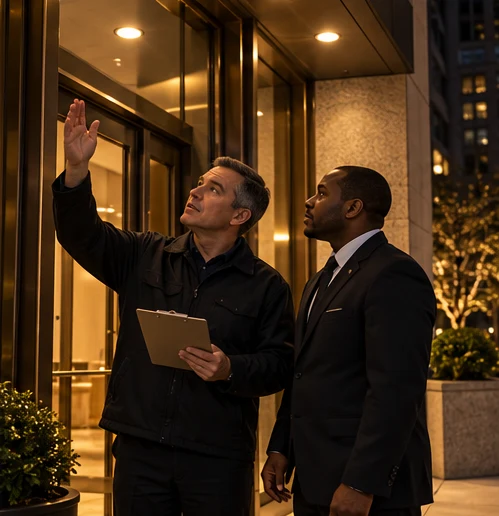
Assign acknowledgment and next action
Record the person or role accepting the request, the time and the next checkpoint. “Sent to maintenance” does not demonstrate acknowledgment. Where the issue remains open after hours, identify the duty contact and communicate any management-approved temporary operating instruction to the affected desk.
Use the outage coordination guide if the issue changes entrance operations. Do not allow an estimated repair time to become an unsupported promise to residents or guests. Use confirmed status, including an explicit “assessment pending” when that is all that is known.
Define what closes the ticket
Ask facilities to record the action taken and any remaining limitation. Arrange a nighttime verification of the affected task once normal conditions return. A daytime visit may confirm physical work but leave the original night observation unresolved.
If the symptom persists, reopen or link the new observation under the property's process without erasing the earlier record. Return recurring issues to the main lighting review for management assessment. Clear evidence makes a repeat problem visible without assuming negligence, equipment failure or fault by any particular person.