
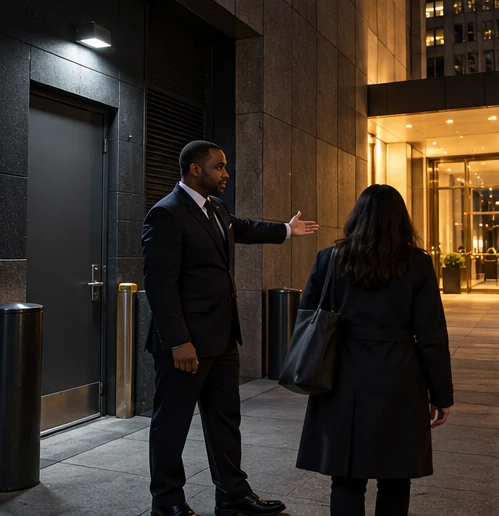
An unlit entrance can create an operational problem before anyone knows why the light is off. Security may be the first team to hear from a visitor, but the desk should not have to invent an electrical repair or decide building-code questions. The immediate goal is to communicate the observed condition and obtain an appropriate management and facilities response.
Use this article within the property lighting review plan. It addresses ordinary coordination, not a substitute for an emergency plan. If there is immediate danger, smoke, sparking or another emergency, use the property's emergency procedures and emergency services as appropriate. Do not approach or touch potentially hazardous equipment.
Establish what is known
From a safe location, identify the affected entrance and time. Note whether the issue concerns one visible fitting, a wider area or a reported condition that has not yet been observed. Do not send someone into a dark or otherwise unsafe area solely to improve a report.
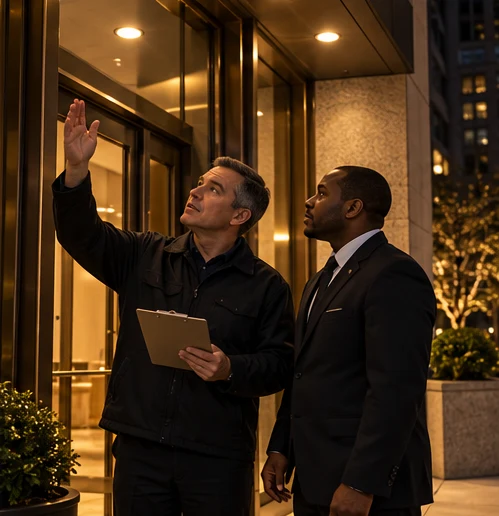
Contact the designated facilities or duty-management role using the approved escalation path. State what task appears affected and whether people are currently using the area. If a light serves an exit route or other safety function, make that uncertainty explicit rather than assuming it is decorative. Follow the site-specific plan while qualified personnel determine the response.
Keep movement decisions with the responsible team
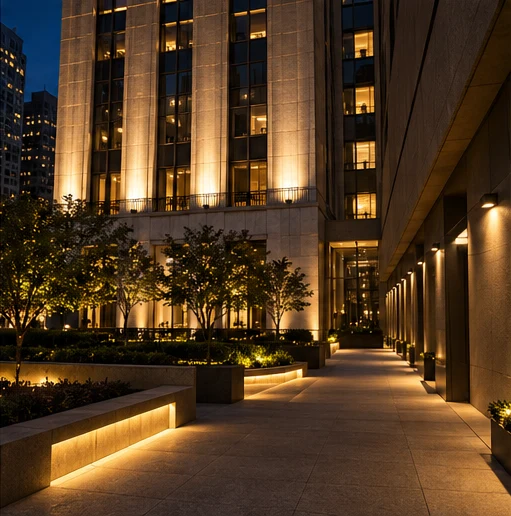
Management and facilities should determine any temporary route, restriction or assistance arrangement within their authority and applicable requirements. Security then communicates and implements the approved instruction. An alternate entrance must be evaluated as a whole route, including accessibility, access control and the ability to leave the building.
Never improvise by locking an exit, obstructing a route with a barrier or running an extension cord across a walking surface. OSHA 1910.37 addresses unobstructed workplace exit routes and maintained safeguards. A manager's convenience preference does not replace applicable safety requirements.
- Who authorized the temporary arrangement?
- Which route and hours does it cover?
- Who assists an arrival that cannot use the arrangement?
- What condition triggers immediate reassessment?
Communicate one current instruction
Give the desk, facilities contact and affected operational teams the same version of the instruction. Record its start time and next review point. If signage is used, have the responsible team check placement and clarity without obscuring required signs or blocking movement.
Tell visitors what to do next in plain language. Avoid diagnosing the fault or promising a repair deadline that has not been confirmed. For example, a property-approved instruction can identify the operating entrance and assistance contact while saying that facilities is assessing the affected area. Do not disclose internal security weaknesses or staff deployment details in public messages.

Track the unresolved condition
Create a lighting maintenance ticket linking the observation, facilities acknowledgment and temporary instruction. Keep the repair status separate from the operational arrangement. A technician may be en route while the temporary route remains in effect; neither fact proves the issue is resolved.
At shift change, identify the receiving person and obtain acknowledgment of the open item. Include the next check, any approved limitation and the contact responsible for changing the instruction. This prevents a day-shift assumption from silently ending an overnight arrangement.

Restore normal operation deliberately
Obtain the responsible team's confirmation before withdrawing temporary instructions. A fitting that turns on briefly does not establish a durable repair or satisfactory route condition. Schedule the nighttime recheck when relevant and retain any remaining technical limitations.
DOE's exterior-lighting controls resource is useful context for facilities when timing or control behavior is involved. Security should report the sequence observed, not change the sequence. Feed the completed record into the main lighting review so management can recognize repeated faults and improve the approved response.