
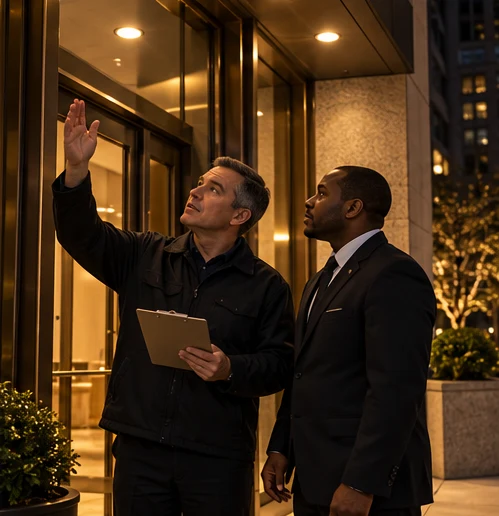
A maintenance system may show a lighting work order as complete at noon even though the original concern occurred after sunset. That does not necessarily mean the repair was ineffective. It means the technical work and the operational recheck answer different questions and should be recorded separately.
This guide closes the after-dark lighting review. Security can observe whether the original arrival task now works under comparable conditions. Qualified personnel retain responsibility for technical testing, electrical safety and any required compliance assessment. An operational observation must not be described as professional certification.
Define the original concern
Before returning to the location, read the ticket and identify the exact task, viewpoint and operating period. If the record only says “dark,” ask the responsible contact to clarify what needs to be checked. Do not invent an acceptance standard after the repair.
For a fixture that appeared off, the recheck might document whether it is operating during the intended period. For a sign-reading concern, it should revisit the same normal approach. For glare, use the original viewpoint report. Keep the scope narrow enough that the result can be stated honestly.

Confirm what facilities completed
Record the action described by the responsible technician or facilities contact, including the completion time and any limitation they specify. Do not translate “control reviewed” into “fault repaired” or “fixture replaced” into “all lighting compliant.” If a required test remains pending, preserve that status.
Ask whether the observation should occur after a normal control transition or during a particular operating period. DOE's exterior-lighting controls guidance addresses controls as a technical subject. The operational reviewer should observe the authorized sequence without overriding it.
- Confirm the location and asset reference.
- Record the reported work and responsible contact.
- Identify remaining technical tests or restrictions.
- Agree the operational review period.

Repeat the observation safely
Use the dusk walkthrough method and comparable reference points. Record time, weather, route use and any changed condition such as temporary signage. Stay on authorized pedestrian routes. Do not interrupt required post coverage to complete a check.
Compare the original task with the current result. Avoid vague statements such as “looks good.” A stronger entry says the entrance number was readable from the specified approach at the recorded time, or that the previously unlit fitting was observed operating. This is still a bounded observation, not proof of performance in every condition.

Look for a new operational problem
A change may improve one viewpoint while creating an uncomfortable bright source elsewhere. Note any new concern without attempting to adjust the equipment. The Department of Energy glare material explains why glare merits separate review; use that distinction when reporting an unintended effect.
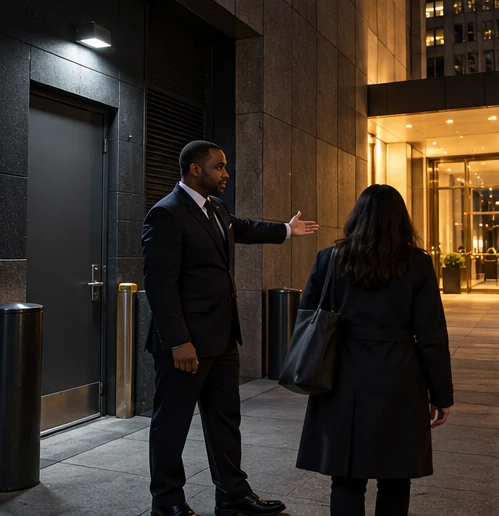
Check that any management-approved temporary instruction has been reviewed by its owner. Security should not remove an alternate-entrance notice or end an assistance arrangement merely because a light is visible again. The responsible team should confirm when normal operation resumes and communicate that decision to all affected shifts.
Record an honest outcome
Use clear states: observed improvement, concern still present, different concern observed, or unable to verify under the necessary conditions. Assign the next action and receiving owner whenever the result is incomplete. Preserve the prior ticket and observation rather than replacing them with a clean-looking record.
Bring recurring findings into the main lighting review. Management can then decide whether a broader professional assessment is warranted. Guardian Consulting's security services support accountable operational reporting; they should not be presented as an electrical design or installation service on the strength of this checklist.