
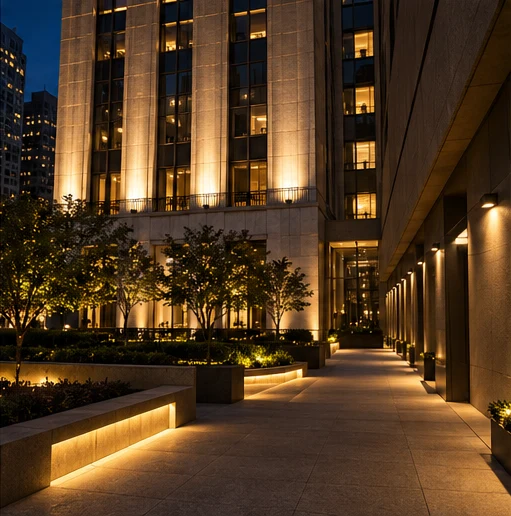
A complaint about lighting may concern too much light in the wrong direction rather than an unlit area. A visitor might struggle to read an entrance sign against a bright source. A neighbor might report light entering a window. These observations need a different record from a simple lamp-out ticket.
This guide supports the after-dark lighting review. It describes how security and property teams can capture a useful report. It does not prescribe fixture aiming, output levels or legal remedies, and it does not determine whether a complaint is justified under an applicable code.
Separate the types of report
Ask whether the concern is difficulty seeing a task, discomfort from a bright source or unwanted light reaching another area. These descriptions may overlap, but keeping them explicit helps facilities decide what to investigate. DOE's glare resource treats glare as an issue deserving technical attention, rather than assuming more brightness always improves an environment.
Do not describe a person's medical condition or infer an impairment. Record the reported experience in neutral terms. If someone asks for assistance reaching an entrance, follow the property's approved assistance process while the lighting concern is evaluated separately.
Locate the viewpoint
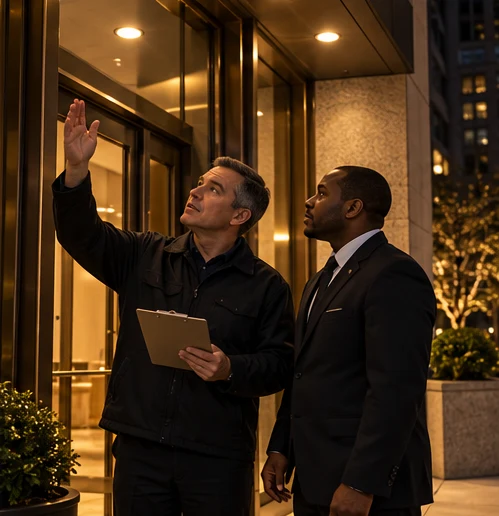
Identify the ordinary standing or travel position from which the condition is reported. Record the direction of view and relevant fixed feature. For neighboring-property complaints, collect only the contact and location information needed for the approved follow-up process. Do not ask a guard to enter a private apartment or photograph its interior.
- Date, time and reported duration
- Observer's location and direction of view
- Source believed to be involved, labeled as unconfirmed if necessary
- Task affected or neighboring impact reported
- Weather or temporary conditions that may affect the view
A complaint during one operating period should not be dismissed because the scene looks different at another time. Equally, the report should not imply that the condition occurs continuously unless that has been established.
Use images as context
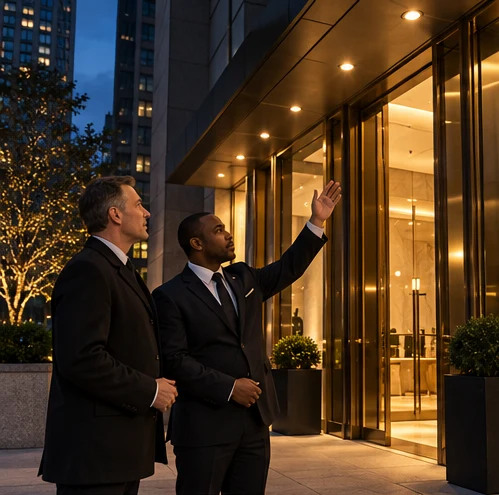
Authorized photographs can show the relationship between a fixture and a sign or approach route. Avoid identifying people or private interiors. Camera processing can alter apparent brightness and flare, so an image alone should not be used to establish a measured condition or a compliance conclusion.
Where safe and authorized, compare the same public approach from more than one ordinary viewpoint. Record the differences in words. Do not deliberately stare at a bright source or reposition equipment to reproduce a complaint. Facilities can arrange a technical assessment using appropriate methods.
Send the issue to the correct owner
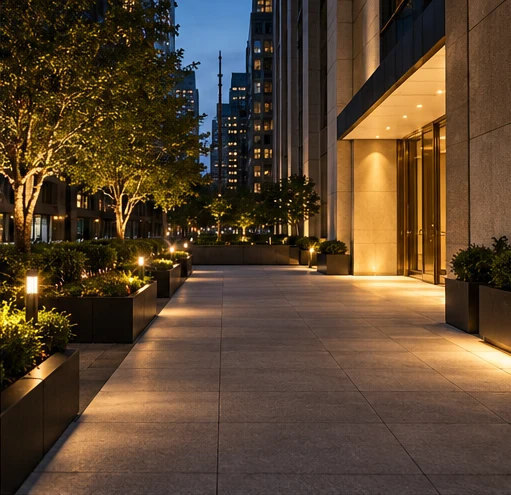
Determine whether the source is property-owned, tenant-controlled or external. Route the concern through management before promising a change. A visible fixture may serve a safety function that the desk cannot assess. Never turn it off solely to settle a complaint.
NYC311's parking-lot light complaint page describes a specific route for parking-lot light shining into a neighboring building and states limits on that complaint category. Do not generalize that page to every exterior-lighting dispute. Management can determine the appropriate process for the actual source and property type.
Check the result from the original viewpoint
After an authorized adjustment, use the nighttime verification process to revisit the original task and viewpoint. Also ask facilities to assess whether the change introduced another problem along the intended route. Resolving one complaint is not a reason to overlook the lighting's operational purpose.
Link the result to the maintenance ticket, preserving both the original report and the action taken. Return unresolved or recurring patterns to the main review plan. The aim is a fair, evidence-based handoff, without claiming a technical diagnosis, guaranteed resolution or legal entitlement that has not been established.