

Managing security at a New York property involves more than assigning personnel to a lobby or loading dock. Staffing, access control, post orders, incident reporting, building operations, and tenant expectations must work together.
A security consultant can provide an objective assessment when management suspects the current program is not aligned with the property's risks. The goal is not necessarily to add guards or purchase more technology. A useful review should identify vulnerabilities, prioritize realistic improvements, and help management spend its security budget more effectively.
Here are seven recognizable situations in which a New York property manager should consider bringing in outside security expertise.
1. A serious incident recently occurred
A break-in, assault, major theft, unauthorized entry, workplace threat, or other serious incident should trigger a structured review. Once immediate safety and reporting needs have been addressed, management should examine how the incident happened and how the property responded.
A consultant may review:
- The incident timeline and available reports
- Access points, visitor procedures, and camera coverage
- Guard actions and escalation protocols
- Communication among security, management, tenants, and first responders
- Whether earlier warning signs were documented
- Corrective steps that can be implemented promptly
The purpose is not to assign blame. It is to separate isolated human error from larger problems involving staffing, procedures, training, technology, or building design. Any relevant video and records should be preserved according to management's established policies and guidance from counsel or insurers.
2. The building is changing security companies
A change in security providers is a natural opportunity to reconsider how the account is structured. Simply giving a new company the old schedule and post orders can carry existing weaknesses into the next contract.
Before soliciting proposals, an independent assessment can help management define:
- Which posts are necessary and when they should operate
- Required officer duties and qualifications
- Site-specific training expectations
- Supervision and quality-control standards
- Reporting requirements and performance indicators
- Procedures for call-outs, emergencies, and extra coverage
A well-defined scope also makes competing proposals easier to compare. Otherwise, one company may bid minimal coverage while another includes relief, supervision, and additional responsibilities, creating an apparent price difference that does not reflect equivalent service.
Property managers preparing for a transition can also review Guardian's security guard services and emergency security coverage.
3. Security costs are increasing without measurable improvement
Higher spending does not automatically produce better security. Overtime, added posts, recurring emergency requests, equipment purchases, and contract increases can accumulate without solving the problems tenants experience.
A consultant should examine what the property receives for its current spending. Useful questions include:
- Are guard hours concentrated during the highest-risk periods?
- Do overtime and call-outs indicate a scheduling problem?
- Are officers performing meaningful security duties or unrelated building tasks?
- Is technology supporting the staff, or creating alarms and data no one reviews?
- Are incident patterns improving after resources are added?
The resulting recommendation might involve more coverage, but it could also call for a different schedule, clearer responsibilities, better supervision, improved access procedures, or more effective use of existing systems.
4. Tenants are reporting recurring problems
Repeated complaints about trespassing, package theft, tailgating, disruptive visitors, unattended desks, garage access, or slow responses should not be treated as unrelated anecdotes. They may indicate a pattern that ordinary incident reports do not capture.
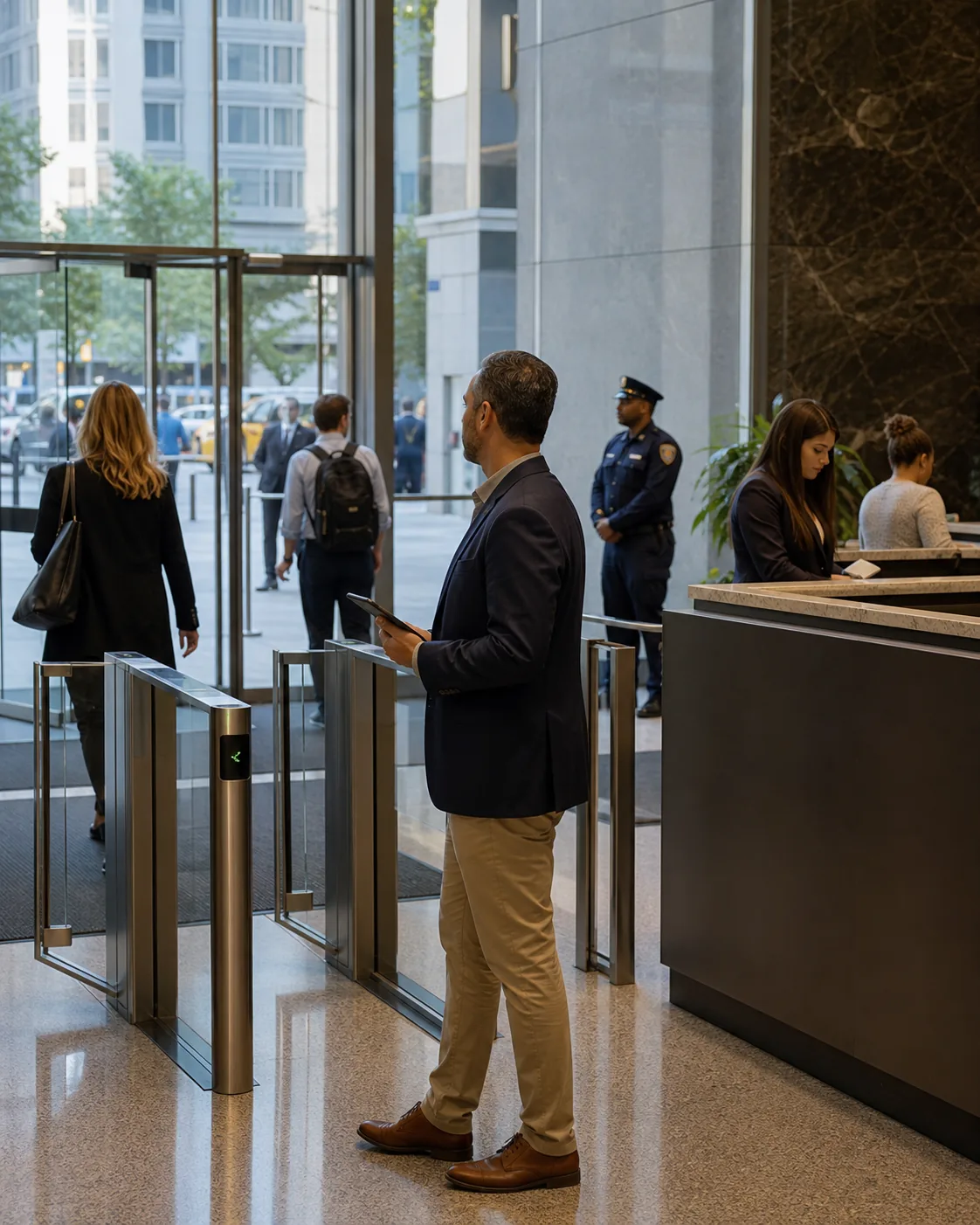
A security review can compare tenant feedback with guard logs, access-control records, incident locations, and time-of-day patterns. The consultant should also observe normal building operations. A procedure that appears sound on paper may fail during busy arrival periods, deliveries, contractor access, or shift changes.
Management should give tenants a consistent way to report security concerns while setting realistic expectations. Security personnel cannot eliminate every incident, but recurring reports should produce documented follow-up rather than repeated temporary fixes.
5. The property is opening, expanding, or changing use
A new building, renovated lobby, added amenity, expanded tenant population, or change in use can alter the property's security profile. Plans created before occupancy may not reflect actual pedestrian flow, delivery activity, visitor volume, or after-hours use.
Early consultation can help property teams consider:
- Lobby and entrance operations
- Public, tenant, service, and restricted circulation paths
- Loading dock and delivery controls
- Credentialing for employees, vendors, and contractors
- Camera placement and lines of sight
- Key and access-card administration
- Emergency communications
- Staffing during opening and stabilization
Security planning should be coordinated with ownership, property management, design professionals, IT, building operations, and applicable fire-life-safety professionals. A security assessment does not replace any code review, filing, inspection, or professional service that may be required for the project.
For properties in transition, Guardian provides dedicated construction security and commercial office security.
6. Existing post orders are outdated
Post orders tell security personnel what to do, where to do it, when to escalate, and whom to contact. If they reference former tenants, obsolete equipment, old access points, or people who no longer work at the property, they can create confusion when clear direction matters most.
Post orders should reflect current operations and be usable during an actual shift. A practical review should address:
- Opening, closing, and patrol responsibilities
- Visitor, vendor, contractor, and delivery procedures
- Access denials and prohibited conduct
- Alarm and incident response
- Emergency contacts and escalation paths
- Report-writing expectations
- Procedures for lost credentials, keys, and property
- Responsibilities during system outages
The document should be site-specific, organized for quick reference, and supported by training. Asking officers to sign an updated manual is not a substitute for confirming that they understand and can perform the procedures.
7. Management is unsure whether staffing matches the actual risks
A staffing plan often develops incrementally. A post is added after an incident, extended for a tenant request, or retained because it has always existed. Over time, management may no longer know whether the schedule corresponds to current risks.
A consultant can conduct a post and workload analysis using incident history, occupancy patterns, building layout, operating hours, access points, patrol routes, and officer responsibilities. The review should account for practical issues such as meal relief, simultaneous incidents, shift handoffs, and the difference between peak and overnight conditions.
The key question is not simply, “How many guards should this building have?” It is, “Which security functions must be performed, at what times, and with what level of training and supervision?”
What should a security consulting engagement deliver?
Before retaining a consultant, define the expected work product. Depending on the property's needs, useful deliverables may include:

- A physical security and operational risk assessment
- Prioritized findings based on urgency and likely impact
- Recommended staffing and post schedules
- Updated post orders and escalation procedures
- Guard-force performance standards
- Technology and access-control recommendations
- A phased implementation plan with budget considerations
- A follow-up review after changes are made
Recommendations should distinguish immediate corrective actions from longer-term capital projects. They should also explain the operational reason for each proposal rather than offering a generic list of products or services.
How to prepare for the assessment
Management can make the process more productive by gathering relevant information before the site visit. This may include incident reports, current post orders, guard schedules, floor plans, access-point lists, tenant complaints, vendor procedures, and existing security-system information.
The consultant should also speak with the people who understand daily conditions: property managers, front desk personnel, building engineers, security supervisors, and selected tenant representatives. Sensitive documents and interviews should be handled with appropriate confidentiality and access controls.
Choosing the right security consultant
Look for experience with properties similar in size, use, and operating complexity. Ask how the consultant gathers evidence, prioritizes recommendations, and measures whether changes work.
If the consultant is connected to a guard company or equipment vendor, understand that relationship. A service provider can still offer valuable operational insight, but management should know whether recommendations may lead to services or products the same organization sells. Clear scope, transparent pricing, and defined deliverables help protect the value of the engagement.
Turn the findings into an operating plan
An assessment creates value only when recommendations become assigned, funded, and tracked actions. Management should identify who owns each improvement, set reasonable target dates, update training and documentation, and review incident trends after implementation.
Guardian ISI helps New York property teams evaluate guard coverage, post responsibilities, transitions, and urgent staffing needs. To discuss your property, call or text [(212) 602-1695](tel:+12126021695) or request coverage online.
Related Guardian ISI services
For on-site coverage and operational support discussed in this article, review Commercial Office Security and Security Guard Services. Contact Guardian ISI to discuss the property, duties, and availability.
Frequently asked questions
What is the difference between a security consultant and a security guard company?
A consultant evaluates risks, procedures, staffing, and systems, then recommends improvements. A guard company supplies and manages security personnel. Some firms provide both services, so property managers should understand any vendor relationships and define the consulting scope clearly.
Should a property wait for an incident before requesting a security assessment?
No. Openings, renovations, changes in occupancy, recurring tenant complaints, outdated post orders, and rising costs are all reasonable triggers for a proactive assessment.
Does a security assessment always recommend more guards?
No. An assessment may recommend schedule changes, clearer post responsibilities, improved supervision, revised access procedures, training, or better use of existing technology. Additional staffing should be tied to identified duties and risks.
What documents should management provide to a security consultant?
Helpful materials include current post orders, guard schedules, incident reports, relevant tenant complaints, floor plans, access-point information, vendor procedures, emergency contacts, and details about existing security systems.
How often should post orders be reviewed?
Review them whenever staffing, tenants, access points, systems, building use, or management contacts change, and after significant incidents. Management should also schedule periodic checks to confirm that the written procedures still match actual operations.
Can a consultant help when a building changes security providers?
Yes. A consultant can define posts, schedules, qualifications, reporting standards, supervision, transition requirements, and performance measures before proposals are requested or a new provider begins work.