A New York City building may need a fire guard when a required fire-protection measure is unavailable or when an activity creates an elevated fire risk. Common examples include an out-of-service sprinkler, standpipe, or fire alarm system; hot work involving a torch; and certain construction, demolition, assembly, or temporary-event conditions.
The exact requirement depends on the building, affected system, occupancy, permit conditions, fire safety plan, and direction from the FDNY or another authority having jurisdiction. Property managers should not assume that assigning an ordinary security guard satisfies the requirement—a fire guard may need an FDNY Certificate of Fitness appropriate to the specific assignment.
What Is a Fire Guard?
A fire guard is a trained person assigned to watch for fire hazards, identify signs of smoke or fire, maintain required records, and initiate emergency notifications. Depending on the assignment, duties may include:
- Patrolling designated floors and other affected areas
- Checking exits, corridors, stairs, and fire doors
- Watching for smoke, fire, or unsafe conditions
- Confirming that escape routes remain unobstructed
- Maintaining a written fire-watch log
- Knowing how to contact 911, building management, and emergency personnel
- Following the building’s approved emergency procedures
A fire guard does not repair a disabled system and is not a substitute for the Fire Department. Fire guards also should not be given unrelated responsibilities that prevent them from maintaining the required watch.
NYC uses different Certificates of Fitness for different situations. For example, fire-guard credentials for a fire-protection-system impairment are not necessarily interchangeable with those used for torch operations or a place of assembly. The required credential should be confirmed before coverage begins.
Common Situations That May Require a Fire Guard
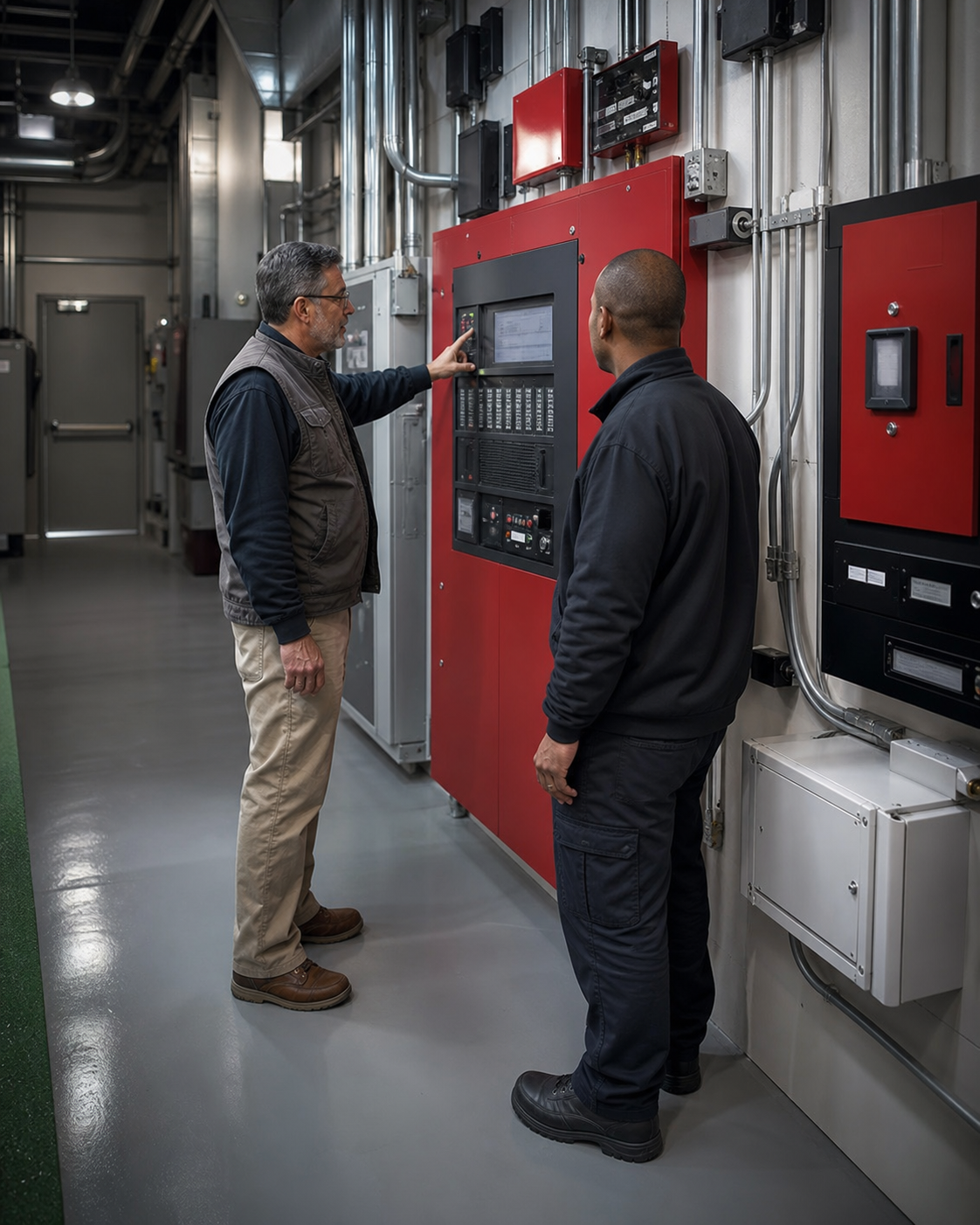
A sprinkler, standpipe, or fire alarm system is out of service
FDNY’s F-01 guidance calls for a fire watch when a required fire-protection system is out of service. The applicable procedures determine qualifications, permitted exceptions, and coverage arrangements. This can involve:
- Automatic sprinkler systems
- Standpipe systems
- Fire alarm or smoke-detection systems
- Fire pumps or water supplies
- Special suppression systems protecting particular hazards
An impairment can be planned, such as during testing, maintenance, renovation, or a system upgrade. It can also be unplanned because of a leak, equipment failure, frozen pipe, electrical issue, or accidental damage.
Whether a fire guard is needed—and how many are needed—depends on factors such as the size of the affected area, the type of system, the building’s occupancy, whether occupants remain inside, and how long the condition is expected to continue. The building’s designated impairment coordinator, when applicable, should implement the relevant impairment procedures and confirm required notifications and safeguards.
For an active outage, managers can request emergency fire guard coverage while repairs and required approvals are being coordinated.
Hot work is being performed
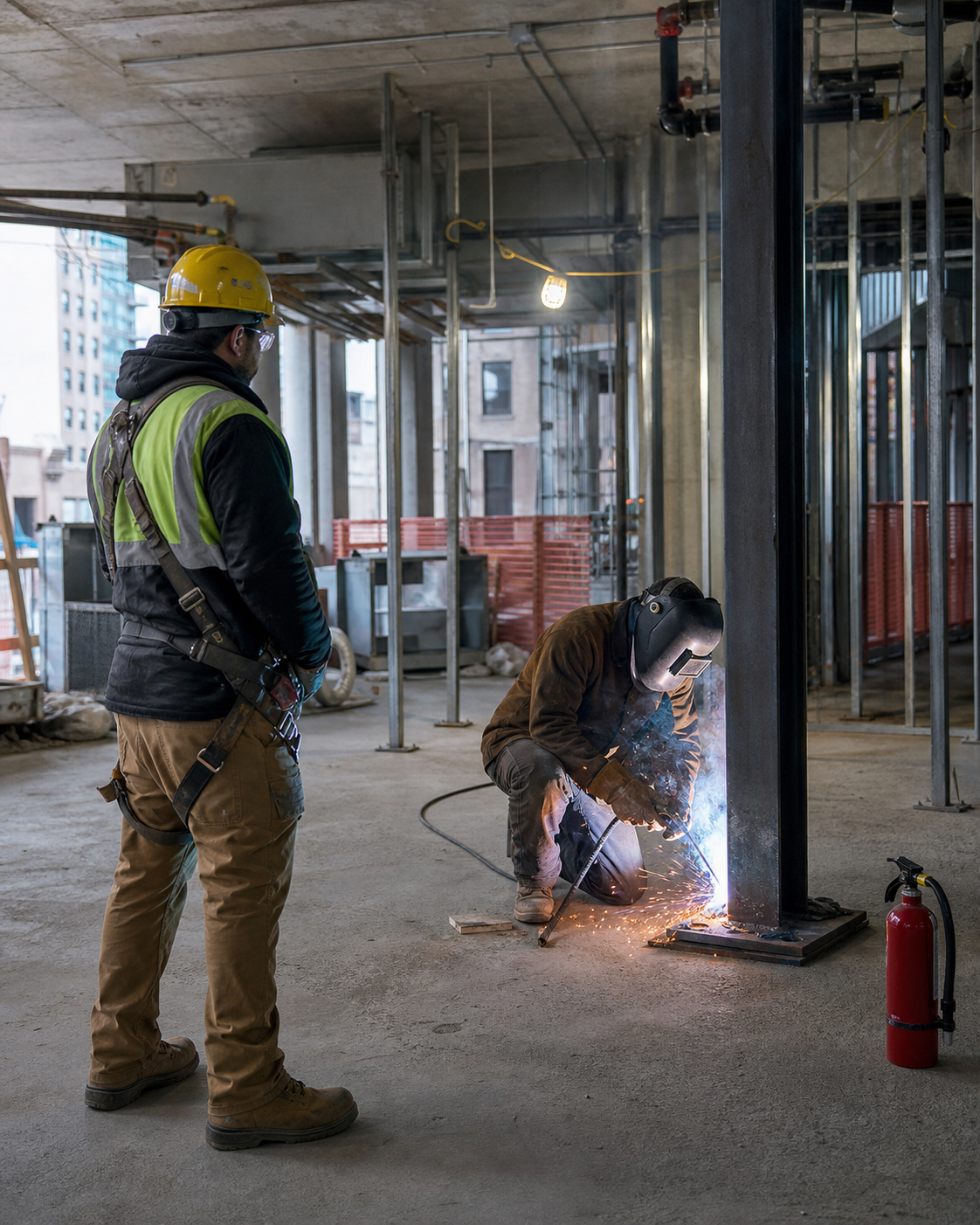
Hot work includes activities capable of producing flame, heat, or sparks, such as torch-applied roofing, brazing, cutting, and welding. These operations can ignite nearby combustible materials or create a concealed fire inside a wall, ceiling, shaft, or roof assembly.
NYC hot-work operations may require a properly qualified fire guard during the work and for a prescribed period after it ends. Responsibilities can include inspecting the work area, monitoring adjacent or lower levels where sparks could travel, keeping extinguishing equipment accessible, and conducting the required post-work watch.
The person conducting the watch must have the appropriate Certificate of Fitness for the operation. Contractors and property managers should confirm responsibilities before the torch or other hot-work equipment is used—not after work has started.
Construction or demolition changes normal fire protection
Construction projects can temporarily affect exits, compartmentation, sprinklers, standpipes, alarms, and emergency access. They can also introduce combustible materials, temporary heating, hot work, and changing floor layouts.
A fire guard may be required when directed by a site fire safety plan, permit condition, system-impairment procedure, or FDNY order. The need is based on the actual hazards and requirements of the project; it should not be assumed that every construction site automatically needs the same fire-guard arrangement.
Fire-guard staffing should be coordinated with the project’s fire safety personnel and overall construction security plan. These are related functions, but one does not automatically replace the other.
A place of assembly or temporary event requires coverage
Certain indoor or temporary places of assembly may require trained fire guards as part of their approved operating conditions. The number and type of personnel can depend on the venue, capacity, configuration, event, and applicable Certificate of Fitness requirements.
Managers should review the venue’s Certificate of Occupancy, permit conditions, fire safety plan, and FDNY requirements. A fire guard assigned to an assembly space may require a different credential from a guard covering an impaired building system.
The FDNY or another authority orders a fire watch
The FDNY may direct a property to establish a fire watch after an inspection, complaint, emergency, system failure, or unsafe condition. An applicable permit, approved fire safety plan, or enforcement order may also specify staffing requirements.
When written instructions have been issued, the property should follow the stated scope, qualifications, notifications, and termination conditions. Coverage should remain in place until the authorized party confirms that it may end.
How Many Fire Guards Does a Building Need?
There is no reliable one-size-fits-all number. Staffing should be based on the required patrol frequency and whether each assigned fire guard can adequately cover the designated area without gaps.
Important considerations include:
- Number of affected floors and buildings
- Square footage and layout
- Stairways, mechanical spaces, shafts, and concealed areas
- Occupancy type and number of people present
- Whether the building remains open to tenants or the public
- Extent of the fire-protection-system impairment
- Patrol and logging requirements
- Shift length and relief coverage
- Any specific direction from the FDNY or the building’s fire safety plan
A large, occupied Manhattan tower with multiple affected floors may need more staffing than a closed, single-floor commercial space. The coverage plan should be based on documented site conditions rather than the lowest possible headcount.
Fire Guard vs. Security Guard vs. FLSD
These roles can work together, but they are not interchangeable.
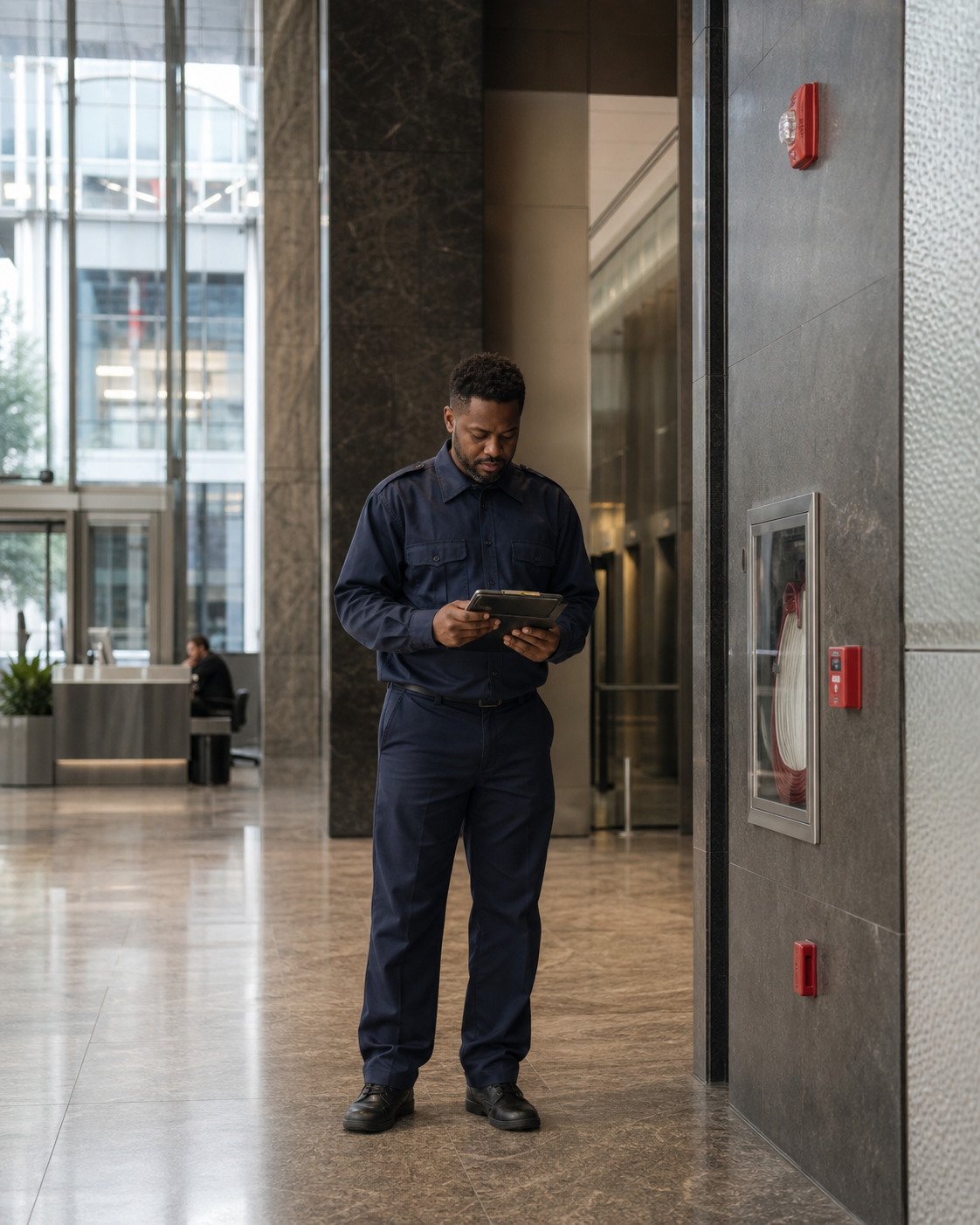
A security guard primarily handles access control, visitor management, incident reporting, and protection of people or property. A security guard should not be assigned as the required fire guard unless that person also holds the correct FDNY Certificate of Fitness and can perform the fire watch without conflicting duties.
A fire guard performs the active watch required for the specific hazard or impairment. The guard patrols assigned areas, looks for fire or smoke, documents rounds, and follows emergency notification procedures.
A Fire and Life Safety Director (FLSD) performs broader emergency-preparedness and response functions in buildings where that position is required. An FLSD may help coordinate the response to an impairment, but the presence of an FLSD does not necessarily eliminate a separate fire-watch requirement. Learn more about Fire and Life Safety Director services.
What Property Managers Should Do When a System Fails
When a fire alarm, sprinkler, standpipe, or related system becomes unavailable, take prompt, documented action:
- Identify the affected system and area. Determine whether the impairment is partial or building-wide.
- Contact the appropriate building personnel and service contractor. Begin diagnosis and repairs as quickly as possible.
- Follow the building’s impairment procedures. Make required notifications and implement temporary safeguards.
- Confirm whether a fire watch is required. Review applicable plans, permits, FDNY instructions, and professional guidance.
- Verify qualifications. Ensure each fire guard has the Certificate of Fitness appropriate to the assignment.
- Define patrol routes and reporting procedures. Include all affected spaces, emergency contacts, and log requirements.
- Provide continuous relief when necessary. Avoid gaps during meals, breaks, or shift changes.
- Document restoration. Do not end the watch merely because a contractor says the repair is complete; follow the applicable restoration and authorization process.
Maintain copies of staffing records, patrol logs, incident reports, and relevant system documentation. These records help demonstrate what safeguards were in place during the impairment.
Arrange Qualified NYC Fire Guard Coverage
Guardian ISI provides NYC fire guard services for planned assignments and urgent fire-watch needs. We can help assess the location, affected floors, operating hours, required qualifications, and relief coverage so that staffing matches the documented assignment.
For help arranging coverage, call or text (212) 602-1695 or request coverage online. For an active fire or immediate threat to life, call 911 first.
Official references
Frequently asked questions
Does every fire alarm outage require a fire guard?
FDNY guidance calls for a fire watch when a required fire-protection system is out of service. Confirm the scope, qualifications, and any applicable exception under FDNY rules and the building’s impairment procedures; do not assume coverage is unnecessary.
Can a regular security guard perform a fire watch?
Only if the person holds the appropriate FDNY Certificate of Fitness and can perform the fire watch without conflicting duties. A security license alone is not sufficient.
Is a fire guard required after hot work ends?
Hot-work requirements may include a post-work watch because concealed materials can continue to smolder. Follow the applicable permit, Certificate of Fitness requirements, and site procedures.
Can a fire guard repair or reset a fire alarm?
No. Qualified contractors or authorized building personnel handle repairs and restoration. A fire guard monitors conditions, records patrols, and initiates emergency notifications.
When can a building end fire-watch coverage?
Coverage should end only after the impairment is properly restored and applicable building procedures, permit conditions, or FDNY instructions are satisfied.