
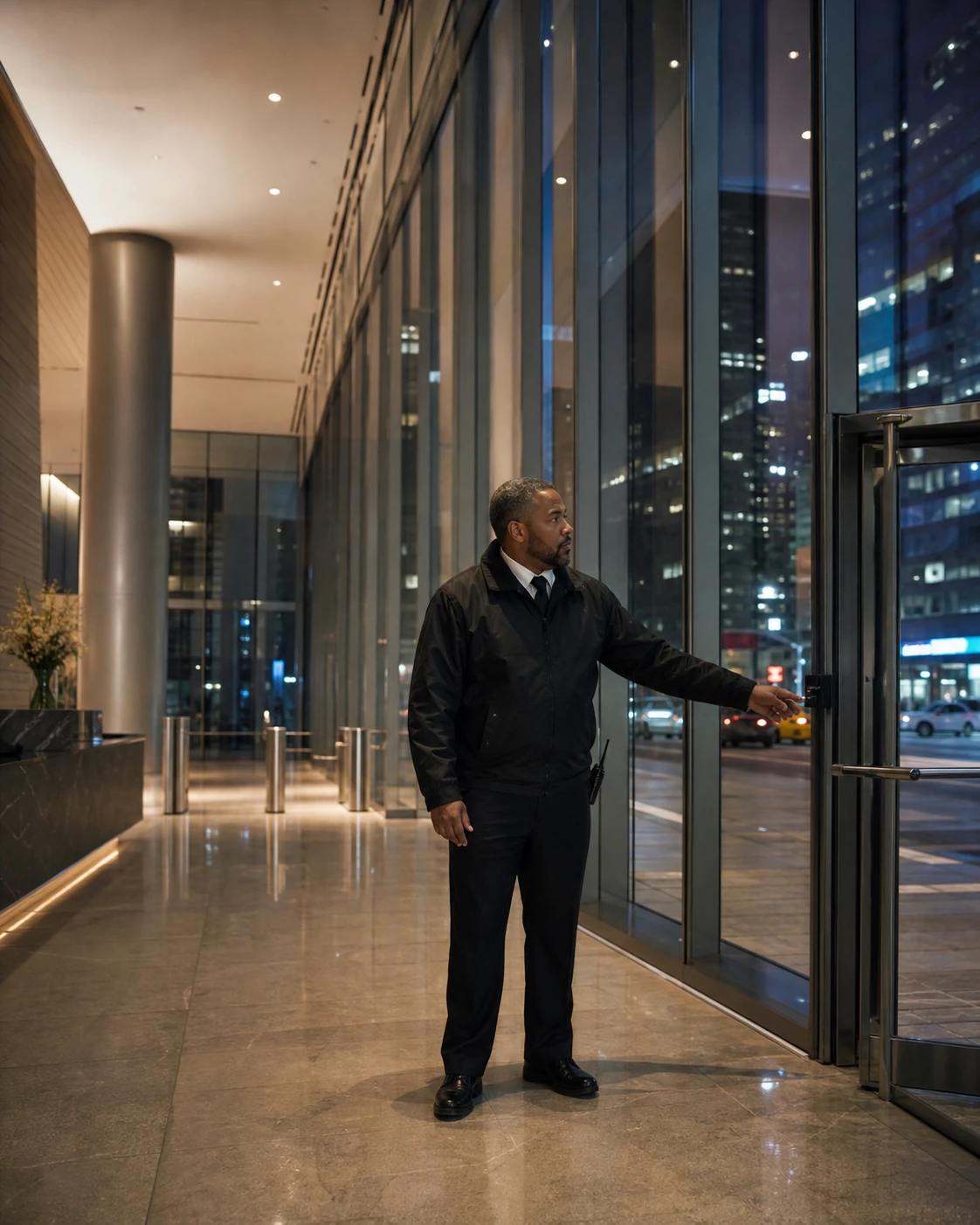
A security patrol is more than a walk through the building. It is a structured inspection intended to deter unwanted activity, identify unusual conditions, support emergency readiness, and document what is happening across the property.
For Manhattan property managers, owners, and facilities teams, the most useful patrols follow a site-specific plan. A guard should know which areas to inspect, what conditions require immediate action, how observations must be recorded, and when to contact building management or emergency services.
What should a security guard check during a patrol?
During a typical commercial-property patrol, a security guard should check:
- Entrances, exits, doors, gates, and loading areas
- Lobbies, corridors, stairwells, elevators, and common spaces
- Perimeter areas, alleys, garages, and other exterior zones
- Restricted rooms and access-controlled areas
- Signs of trespassing, theft, vandalism, or unauthorized activity
- Obvious safety hazards, including spills, obstructions, or damaged fixtures
- Visible signs of smoke, fire, water leaks, or unusual odors
- Lighting, cameras, alarms, and access-control equipment for apparent problems
- Vacant spaces, mechanical-area entrances, rooftops, or construction zones when included in the post orders
- Conditions or behavior that differ from the property's normal baseline
The exact checklist should reflect the building, time of day, occupancy, tenant activity, and known risks. A hotel, office tower, residential building, retail store, and construction site will each require a different patrol pattern.
Entrances, exits, and access points
Doors and access points are a priority because they affect both security and emergency movement. During a patrol, a guard may be expected to verify that:
- Exterior doors are in the expected open or secured condition
- Restricted doors have not been propped open
- Locks, hinges, handles, gates, and card readers show no obvious damage
- Emergency exits are not visibly blocked
- Loading docks and service entrances are being used only as authorized
- Visitors, vendors, and delivery personnel are following site procedures
- No one appears to be hiding, loitering, or attempting to bypass access controls
A guard should not automatically lock or unlock a door without authorization. The correct condition depends on the property's operating schedule, life-safety procedures, and written post orders.
Interior common areas and restricted spaces
Patrols should cover both high-traffic locations and areas that receive little routine attention. Lobbies, elevator banks, corridors, stairwells, restrooms, amenity spaces, storage areas, and vacant floors can present different concerns.
The guard should look for unauthorized occupants, suspicious packages, damaged property, unusual sounds, evidence of forced entry, or activity inconsistent with the location. Access to sensitive rooms—such as IT closets, management offices, storage rooms, or mechanical spaces—should be checked according to the guard's assigned scope.
Guards should generally observe and report rather than handle an unknown object, enter an unsafe area, or operate unfamiliar building equipment.
Perimeter, sidewalk, garage, and loading areas
An exterior patrol can reveal conditions that are not visible from a lobby desk. Depending on the property, a guard might inspect:
- Sidewalk-facing entrances and storefronts
- Fences, gates, and perimeter barriers
- Alleys, setbacks, scaffolding access points, or courtyards
- Parking areas, bicycle storage, and garages
- Loading docks, package areas, and service corridors
- Exterior lighting and visible camera damage
- Graffiti, broken glass, or signs of attempted entry
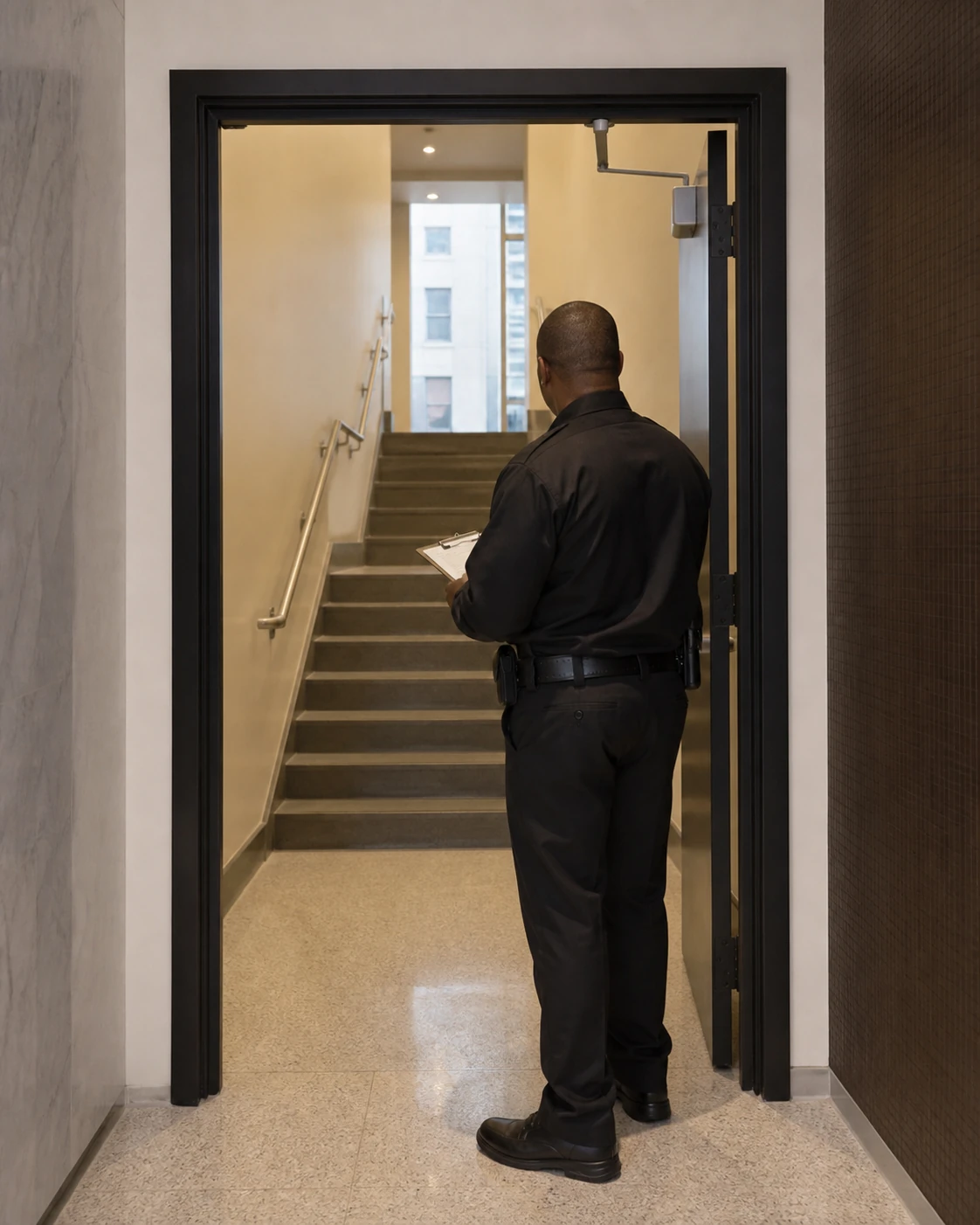
In Manhattan, exterior conditions can change quickly because of deliveries, street activity, weather, contractors, and neighboring work. Patrol instructions should clarify the property's boundaries so a guard does not leave the assigned area unnecessarily.
Fire and life-safety warning signs
A security guard should remain alert for readily observable fire and life-safety concerns, including:
- Smoke, flames, sparks, or burning odors
- Blocked corridors, stairways, or exit routes
- Doors or equipment that appear damaged or tampered with
- Accumulated combustible material in inappropriate areas
- Unusual heat, water discharge, or alarm activity
- Occupants who may need help during an incident
Discovering a warning sign does not mean the guard should attempt technical repairs or exceed their training. The guard should follow the site's emergency procedures, notify the designated contacts, and call 911 when the situation warrants immediate emergency assistance.
Fire watches and other specialized assignments require their own written procedures and properly qualified personnel. Properties needing dedicated coverage can review Guardian ISI's fire guard services and fire life safety director services.
Building systems and visible equipment conditions
Patrols can help identify apparent equipment problems before they go unnoticed for hours. Guards may visually check whether:
- Security cameras appear misaligned, obstructed, or damaged
- Card readers, intercoms, turnstiles, and gates show signs of malfunction
- Lighting is out in a sensitive area
- Alarm panels display an obvious alert, when monitoring them is part of the post
- Elevator doors or lobby fixtures appear damaged
- Pipes, ceilings, or floors show evidence of a leak
These are observational checks—not technical inspections. A guard should document the condition and contact the appropriate building representative rather than repair, reset, or silence equipment unless specifically trained and authorized to do so.
People, behavior, and changes from normal conditions
Effective patrols depend on recognizing context, not making assumptions about people. Guards should focus on observable conduct and violations of established property rules.
Examples include someone attempting to enter behind an authorized person, testing multiple doors, entering a restricted floor, concealing property, threatening others, or remaining in a closed area without authorization. Guards should also note occupancy patterns that are unusual for the time or location.
Reports should use objective language. Instead of recording that someone “looked suspicious,” the guard should describe the observed actions, location, time, direction of travel, and response taken.
How guards should document a patrol
A completed patrol should leave a reliable record. Depending on the site, documentation may include an electronic tour system, daily activity report, checkpoint scan, incident report, or supervisor notification.
A useful patrol entry generally records:
- The date and time
- The guard's name or identification
- Areas and checkpoints inspected
- Specific observations
- Actions taken and people notified
- Follow-up that remains outstanding
Serious events should not wait until the end of a patrol shift. The guard should make the required notification promptly and then complete the written report when it is safe to do so.
How often should patrols occur?
There is no single interval appropriate for every NYC property. Patrol frequency should be based on the site's risk assessment, occupancy, operating hours, physical layout, incident history, and contractual requirements.
A property may use scheduled patrols, randomized patrols, event-triggered checks, or a combination. Randomized timing can make the security presence less predictable, while fixed checkpoints help confirm that critical areas receive attention. Higher-risk periods—such as opening, closing, shift changes, deliveries, events, or active construction—may justify additional coverage.
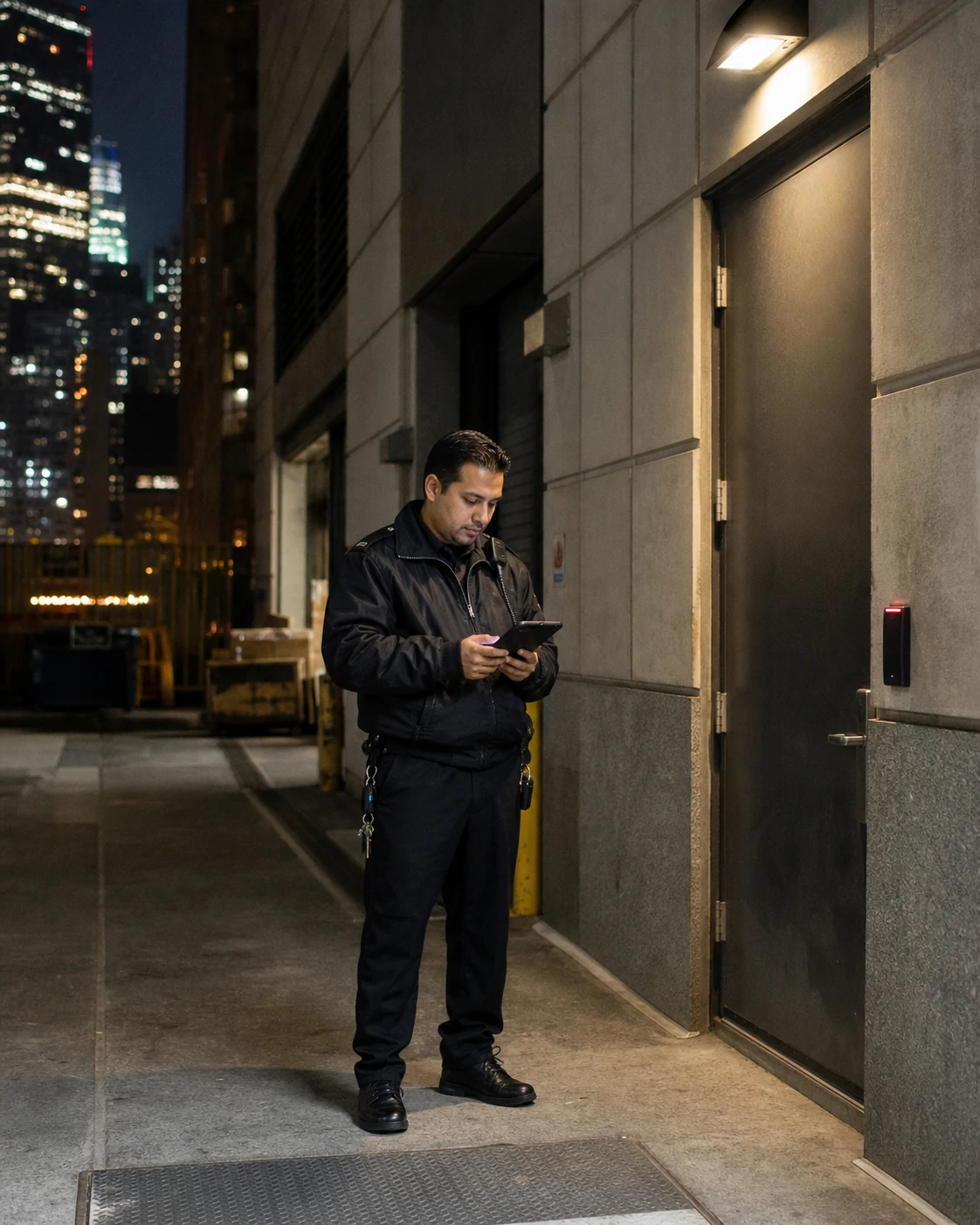
Building a practical patrol plan
A strong patrol plan should tell guards what to check without encouraging a mechanical, checkbox-only approach. Property management and the security provider should define:
- Patrol routes and priority locations
- Normal conditions for doors, rooms, and systems
- Required frequency and timing
- Areas a guard may or may not enter
- Lone-worker and communication procedures
- Emergency contacts and escalation thresholds
- Documentation and incident-reporting expectations
- Procedures for keys, access cards, and restricted information
- Post orders for overnight, weekend, or special-event coverage
The plan should be reviewed after incidents, tenant changes, renovations, access-control updates, or shifts in building operations. Professional security guard coverage can combine lobby presence, access control, patrols, and incident reporting around the property's actual needs.
Patrol priorities by property type
Commercial offices
Office patrols often emphasize lobby access, tenant floors, vacant suites, stairwells, loading areas, and after-hours occupancy. Learn more about commercial office security.
Construction sites
Construction patrols may prioritize fencing, gates, stored materials, temporary access points, equipment areas, and signs of intrusion or hazardous conditions. Guardian also provides construction security for active New York projects.
Hotels and residential properties
These properties require an approach that balances access control with appropriate service to residents and guests. Patrol plans may cover lobbies, elevators, amenity spaces, corridors, package areas, and building perimeters.
Retail locations
Retail patrols may focus on entrances, sales floors, stockrooms, receiving areas, closing procedures, and observable loss-prevention concerns. Guards should follow the retailer's policies for customer interactions and suspected theft.
Arrange site-specific security coverage in New York City
A patrol is most effective when guards receive clear post orders, reliable escalation procedures, and supervision suited to the property. Guardian ISI can help Manhattan decision-makers plan ongoing or short-notice guard coverage for commercial buildings, construction sites, hotels, retail locations, and residential properties.
Call or text (212) 602-1695, or request security coverage online.
Related Guardian services
Match the patrol to the environment: Hotel Security, Residential Security, and Retail Security have different access patterns and reporting priorities.
Frequently asked questions
What is the main purpose of a security patrol?
A patrol helps deter unwanted activity, identify unusual security or safety conditions, confirm that assigned areas have been checked, and create a record for property management.
Should a security guard follow the same patrol route every time?
Not necessarily. Critical checkpoints should be covered consistently, but varying the timing or sequence can reduce predictability when permitted by the site's post orders.
Can a security guard repair a broken alarm or access-control device?
A guard should normally report and document an apparent malfunction rather than attempt a technical repair. Equipment should be handled only by personnel who are trained and authorized to do so.
What should a guard do after finding an unsecured door?
The guard should follow site procedures, determine whether the door is supposed to be secured, notify the appropriate contact, and document the condition and response. The guard should not change a door's status without authorization.
What makes a good security patrol report?
A good report is timely, factual, and specific. It records where and when an event occurred, what the guard directly observed, what action was taken, who was notified, and whether follow-up is needed.
How often should a commercial building be patrolled?
Frequency should reflect the property's layout, hours, occupancy, risks, incident history, and post orders. Many properties combine scheduled critical checks with less predictable patrol timing.