
When someone pulls a fire alarm in a Manhattan building, the result is more than a loud horn or flashing strobe. Depending on the property’s design, the alarm may notify a monitoring station, recall elevators, shut down air-handling equipment, release selected doors, close fire doors, and activate an emergency response plan.
But does the building become open to break-ins? Usually, no. A properly designed system preserves emergency egress without unnecessarily unlocking every exterior entrance. Occupants must be able to get out, but that does not always mean unauthorized people can get in.
The exact sequence varies by building, occupancy, installed equipment, and approved fire alarm and access-control design. Property managers should know their building’s actual sequence rather than relying on assumptions.
What happens immediately after a manual fire alarm is activated?
Pulling a manual station sends a signal to the building’s fire alarm control unit. The system identifies the device or alarm zone and then carries out its programmed sequence.
That sequence may include:
- Activating audible alarms, voice instructions, and visible strobes
- Displaying the alarm location at the fire alarm panel or annunciator
- Transmitting a signal to an approved monitoring service
- Initiating elevator recall
- Shutting down selected HVAC equipment to limit smoke movement
- Starting smoke-control or stair-pressurization systems where installed
- Releasing electromagnetic door holders so fire-rated doors close
- Changing the status of specific access-controlled doors
- Alerting building staff, security personnel, or fire-life-safety personnel
Not every building has every feature. A small retail property, a commercial office tower, and a hotel can have very different alarm sequences.
A manual pull station also does not normally activate sprinkler water by itself. Sprinkler systems are typically activated by heat at individual sprinkler heads, although sprinkler water flow can generate a fire alarm signal.
Does the fire alarm unlock every door?
Generally, a fire alarm should not be assumed to unlock every door in the building. Door behavior depends on the locking hardware, how the access-control system is wired, and the building’s approved life-safety design.
Some doors must release under specified emergency conditions. Others can remain secured from the entry side while still allowing people inside to leave. Exterior perimeter doors, tenant entrances, stair doors, and electronically locked interior doors may all behave differently.
This is why an alarm activation does not necessarily leave a property open to the street.
How people can go out while others cannot get in
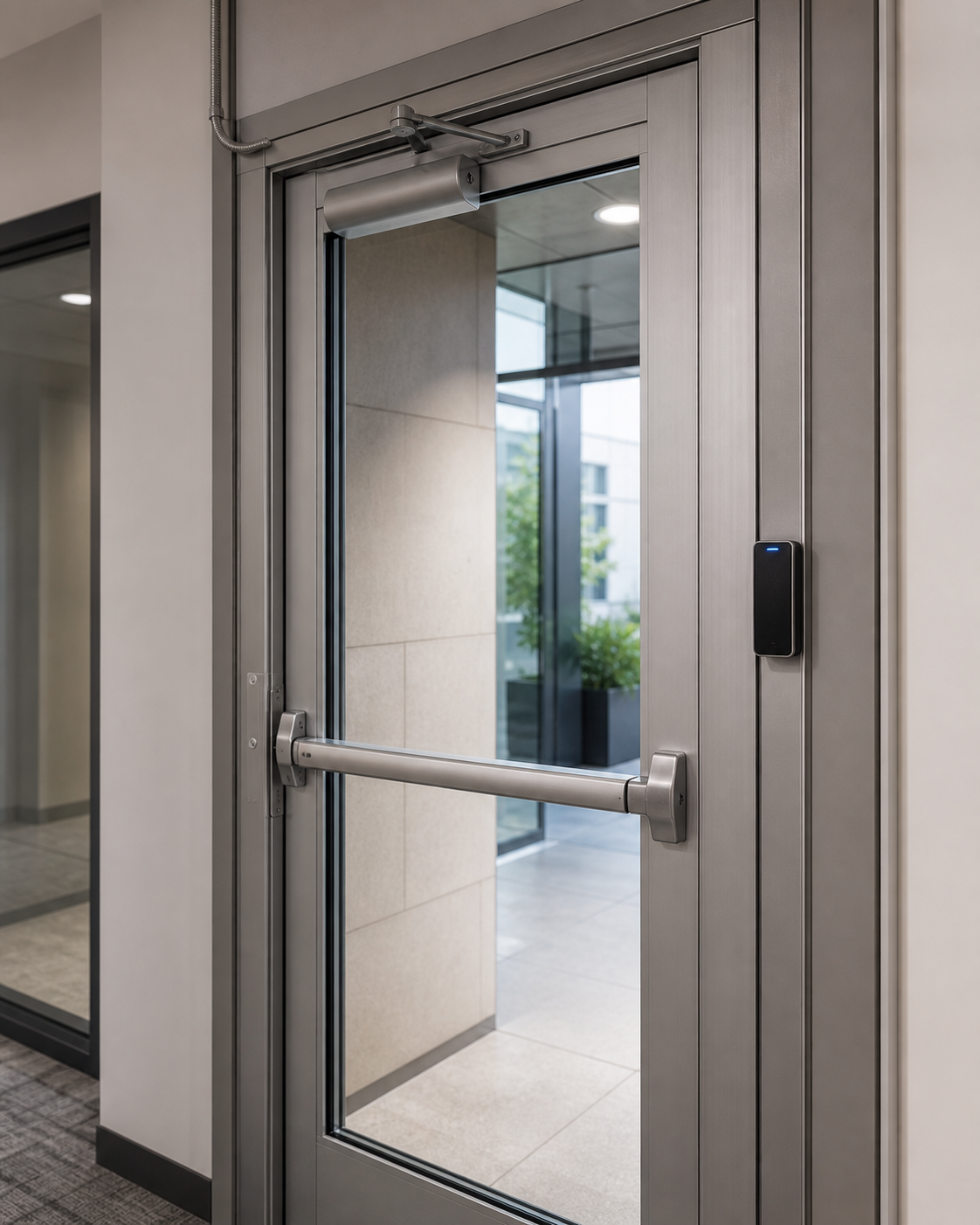
Many commercial doors are arranged for free egress. A person on the secure side can use a lever, push bar, panic hardware, request-to-exit device, or other approved method to leave. From the outside, the same door remains locked unless someone presents valid credentials or authorized staff release it.
A typical exterior door might therefore operate like this during an alarm:
- Occupants push the interior exit hardware and leave.
- The door closes behind them.
- The exterior handle or access-control reader remains locked.
- Unauthorized people cannot simply pull the door open from outside.
Whether a particular door is permitted to operate this way depends on its hardware and approved design. Egress must never depend solely on someone finding a key or entering a code during an emergency.
Fail-safe doors versus fail-secure doors
“Fail safe” and “fail secure” describe what locking hardware does when electrical power is lost. They do not, by themselves, describe the complete fire-alarm response or whether occupants can exit.
| Door hardware behavior | What happens when power is lost | Common security effect | Egress consideration |
|---|---|---|---|
| Fail safe | The lock releases or unlocks | Entry may become possible unless another mechanical lock or controlled barrier remains | Often used where emergency release is required |
| Fail secure | The lock remains locked from the entry side | The secure side stays protected during a power outage | Approved hardware must still allow occupants to exit where required |
What is a fail-safe lock?
A fail-safe electric lock requires power to remain locked. If power is removed, it unlocks. Electromagnetic locks are a common example, although their required release methods and system interfaces depend on the installation.
Fail-safe operation supports emergency release, but it can create a security concern if a power outage or system fault unlocks a perimeter opening. Designers may address that risk through door placement, mechanical hardware, monitoring, backup power, staffing, or other approved measures.
What is a fail-secure lock?
A fail-secure electric lock remains locked from the entry side when power is lost. Many electric strikes can be configured this way. On an egress door, the interior lever or panic hardware may still mechanically retract the latch, allowing people to leave even though entry remains restricted.
Fail secure does not mean people are locked inside. Properly selected egress hardware separates the ability to exit from the ability to enter.
Fire alarm release and power failure are not always the same event
A door can be fail secure during an ordinary power failure but still receive a dedicated release command under specific emergency conditions. Conversely, some doors are not intended to release when the general fire alarm activates.
The fire alarm sequence, access-control programming, lock power supply, emergency inputs, and mechanical door hardware must be evaluated together. Labels such as “fail safe” and “fail secure” are not enough to predict the complete behavior.
Some doors close during a fire alarm
People often assume fire alarms open doors. In reality, many fire and smoke doors are supposed to close.
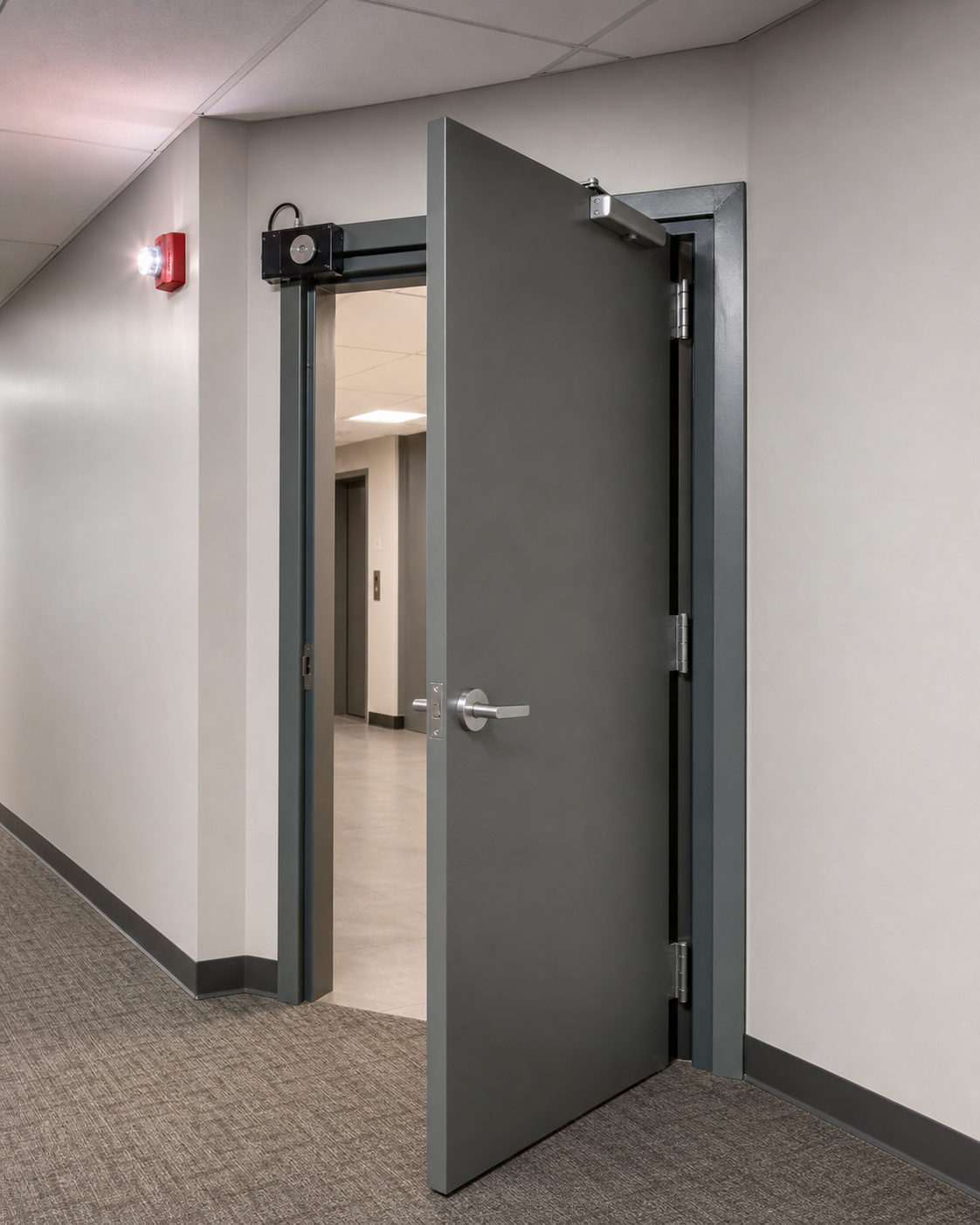
A fire-rated door may normally be held open by an electromagnetic holder. When the alarm activates, the holder releases and the door closes under its door closer. This helps maintain fire and smoke compartments.
These doors should not be wedged open. Blocked, damaged, or poorly adjusted doors can undermine the building’s fire-protection strategy even if the alarm system works correctly.
How elevators and HVAC systems may respond
Elevator recall
Elevators may be recalled to a designated level and removed from normal passenger service. The specific response can depend on where smoke is detected and how the system is programmed. Occupants should follow posted instructions and emergency announcements rather than attempting to use an elevator during an alarm.
HVAC shutdown and smoke control
Selected fans or air-handling units may shut down to reduce smoke circulation. Larger buildings may also have smoke-exhaust, stair-pressurization, or other engineered systems.
These actions are building-specific. A fire alarm may control some equipment directly and supervise or signal other systems through interfaces.
Is the building more vulnerable to break-ins during an alarm?
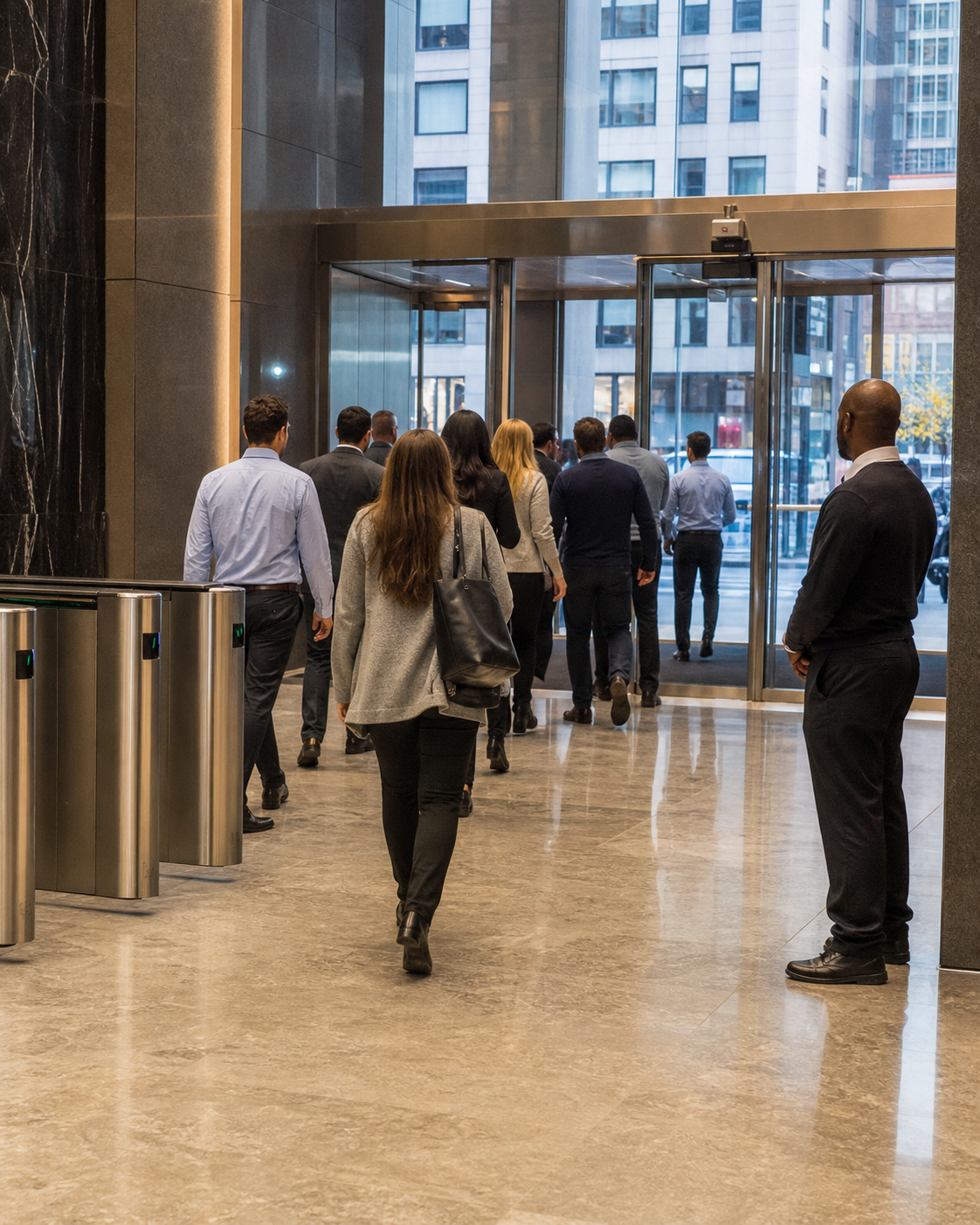
An alarm can create temporary security challenges even when exterior doors remain locked. Occupants may hold doors open, evacuation crowds can obscure entrances, and responding personnel may need rapid access. Someone may also try to enter while staff are focused on the emergency.
A coordinated security plan can reduce these risks without interfering with evacuation or emergency operations.
Useful measures include:
- Assigning trained personnel to observe key perimeter entrances from a safe location
- Monitoring access-control events and door-held-open alerts
- Maintaining camera coverage of entrances, lobbies, loading areas, and emergency exits
- Preventing evacuees from propping exterior doors open
- Establishing a controlled reentry process after authorities permit occupants to return
- Checking emergency exits and locking hardware during routine inspections
- Ensuring security personnel understand which doors release, close, or remain secured
- Preserving alarm and access-control event logs for later review
Security activity must never delay evacuation, obstruct responders, or encourage personnel to remain in an unsafe area. Life safety comes first.
Why building teams should test the full sequence
Testing only the alarm horns does not reveal how all connected systems respond. Building management should coordinate qualified fire alarm, elevator, HVAC, access-control, door-hardware, and security vendors as appropriate.
A practical review should answer:
- Which doors unlock when the fire alarm activates?
- Which doors remain locked from the outside but permit free egress?
- Which held-open fire doors close?
- What happens during a loss of normal power?
- Are lock power supplies backed up or supervised?
- Where do elevators recall?
- Which fans stop or start?
- Who receives the alarm signal?
- Who watches entrances during evacuation and reentry?
- How are door, alarm, and camera events documented?
Any functional test should be planned with the appropriate service providers and building stakeholders. Do not activate or disable life-safety equipment casually, and do not reset an alarm until authorized procedures have been followed.
Combine life safety with perimeter security
The best emergency plan does not treat fire safety and physical security as competing goals. It enables prompt evacuation, supports emergency responders, and maintains reasonable control of the property perimeter.
Guardian ISI can provide commercial office security, fire-life-safety personnel, and emergency coverage for Manhattan properties. To discuss planned or urgent coverage, call or text (212) 602-1695 or request coverage online.
Official references
Frequently asked questions
Does pulling a fire alarm unlock all exterior doors?
Not necessarily. Only doors included in the building’s approved alarm and access-control sequence should change state. Many exterior doors continue to block entry while allowing occupants to exit.
Can a fail-secure door trap people inside?
Fail secure refers to the lock remaining secured from the entry side when power is lost. On a required egress door, approved interior hardware must still permit occupants to leave.
What is the main difference between fail-safe and fail-secure locks?
A fail-safe lock unlocks when electrical power is removed. A fail-secure lock remains locked from the entry side, although properly designed egress hardware can still allow people to exit.
Does a manual pull station activate the sprinklers?
Normally, no. Pulling the station activates the fire alarm sequence. Individual sprinkler heads generally operate in response to heat, and sprinkler water flow can then signal the alarm system.
Do fire doors open or close when an alarm activates?
Many held-open fire and smoke doors close when the alarm releases their magnetic holders. Selected electronically locked egress doors may unlock, so behavior varies by door and system design.
How can a building prevent break-ins during an evacuation?
Maintain free egress while monitoring perimeter doors, cameras, access-control events, and reentry. Trained personnel should never block evacuation or remain in an unsafe area solely to protect property.