

Warehouses in Hunts Point and the South Bronx have security needs that differ from those of a typical Manhattan office building. Large footprints, active loading docks, trailer yards, overnight operations, contractors, and frequent vehicle movements create multiple points of exposure—often at the same time.
For owners, property managers, and operations leaders seeking warehouse security in the Bronx, an effective patrol plan should reflect how the property actually functions. It should define priorities, coordinate fixed posts with mobile patrols, and give security personnel clear instructions for reporting and escalation.
Why warehouse patrol planning must be site-specific
A generic instruction to “patrol the building” is not enough for an industrial property. Two warehouses on the same block can have different operating hours, cargo profiles, access systems, tenant responsibilities, and surrounding conditions.
A useful assessment starts with several questions:
- When do employees, drivers, vendors, and contractors arrive?
- Which entrances are staffed, locked, alarmed, or remotely monitored?
- Where are trailers, delivery vehicles, keys, fuel, tools, or valuable inventory kept?
- Are loading bays left open during active operations?
- Which areas become quiet or unoccupied overnight?
- Who has authority to approve entry after hours?
- What should happen when a guard finds an open door, damaged fence, alarm condition, leak, or blocked exit?
The answers determine where officers should be positioned, which areas require patrols, and when coverage should increase.
Common security priorities in Hunts Point warehouses
Hunts Point is a major industrial and distribution area with substantial truck activity. Security plans must account for busy logistics periods without assuming that every person or vehicle near a facility is connected to that property.
Loading docks and vehicle gates
Loading areas combine people, vehicles, merchandise, and open access points. During busy periods, guards may need to support entry verification, observe dock activity, and keep unauthorized pedestrians away from operational areas.
Post orders should explain how to handle:
- Drivers arriving early, late, or at the wrong entrance
- Vehicles without an expected appointment or delivery reference
- Requests to enter through an open loading bay
- Tailgating through vehicle gates
- Unattended vehicles near doors, ramps, or fire access areas
- Disputes involving loading order, parking, or access
Security personnel should not improvise receiving rules. Management should provide an approved contact list and a clear process for resolving exceptions.
Perimeters, yards, and parked trailers
Fences and gates are important, but they are not a complete security program. Patrols should check for damage, unsecured gates, poor visibility, evidence of attempted access, and changes from the property’s normal condition.
Trailer and container checks can be incorporated into patrols without asking guards to handle cargo or interfere with logistics. Depending on the site, officers may document trailer locations, visibly damaged seals, open doors, or vehicles parked in restricted areas and then notify the designated operations contact.
Employee and contractor entrances
Shift changes can produce a high volume of arrivals within a short period. A plan may require a fixed officer at the employee entrance during these windows, followed by mobile patrol duties after traffic subsides.
Management should define which credentials are accepted, whether visitors must be escorted, and how terminated, suspended, or unknown credentials are handled. Guards also need a reliable way to contact an authorized manager when access-control records do not match the person at the door.
Interior storage and restricted areas
Not every interior area needs equal patrol attention. Higher-priority locations may include inventory cages, shipping offices, key-control rooms, electrical and mechanical spaces, roof-access points, and areas where valuable equipment is stored.
Patrol routes should also account for employee safety concerns, including poorly lit corridors, isolated stairways, and distant parking areas. These observations can help management identify maintenance or operational issues beyond conventional security incidents.
Build patrol routes around risk and activity
An effective warehouse patrol plan usually combines predictable accountability with enough variation to avoid an easily anticipated routine.
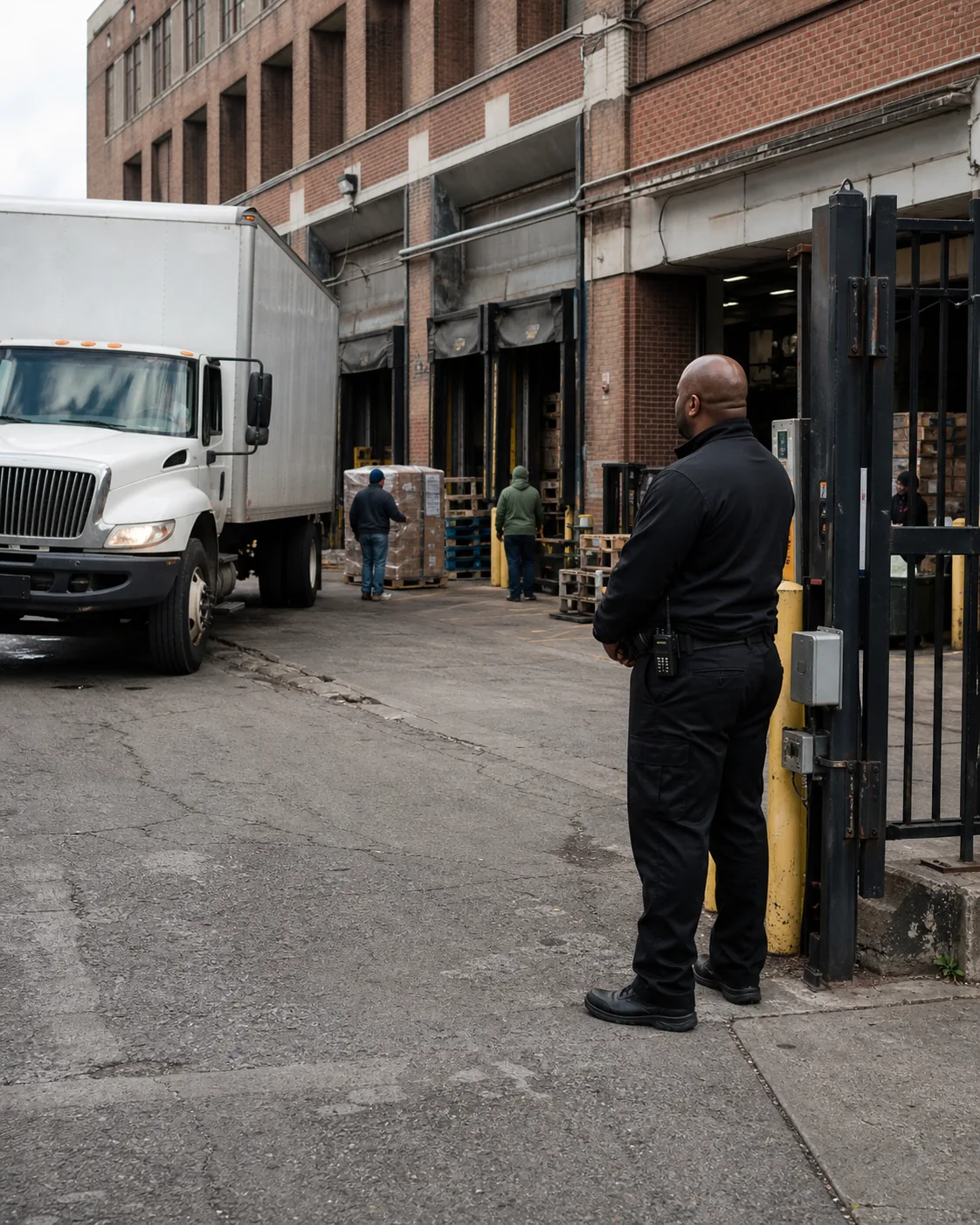
Divide the property into patrol zones
Large sites are easier to manage when divided into defined zones, such as:
- Public frontage and employee entrance
- Loading docks and shipping areas
- Vehicle gate, yard, and perimeter
- Interior warehouse aisles and restricted rooms
- Roof, stairways, utility areas, and secondary exits
Each zone should have specific observations assigned to it. “Check Dock 4 pedestrian door for secure condition” is more useful than “inspect loading area.”
Set frequency according to operating conditions
Patrol frequency should reflect risk, staffing, and activity rather than an arbitrary universal schedule. A dock may require near-continuous observation during receiving hours but only periodic checks after it is secured. A remote yard may need more attention overnight, while an employee entrance may be the priority at shift changes.
Managers should consider increasing coverage during:
- Major deliveries or inventory movements
- Overnight and weekend shutdowns
- Construction, repairs, or access-system outages
- Holiday closures
- Staffing transitions or unusual contractor activity
- Periods when doors, gates, cameras, or alarms are temporarily unavailable
When a facility has an urgent gap in protection, emergency security coverage can help bridge an outage or unexpected staffing need.
Avoid patrol patterns that become too predictable
Electronic checkpoints can confirm that an officer reached designated locations, but they should not turn the route into a rigid loop. A well-designed plan can include required checks within time windows while allowing officers to vary the sequence when operations permit.
Checkpoint records also do not prove that a meaningful inspection occurred. Supervisors should review reports for useful observations, appropriate responses, and recurring property conditions—not just completed scans.
Decide between fixed posts, mobile patrols, or a hybrid plan
Many warehouses benefit from a hybrid model.
A fixed officer can maintain continuity at a gate, lobby, or shipping entrance. A second officer—or the same officer during quieter periods—can inspect the perimeter and interior. The right configuration depends on whether the fixed post can ever be left unattended and how long a complete patrol takes.
A single officer should not be assigned simultaneous responsibilities that cannot realistically be performed together. For example, an officer cannot continuously control a busy vehicle gate while conducting a distant perimeter patrol. If both functions are essential at the same time, staffing or technology should be adjusted.
Professional security guard services should be supported by clear post orders, site orientation, supervision, and a communication plan tailored to the warehouse.
Connect guards with cameras, alarms, and access control
Technology is most useful when it directs human attention and preserves reliable information. It should not operate as a separate system that guards are expected to understand without training.
A coordinated plan should specify:
- Which alarms require immediate verification or escalation
- Who may review or export recorded video
- How guards report cameras that are offline or obstructed
- What happens when an access credential is rejected
- Whether guards may remotely open any gate or door
- How intercom requests are authenticated
- Who receives alerts after normal business hours
Camera views should cover operationally important areas without creating blind spots at doors, docks, gate lanes, and yard approaches. Lighting, weather, vehicle placement, and stacked materials can all affect visibility.
Write post orders that support consistent decisions
Post orders should be specific enough to guide action but simple enough to use during a busy shift. At minimum, warehouse instructions should identify:
- Post locations, coverage hours, and relief procedures
- Patrol zones and required checks
- Access rules for employees, visitors, drivers, and contractors
- Key, credential, and gate-control responsibilities
- Prohibited areas and activities
- Emergency contacts and escalation order
- Procedures for alarms, trespassing, property damage, medical events, and utility problems
- Report requirements and required notifications
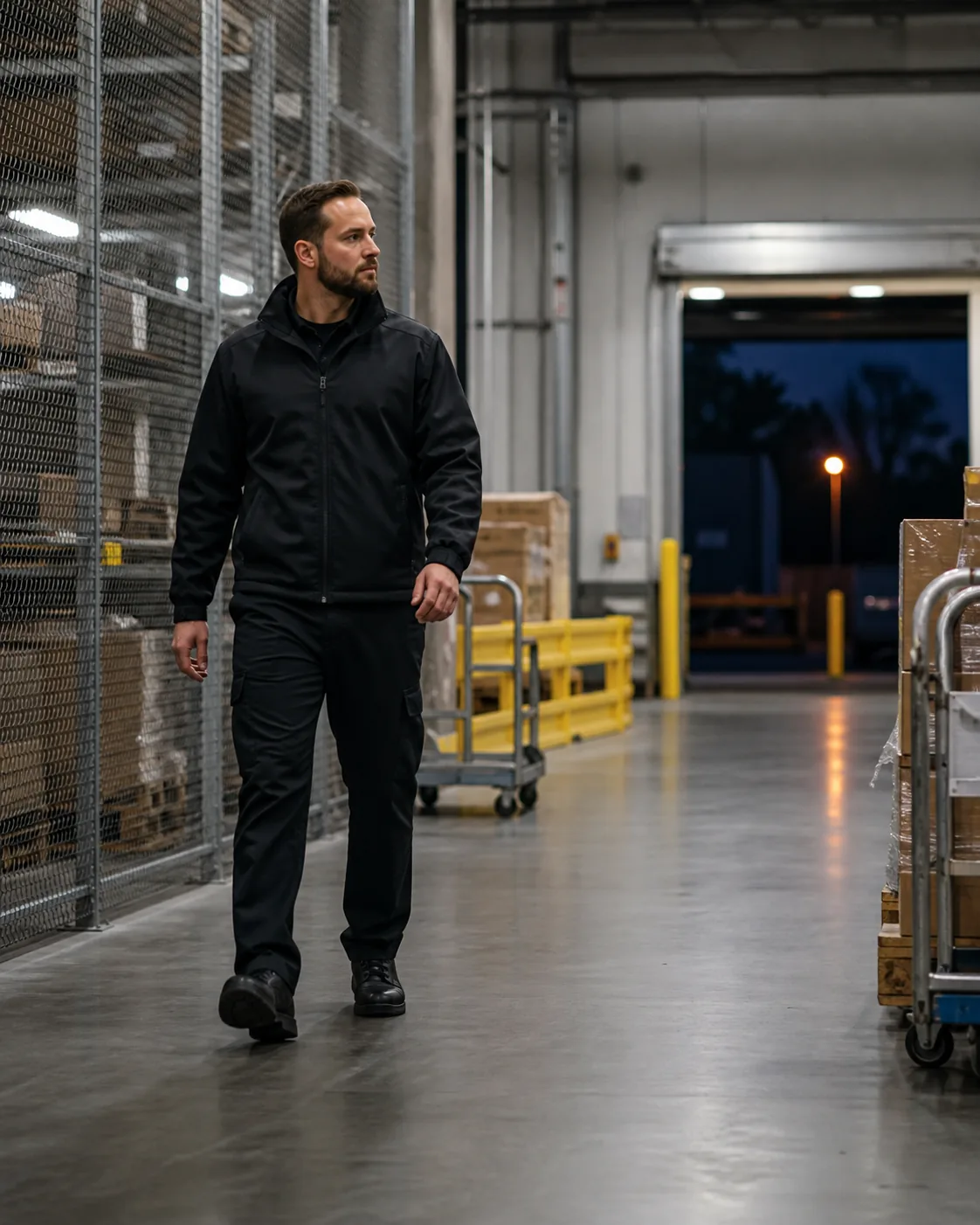
Emergency instructions should distinguish between calling 911 for an immediate emergency and contacting site management for a non-emergency operational issue. Guards should know where to meet first responders and how to provide access without obstructing evacuation or response activities.
Security patrols should also avoid being treated as a substitute for a required fire-life-safety role. If a property needs dedicated fire guard coverage or another specialized function, management should confirm the appropriate assignment separately.
Use reporting to improve the security plan
Incident reports are only one part of useful security documentation. Daily activity reports, exception logs, checkpoint records, and supervisor inspections can reveal recurring conditions before they become larger problems.
Reports should record objective details such as:
- Date, time, and exact location
- People or vehicles involved, when observable
- What the officer saw or was told
- Actions taken and people notified
- Relevant camera, alarm, or access-control information
- Whether the condition remained unresolved at shift change
For decision-makers managing a Bronx property from Manhattan or another location, concise exception reporting is especially valuable. Leaders should be able to identify open gates, repeated lighting failures, unauthorized parking, malfunctioning cameras, and access disputes without reading pages of routine entries.
A monthly review can compare incident types, locations, and times of day. The goal is not simply to count patrols; it is to determine whether the security program is reducing exposure and improving response.
A practical warehouse security planning checklist
Before starting or revising coverage, confirm that the plan includes:
- A current property map with entrances, docks, yards, stairs, and restricted areas
- Operating hours and shift-change schedules
- Authorized management and emergency contacts
- Visitor, vendor, and driver verification procedures
- Defined fixed-post and patrol responsibilities
- Instructions for open doors, damaged fencing, alarm conditions, and system outages
- Working radios or other dependable communication tools
- Reporting standards and escalation timeframes
- Procedures for severe weather, utility interruptions, and temporary closures
- Regular supervisor reviews and post-order updates
Plans should be revisited when tenants, operating hours, inventory, access points, construction activity, or technology change.
Request warehouse security coverage in the Bronx
Guardian ISI can help property and operations teams plan security coverage around loading activity, access points, patrol zones, reporting, and after-hours conditions.
To discuss warehouse security in the Bronx, call or text (212) 602-1695 or request coverage online. Provide the property location, desired hours, operating schedule, priority posts, and target start date so the coverage request can be reviewed efficiently.
Related Guardian ISI services
For on-site coverage and operational support discussed in this article, review Security Guard Services and Emergency Security Coverage. Contact Guardian ISI to discuss the property, duties, and availability.
Frequently asked questions
How many security guards does a Bronx warehouse need?
Staffing depends on the property’s size, operating hours, entrances, loading activity, and whether any post must remain continuously staffed. A site assessment can determine whether one officer, multiple officers, or a hybrid fixed-post and patrol model is practical.
What areas should warehouse security patrol?
Typical priorities include loading docks, vehicle gates, trailer yards, perimeter fencing, employee entrances, restricted storage, stairways, roof access, utility rooms, and secondary exits. Routes should be customized to the facility.
How often should a warehouse patrol be completed?
There is no universal interval. Frequency should reflect activity and risk, with added attention during shift changes, major deliveries, overnight periods, system outages, and closures.
Can security guards verify trucks and deliveries?
Guards can follow management-approved procedures for checking appointments, driver information, credentials, and vehicle details. Receiving personnel should retain responsibility for accepting cargo and resolving shipment discrepancies.
Can cameras replace warehouse security guards?
Cameras can improve awareness and documentation, but they do not physically control access, investigate every condition, or respond on site. Many properties use cameras, alarms, access control, and trained guards together.
Is emergency warehouse security coverage available?
Coverage may be requested for urgent needs such as staffing gaps, access-system outages, property damage, construction, or unexpected closures. Availability depends on the location, schedule, duties, and requested start time.