
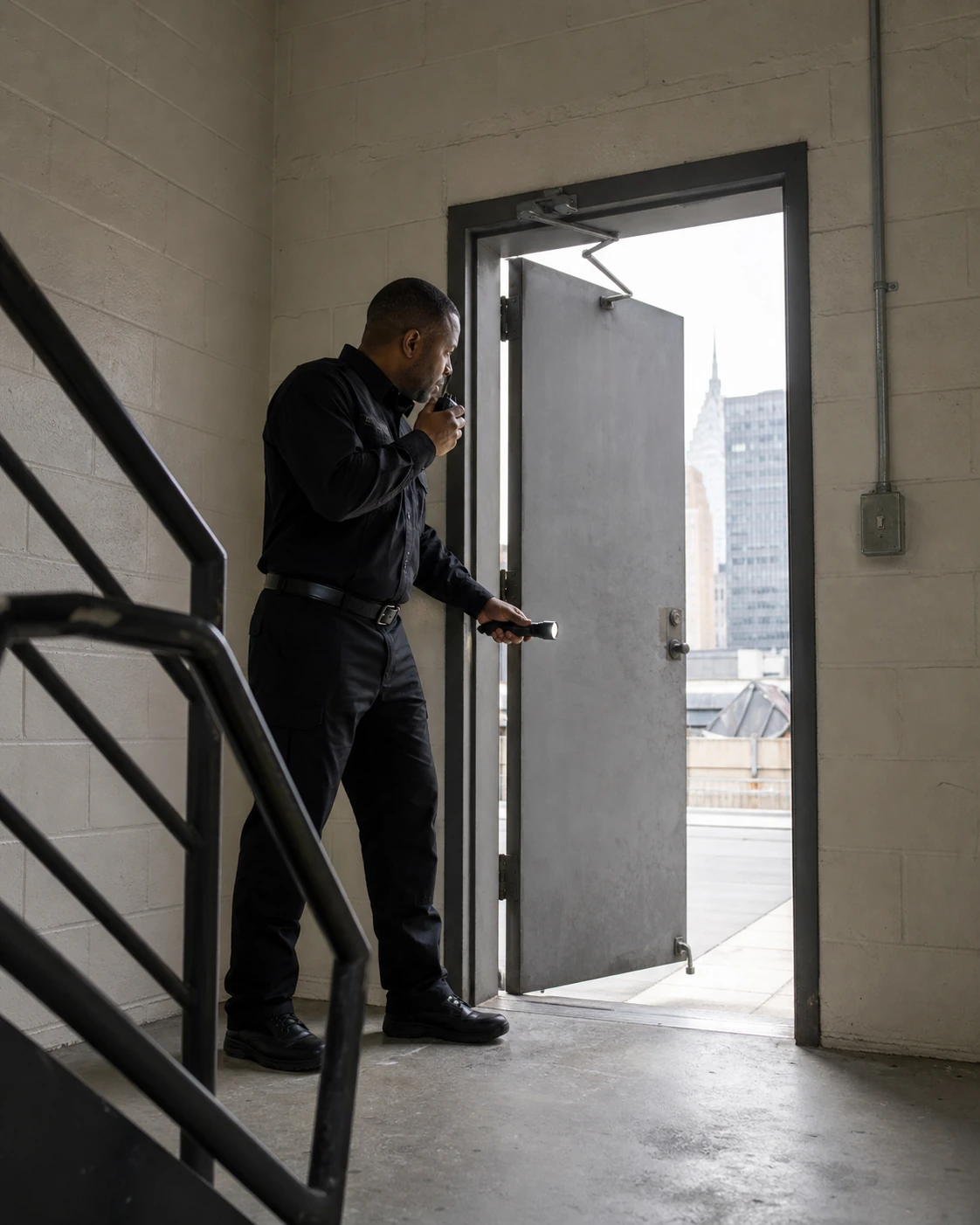
An unsecured roof door can be easy to dismiss as a maintenance problem. For a New York City property, however, it may also affect access control, tenant safety, equipment protection, and the integrity of the building perimeter.
The officer who discovers the condition should not simply pull the door shut and continue the patrol. A useful response establishes what happened, controls the immediate risk, preserves life-safety functions, and creates a clear path to permanent correction.
Treat the Discovery as an Active Condition
The first question is whether someone may already have entered the roof or used the door to access the building. The officer should pause, remain observant, and notify the appropriate security contact instead of automatically stepping onto an unfamiliar roof alone.
Initial observations may include:
- Whether the door is open, ajar, damaged, or failing to latch
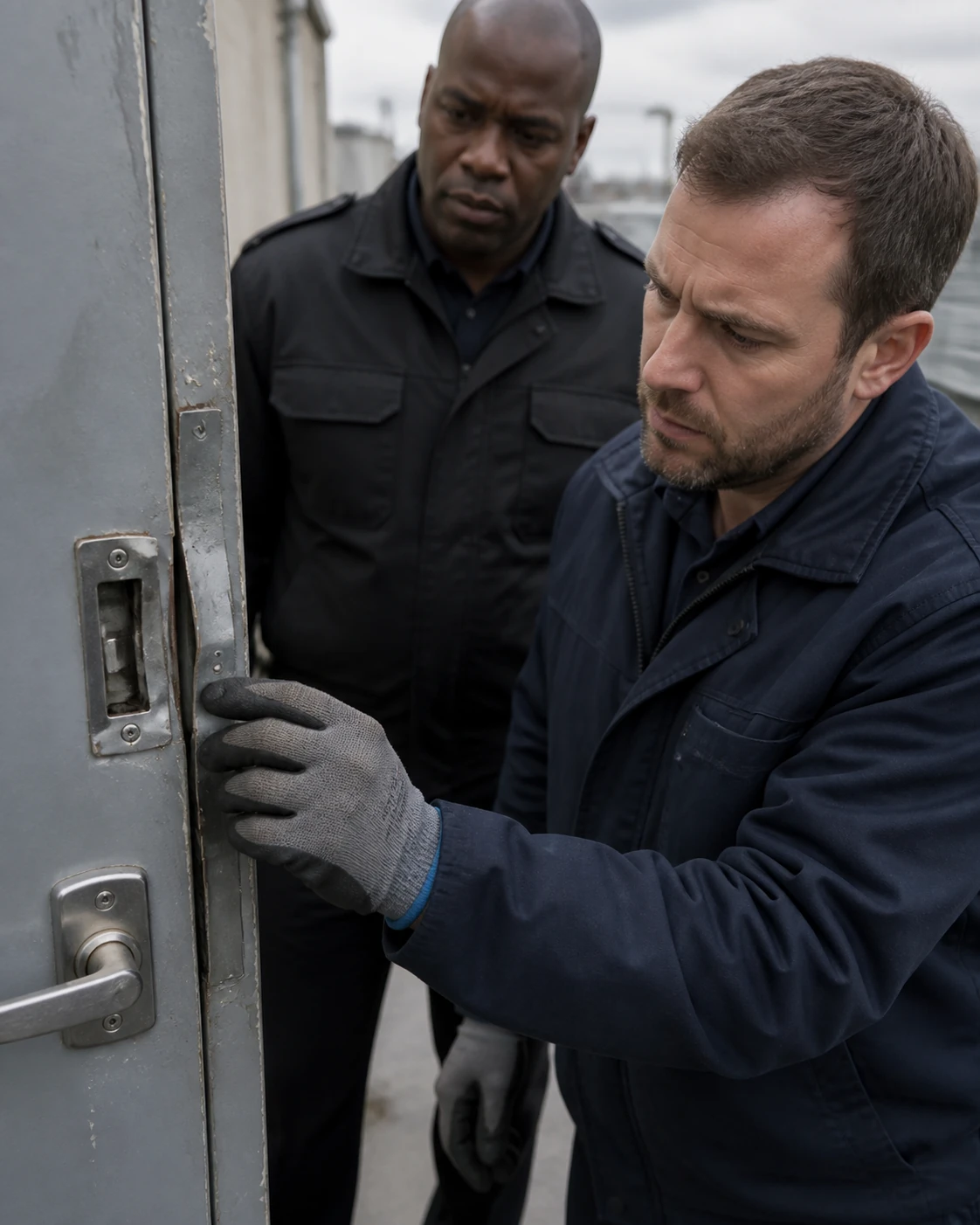
- Signs of forced entry or tool marks
- Persons, voices, movement, or newly placed property nearby
- Damage to the lock, closer, frame, hinges, or alarm contact
- Whether construction or maintenance work is underway
- Weather conditions that may have affected the door
- Whether another door provides access to the same roof area
If there is an immediate threat, suspicious person, fire, medical emergency, or other dangerous condition, the officer should follow the property’s emergency procedures and contact 911 when appropriate.
Do Not Create a Life-Safety Problem While Solving a Security Problem
Security personnel should not improvise repairs that could interfere with required egress or emergency access. Chains, padlocks, furniture, wire, or other makeshift devices can create new hazards.
Required means of egress must remain available for immediate use, so any temporary control should be approved by building management, engineering, or another authorized person who understands the door’s function. (nyc.gov)
The officer’s role is normally to report, observe, limit unauthorized access when safely possible, and maintain the condition until an authorized building representative determines the proper response.
Use a Clear Notification Order
Post orders should identify exactly whom the officer contacts after finding an unsecured perimeter door. A practical sequence may include:
- The on-duty security supervisor or command center
- Building management
- Engineering or maintenance
- The approved locksmith, door contractor, or alarm vendor
- Senior property leadership if the condition cannot be promptly controlled
Avoid vague instructions such as “notify management.” Officers need a current call list, after-hours numbers, and an escalation point if the first contact does not answer.
Decide Whether the Area Needs Temporary Coverage
If the door cannot be secured, management may need to establish a temporary post or add the location to a focused patrol until repairs are completed.
That decision should consider:
- Whether the roof can be reached from an adjoining property
- Access to mechanical equipment or tenant infrastructure
- The presence of ladders, scaffolds, terraces, or setback roofs
- Whether the door connects to an occupied floor or stairwell
- Previous trespassing, vandalism, or unauthorized smoking complaints
- How long the repair will take
- Whether an alarm or camera provides reliable coverage
A handwritten note on the desk is not an adequate temporary plan. The assignment should state who checks the door, how often it is checked, what conditions require escalation, and when the special instruction ends.
Conduct a Safe Area Check
If the property’s procedures authorize officers to inspect the roof, the responding officer should avoid entering alone when circumstances suggest that an unauthorized person may be present. The supervisor may assign a second officer, monitor the inspection by radio, or request police assistance when there is a credible threat.
The inspection should focus on observable conditions rather than an uncontrolled search. Look for:
- Unauthorized individuals
- Open hatches or secondary doors
- Damaged equipment or fencing
- Tools, bags, bedding, containers, or other unfamiliar property
- Signs that someone crossed from an adjacent roof
- Doors that permit entry back into tenant or mechanical spaces
Officers should not disturb suspicious property unnecessarily. Preserve the scene and follow the property’s incident procedures when criminal activity may have occurred.
Document More Than “Door Found Open”
A useful incident report should enable a manager who was not present to understand the condition and response. Include:
- Exact door and floor location
- Time discovered
- Patrol officer’s name
- Door position and visible damage
- Whether the area was checked
- Names and times of everyone notified
- Temporary measures authorized
- Contractor arrival and departure times, if applicable
- Repair status at the end of the shift
- Related camera or access-control information
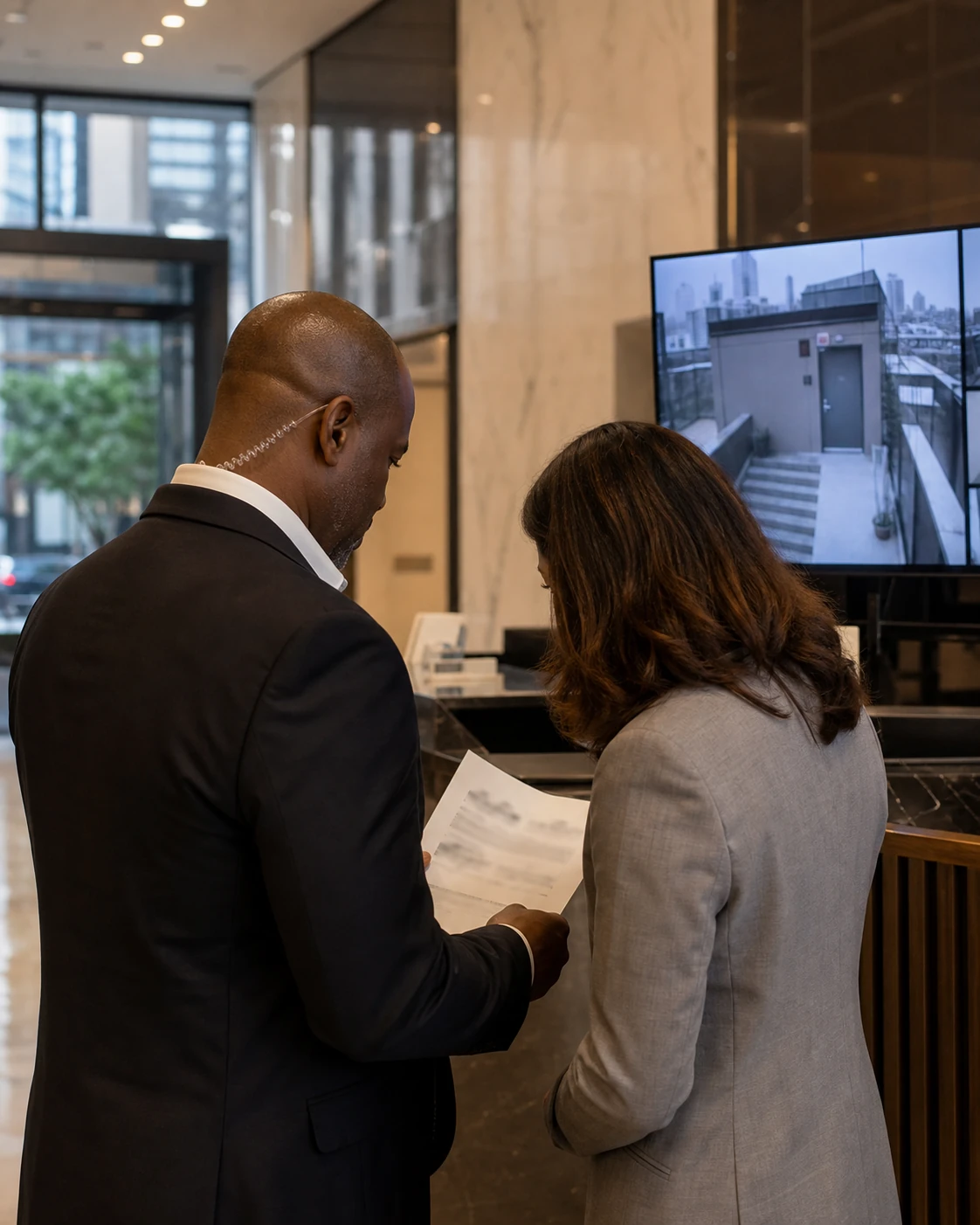
Photographs may be helpful when permitted by site policy, but they do not replace a written description.
Verify the Repair on a Later Patrol
A contractor’s departure does not automatically close the issue. Security or engineering should verify that the door closes, latches, and reports correctly to any connected monitoring system.
The property should then ask why the condition occurred. Possible causes include a failing closer, misaligned frame, improper contractor use, a propped door, an alarm that was ignored, or a post order that did not require verification after rooftop work.
This follow-up turns a one-time response into prevention.
Add Roof Doors to the Site’s Perimeter Strategy
Roof access should be addressed in the same operational plan as street entrances, loading docks, garage doors, stair discharge doors, and construction openings. Guardian’s security guard services can support fixed posts and property patrols, while commercial office security can help Manhattan managers align access procedures with building operations.
If your patrol program is finding repeated unsecured doors—or failing to find them until tenants complain—Guardian ISI can review routes, post orders, escalation procedures, and supervision. Call or text (212) 602-1695, or request coverage online.
Related Guardian services
Review ongoing perimeter checks through Security Guard Services. Discuss Emergency Security Coverage when an unsecured opening needs an additional temporary post.
Frequently asked questions
Should a security guard immediately lock an unsecured roof door?
Only if doing so is authorized and does not interfere with the door’s life-safety function. Improvised locking methods should not be used.
Should the officer go onto the roof alone?
Not automatically. The decision should follow site procedures and consider whether an unauthorized person, dangerous condition, or unfamiliar roof layout may be present.
When should police be called?
Call 911 when there is an immediate threat, suspected crime in progress, dangerous person, fire, medical emergency, or another condition requiring emergency response.
What should the incident report include?
Document the exact location, condition, visible damage, area check, notifications, temporary controls, repair status, and any relevant camera or access-control information.
How should the building handle a door that cannot be repaired immediately?
Management should approve a temporary control plan, which may include a dedicated post, focused patrol checks, restricted work access, and documented escalation instructions.