
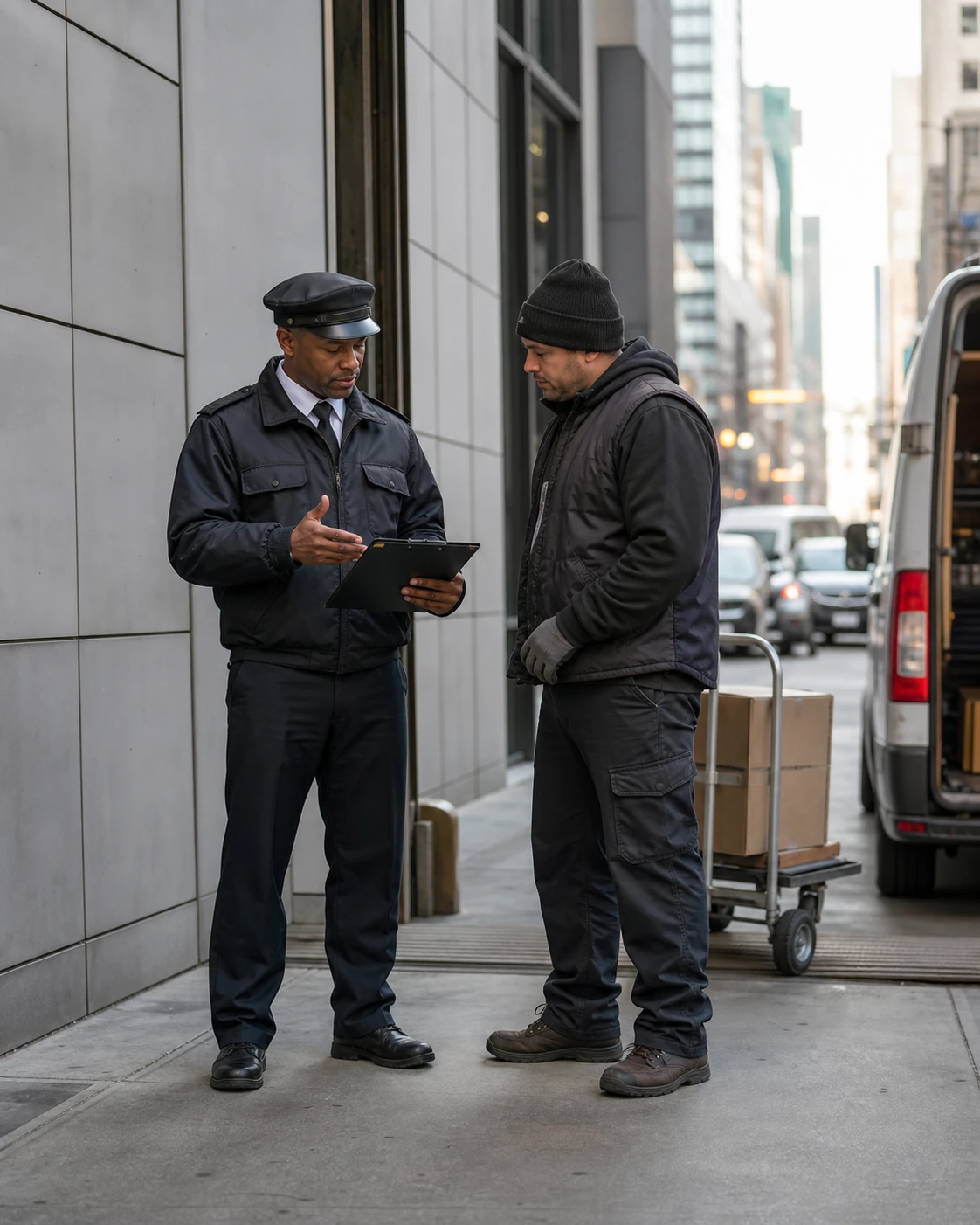
The United Nations General Assembly creates a demanding operating period for East Midtown properties. The United Nations lists the 2026 General Debate for September 22–26 and September 28. Building teams should separately check current NYC DOT embargo notices and official street-access directions; event dates alone do not establish which routes are available.
For commercial buildings, the challenge is not limited to traffic. Rolling restrictions, delayed vendors, displaced curb activity, unfamiliar drivers, crowded sidewalks, and last-minute tenant requests can place extra pressure on loading docks and service entrances.
A useful security plan should therefore answer a narrow operational question: How will the building keep necessary goods and contractors moving without weakening access control?
Start With a Time-Specific Operating Plan
A generic memo telling tenants to “expect delays” is not enough. Property management, security, engineering, and loading dock personnel should agree on a daily operating plan covering:
- Loading dock hours and any temporary reductions
- Deliveries that are essential, deferrable, or prohibited
- Contractor arrival windows
- Vehicle queuing limitations
- Approved entrances for couriers and hand-carried packages
- Escalation procedures when a scheduled vendor cannot reach the property
- The person authorized to approve an exception
The plan should identify both normal procedures and the temporary UNGA procedure. Otherwise, officers may be forced to improvise when a driver arrives late or approaches the wrong entrance.
Build an Approved Vendor List Before the Busy Period
A preapproved list helps the security team separate expected activity from unexpected arrivals. It should include:
- Vendor and company name
- Driver or technician name when available
- Vehicle description or plate number when available
- Tenant or department being served
- Expected date and arrival window
- Delivery contents or work purpose
- On-site contact and backup contact
- Whether access beyond the loading dock is required
The list is not a substitute for identification and verification. It gives the officer a reliable starting point when traffic conditions cause schedules to change.
Require Tenants to Confirm Late Changes
During a disruption, a tenant may tell a delayed driver to “just try another door.” That creates confusion and can bypass the loading dock’s normal controls.
Temporary instructions should state that security will not accept a rerouted vendor solely on the vendor’s claim. The tenant or designated building contact should confirm the change through an approved communication channel.
Separate Vehicle Decisions From Pedestrian Decisions
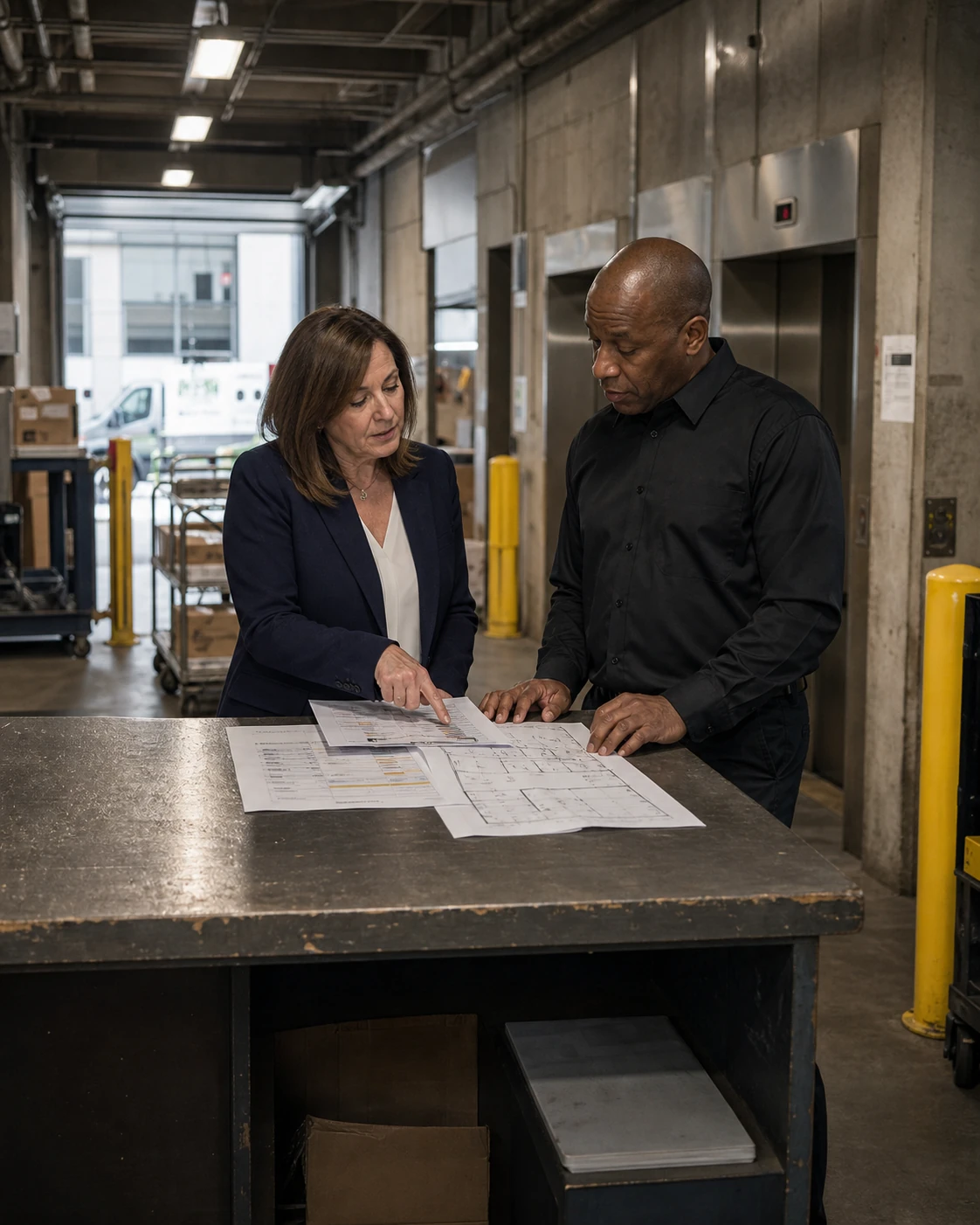
A truck that cannot enter the block may become a pedestrian delivery. Security should decide in advance:
- Whether hand-carried deliveries may use the main lobby
- Which package sizes require the service entrance
- Whether carts are permitted through public areas
- Where drivers may wait while authorization is confirmed
- Who handles food, messenger, medical, and high-value deliveries
This prevents lobby officers from making inconsistent decisions while managing normal tenant and visitor traffic.
Give the Loading Dock Guard a Delay Procedure
The officer needs more than a vendor schedule. Post orders should explain what to do when an expected vehicle is missing, significantly delayed, or unable to reach the property.
A practical sequence is:
- Confirm that the delivery was actually scheduled.
- Contact the listed tenant or building representative.
- Determine whether the delivery remains necessary that day.
- Provide only the approved alternate instructions.
- Record the delay, authorization, and outcome.
- Notify management if the issue affects building operations.
Security personnel should not direct a driver around a police checkpoint or promise curb access that the building does not control.
Protect the Dock From Courtesy-Based Exceptions
Pressure tends to increase when streets are congested. Familiar vendors may ask officers to skip a step because they are late, parked illegally, or carrying temperature-sensitive materials.
Property managers should make clear that urgency does not automatically authorize access. Officers still need to verify the company, destination, purpose, and receiving contact. If an exception is approved, the name of the person granting it should be documented.
Review the Physical Service Area
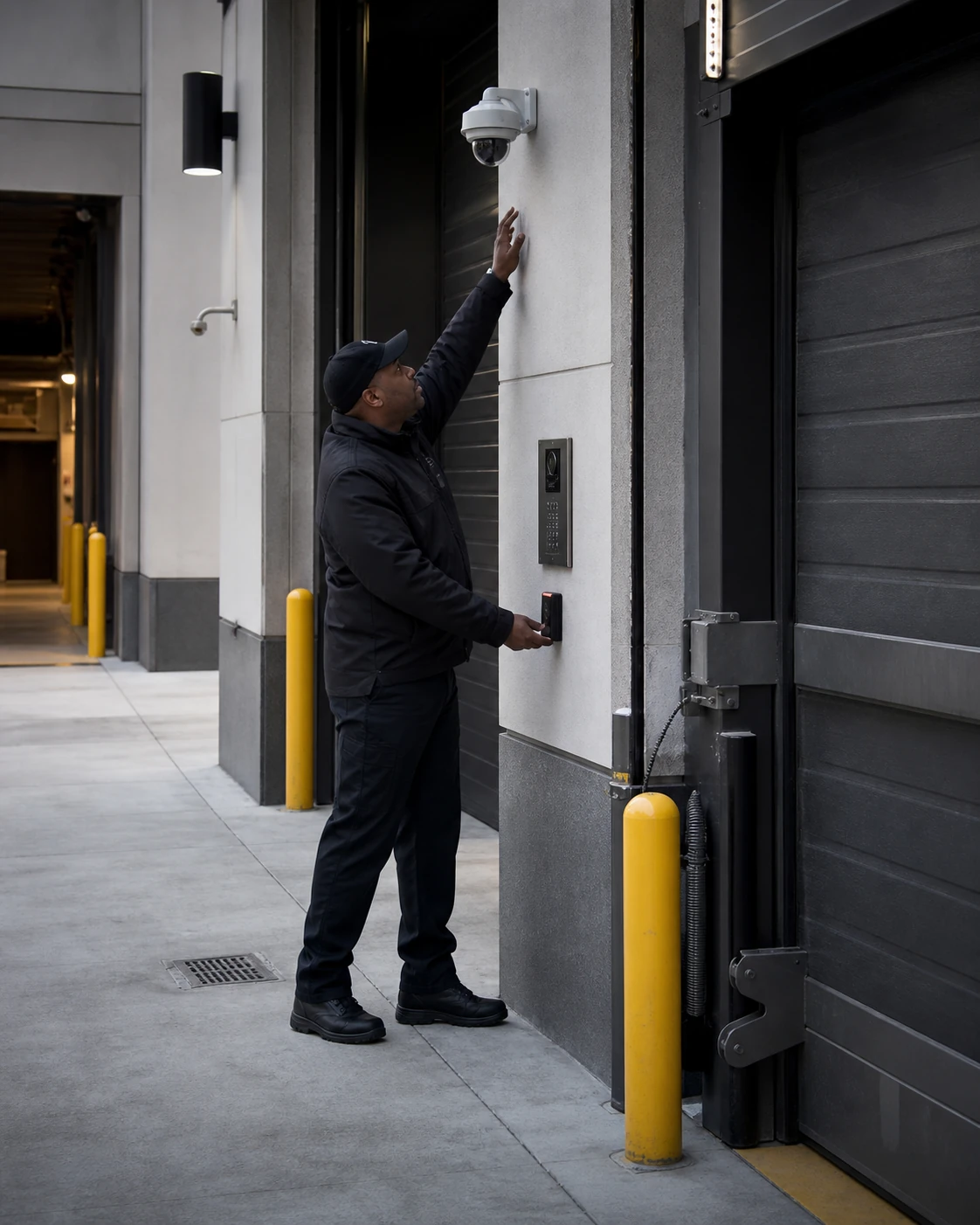
Before heightened activity begins, conduct a short walk-through of the loading dock and nearby service corridors. Check:
- Exterior and interior doors
- Intercoms, cameras, card readers, and lighting
- Vehicle gates and roll-down doors
- Package inspection or holding areas
- Emergency exits and fire doors
- Radio reception
- Areas where delayed workers can wait without blocking egress
- Blind spots created by stored materials or temporary construction
Resolve ordinary defects before the location becomes busier. A recurring door problem that is manageable on a quiet day can become a serious access-control weakness when multiple vendors arrive together.
Establish a Daily Communication Rhythm
Conditions can change between the morning commute and afternoon delivery period. Use a short daily briefing to update officers on:
- Approved vendors and contractors
- Expected VIP or tenant events
- Known street restrictions
- Suspended delivery windows
- Changes to entrances or staffing
- Open incidents from the previous shift
- The manager responsible for real-time decisions
The briefing should be concise enough to use at every shift change. Outdated versions should be removed so officers do not follow conflicting instructions.
Conduct an After-Action Review
After the operating period, compare the plan with what actually happened. Useful questions include:
- Which vendors repeatedly arrived outside approved windows?
- Did tenants follow the notification procedure?
- Were service entrances adequately staffed?
- Did drivers attempt to use public entrances?
- Which communications reached officers too late?
- Did any exception reveal a permanent weakness in access control?
These findings can improve future plans for parades, demonstrations, diplomatic activity, severe weather, and other Manhattan disruptions.
Plan Coverage Before Access Becomes Difficult
Guardian ISI can help Manhattan properties establish temporary post orders, loading dock procedures, patrol coverage, and supervisor communication for high-impact operating periods.
Call or text (212) 602-1695, or request security coverage before street restrictions and vendor delays begin affecting your building.
Related Guardian services
Review Commercial Office Security for loading-dock and building access staffing. Discuss Emergency Security Coverage if a temporary gap needs additional personnel.
Official references
Frequently asked questions
When is the 2026 UN General Assembly General Debate?
The United Nations lists the 2026 General Debate for September 22 through September 28, with no session scheduled on Sunday, September 27.
Should an East Midtown building stop all deliveries during UNGA?
Not necessarily. Management can prioritize essential deliveries, reduce nonessential activity, establish narrower windows, and require advance vendor confirmation.
Can a delayed vendor use the main lobby instead of the loading dock?
Only if the property has approved that alternative. The decision should account for package size, lobby operations, tenant verification, public-area rules, and access control.
What information should security receive about expected vendors?
Provide the company, individual or driver when known, arrival window, purpose, destination, on-site contact, and any approved access beyond the loading dock.
How should officers document UNGA-related delivery problems?
Record the scheduled vendor, arrival or attempted arrival time, verification steps, person contacted, instructions received, exception approval, and final outcome.