
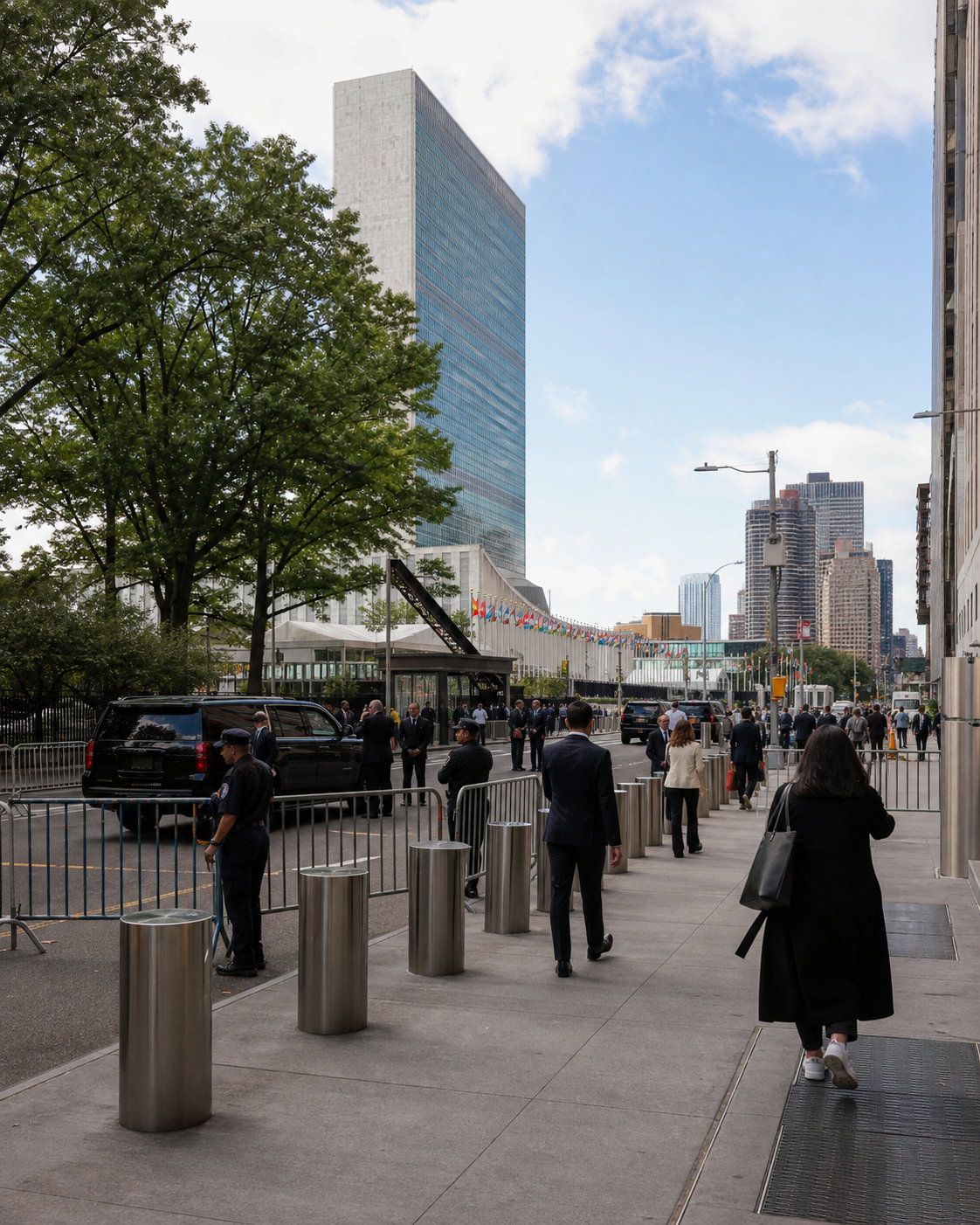
The event often called the “New York General Assembly” is the United Nations General Assembly (UNGA), held annually at United Nations Headquarters in Manhattan. Its high-level meetings bring heads of state, diplomats, security details, media teams, demonstrators, and additional visitors to New York City.
For Manhattan property managers, hotel operators, building owners, and corporate security teams, UN General Assembly week can affect far more than the blocks surrounding the UN. Temporary street restrictions, motorcades, crowded sidewalks, changing delivery windows, and high-profile guests can create operational challenges across Midtown and other parts of the city.
For the current 2026 calendar, the United Nations lists High-level Week as September 18–28, with the General Debate September 22–28. Verify city traffic restrictions separately; meeting dates are not a street-closure schedule.
The best response is not to make assumptions about threats. It is to prepare for predictable changes in access, traffic, staffing, and communication.
Why UN General Assembly Week Requires Advance Planning
UNGA-related conditions can change quickly. A route that was open during the morning may be restricted later because of a motorcade or official movement. Guests, employees, vendors, and delivery drivers may arrive late or use entrances they do not normally use.
Properties may experience:
- Temporary street and curb restrictions
- Vehicle and pedestrian congestion
- Delayed deliveries and contractor arrivals
- Higher lobby and visitor volume
- Unplanned media activity near entrances
- Demonstrations or counter-demonstrations
- Requests involving VIPs or protective details
- Increased demand for licensed security personnel
Restrictions vary by day and location. Building teams should monitor current information from the NYPD, NYC Department of Transportation, Office of Emergency Management, the United Nations, and other official sources rather than relying on prior-year traffic plans.
Start With a Property-Specific Risk and Operations Review
A useful UNGA plan should reflect the property’s location, occupants, entrances, loading areas, and normal staffing. A hotel near a diplomatic venue has different concerns from a residential tower, retail store, or construction project.
Map every point of entry
Review the main lobby, employee entrance, loading dock, parking access, service corridors, roof access, and any doors shared with neighboring tenants. Confirm which entrances should remain open and who has authority to change access procedures.
Avoid making last-minute entrance changes without communicating them. Confused employees and vendors can create unnecessary crowding at the wrong door.
Review expected activity
Ask tenants, event teams, and hotel departments about scheduled meetings, receptions, visiting executives, media arrivals, or large deliveries. Protective details and VIP teams may have their own procedures, but property management should maintain clear control over building operations.
Identify realistic pressure points
Focus on likely operational issues, including crowded lobbies, unattended packages, unauthorized photography in controlled areas, frustrated drivers, delivery delays, and people attempting to follow authorized visitors through secure doors.
Strengthen Lobby and Access-Control Procedures
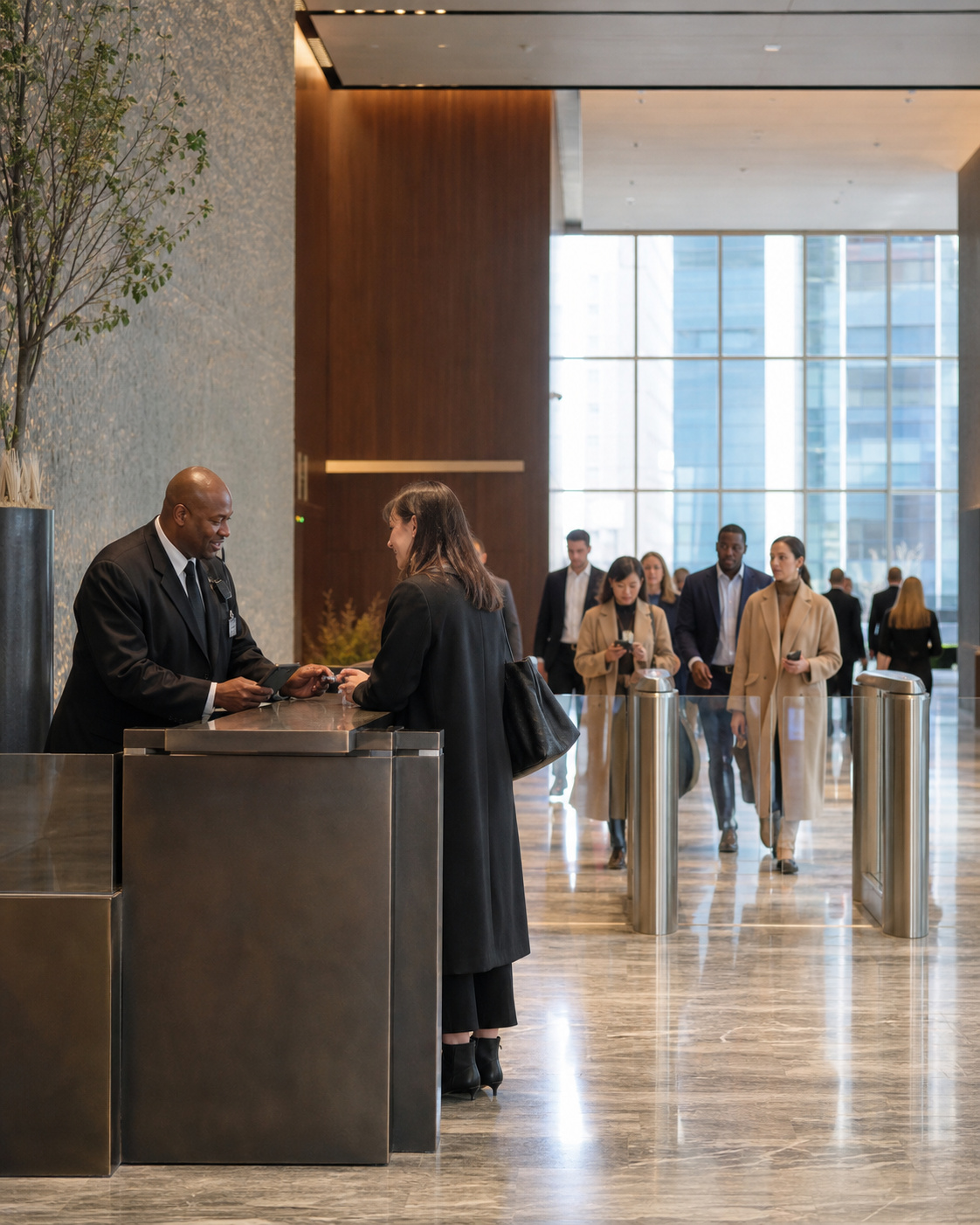
A visible, professional lobby presence can help maintain order while preserving a welcoming environment. Officers and front-desk personnel should receive written post instructions covering visitor processing, credential checks, tenant notifications, deliveries, restricted areas, and escalation procedures.
Recommended steps include:
- Confirm the current tenant and employee access policy.
- Test access-control devices, radios, intercoms, cameras, and duress systems.
- Update emergency and management contact lists.
- Define procedures for unannounced VIPs, media representatives, and large groups.
- Establish who may approve exceptions to normal access rules.
- Record incidents and significant operational changes consistently.
Security personnel should not guess whether a credential, diplomatic document, or request grants access to private property. When in doubt, they should follow the building’s verification and escalation process.
Businesses that need additional lobby, perimeter, or overnight support can consider commercial office security or temporary security guard coverage.
Plan for Traffic, Deliveries, and Curbside Disruptions
Transportation disruption is often the most immediate concern during UNGA week. Deliveries may miss scheduled windows, rideshare vehicles may stop in unexpected locations, and employees may be forced to approach from a different avenue or cross street.
Building teams should:
- Ask vendors to confirm routes before departure
- Move nonessential deliveries outside peak periods when practical
- Create a backup delivery location or holding procedure
- Tell employees where to enter if the primary approach is blocked
- Keep fire lanes, exits, and emergency access points clear
- Assign staff to loading and curbside areas only when it can be done safely
Do not promise unrestricted vehicle access to guests or tenants. Public street access is controlled by city authorities and may change with limited notice.
Guidance for Hotels, Residential Buildings, and Retailers
Hotels
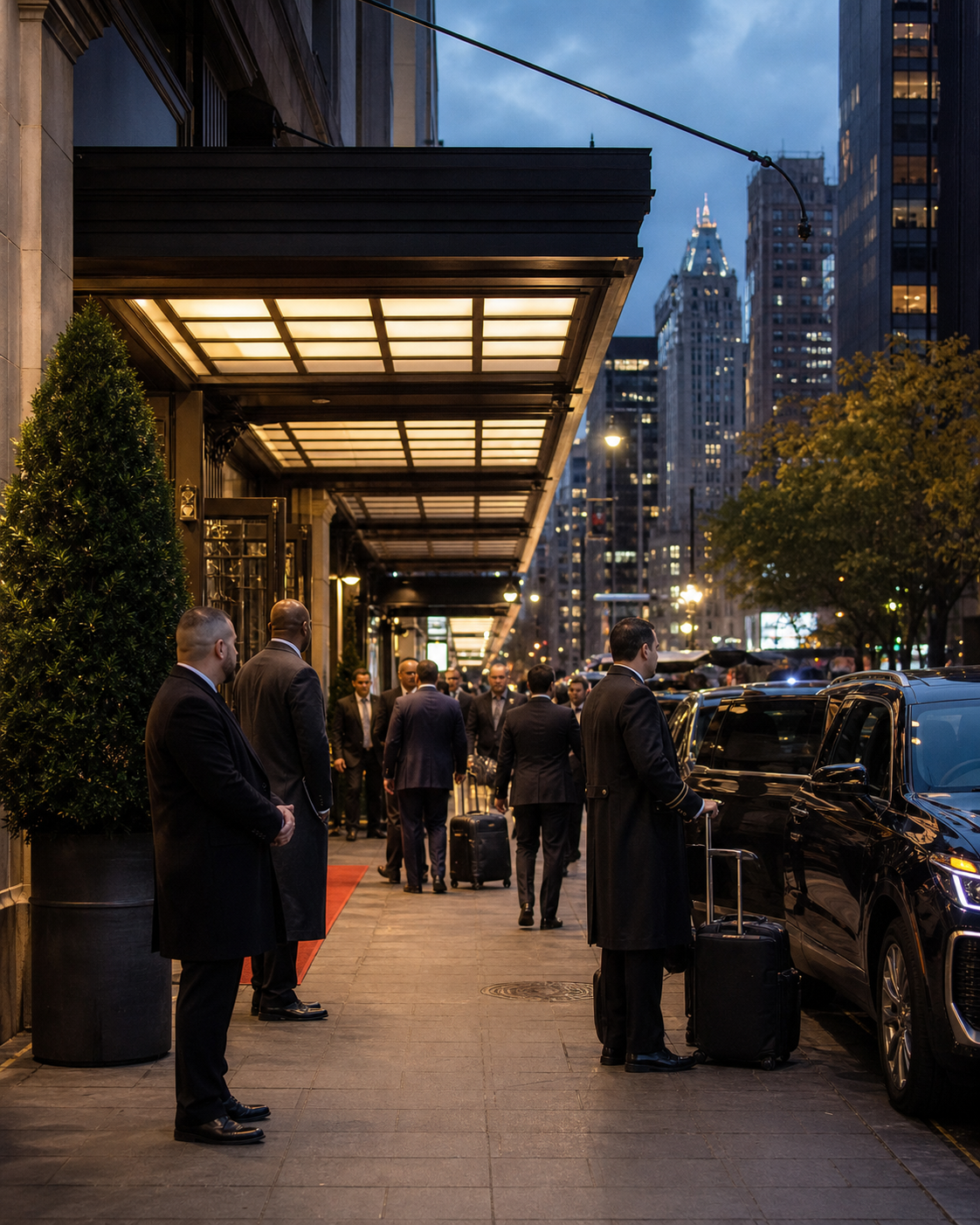
Hotels may face increased guest volume, vehicle arrivals, luggage handling, meeting activity, and requests for privacy. Management should coordinate the front desk, bell team, engineering, events, housekeeping, and security departments before high-profile arrivals.
Temporary officers can support entrance observation, event access, elevator control, and overnight patrols. Learn more about hotel security services.
Residential properties
Residential teams should preserve normal resident access while applying visitor and delivery policies consistently. Staff should be prepared for unfamiliar drivers, additional household employees, private events, and guests arriving without complete instructions.
Residents should receive a short operational notice explaining anticipated access or delivery disruptions without disclosing sensitive security details. Additional support is available through residential security.
Retail locations
Retailers should consider crowd flow, storefront visibility, high-value merchandise, closing procedures, and the possibility that street restrictions will affect staffing or customer traffic. Employees should know when to contact management, building security, or emergency services rather than engaging with demonstrators or disruptive individuals.
Do Not Overlook Construction and Vacant Areas
Active construction sites and partially occupied buildings can become more difficult to supervise when sidewalks are crowded or access routes change. Confirm fencing, gates, lighting, material storage, temporary doors, and after-hours contact procedures before UNGA activity increases.
Security officers assigned to construction environments need site-specific instructions. Their responsibilities may include access logs, perimeter patrols, delivery verification, and reporting unsafe or suspicious conditions. Guardian ISI provides dedicated construction security for New York City projects.
Coordinate Security With Fire-Life-Safety Operations
Security planning should support—not obstruct—the property’s fire-life-safety procedures. Temporary checkpoints, event furniture, luggage, equipment, or crowd-control measures should not block exits, stairs, fire department access, or other required paths.
Building management should confirm that relevant fire-life-safety personnel understand any temporary changes to occupancy, events, access, or staffing. If a property has a system impairment or another condition requiring fire watch coverage, management should determine the appropriate response with its fire-safety professionals and applicable authorities.
Guardian ISI can help properties arrange qualified fire guards and Fire and Life Safety Directors based on the site’s actual needs.
Create a Clear Communications Plan
During a high-activity week, communication failures can cause more disruption than the original issue. Establish one reliable method for distributing updates to managers, security officers, engineering staff, tenants, and vendors.
A practical communications plan should identify:
- The on-duty decision-maker for each shift
- Primary and backup communication methods
- Emergency and nonemergency contact numbers
- Who receives official traffic and street updates
- Who may communicate with guests, tenants, or media
- How incidents and shift changes will be documented
Brief every shift. Conditions and instructions may change between the morning, afternoon, and overnight periods.
When to Request Additional Security Coverage
Consider supplemental coverage if your property expects high-profile visitors, extended operating hours, large events, heavier lobby traffic, reduced employee availability, or unusual loading-dock activity. Extra personnel are most effective when they have defined posts, clear supervision, and property-specific instructions.
Avoid waiting until street restrictions or staffing shortages begin. Availability can tighten around major events, particularly for last-minute and overnight assignments.
Prepare Your Manhattan Property for UNGA Week
Guardian ISI supports Manhattan hotels, offices, residential buildings, retailers, construction sites, and special events with security and fire-life-safety personnel. We can help evaluate post requirements, coverage hours, access points, and escalation procedures without applying a one-size-fits-all plan.
For planned or urgent coverage, call or text [212-602-1695](tel:+12126021695) or request coverage online.
Official references
Frequently asked questions
When does the United Nations General Assembly take place in New York City?
The General Assembly meets in annual sessions, with high-level meetings typically drawing the greatest attention in September. Dates and schedules can change, so properties should confirm the current calendar through official United Nations and New York City sources.
Which parts of Manhattan are most affected during UNGA week?
The area around United Nations Headquarters and portions of Midtown generally experience the most visible disruption, but motorcades, events, hotel activity, and temporary restrictions can affect other Manhattan neighborhoods.
Should a building add security guards for the General Assembly?
It depends on the property’s location, expected visitors, operating hours, entrances, and existing team. Supplemental guards may be useful for lobby coverage, access control, patrols, loading areas, events, or overnight operations.
Can a security company guarantee building or vehicle access during street closures?
No. Public street restrictions are controlled by government authorities and can change with limited notice. A security provider can help manage private-property access and contingency procedures but cannot override official restrictions.
How early should a property request temporary UNGA security coverage?
Request coverage as early as practical after identifying dates, posts, and operating hours. Demand may increase near major events, making last-minute or specialized assignments harder to fill.
What information should we provide when requesting coverage?
Provide the property address, requested dates and hours, number of entrances, expected activity, post duties, uniform preference, on-site contact, and any relevant access or fire-life-safety considerations.