
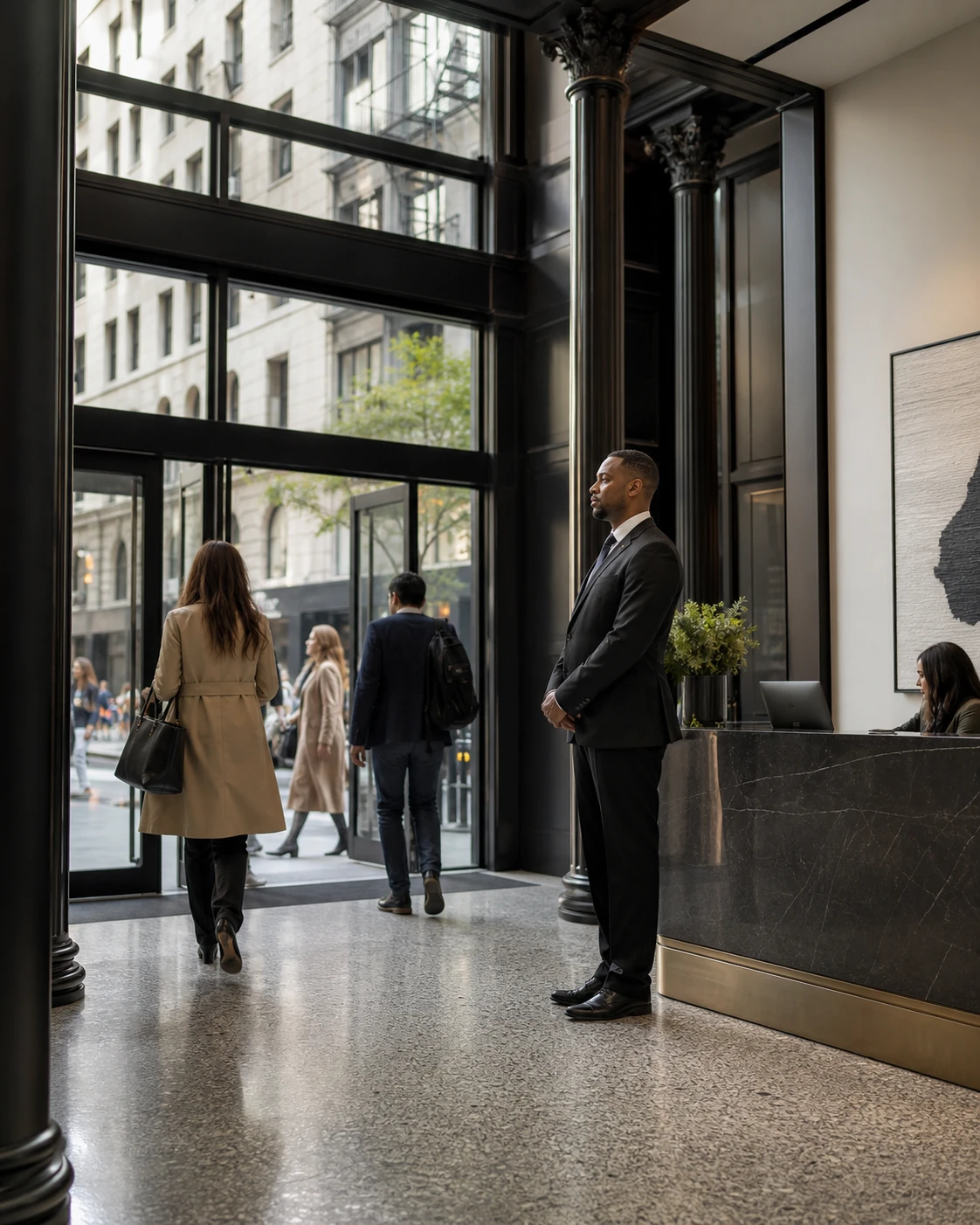
SoHo lobbies operate at the intersection of commerce, residential life, tourism, dining, and nightlife. A single entrance may serve office tenants, residents, customers, contractors, delivery workers, and visitors within the same hour. That activity makes the lobby an important point for identifying concerns early without creating unnecessary friction.
Effective SoHo lobby safety is not based on one camera, lock, or front-desk employee. It comes from combining thoughtful procedures, appropriate technology, trained personnel, and clear communication among ownership, management, tenants, and building staff.
Why SoHo lobbies require a tailored safety plan
SoHo’s building stock and street environment create distinct operating challenges. Properties may have historic layouts, narrow vestibules, limited space for visitor processing, multiple tenant types, or entrances that open directly onto busy sidewalks.
Common concerns include:
- Heavy pedestrian traffic and visitors entering behind authorized occupants
- Unscheduled couriers, food deliveries, and service vendors
- Retail customers confusing private and public entrances
- Evening activity associated with restaurants, events, and nightlife
- Contractors requiring temporary access to tenant or mechanical areas
- Packages accumulating near the front desk or in common areas
- People seeking shelter or assistance during severe weather
- Limited sightlines caused by columns, elevators, stairs, or lobby design
A useful plan starts with the property’s actual traffic patterns. Procedures appropriate for a boutique office building may not work for a mixed-use condominium or a property with street-level retail.
Start with a lobby risk and operations review
Before adding staff or equipment, property teams should examine how the entrance functions during a normal day. Review weekday mornings, delivery periods, shift changes, evenings, and weekends separately.
Map people and package movement
Document who enters, where they should go, and how authorization is confirmed. This should include tenants, employees, residents, guests, messengers, food couriers, maintenance vendors, cleaners, and construction personnel.
Look for predictable points of confusion. For example, visitors may wait in front of elevator doors, delivery workers may leave items in an exit path, or retail customers may approach a private residential desk.
Identify gaps in visibility
From the lobby desk, can personnel clearly see the entrance, elevator bank, stairs, and package area? Cameras can supplement visibility, but they do not replace a workable desk position or active observation.
Lighting should also be evaluated from an operational perspective. Reflections from glass doors, abrupt changes between bright sidewalks and dim interiors, or decorative fixtures can make it harder to assess activity.
Review access-control behavior
Even a modern access-control system can be undermined when doors are propped open or occupants routinely allow unknown people to follow them inside. Check whether doors close reliably, credentials are promptly deactivated when appropriate, and staff know what to do when a reader or intercom fails.
Build consistent visitor and delivery procedures
Lobby personnel make better decisions when expectations are documented. Written post orders should reflect the specific property rather than rely on generic instructions.
A practical visitor process may include:
- Greeting the visitor and determining the intended destination.
- Confirming authorization through the property’s approved method.
- Recording only the information needed under management policy.
- Providing clear directions or notifying the tenant.
- Escalating unusual behavior without unnecessary confrontation.
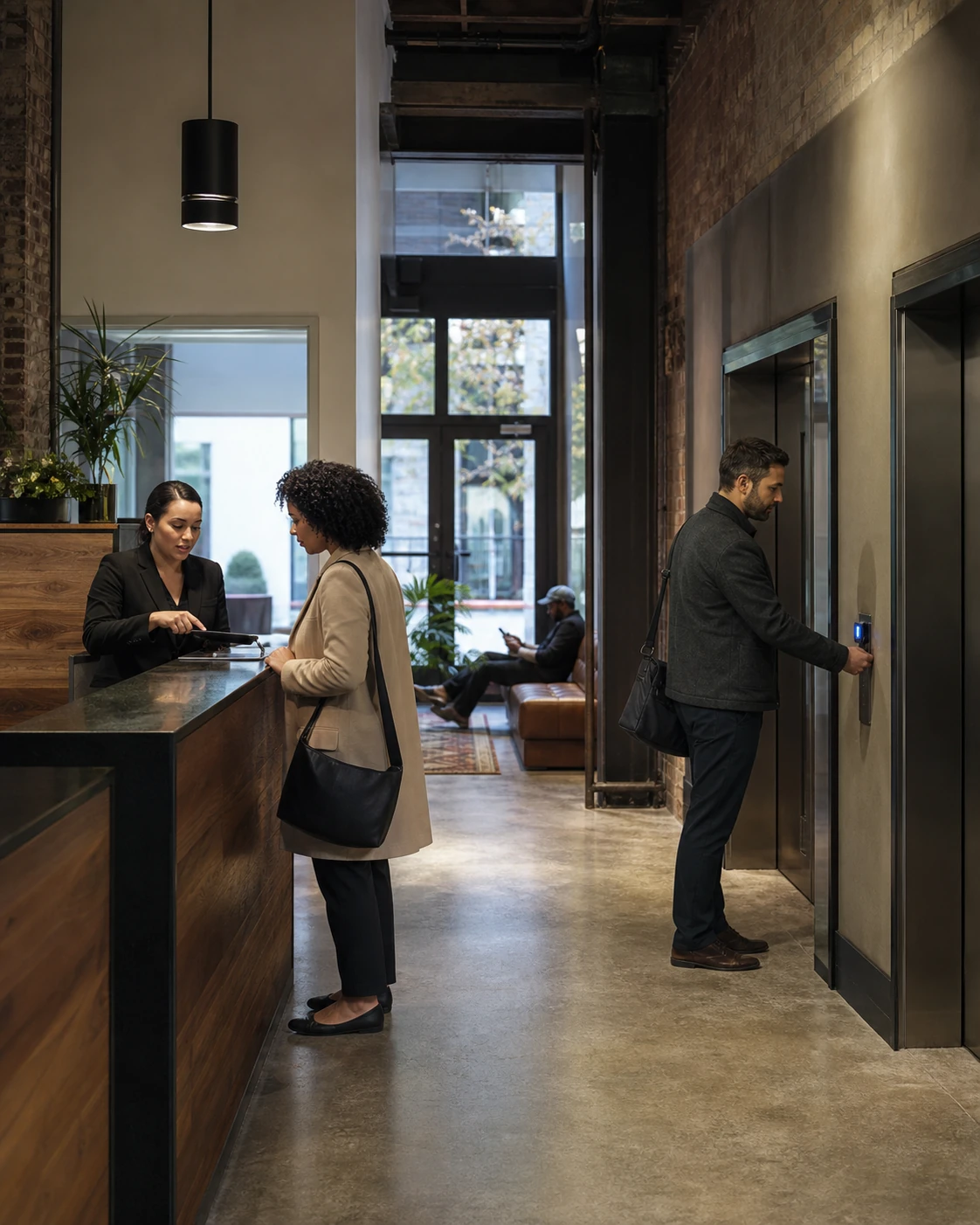
Staff should not improvise exceptions for someone who appears familiar, is in a hurry, or claims that a tenant is expecting them. At the same time, procedures should account for accessibility needs and provide a respectful experience for legitimate visitors.
Separate deliveries from visitor traffic when possible
If the layout permits, establish a specific delivery location and notify tenants of the process. Consider scheduled windows for larger shipments and clear rules for unattended food or parcel deliveries.
Package procedures should address custody, storage capacity, tenant notification, oversized items, and suspicious or damaged parcels. Avoid allowing packages to block doors, circulation paths, or access to emergency equipment.
Define the role of lobby security personnel
A professional lobby officer can support access control, visitor management, incident documentation, and coordination with building management. The position should be designed around the property’s needs rather than treated as a visible presence alone.
Useful responsibilities may include:
- Monitoring entrances and common areas
- Applying visitor and vendor procedures consistently
- Conducting scheduled checks of designated building areas
- Reporting door, lighting, camera, or intercom problems
- Documenting incidents with objective details
- Contacting management or emergency services under established protocols
- Supporting orderly communication during disruptions
Properties considering dedicated personnel can learn more about security guard services in New York City and options tailored to commercial office security.
Train for service as well as security
A SoHo lobby is often part security checkpoint and part hospitality environment. Personnel need a calm, professional communication style. Training should cover de-escalation, privacy, emergency notifications, property-specific escalation procedures, and respectful interaction with occupants and the public.
Security personnel should also know the boundaries of their assignment. Medical emergencies, fires, suspected crimes, and hazardous conditions may require immediate contact with 911 or other designated responders rather than independent intervention.
Use technology as part of a layered approach
Technology is most effective when it supports clear operating procedures. Depending on the building, useful tools may include:
- Credentialed access control for occupants and approved vendors
- Intercom or video-entry systems
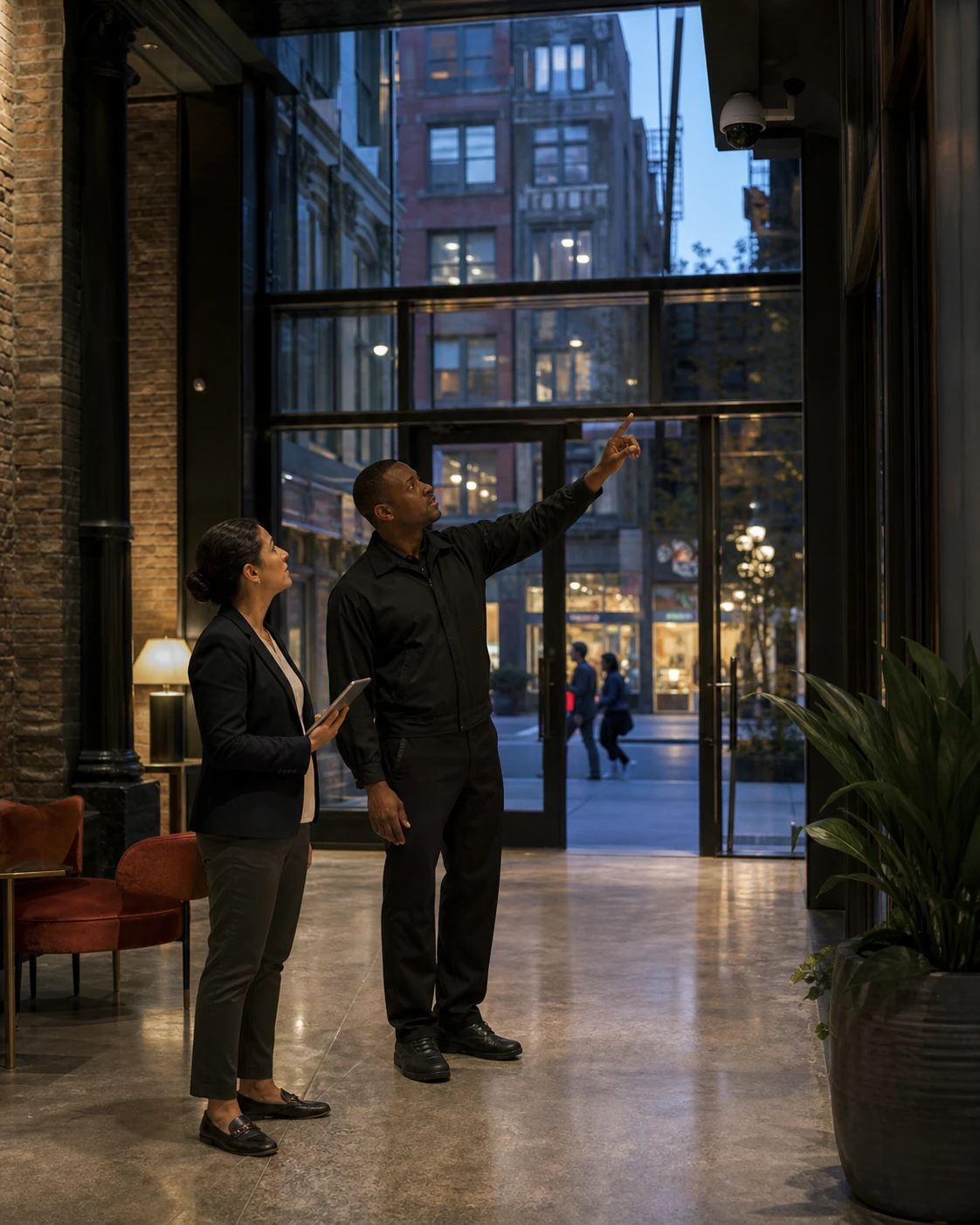
- Cameras covering entrances, elevator approaches, and package areas
- Visitor-management tools approved by property management
- Duress or emergency communication methods
- Door-position alerts for entrances that are left open
Property teams should define who monitors each system, how alerts are handled, how equipment problems are reported, and who is authorized to review recordings. Privacy, cybersecurity, lease requirements, and applicable rules should be reviewed with the property’s qualified advisers before collecting or retaining visitor information.
Prepare for disruptions and emergencies
Lobby procedures should remain workable when normal systems are unavailable. Consider how staff will operate during an access-control outage, power interruption, water leak, medical incident, severe weather event, protest activity, or unexpected street closure.
Maintain an accessible contact list for property management, engineering, key tenants, approved vendors, and emergency services. Staff should know where to find current procedures and how to communicate verified information without speculating.
Fire and life-safety responsibilities require particular care. Building management should confirm that assigned personnel, plans, and staffing arrangements match the property’s actual requirements and guidance from qualified professionals. Security staff should not be assumed to perform specialized fire-life-safety duties unless they are properly qualified and specifically assigned to do so. Guardian also provides information about fire and life-safety director services for properties that need that specialized support.
Measure whether the plan is working
Lobby safety should be reviewed regularly rather than only after a serious event. Useful indicators can include:
- Unauthorized-entry attempts and how they were resolved
- Doors found open or malfunctioning
- Visitor verification delays
- Delivery congestion and package exceptions
- Recurring complaints from tenants or residents
- Equipment outages and repair times
- Quality and completeness of incident reports
Review patterns by time and location. Several minor incidents during the same evening period may indicate a staffing, lighting, or procedure gap that is not visible in a monthly total.
After any significant incident, conduct a focused review. Determine what happened, which procedures worked, where communication broke down, and what practical changes should follow. The goal is continuous improvement, not blame.
A practical SoHo lobby safety checklist
Property managers can use the following questions during a walkthrough:
- Are private and public entrances clearly distinguishable?
- Can staff observe the entrance and elevator approach?
- Do exterior and vestibule doors close and latch consistently?
- Is visitor authorization handled the same way on every shift?
- Are delivery and package procedures realistic for daily volume?
- Can staff quickly reach management and emergency services?
- Are post orders current, property-specific, and easy to access?
- Do relief personnel receive the same site information as regular staff?
- Are incidents documented objectively and reviewed by management?
- Is there a backup process when access or communication systems fail?
Strengthen your SoHo lobby coverage
Guardian ISI can help Manhattan property teams assess lobby operations and arrange professional security coverage suited to office, residential, retail, and mixed-use environments. Planned and short-notice options are available based on staffing capacity and site needs.
Call or text 212-602-1695, or request security coverage online. For urgent staffing needs, review Guardian’s emergency security coverage options.
A practical operating checklist
| Stage | What to confirm |
|---|---|
| Entrance | Clear sightlines, reliable doors, and accessible visitor process |
| Lobby desk | Consistent authorization, delivery rules, and relief |
| Disruption | Emergency contacts, backup procedures, and responder access |
Related Guardian services
Review Commercial Office Security and Residential Security to connect these procedures with the appropriate staffing and site responsibilities.
Frequently asked questions
What is the biggest lobby safety concern for a SoHo building?
Unauthorized entry is a common concern because busy sidewalks, mixed tenant uses, deliveries, and visitor traffic can make tailgating difficult to detect. The specific priority should be based on a review of the property’s layout and activity.
Should every SoHo lobby have a security guard?
Not necessarily. Staffing should reflect the building’s hours, tenant mix, visitor volume, layout, incident history, and existing controls. Some properties need continuous coverage, while others benefit from targeted shifts or temporary support.
How can lobby staff reduce tailgating without creating conflict?
Staff should use a consistent greeting and verification process, avoid assumptions based on appearance, and follow written escalation procedures. Clear tenant communication can also discourage occupants from admitting unknown people.
What should a lobby delivery policy cover?
It should address permitted delivery locations, authorization, package custody, tenant notification, oversized items, unattended food deliveries, and items that appear damaged or suspicious.
Can lobby security personnel handle fire-life-safety duties?
Security and fire-life-safety assignments are not automatically interchangeable. Property management should confirm applicable requirements and use personnel who hold the qualifications required for the duties they are assigned.