
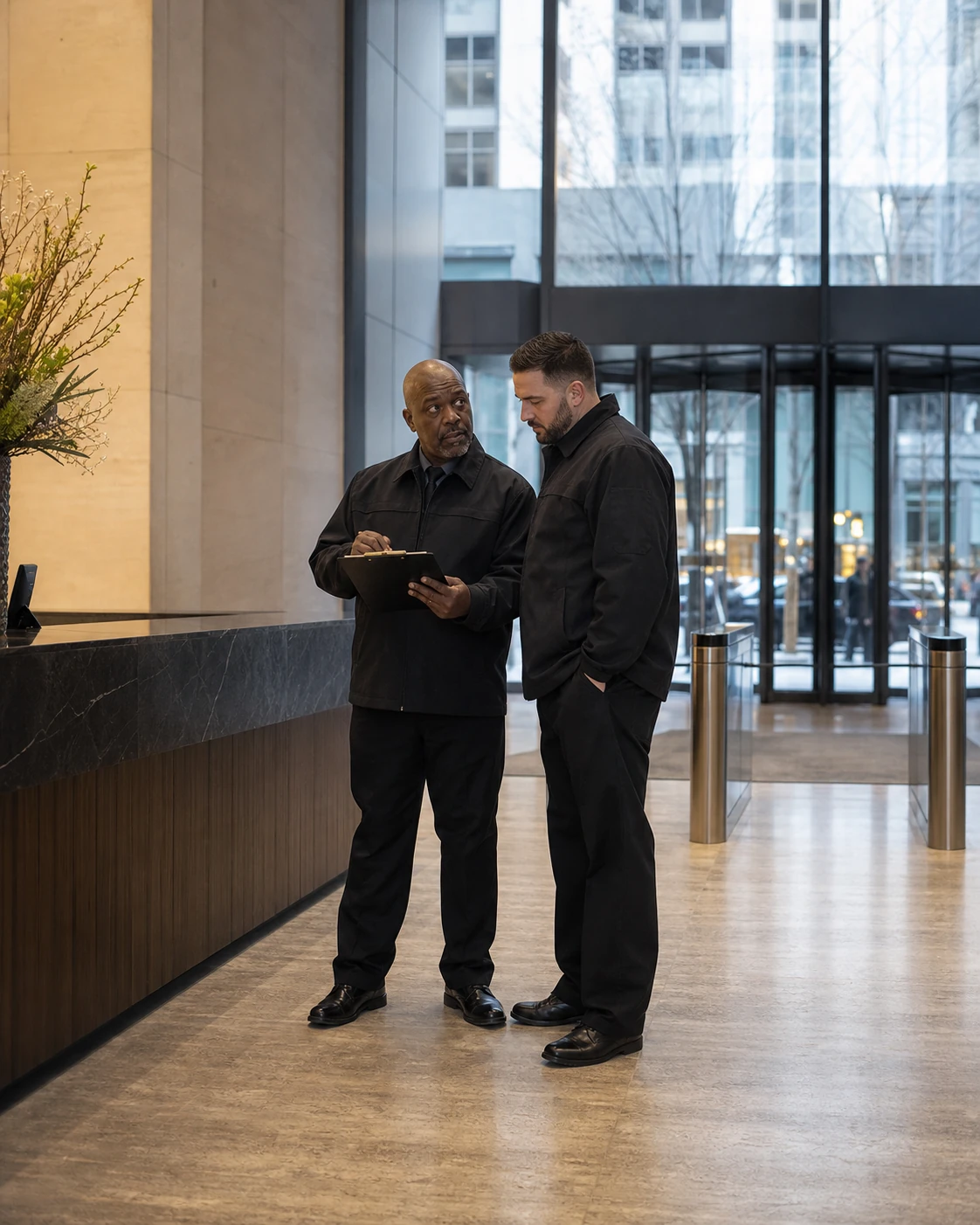
A security supervisor taking over a new site must quickly understand the property, the people, the procedures, and the risks. In Manhattan, that can mean managing a busy lobby, loading activity, contractors, tenant concerns, access-control systems, and emergency procedures—all within the first shift.
This security supervisor site-takeover checklist gives property managers, building operators, and security leaders a practical framework for transferring responsibility without relying on assumptions. It should be adapted to the property’s written security plan, post orders, management requirements, and any direction provided by authorized fire-life-safety personnel.
Why a structured site takeover matters
A handoff is a vulnerable moment. Information can be lost when a supervisor changes, a new security company begins coverage, or an emergency replacement arrives with limited notice.
A structured takeover helps the incoming supervisor:
- Identify immediate safety and security concerns
- Confirm staffing and post coverage
- Understand who can authorize access or operational changes
- Preserve incident records and other site documentation
- Learn the property’s normal patterns before making recommendations
- Give management a clear record of open issues
The goal is not to redesign the entire security program during the first shift. It is to establish control, confirm priorities, and document what requires follow-up.
Before the first shift
Whenever possible, the supervisor should review core information before arriving. For a planned transition, management or the outgoing provider should assemble a takeover packet.
Request the essential site documents
The packet may include:
- Current post orders and site-specific procedures
- Guard schedule, post assignments, and relief arrangements
- Property management and tenant contact lists
- Emergency notification and escalation procedures
- Recent incident, visitor, key, package, and contractor logs
- Access-control and credential procedures
- Known equipment problems and outstanding work orders
- Loading dock and delivery rules
- Building opening, closing, and patrol procedures
- Relevant fire-life-safety plans and authorized personnel contacts
Confirm the revision date for every important document. An old contact list or outdated post order can be more dangerous than having no document at all because officers may rely on incorrect instructions.
Clarify authority and reporting lines
The incoming supervisor should know exactly who can issue instructions, approve overtime, authorize schedule changes, request additional coverage, or permit access outside normal procedures.
Create a short escalation list covering:
- Routine operational questions
- Security incidents
- Medical or life-safety emergencies
- Building-system problems
- Staffing shortages
- Media, law-enforcement, or other sensitive inquiries
Security personnel should contact emergency services when circumstances require it, then follow the property’s notification procedures. They should not delay an urgent call while attempting to reach every person on an internal list.
First-hour physical walkthrough
The incoming supervisor should walk the property with a knowledgeable management representative or outgoing supervisor whenever possible. This is not merely a tour—it is an operational inspection.
Verify every security post
At each post, confirm:
- The post’s purpose and hours of operation
- Required officer duties
- Available communication equipment
- Logbooks, forms, and report-writing procedures
- Keys, radios, phones, chargers, and other assigned equipment
- Relief and break procedures
- Conditions requiring escalation
Ask the officer on duty to explain the post in their own words. Differences between written post orders and actual practice should be documented and referred to management rather than quietly accepted.
Inspect entrances and circulation routes
Review all public and controlled entrances, including:
- Main lobby doors
- Employee or tenant entrances
- Loading docks and freight areas
- Service corridors
- Garage or bicycle entrances
- Roof, mechanical, and utility access points
- Emergency exits and stairwell doors
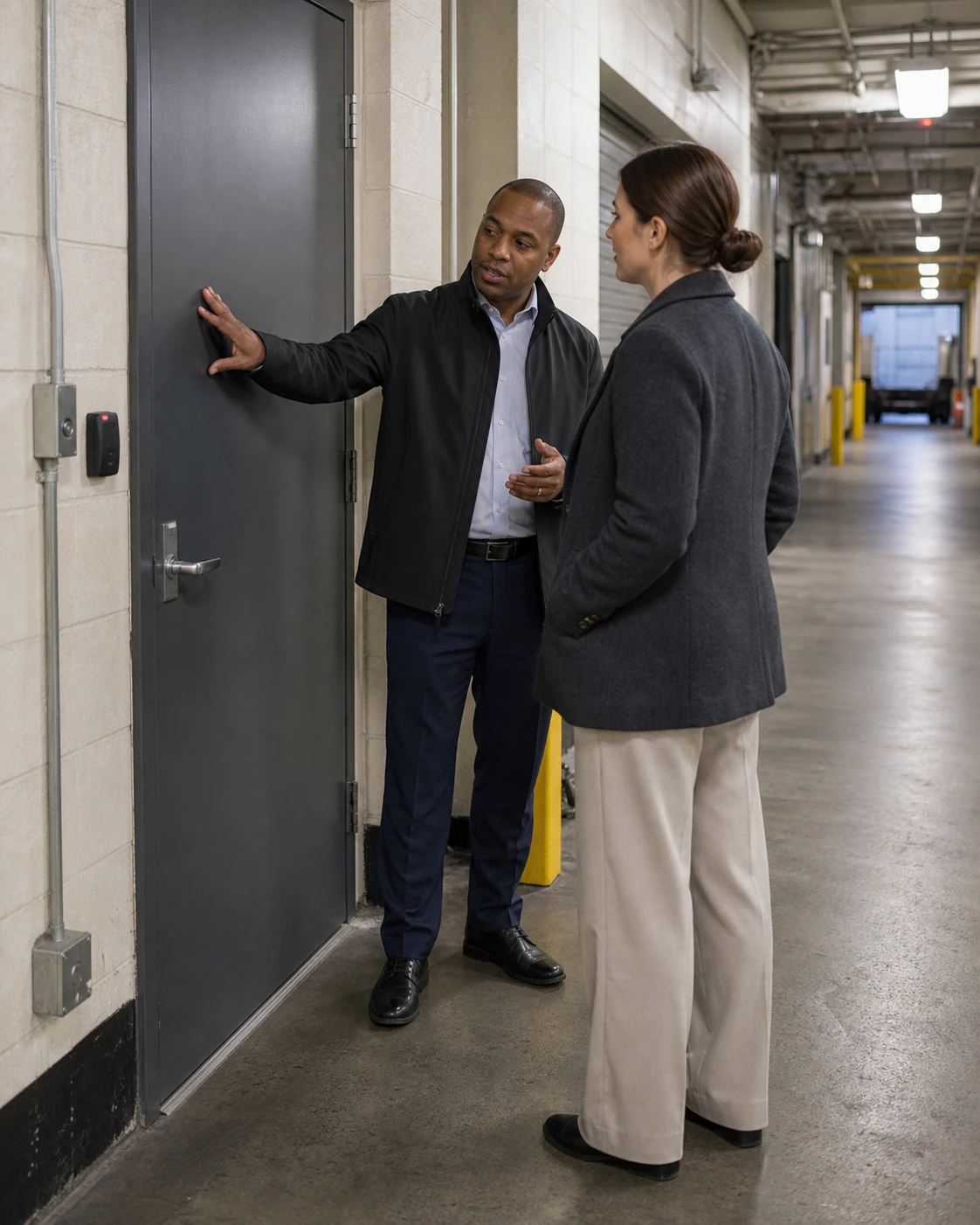
Look for damaged locks, doors that do not close properly, unsecured keys, obstructed sightlines, or access points being used differently from their intended purpose. Do not test or manipulate building systems unless authorized and trained to do so.
Properties needing dedicated front-of-house operations may benefit from a review of their commercial office security coverage and lobby procedures.
Learn the property’s normal rhythm
The supervisor should ask when the site experiences its highest activity, including:
- Morning tenant arrivals
- Visitor peaks
- Lunch and shift changes
- Major deliveries
- Contractor arrivals
- Evening departures
- Cleaning and maintenance shifts
- Events or executive visits
Understanding normal activity makes it easier to recognize unusual behavior without disrupting tenants, residents, guests, or legitimate workers.
Staffing and officer-readiness checks
A complete schedule does not always mean every post is operationally ready. The supervisor should verify the actual personnel assigned to the property.
Confirm staffing post by post
Check:
- Officer names and scheduled hours
- Required credentials and site documentation
- Uniform and appearance expectations
- Arrival, timekeeping, and call-out procedures
- Break and meal relief
- Overtime approval requirements
- Backup coverage for absences
Any credential questions should be escalated to the security provider’s management rather than resolved through guesswork. Copies of sensitive personnel information should be stored and handled according to company and property procedures.
Conduct a short roll call
A focused roll call can establish expectations without overwhelming officers. Cover:
- Current site conditions
- Post assignments
- Priority incidents or concerns
- Communication channels and radio protocol
- Professional conduct and customer service
- Report writing and immediate notification requirements
Supervisors should also ask officers what repeatedly goes wrong. Front-line personnel often know about malfunctioning doors, recurring delivery conflicts, or unclear tenant instructions that have not reached management.
Systems, keys, and sensitive assets
The takeover should account for systems and assets without exposing passwords or other sensitive information unnecessarily.
Access control and visitor management
Confirm who is authorized to:
- Issue or deactivate credentials
- Approve visitors
- Admit contractors after hours
- Override access restrictions
- Review access activity
- Handle terminated or suspended credentials
Test routine workflows through approved methods. For example, process a sample visitor or confirm that an intercom reaches the intended recipient. Avoid changing permissions during the takeover unless management has specifically authorized the change.
CCTV and communications
Verify that officers know how to use the systems assigned to their posts. Document obvious issues such as an unavailable camera view, incorrect time display, failed radio, or missing charger.
The supervisor should not promise that a camera system provides complete coverage. Instead, record which areas can be observed from the security post and refer technical deficiencies to the responsible vendor or manager.
Keys and controlled property
Perform a documented count of:
- Master and operational keys
- Access cards or fobs
- Radios and mobile devices
- Panic devices, where provided
- Equipment cabinet contents
- Lost-and-found property
- Incident evidence being held under site procedures
Record discrepancies immediately. Never label a key ring with information that would unnecessarily reveal the door or area it controls if the ring were lost.
Fire-life-safety coordination
Security and fire-life-safety responsibilities may overlap operationally, but they are not interchangeable. The takeover should identify the personnel assigned to fire-life-safety functions and clarify how security supports them.
Review:
- Emergency reporting and notification procedures
- The location of approved emergency plans and contact lists
- Assembly or relocation instructions provided for the property
- How security supports elevator, lobby, or perimeter control during an incident
- Procedures for documenting alarms and related activity
- Who is authorized to provide fire-life-safety instructions
Security supervisors should not create improvised emergency directions that conflict with the building’s approved procedures or instructions from emergency responders. Properties seeking qualified personnel can review Guardian’s fire-life-safety director services and fire guard coverage.
Records to reconcile during the first shift
Good documentation turns a takeover into an accountable process. The supervisor should reconcile or acknowledge receipt of the following, as applicable:
- Daily activity reports
- Incident and accident reports
- Visitor and contractor logs
- Key-control records
- Package or delivery records
- Found-property records
- Equipment inventories
- Open maintenance or security concerns
- Staffing and attendance records

If a record is missing, note that it was unavailable at takeover. Do not reconstruct historical entries without a clear basis or ask officers to backdate reports.
The first 24- and 72-hour priorities
Not every issue can be resolved on day one. Divide findings by urgency and ownership.
Within the first 24 hours
The supervisor should:
- Confirm all required posts are covered
- Address immediate hazards through the proper channel
- Report unsecured access points or critical equipment problems
- Verify emergency and management contacts
- Document key, credential, and equipment discrepancies
- Brief officers on current priorities
- Deliver a written takeover summary to management
Within the first 72 hours
The supervisor should:
- Review incident trends and recurring complaints
- Observe each major operating period
- Audit a sample of reports and logs
- Identify training or post-order gaps
- Confirm backup staffing arrangements
- Meet relevant management, engineering, and tenant contacts
- Recommend practical corrective actions with assigned owners
Recommendations should distinguish observed facts from proposed improvements. For example: “The west service door failed to latch during three checks” is an observation. “Replace the locking hardware” is a recommendation that should be evaluated by the appropriate property professional.
A concise takeover report format
The final report does not need to be lengthy. A useful format includes:
- Coverage status: Posts staffed, vacancies, and temporary adjustments
- Immediate concerns: Conditions requiring prompt attention
- Equipment status: Radios, keys, access control, CCTV, and post equipment
- Document status: Materials received, outdated, or missing
- Personnel observations: Training and procedural needs
- Open incidents: Current cases and required follow-up
- Recommended actions: Priority, responsible party, and target date
Use neutral, factual language. Avoid speculation about why a condition exists unless the cause has been verified.
When outside coverage is needed
A site takeover may uncover vacancies, call-outs, special events, or posts that need immediate support. Bringing in additional personnel can help preserve coverage while management addresses the long-term plan.
Guardian ISI provides security guard services and emergency coverage for commercial properties and other sites in New York City. To discuss a planned transition or urgent staffing need, call or text (212) 602-1695 or request coverage online.
A practical operating checklist
| Stage | What to confirm |
|---|---|
| At takeover | Coverage, urgent conditions, keys, and communications |
| First shift | Current instructions, equipment inventory, and open incidents |
| Follow-up | Training gaps, action owners, and management review |
Related Guardian services
Review Security Guard Services and Commercial Office Security to connect these procedures with the appropriate staffing and site responsibilities.
Frequently asked questions
Who should complete a security site-takeover checklist?
The incoming security supervisor should lead it with support from property management, the outgoing supervisor, and relevant building personnel. Responsibilities should be documented so unresolved items have a clear owner.
How long should a security site takeover take?
The immediate operational review should begin during the first shift. A more complete assessment usually requires observing multiple operating periods and following up over the first 24 to 72 hours.
What is the most important first step during a takeover?
Confirm that critical posts are staffed and identify any immediate safety, access, or communication problems. Urgent conditions should be reported through the property’s established escalation process.
Should the incoming supervisor change post orders immediately?
Usually not without authorization. The supervisor should document conflicts between written instructions and actual practices, then submit recommended revisions to the appropriate security and property managers.
How should missing keys or equipment be handled?
Record the discrepancy at once, notify the designated manager, and follow the site’s key-control or equipment-loss procedure. Do not alter records to make the inventory appear complete.
Does the security supervisor control fire-life-safety operations?
Not automatically. Security should understand its support role and follow the property’s approved procedures, authorized fire-life-safety personnel, and emergency responders’ instructions.