

A security risk assessment for schools helps administrators understand how people, procedures, technology, and the physical environment work together during an ordinary day—and under unusual conditions. In New York City, that means examining more than the front entrance. Arrival and dismissal, shared buildings, after-school programs, deliveries, public events, construction, and emergency response all affect risk.
The goal is not to make a school feel unwelcoming or turn every concern into an expensive equipment project. A useful assessment identifies realistic vulnerabilities, recognizes existing strengths, and produces prioritized recommendations that fit the facility, student population, operating schedule, and budget.
What Is a School Security Risk Assessment?
A school security risk assessment is a structured review of foreseeable security and safety concerns at an educational facility. It can cover K–12 schools, colleges, vocational programs, tutoring centers, childcare facilities, and other learning environments.
The assessment should consider three connected areas:
- Physical conditions: Entrances, exits, doors, windows, reception areas, perimeter conditions, lighting, elevators, stairwells, and gathering spaces
- Operational practices: Visitor processing, staff responsibilities, deliveries, key control, student release, incident reporting, and after-hours access
- Security systems and personnel: Cameras, alarms, intercoms, access control, communications, security officers, and supervisory procedures
An assessment is different from a product quote. Technology may be part of the solution, but cameras and access-control hardware cannot compensate for unclear procedures, poor maintenance, or inconsistent staff training.
Why NYC Educational Facilities Require a Site-Specific Review
New York schools operate in varied environments. One facility may occupy a stand-alone campus, while another shares a mixed-use Manhattan building with offices, retail tenants, or residential occupants. Some schools have street-level entrances with little setback. Others use multiple floors, shared elevators, or leased event spaces.
A site-specific review can account for conditions such as:
- High pedestrian activity near entrances
- Congested arrival and dismissal periods
- Multiple programs operating on different schedules
- Shared lobbies, elevators, loading areas, or fire-safety systems
- Vendors, contractors, and food-service deliveries
- Evening classes, performances, athletics, and community events
- Students or staff traveling between separate buildings
- Temporary changes caused by renovation or construction
Security recommendations should also support accessibility, emergency egress, and the school’s educational mission. Any proposed physical or procedural change should be reviewed with the appropriate school leadership, property management, design professionals, and authorities having jurisdiction when necessary.
What a Comprehensive Assessment Should Examine
Entrances and access control
Assessors should document every routine, secondary, and service entrance—not just the main door. The review may consider how credentials and keys are issued, whether doors latch reliably, how staff handle propped doors, and what happens when access-control systems are unavailable.
The objective is to establish practical control without obstructing required exits or creating unsafe bottlenecks.
Visitor management and front-desk operations
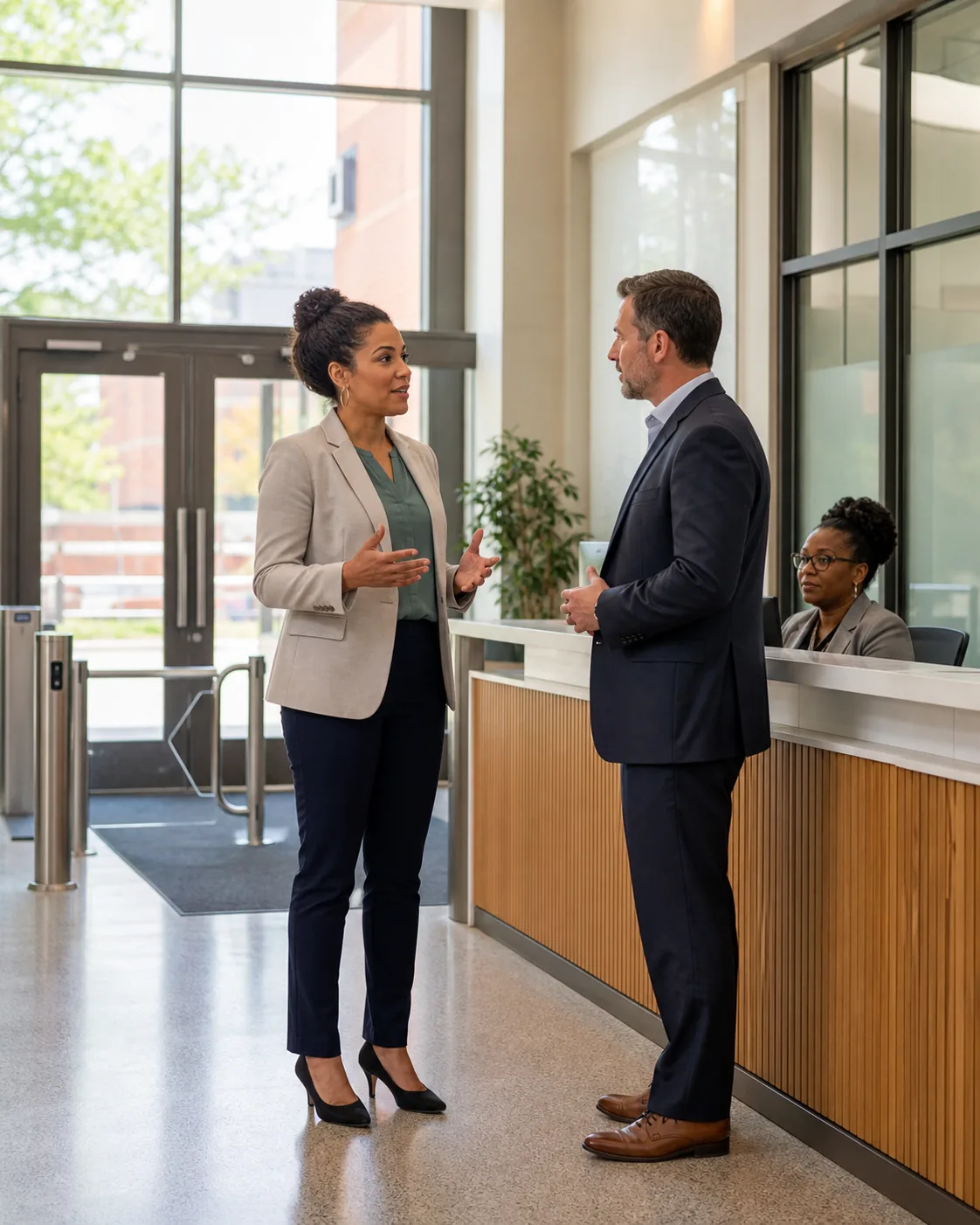
Visitor procedures should be clear, consistent, and appropriate for the school community. An assessment can examine how visitors request entry, where they wait, how identity and purpose are verified, whether they receive visible authorization, and how staff respond when someone bypasses the process.
The reception area’s location and sightlines matter as much as written policy. Staff should be able to communicate concerns quickly without unnecessarily escalating routine interactions.
Arrival, dismissal, and student release
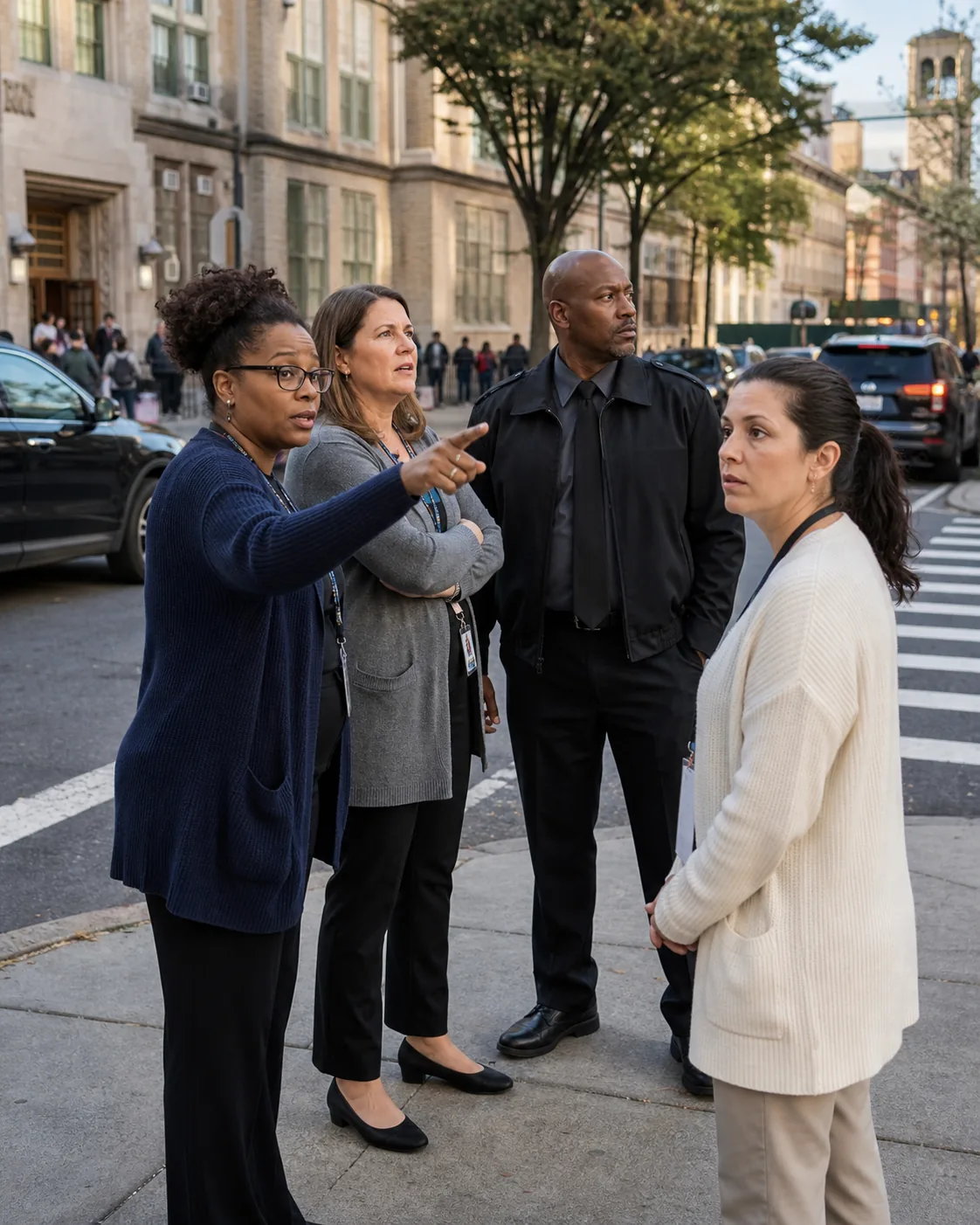
Transitions often create the greatest operational pressure. Assessors may observe pedestrian flow, vehicle activity, parent and caregiver waiting areas, bus or van loading, and coordination among administrators, teachers, and security personnel.
For younger students, the review should also consider authorized pickup procedures and how last-minute changes are confirmed. Older students may present different concerns, including open-campus periods or movement between buildings.
Perimeter and public-facing areas
The property line is not always the practical security boundary in Manhattan. Sidewalks, adjacent businesses, alleys, scaffolding, plazas, and shared vestibules can affect visibility and access.
A review may identify opportunities to improve lighting, signage, natural surveillance, door hardware, landscaping, or staff positioning. Recommendations should avoid exposing sensitive security details in publicly distributed documents.
Security cameras, alarms, and communications
A system review should focus on operational value rather than camera count. Important questions include:
- Do cameras cover priority areas with useful image quality?
- Are views blocked by seasonal decorations, construction, or changing layouts?
- Who receives alarms, and what action are they expected to take?
- Can designated staff communicate during a power, internet, or cellular disruption?
- Are recordings and access permissions managed according to school policy?
Equipment testing and maintenance should be documented. Schools should also address privacy, cybersecurity, labor, and records-management considerations with their qualified advisers.
Emergency and fire-life-safety coordination
Security procedures must work alongside the facility’s emergency and fire-life-safety plans. The assessment should examine how staff receive alerts, account for students, assist people who may need additional support, communicate with responders, and manage reunification or relocation.
Evacuation, shelter-in-place, lockdown, and other protective actions are not interchangeable. Plans and terminology should be based on the school’s circumstances and coordinated with applicable official guidance. Building-specific staffing or fire-life-safety obligations should be confirmed with qualified professionals and the relevant authorities rather than assumed from a general checklist.
Guardian can also help clients evaluate appropriate fire guard coverage or fire-life-safety director staffing when those services are relevant to the property’s needs.
Staffing, training, and post orders
If a school uses security personnel, the assessment should evaluate more than headcount. Officer responsibilities, supervision, post locations, breaks, escalation paths, incident documentation, and coordination with school administrators all influence performance.
Effective security guard coverage should be based on the facility’s actual operating periods and risks. Staff assigned to an educational setting should understand the school’s expectations for professionalism, de-escalation, confidentiality, and interaction with students and families.
After-hours activities and temporary conditions
Evening programs, rentals, performances, open houses, and construction can change how a building is used. A strong assessment distinguishes normal operations from temporary or higher-attendance activities.
Renovation may disable doors, cameras, alarms, or normal circulation routes. Where work is underway, a separate review of construction security can help address contractor access, material deliveries, temporary openings, and off-hours conditions.
A Practical Assessment Process
A useful engagement generally includes the following stages:
- Define the scope. Identify buildings, programs, schedules, stakeholders, and known concerns.
- Review available information. Examine relevant policies, floor plans, incident trends, service schedules, and prior assessments while controlling access to sensitive records.
- Conduct a site walk-through. Observe entrances, circulation, public areas, building systems, and surrounding conditions.
- Interview key personnel. Speak with administrators, facilities staff, front-desk teams, security supervisors, and other appropriate stakeholders.
- Observe operations. When feasible, review arrival, dismissal, deliveries, or an event rather than relying solely on written procedures.
- Prioritize findings. Distinguish urgent corrective actions from short-, medium-, and long-term improvements.
- Assign responsibility. Identify who owns each action, the expected timeline, and how completion will be verified.
- Reassess. Revisit the plan after major renovations, program changes, serious incidents, or shifts in building use.
What the Final Report Should Deliver
A decision-ready report should not be a generic list of possible upgrades. It should explain the observed condition, why it matters, and what practical action is recommended.
Recommendations can be organized by priority, complexity, and approximate implementation horizon. Useful early actions might include repairing a door, updating a contact list, clarifying a visitor procedure, adjusting officer post orders, or testing communications. Larger capital projects can then be evaluated in context instead of treated as the only solution.
Because assessment reports may contain sensitive information, schools should decide in advance who will receive the full report, where it will be stored, and whether separate executive and technical versions are appropriate.
When to Update the Assessment
A security assessment should be revisited when conditions materially change. Common triggers include:
- Opening, relocating, or expanding a school
- Renovating entrances or changing building circulation
- Adding an after-school program or public event schedule
- Changing security vendors or access-control systems
- Experiencing repeated incidents or a significant event
- Beginning nearby or on-site construction
- Sharing the property with new occupants
Periodic reviews also help leadership confirm whether earlier recommendations were implemented and remain effective.
Request a School Security Review in New York City
Guardian ISI helps educational and commercial-property decision-makers evaluate security staffing, operating procedures, access points, and changing site conditions. Recommendations are tailored to the property rather than copied from a standard checklist.
To discuss a security risk assessment or request coverage, call or text Guardian at (212) 602-1695 or submit a coverage request. For urgent short-term staffing needs, learn more about emergency security coverage.
Frequently asked questions
How long does a school security risk assessment take?
Timing depends on the facility size, number of buildings, operating schedules, and desired report detail. A proper scope should allow time for document review, stakeholder interviews, a site walk-through, and observation of key periods when appropriate.
Should an assessment occur while students are present?
Some operational conditions are best understood during arrival, dismissal, or normal occupancy. Any observation should be coordinated with school leadership to protect privacy, avoid disruption, and maintain appropriate boundaries.
Does a security assessment require purchasing new technology?
No. Assessments often identify procedural, maintenance, training, or staffing improvements before recommending major equipment purchases. Existing systems may also become more effective through testing, repositioning, or clearer response procedures.
How often should a school update its security assessment?
The review should be updated periodically and after significant changes such as renovation, relocation, new programs, serious incidents, construction, or changes in building use. The appropriate interval depends on the facility and its risk profile.
Can one assessment cover both security and fire-life-safety needs?
The subjects should be coordinated because emergency communications, staffing, egress, and accountability can overlap. However, specialized fire-life-safety or code questions may require separate review by qualified professionals and the relevant authorities.
Who should participate in the assessment?
Participants commonly include school leadership, facilities personnel, front-desk staff, security supervisors, technology representatives, and other stakeholders familiar with daily operations. Legal, privacy, accessibility, and regulatory advisers may be included when relevant.