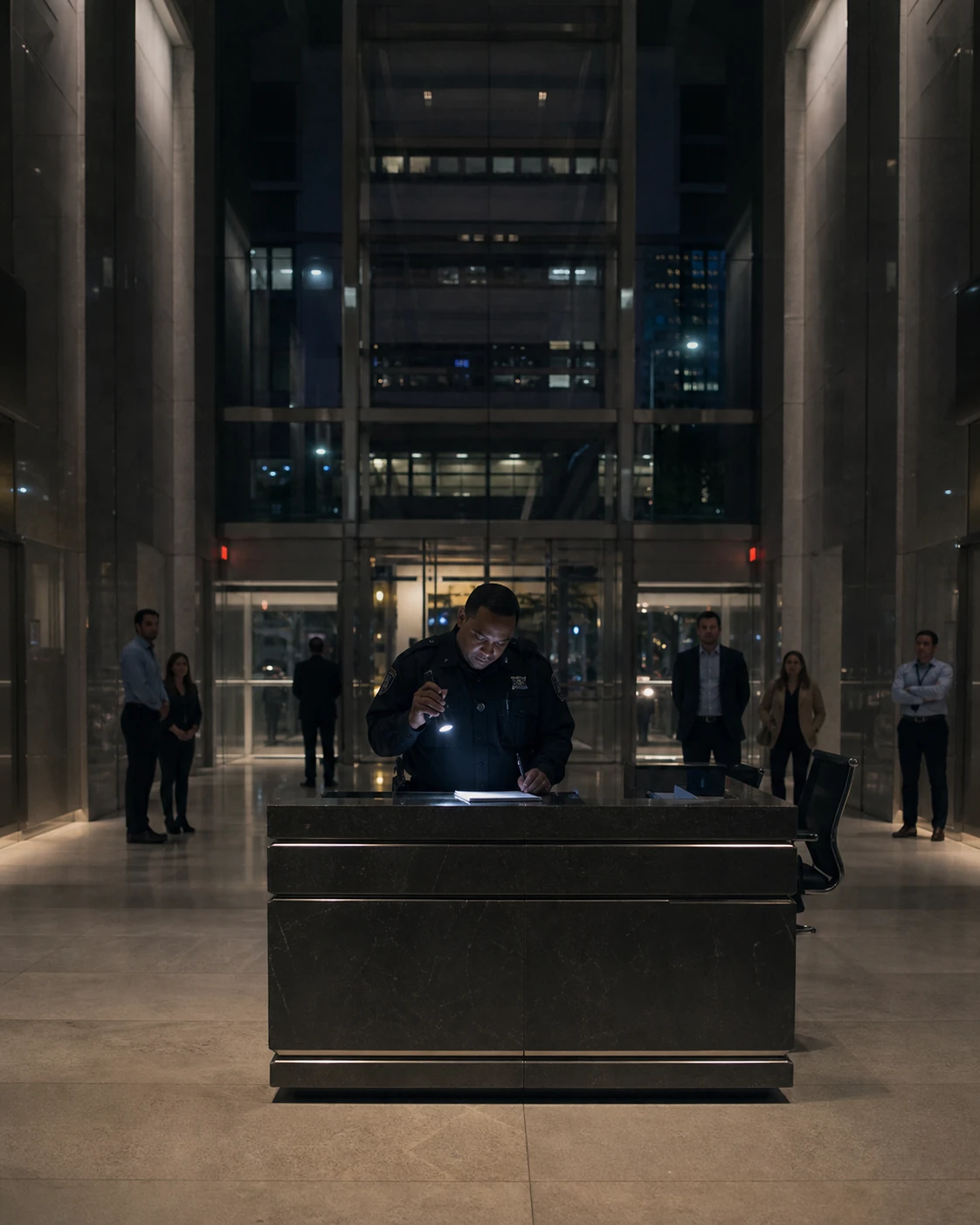
A power outage can quickly change a New York building’s security conditions. Electronic access control may behave differently by door, cameras can lose coverage, elevators may stop, and normally active areas can become difficult to supervise. At the same time, occupants, vendors, and emergency personnel may all need clear directions.
A useful response plan does more than assign someone to the lobby. It identifies critical posts, establishes manual alternatives, and gives security personnel a clear way to coordinate with building management, engineering, and fire-life-safety staff.
Why power outages create security gaps
An outage may affect the entire property or only selected floors, systems, or entrances. Even when a generator starts, it may support life-safety and essential building systems without powering every camera, reader, intercom, or loading-area fixture.
Security teams should avoid assuming that all equipment failed—or that everything transferred successfully to backup power. The first response should include a controlled assessment of:
- Access-controlled doors and turnstiles
- Lobby visitor-management systems
- CCTV cameras, monitors, and recording equipment
- Intercoms and emergency communication devices
- Elevators and elevator lobbies
- Stairwell and exit lighting
- Loading docks, service corridors, and freight entrances
- Parking, bicycle, and package-storage areas
Personnel should report observed conditions rather than attempting electrical, elevator, or fire-alarm repairs outside their training and authority.
Immediate security response procedures
Establish command and communications
Building management should identify who is directing the property response and how security will communicate if desk phones, Wi-Fi, or radio infrastructure is affected. The team should confirm:
- Whether the outage is building-wide or localized
- Which systems are operating on backup power
- Whether any occupants are trapped or require assistance
- Which entrances, exits, and service areas need posts
- How incident updates will be documented and distributed
Security supervisors should maintain an incident log with the outage start time, affected systems, staffing changes, significant observations, calls for assistance, and instructions received from authorized building representatives.
For an immediate threat to life or safety, call 911. Staff should follow the building’s approved emergency procedures and directions from responding public agencies.
Check access-control behavior door by door
Electronic locks do not all respond to power loss in the same way. Depending on the door, hardware, backup power, and system configuration, a lock may release, remain secured, or continue operating temporarily.
Security personnel should check designated critical doors individually and report their actual condition. Priority locations often include:
- Main tenant and resident entrances
- Side and after-hours entrances
- Roof and mechanical-area access points
- Amenity and shared-space doors
- Loading docks and freight entrances
- Doors connecting public and restricted areas
A guard should not prop open a controlled door as a general workaround. If an entrance must remain available, management can establish a staffed access point with a manual verification process.
Control emergency exits without obstructing them
Emergency exits require special care. Security measures must not block, chain, or otherwise interfere with required egress. If an exit door no longer reports alarms or status to the security desk, management may assign personnel to observe the location from a safe position or increase patrol frequency.
Any concern involving exit hardware, emergency lighting, fire alarms, or other life-safety equipment should be reported immediately to building management and the appropriate qualified personnel. Security staff should not represent a temporary watch as a repair or substitute for required systems.
Managing dark stairwells and elevator disruptions
Dark or partially lit stairwells
Stairwells may become difficult to navigate even when some emergency lighting remains operational. Security should notify management of dark landings, damaged fixtures, obstructions, water, or other hazards.
Depending on conditions and the building’s plan, useful measures may include:
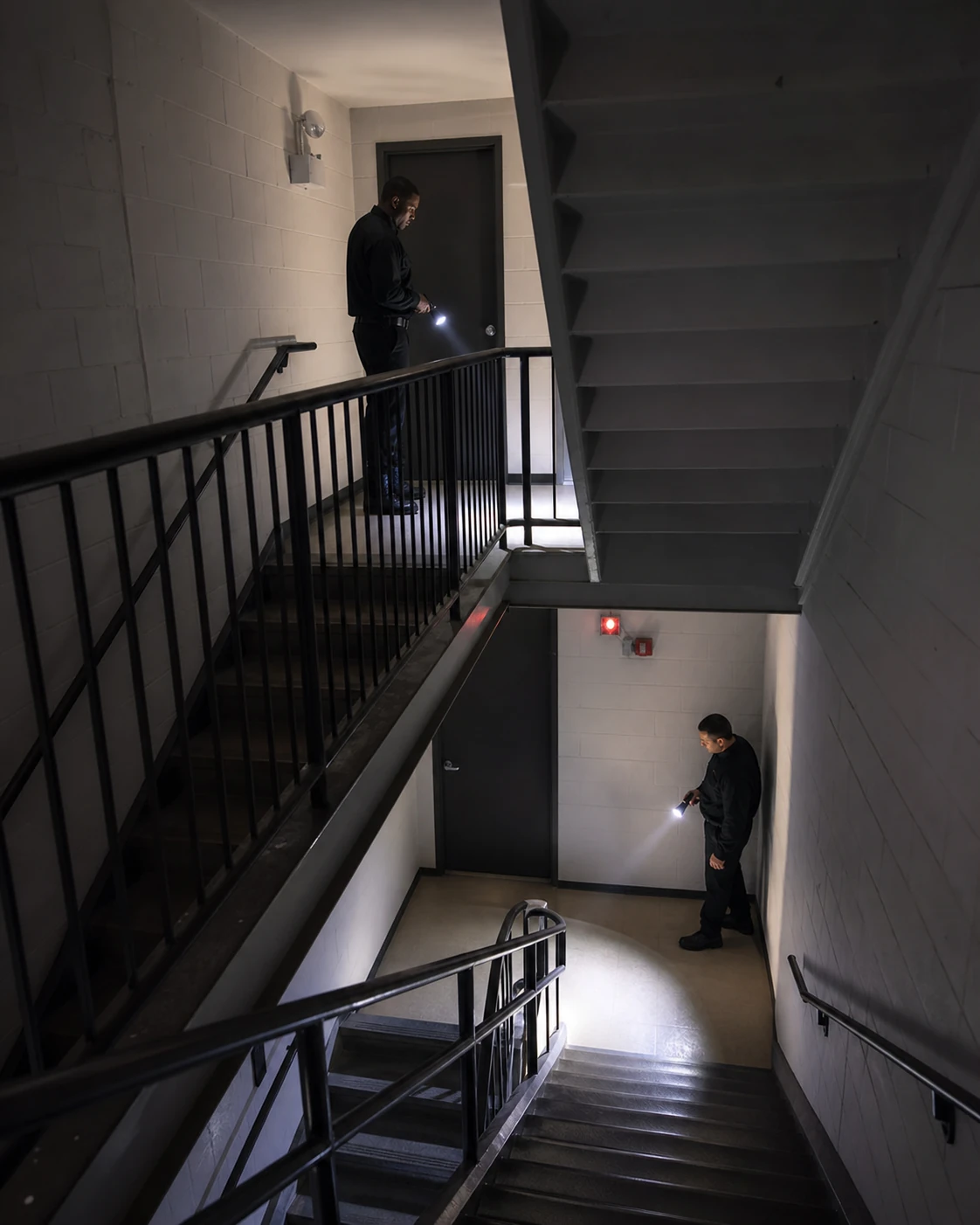
- Posting personnel at key stairwell entry points
- Conducting paired patrols rather than sending one person alone
- Carrying approved flashlights and spare batteries
- Directing occupants toward safer available routes
- Reporting mobility-assistance requests to the designated building contact
- Recording each stairwell inspection and observed condition
Guards should not patrol an area when darkness or another hazard makes entry unsafe. Portable lights should be placed only under management’s direction and should not obstruct walking paths or exits.
Elevators
An outage can stop elevators, place them into a recall or emergency mode, or leave only selected cars available. Security should treat elevator status as an engineering and life-safety matter—not guess whether a car is safe to use.
The security team can support the response by:
- Keeping occupants away from elevators declared out of service
- Reporting possible entrapments immediately through the building’s procedure
- Preserving clear access for elevator technicians and first responders
- Providing occupants with management-approved route information
- Monitoring elevator lobbies where confusion or crowding develops
Personnel should never attempt to force open elevator doors or perform a rescue without the required authority and training.
Manual access and visitor management
Backup keys and physical credentials
Mechanical keys can become essential when readers and electronic credentials are unavailable. They can also create a serious accountability gap if issued informally.
A backup-key procedure should specify:
- Where emergency keys are secured
- Who may authorize their release
- The key number or identifier
- The recipient’s name and signature
- The time issued and returned
- The door or area for which the key was used
- What to do if a key is not returned
Keys should not be labeled with unnecessary identifying information, left unattended at the desk, or handed to a person whose authorization has not been verified.
Manual visitor records
If the visitor-management platform is down, switch to a prepared paper log or other management-approved offline process. Record only the information necessary for the building’s security procedure, such as:
- Visitor name
- Company or organization
- Host or destination
- Arrival and departure times
- Verification or approval method
- Temporary credential number, if used
- Name or initials of the security officer processing entry
Host approval should still be obtained through an available verified channel. A power outage should not become a reason to admit unconfirmed visitors or bypass tenant-specific restrictions. Completed paper records should be protected from public view and transferred or stored according to the property’s record-handling practices.
Loading areas and service entrances
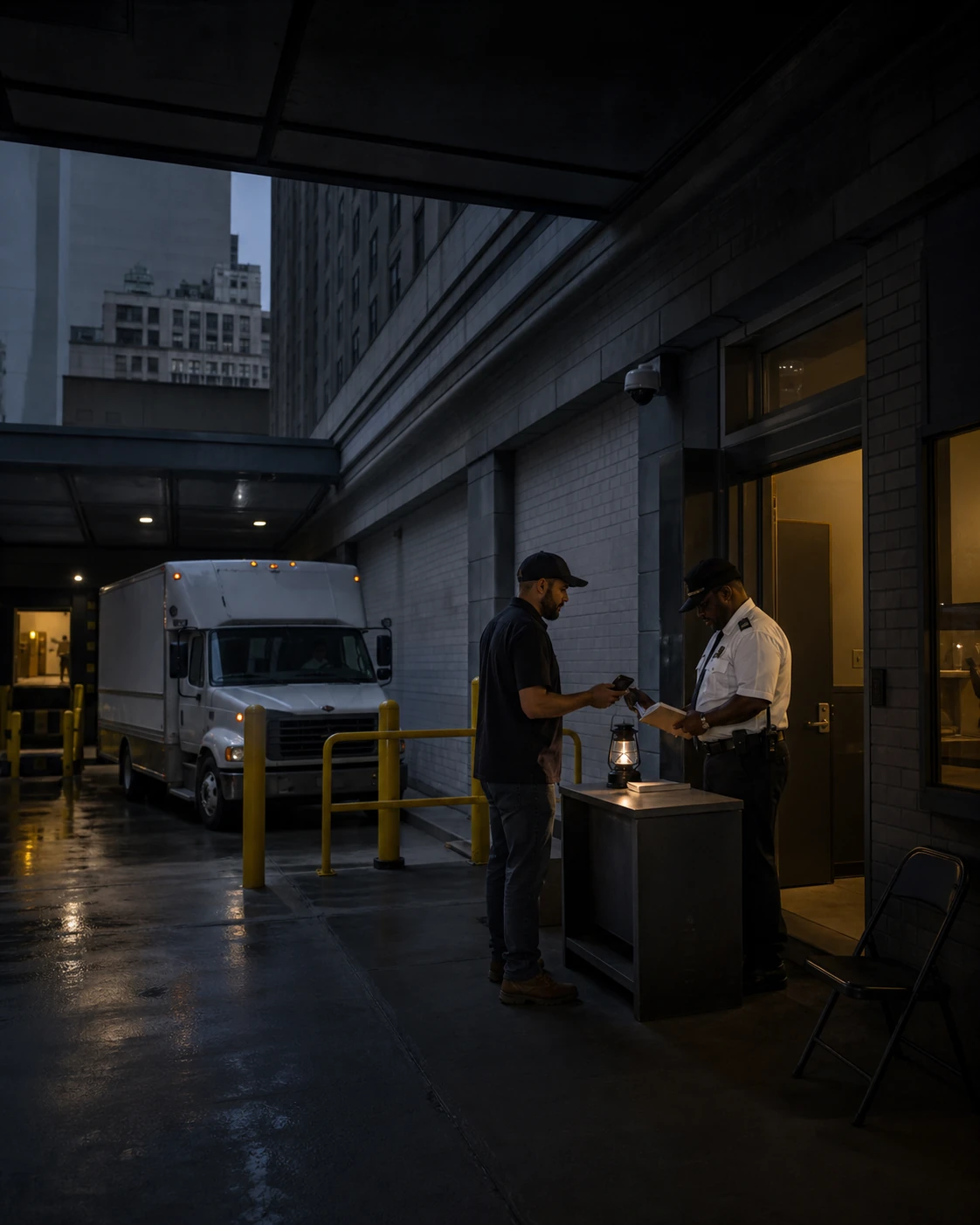
Loading docks may become especially vulnerable when cameras, roll-down gates, intercoms, freight elevators, or scheduling systems are unavailable. Deliveries can also accumulate if tenants are unable to receive them.
Management may choose to reduce loading activity or require advance confirmation during the outage. Security measures can include:
- Assigning a fixed post at the active service entrance
- Keeping unused loading doors secured
- Manually confirming drivers, vendors, and delivery destinations
- Recording vehicle, company, arrival, and departure information
- Separating accepted deliveries from unverified items
- Preventing tailgating through service corridors
- Coordinating freight-elevator availability before admitting a delivery
Drivers should not be allowed to wander through the building to locate a recipient. If a delivery cannot be verified or safely completed, staff should follow management’s refusal or rescheduling procedure.
Added patrols and temporary posts
A good outage plan reallocates personnel according to changed risks instead of simply adding random patrol rounds. Fixed posts may be more useful at an unlocked perimeter door, while roving patrols can check stairwells, isolated floors, mechanical-area approaches, and other locations that have lost camera coverage.
Every temporary assignment should define:
- The exact post or patrol route
- The condition being monitored
- Check-in frequency
- Required equipment
- Escalation contacts
- Relief and rest arrangements
- Documentation requirements
Patrol records should note specific findings, not only that an area was “all clear.” Useful entries include the doors tested, lights observed, people assisted, hazards reported, and corrective instructions received.
If existing staffing cannot cover the identified posts safely, management may need emergency security coverage until normal systems are restored.
Coordination with building management
Security, engineering, property management, and fire-life-safety personnel should operate from a shared status picture. Regular briefings can prevent conflicting instructions and duplicated work.
A simple outage status board or report can track:
| Area or system | Current condition | Temporary control | Responsible party | Next review |
|---|---|---|---|---|
| Main entrance | Readers offline | Guard verifies credentials | Security supervisor | Every 30 minutes |
| West stairwell | Limited lighting | Hazard reported; safe route guidance under the emergency plan | Building management | After engineering update |
| Loading dock | Camera unavailable | Fixed post and manual vehicle log | Security | End of shift |
| Elevators | Selected cars unavailable | Lobby direction and access control | Engineering/security | On status change |
The exact response should reflect the building’s emergency plan, occupancy, system design, and instructions from authorized management and public officials.
Returning to normal operations
Restoration of utility power does not mean every security system is immediately reliable. Systems may restart at different times, clocks may be incorrect, and access or video events may not have recorded properly.
Before removing temporary posts, the responsible teams should confirm the status of:
- Card readers, locks, alarms, and turnstiles
- Cameras, recording equipment, and security monitors
- Lobby and loading-area intercoms
- Visitor-management systems
- Emergency and common-area lighting
- Elevator service
- Gates, shutters, and garage equipment
Security should reconcile temporary badges and backup keys, complete manual visitor departures where possible, preserve incident records, and document unresolved issues for the next shift. A post-incident review can identify equipment weaknesses, missing supplies, and staffing changes needed for the next outage.
Prepare before the next outage
Guardian ISI can help Manhattan commercial and residential properties plan temporary security posts, reinforce access points, and arrange qualified coverage when an outage disrupts normal operations. Learn more about our security guard services and commercial office security.
For planned or urgent coverage, call or text (212) 602-1695 or request coverage online.
Related Guardian services
Review Emergency Security Coverage and Commercial Office Security to connect these procedures with the appropriate staffing and site responsibilities.
Frequently asked questions
What should security check first during a building power outage?
Confirm communications and management direction, identify immediate life-safety concerns, and check critical entrances, exits, elevators, stairwells, cameras, and access-controlled doors. Do not assume all systems failed in the same way.
Should access-controlled doors be propped open when readers stop working?
No. If a door must remain available, management should establish a staffed entry point with manual identity and authorization checks rather than leave the door unsecured.
How should visitors be processed when the electronic system is offline?
Use a prepared manual log, verify the visitor's host through an approved channel, issue controlled temporary credentials if applicable, and protect completed records from public view.
Can security guards rescue people from a stalled elevator?
Guards can report the entrapment, communicate through approved channels, control the surrounding area, and assist responders. They should not force elevator doors or attempt a rescue without the necessary authority and training.
When can added security posts be removed after power returns?
Temporary posts should remain until authorized management confirms that the affected access, video, communication, lighting, and other relevant systems are functioning reliably.
What supplies should a security desk keep for outages?
Useful supplies may include approved flashlights, spare batteries, printed contact lists, manual visitor and key logs, clipboards, pens, post instructions, and current floor or access-point information.