
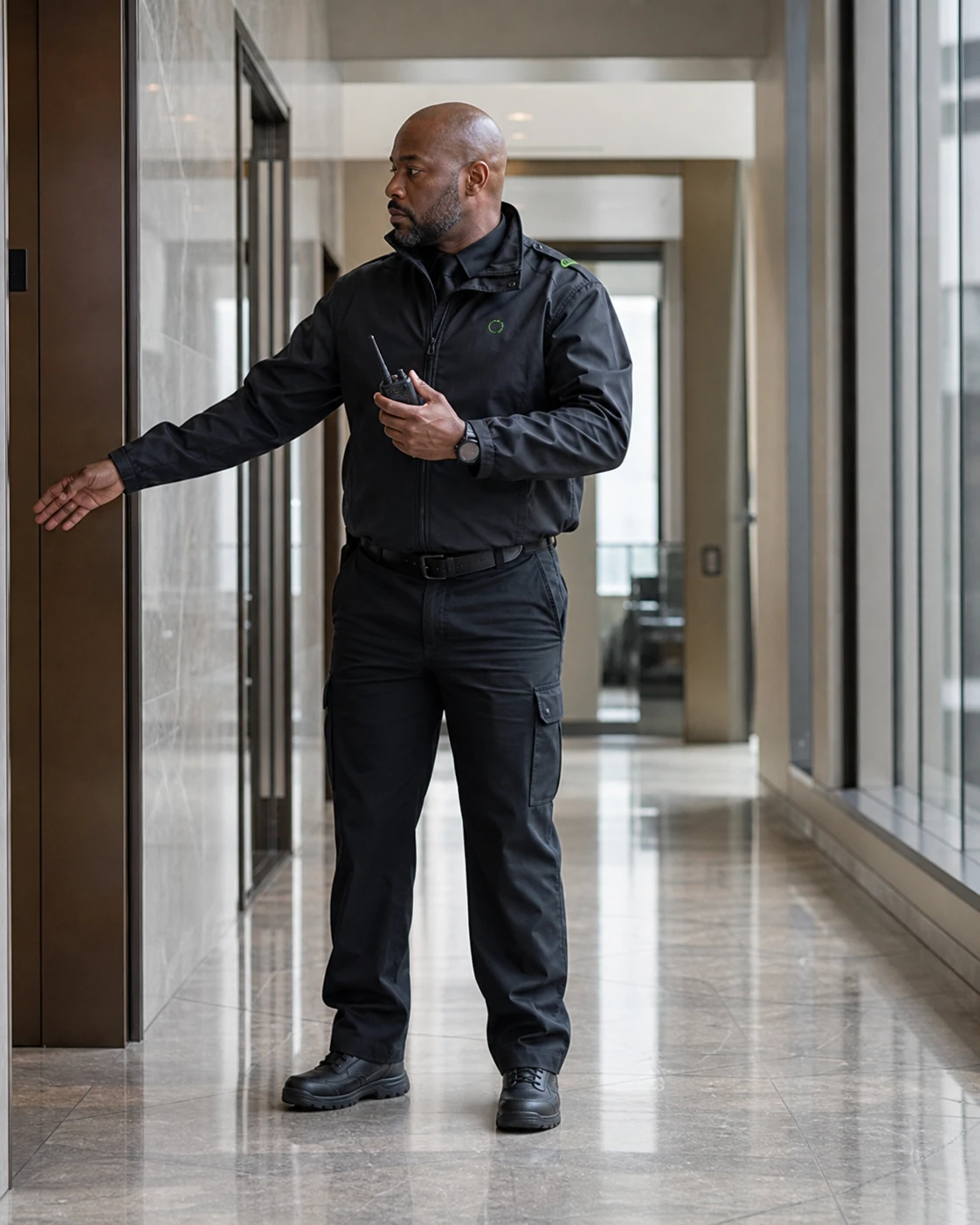
A security patrol should do more than demonstrate that an officer walked through a property. Effective patrols are designed around identifiable risks, provide a repeatable method for checking critical areas, and connect observations to clear response procedures.
For Manhattan properties, the challenge is often complexity: multiple tenants, public-facing lobbies, loading docks, mechanical spaces, contractors, after-hours activity, and vertical circulation in a compact footprint. A useful patrol plan accounts for all of them without leaving the primary post exposed.
Define the Purpose of Each Patrol
Before selecting a route, management should identify what the officer is expected to observe. Patrol objectives may include:
- Checking doors, gates, and accessible windows
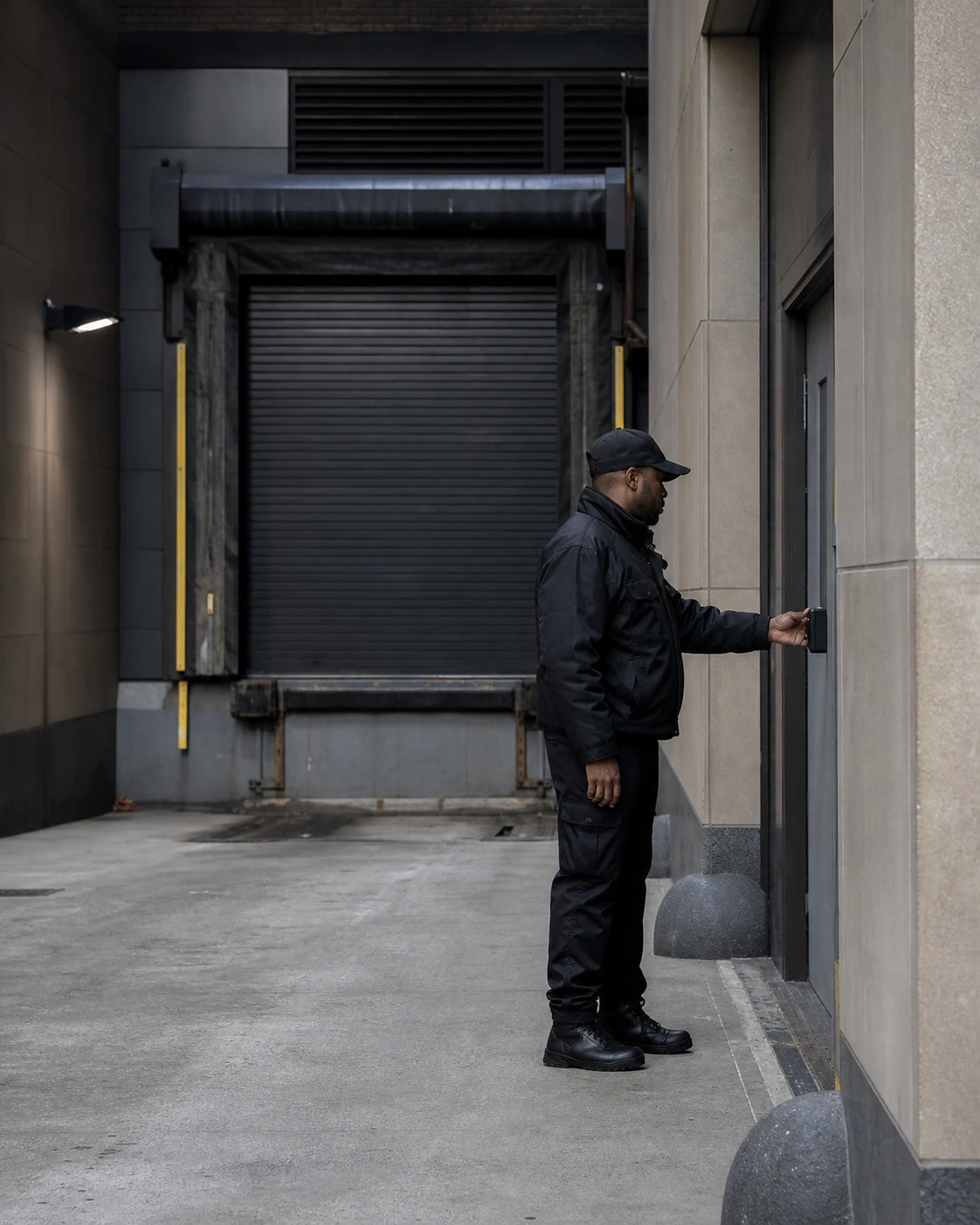
- Observing loading docks and service corridors
- Identifying water leaks, unusual odors, or visible damage
- Confirming that restricted areas remain secured
- Monitoring public and tenant amenity spaces
- Looking for trip hazards or blocked pathways
- Checking vacant floors or construction interfaces
- Deterring unauthorized activity through visible presence
Officers should understand that a patrol is an observation and reporting assignment. Technical problems should be referred to engineering or another qualified party rather than diagnosed or repaired by security personnel.
Build Routes Around Site Risk
Prioritize critical locations
The patrol schedule should reflect when and where problems are most likely. A loading dock may need attention during morning deliveries, while vacant floors and secondary entrances may require more frequent checks after business hours.
Routes should also account for stairwells, parking areas, rooftops, package rooms, bicycle storage, shared tenant spaces, and active construction zones where applicable.
Avoid completely predictable movement
Some required checks must occur at set times, but every patrol does not need to follow the same sequence. Limited variation can improve observation and reduce predictability. Management should still preserve enough structure to confirm that critical areas were checked.
Keep essential posts covered
A patrol plan should not create a new vulnerability by leaving a lobby or access-control desk unattended. Determine whether another officer provides relief, the desk can be remotely supported, or the patrol must occur during a lower-volume period.
Match Responses to Observed Conditions
Post orders should explain what an officer does after finding a problem. Useful procedures distinguish among routine service issues, security concerns, and emergencies.
For example:
- Unsecured door: Remain nearby when practical, notify the designated contact, document the condition, and follow site instructions for temporary control.
- Unknown person in a restricted area: Use the property’s approved engagement and verification procedure; request assistance rather than escalating unnecessarily.
- Water leak or burning odor: Notify engineering and the supervisor immediately, protect people from the affected area, and follow emergency procedures.
- Suspected crime in progress: Prioritize personal safety and follow site protocols for contacting 911, supervisors, and management.
- Medical emergency: Call 911 promptly when emergency assistance is needed, provide accurate location information, and support responder access within the officer’s training.
Security staff should not be expected to improvise beyond their training or authority. Procedures must identify the people and agencies responsible for the next step.
Improve Incident Communications
A strong response can be undermined by a vague radio call. Officers should communicate:
- Their exact location
- What they directly observe
- Whether anyone appears to be in immediate danger
- What assistance is needed
- What action they have already taken
Plain language is often more useful than property-specific codes that contractors, tenants, or public responders may not understand. Backup communication methods should be available where elevators, basements, or mechanical areas have poor radio or cellular reception.
Require Useful Patrol Records
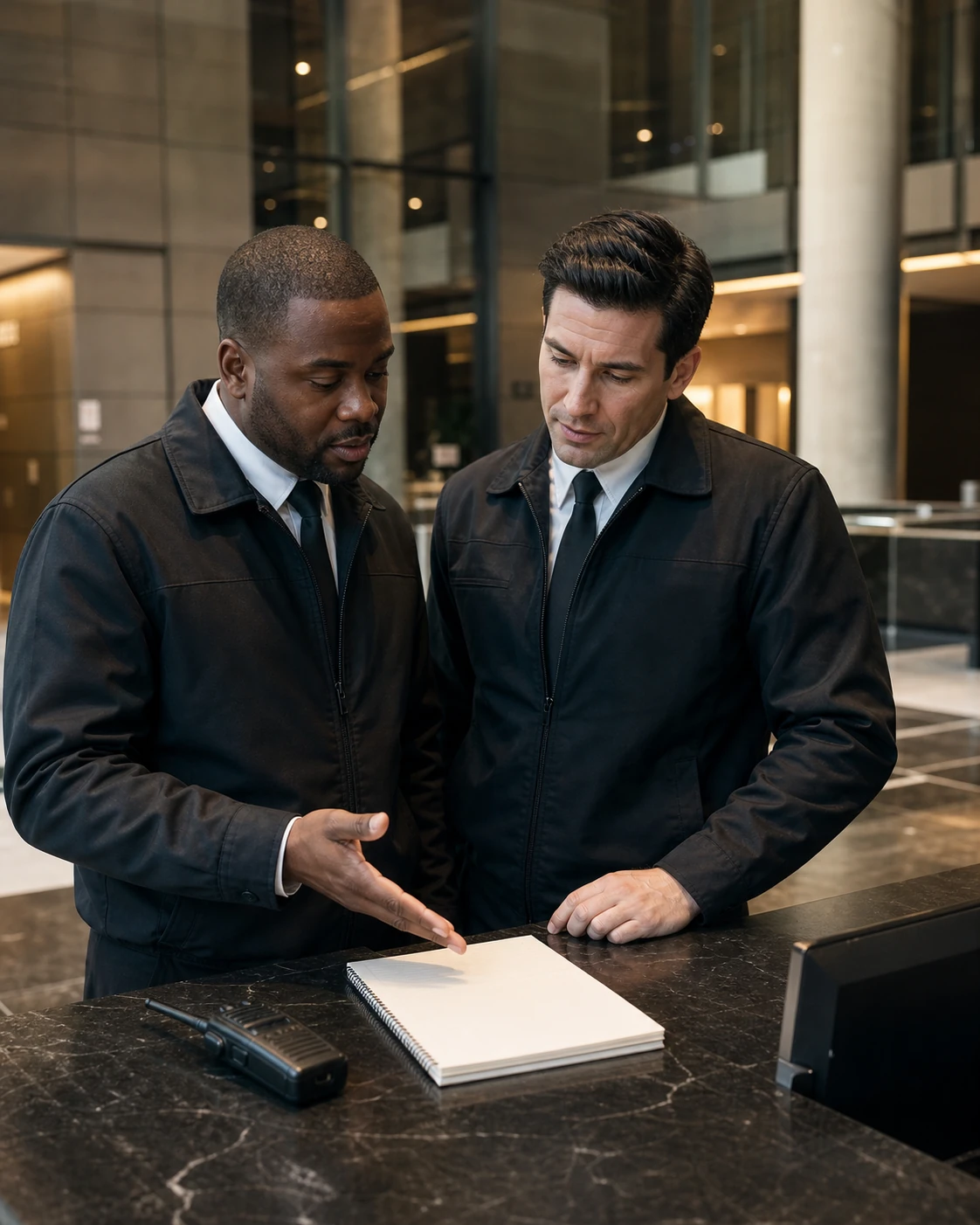
Patrol technology can verify that an officer reached a checkpoint, but it cannot show the quality of the observation. Logs should include meaningful exceptions, actions taken, and notifications made.
Supervisors should review records for patterns such as:
- Doors repeatedly found unsecured
- Lights or cameras consistently out of service
- Recurring activity in restricted spaces
- Missed checkpoints or unusually short patrols
- Repeated tenant complaints in the same area
These trends may justify operational changes, repairs, training, or revised staffing—not simply another notation in the log.
Test the Procedure Through Supervision
Supervisory visits can confirm whether routes are realistic, post orders are available, officers understand escalation rules, and equipment is working. A supervisor should occasionally walk the route with the assigned officer and ask what the officer would do in common scenarios.
Patrol instructions should be reviewed after incidents, renovations, tenant changes, new access-control installations, and changes in building hours. For active projects, patrol planning should also be coordinated with construction security responsibilities.
Strengthen Patrol Coverage at Your NYC Property
Guardian ISI can assess patrol routes, post orders, reporting practices, and supervisory needs for commercial office security and other Manhattan properties. Call or text (212) 602-1695 or request coverage online to discuss a site-specific security plan.
Related Guardian services
Review Security Guard Services and Commercial Office Security when setting patrol duties, staffing, supervision, and reporting.
Frequently asked questions
How often should security officers patrol an NYC property?
There is no universal interval. Frequency should reflect the property’s risks, operating hours, staffing, critical areas, and the need to keep fixed posts covered.
Should patrol routes always follow the same sequence?
Required checks should be consistent, but limited route and timing variation can reduce predictability when approved by management.
What belongs in a security patrol log?
Record the time, location, observed condition, action taken, person notified, and outcome. Entries should separate direct observations from assumptions.
Can checkpoint technology replace security supervision?
No. It can verify location and timing, but supervisors must still evaluate observation quality, officer readiness, reporting, and compliance with post orders.
When should patrol procedures be updated?
Review them after incidents, renovations, tenant or schedule changes, new equipment installations, and any material change in property operations.