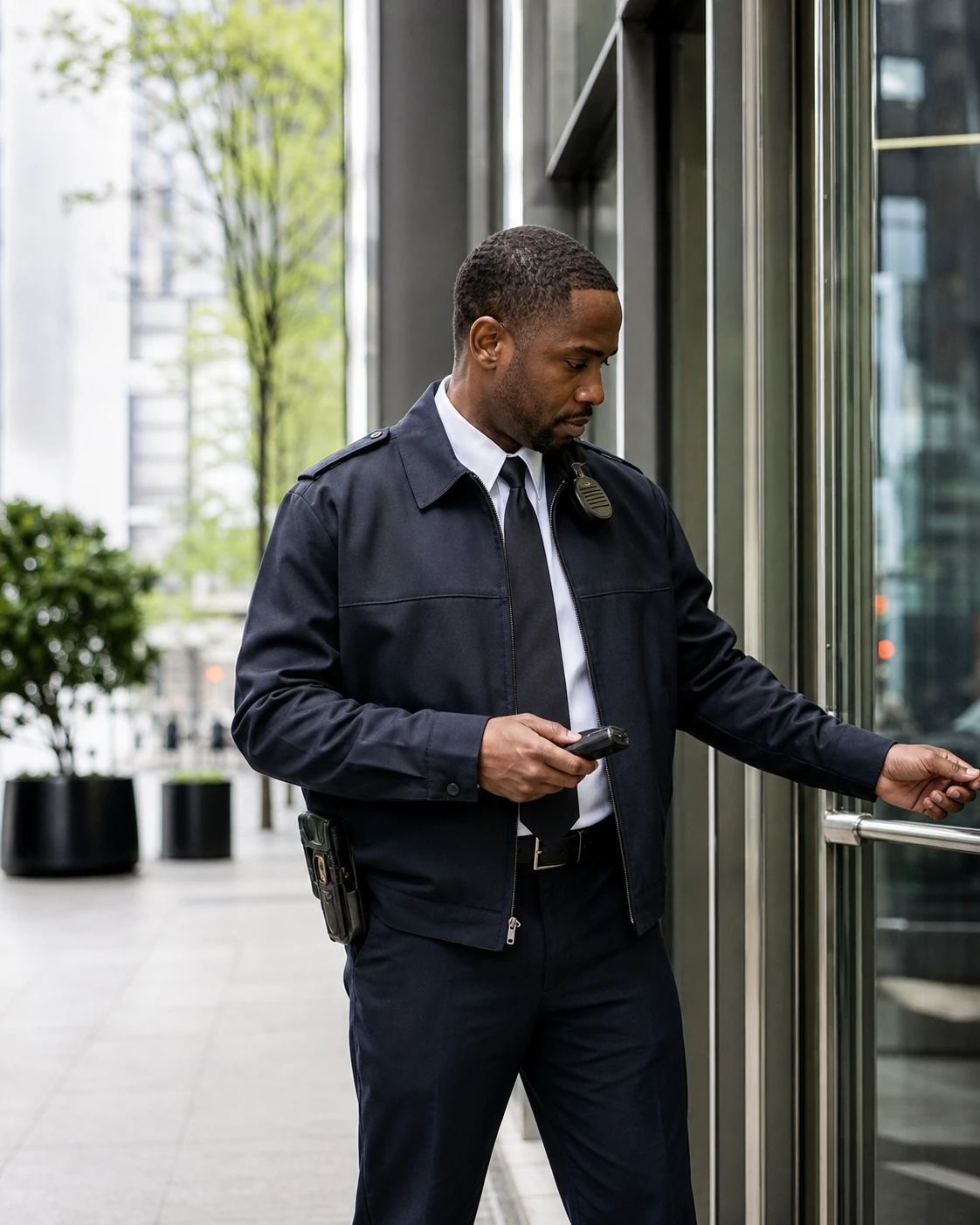
Security patrols are often described as walking through a property and looking for problems. For a New York property, that definition is too limited. A professional patrol program should establish what must be checked, how frequently it must be checked, what conditions require action, and how the result will be documented for management.
Start With Clearly Defined Patrol Zones
Every assignment should have a written patrol map or zone list. Typical areas include entrances, emergency exits, stairwells, elevator landings, loading docks, garages, rooftops, utility rooms, vacant spaces, and the exterior perimeter. The list should reflect the property’s actual vulnerabilities rather than reuse a generic template.
Use Randomized Timing Without Losing Accountability
Predictable patrol times can allow unwanted activity to occur between rounds. Randomized timing creates uncertainty while electronic or written records maintain accountability. Supervisors should still define minimum frequency, priority areas, and conditions that require an immediate additional patrol.
Know What Officers Should Observe
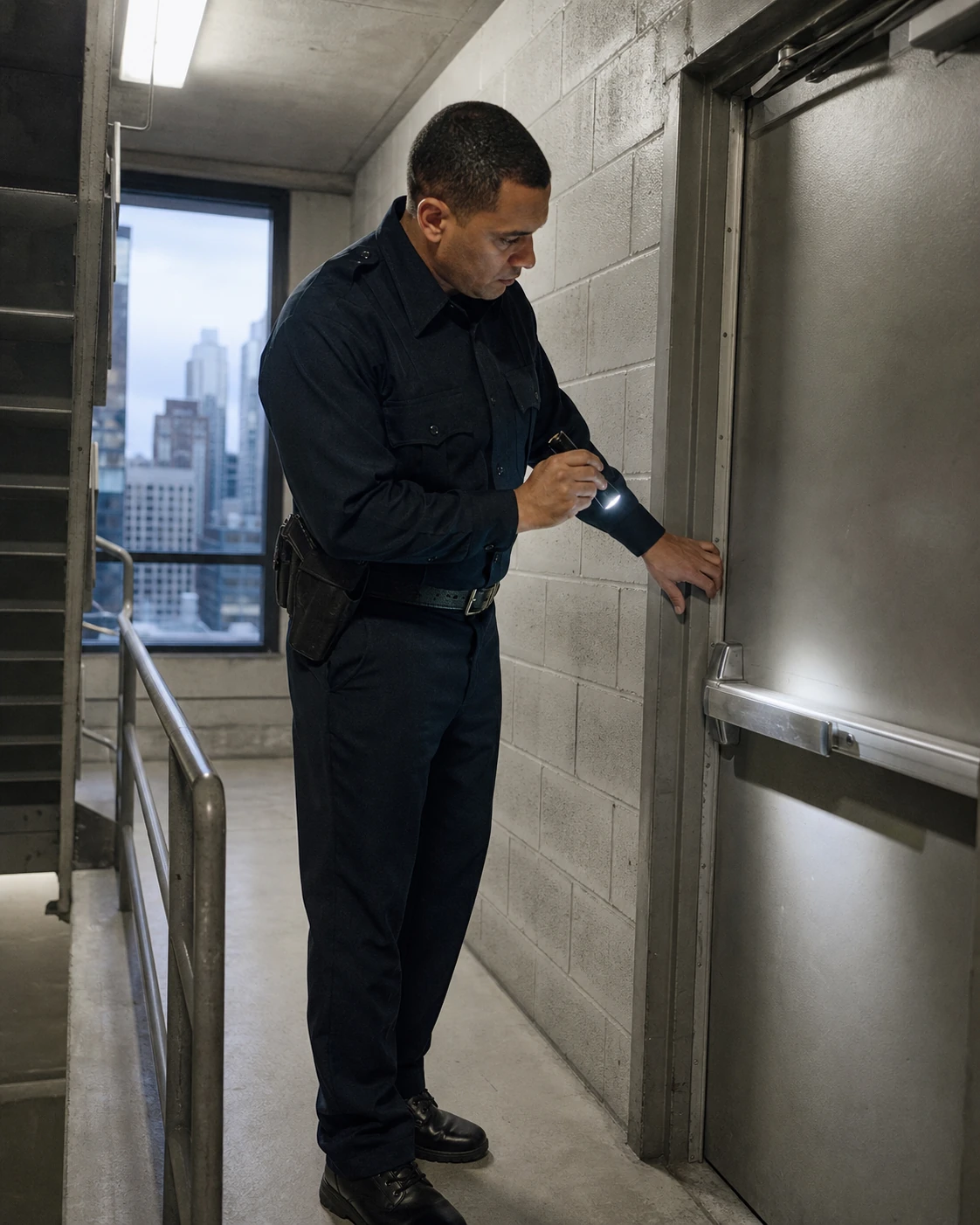
Officers should look for unsecured doors, damaged locks, blocked exits, water leaks, smoke or unusual odors, lighting failures, suspicious persons, unattended property, safety hazards, and violations of building rules. They must understand the difference between observing, correcting, and escalating a condition.
Build Response Levels Before an Incident
Response procedures should classify events by urgency. A routine issue may require documentation and manager notification. A developing condition may require supervisor response and access restrictions. An immediate threat may require 911, evacuation, shelter-in-place, or emergency-service coordination.
Make Notification Chains Specific
A post order that says “notify management” is incomplete. It should identify the primary contact, backup contact, after-hours contact, and situations requiring direct notification. Phone numbers and roles should be reviewed regularly.
Require Complete Incident Documentation
A useful report answers six questions: who was involved, what happened, when it happened, where it happened, what actions were taken, and who was notified. Reports should distinguish observed facts from assumptions.
Review Patrol Data for Patterns
Repeated door alarms, recurring loitering, lighting failures, or delivery conflicts can reveal a preventable problem. Management should review trends and assign corrective actions instead of treating every report as an isolated event.
Test the Program Through Supervision
Supervisors should conduct unannounced visits, verify patrol records, question officers about emergency procedures, inspect uniforms and equipment, and confirm that post orders are current.

Build a Patrol Program That Fits Your Property
Guardian security guard services support commercial, residential, hospitality, retail, construction, and institutional properties across New York City. For a site-specific plan, call or text (212) 602-1695 or request coverage.
Put the plan into practice
| Review point | What to confirm |
|---|---|
| Before patrol | Confirm route, priority checkpoints, safe access, and maximum gaps |
| During patrol | Record specific observations and escalate urgent conditions |
| After patrol | Assign follow-up and verify unresolved hazards |
Related Guardian services
Review Security Guard Services and Commercial Office Security to connect these procedures with the appropriate staffing and site responsibilities.
Frequently asked questions
Should patrol times be predictable?
Minimum frequency should be clear, but varying exact times can reduce predictability.
What requires an incident report?
Any unusual condition, policy violation, safety hazard, confrontation, emergency response, or management-directed event should be documented.
Who should review patrol reports?
Site supervisors and property management should review them for completeness, recurring conditions, and needed corrective action.
Do patrols replace cameras?
No. Patrols, cameras, access control, lighting, supervision, and reporting work best as a coordinated system.