
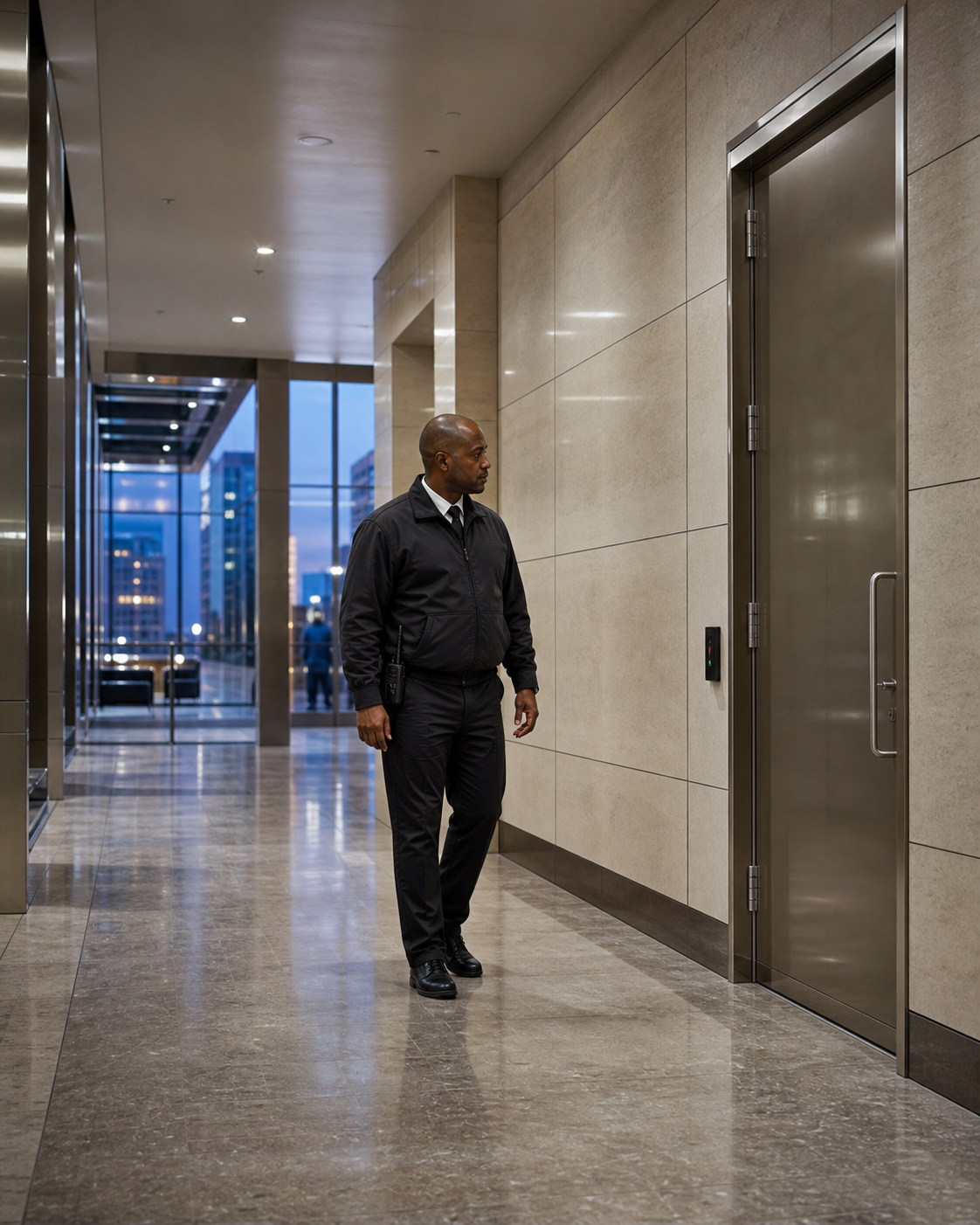
Security patrols are most effective when they operate as part of a complete response system—not as guards simply walking through a building at fixed intervals. For New York commercial properties, a sound patrol program connects carefully designed routes with meaningful inspection points, reliable communications, clear escalation levels, consistent incident documentation, and prompt emergency notifications.
That coordination is especially important in Manhattan, where one building may include offices, retail space, loading areas, mechanical floors, public lobbies, and multiple tenant operations. Property managers need procedures that help security personnel identify problems early, respond within their training and authority, and quickly involve building management or emergency services when necessary.
Start With a Site-Specific Patrol Plan
A patrol plan should reflect the building’s actual layout, occupancy, operating hours, and risk profile. A generic checklist rarely addresses the differences between a Midtown office tower, a mixed-use property, and a commercial building undergoing renovation.
Before establishing routes, management and its security provider should review:
- Public entrances, employee entrances, and emergency exits
- Lobby, turnstile, and visitor-management operations
- Loading docks, freight elevators, and delivery procedures
- Stairwells, corridors, rooftops, terraces, and setback areas
- Mechanical, electrical, telecommunications, and utility spaces
- Vacant floors and areas under construction
- Parking, bicycle storage, and package rooms, where applicable
- Tenant schedules, after-hours access, and recurring events
- Known trouble spots and previous incident reports
The resulting written post orders should identify what guards are expected to inspect, when patrols should occur, how observations should be reported, and which conditions require immediate escalation. Post orders should also define limits: security personnel should not enter unsafe environments or perform technical work outside their training.
Design Patrol Routes That Provide Real Coverage
Predictability can create gaps. If every patrol follows the same route at exactly the same time, unauthorized activity may be timed around it. A better program combines required inspection points with reasonable variation in timing and direction.
Use layered routes
Many Manhattan properties benefit from several patrol types rather than one building-wide loop:
- Opening patrols: Confirm that designated entrances, common areas, and building systems visible to security are ready before normal occupancy.
- Routine interior patrols: Cover tenant corridors, stairwells, amenity areas, vacant spaces, and other assigned floors.
- Perimeter patrols: Check doors, storefronts, sidewalk-facing conditions, loading areas, and accessible exterior spaces.
- Closing patrols: Identify unsecured doors, remaining occupants, unusual conditions, and after-hours activity.
- Targeted patrols: Increase attention around deliveries, special events, construction activity, terminations, protests, or reported concerns.
Route design should also account for elevator travel time, freight operations, tenant privacy, and areas requiring special access authorization. Patrol expectations must be realistic enough that guards can investigate and document findings rather than rushing to meet an arbitrary schedule.
Avoid leaving critical posts uncovered
A lobby or control-desk officer should not abandon a critical post unless procedures provide suitable relief or the situation requires an emergency response. Larger buildings may assign a dedicated roving guard, while smaller properties may schedule patrols during low-traffic periods or arrange temporary coverage.
For properties that need trained personnel at entrances, control desks, or mobile posts, Guardian ISI provides commercial office security and broader security guard services tailored to the site.
Make Every Inspection Point Meaningful
A checkpoint confirms where a guard traveled, but it does not prove that the area was properly inspected. Each inspection point should have a defined purpose and a short list of observable conditions.
Depending on the property and the guard’s responsibilities, an inspection may include checking for:
- Doors that are propped open, damaged, or unexpectedly unlocked
- Obstructed corridors, stairs, exits, or access points
- Unauthorized occupants or unusual after-hours activity
- Water leaks, unusual odors, visible smoke, or excessive heat
- Broken lighting, damaged locks, or compromised barriers
- Suspicious packages or unattended property
- Evidence of vandalism, forced entry, or tampering
- Unsafe conditions that can be observed without touching equipment
- Construction activity outside approved locations or hours

Electronic tour systems can record the time and location of patrols, but technology should support—not replace—attentive observation. Guards need a simple way to record exceptions, photographs when authorized, and follow-up actions.
Routine security patrols also should not be confused with a required fire watch or other specialized fire-life-safety assignment. When a fire protection system is impaired or a site is subject to a specific fire-safety requirement, management should determine the appropriate response with its fire-safety professionals and arrange qualified fire guard coverage where required.
Build Radio Checks Into the Patrol Process
A lone guard moving through stairwells, vacant floors, or back-of-house areas needs dependable communication with the lobby, security operations center, or supervisor. Radio checks help confirm both the guard’s status and the reliability of communications in different parts of the property.
A practical procedure should define:
- When the officer announces the start of a patrol
- Which locations require a status check
- How often scheduled check-ins occur
- What language or call signs should be used
- How long the control post waits before attempting contact again
- What happens when a guard misses a check-in
- Which backup method is used in a radio dead zone or equipment failure
Messages should be brief and professional. Sensitive personal details, access credentials, and unnecessary descriptions should not be broadcast over an open channel. Buildings should test radio coverage in stairwells, basements, mechanical areas, loading docks, and upper floors rather than assuming coverage is uniform.
A missed radio check deserves a defined response. The control officer might first attempt radio contact, then use an approved secondary method, notify a supervisor, and dispatch another officer if it is safe to do so. If the circumstances suggest an immediate threat to the patrolling officer, management should follow the site’s emergency procedures without delay.
Establish Clear Escalation Levels
Guards should not have to improvise whom to call during a developing incident. A written escalation matrix can group events by urgency while preserving flexibility for the facts at hand.
| Level | Typical conditions | Expected action |
|---|---|---|
| Routine | Minor maintenance concern, lighting issue, noncritical door problem | Document, notify the designated building contact, and monitor until addressed |
| Priority | Repeated access violation, active leak without immediate life threat, disruptive person, evidence of attempted entry | Notify the supervisor or property manager promptly, preserve relevant information, and increase observation as directed |
| Urgent | Confirmed unauthorized entry, credible threat, escalating confrontation, significant property damage | Request immediate supervisory support, contact designated management personnel, and call emergency services when circumstances warrant |
| Emergency | Fire or smoke, serious medical event, violence, weapon, suspected explosive device, or another immediate threat to life | Call 911, provide clear information, follow approved emergency procedures, and assist responders without exceeding training or authority |
This table is a planning model, not a substitute for site-specific post orders or professional fire-life-safety planning. Properties should define examples relevant to their operations and specify who has authority to make operational decisions.
Prioritize safety over investigation
Security personnel can observe, report, preserve a scene, direct responders, and support building procedures. They should not take unnecessary risks to confirm a suspected hazard. For example, a guard who detects smoke should initiate the designated emergency process rather than opening doors or entering an area that may be dangerous.
Coordinate Emergency Notifications
Emergency notifications should answer three questions: who needs to know, how quickly, and through which approved channel. The sequence will vary based on the incident, but immediate threats to life generally require direct contact with 911 before routine management notifications.
A building contact list may include:
- 911 for police, fire, or emergency medical assistance
- The security supervisor or account manager
- Property management and engineering personnel
- The building’s fire-life-safety team
- Tenant representatives, when authorized and appropriate
- Ownership, risk management, or legal contacts for significant events
- Approved restoration or emergency vendors
Notification lists should include primary and backup contacts and be reviewed regularly. Guards should know the building’s exact address, relevant entrance, floor or location, callback number, and best route for responders. Someone should be assigned to meet responding agencies when conditions permit.
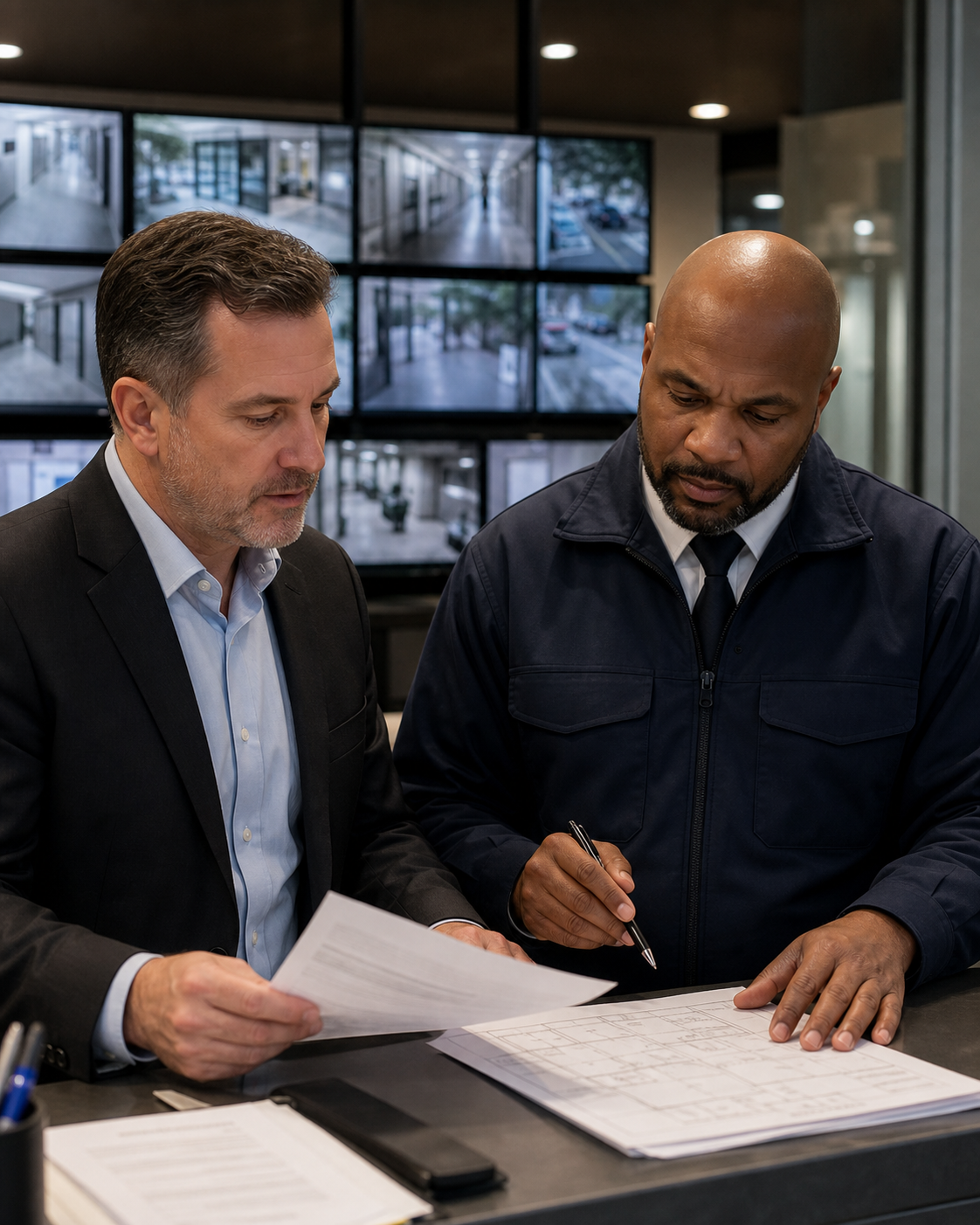
Security staff should use only approved mass-notification, public-address, or tenant-communication systems. Messages need to be factual and concise; speculation can create confusion and interfere with the response.
Document the Incident and the Follow-Up
An incident report creates a record for management, helps identify recurring problems, and supports an informed review of the response. It should distinguish direct observations from statements made by others.
A useful report generally includes:
- Date, time, and exact location
- Name and assignment of the reporting officer
- How the condition was discovered
- Objective description of what the officer observed
- People involved and available contact details, when appropriate
- Notifications made and the time of each notification
- Instructions received and actions taken
- Arrival times for supervisors or emergency responders
- Relevant photographs, video references, or access-control records, if authorized
- Final known status and any required follow-up
Reports should avoid unsupported conclusions and vague phrases such as “everything was handled.” A clear timeline is more useful: what was observed, who was contacted, what action followed, and when the situation was transferred to management or responding authorities.
Management should also preserve relevant video or access-control data in accordance with the property’s policies. Access to reports and recordings should be limited to authorized parties.
Review Patrol Data and Correct Recurring Gaps
Patrol records become more valuable when someone reviews them. Property managers and security supervisors should look for patterns such as:
- Repeatedly unsecured doors
- Missed or unusually fast patrols
- Radio dead zones and equipment failures
- Recurring leaks, lighting outages, or obstructions
- Delayed management callbacks
- Similar incidents on specific shifts or floors
- Checkpoints that no longer reflect the building’s use
After a significant event, conduct a short debrief. Determine whether the officer recognized the problem, followed the notification sequence, received timely support, and documented the outcome. Update post orders, contact lists, training, or staffing when the review identifies a gap.
Patrol plans should also be revisited after renovations, tenant turnover, schedule changes, new access-control systems, or major changes in building occupancy. Properties with active work areas may require a separate construction security plan instead of simply adding another stop to an existing route.
Create a Patrol Program That Works Under Pressure
A reliable security patrol program connects six elements:
- Routes built around the property’s actual risks
- Inspection points with defined observations
- Radio procedures that account for missed checks and dead zones
- Escalation levels that remove uncertainty
- Emergency notifications with current primary and backup contacts
- Objective documentation followed by management review
Guardian ISI can assess existing procedures, develop site-specific post orders, and provide scheduled or emergency security coverage for New York commercial properties. To discuss your building, call or text (212) 602-1695 or request coverage online.
Frequently asked questions
How often should security patrols occur in a New York commercial building?
There is no single interval appropriate for every building. Frequency should reflect occupancy, operating hours, building layout, incident history, critical areas, and available staffing. High-risk locations may need more frequent or targeted checks.
Should guards follow the same patrol route every time?
Required areas should be covered consistently, but reasonable variation in timing and direction can reduce predictability. Any variation should remain compatible with post coverage, radio checks, and documented inspection requirements.
What should happen if a guard misses a scheduled radio check?
The site procedure should require a prompt contact attempt, an approved backup communication method, supervisory notification, and a safe welfare check when appropriate. A possible emergency should be escalated immediately.
What information belongs in a security incident report?
Reports should include the time, location, direct observations, people involved, notifications, actions taken, responder arrival times, and final known status. Officers should separate facts they observed from information supplied by others.
Are routine security patrols the same as fire guard coverage?
No. Routine patrol duties should not be treated as a substitute for a required fire watch or specialized fire guard assignment. Building management should consult its fire-safety professionals and use appropriately qualified personnel when fire guard coverage is required.