
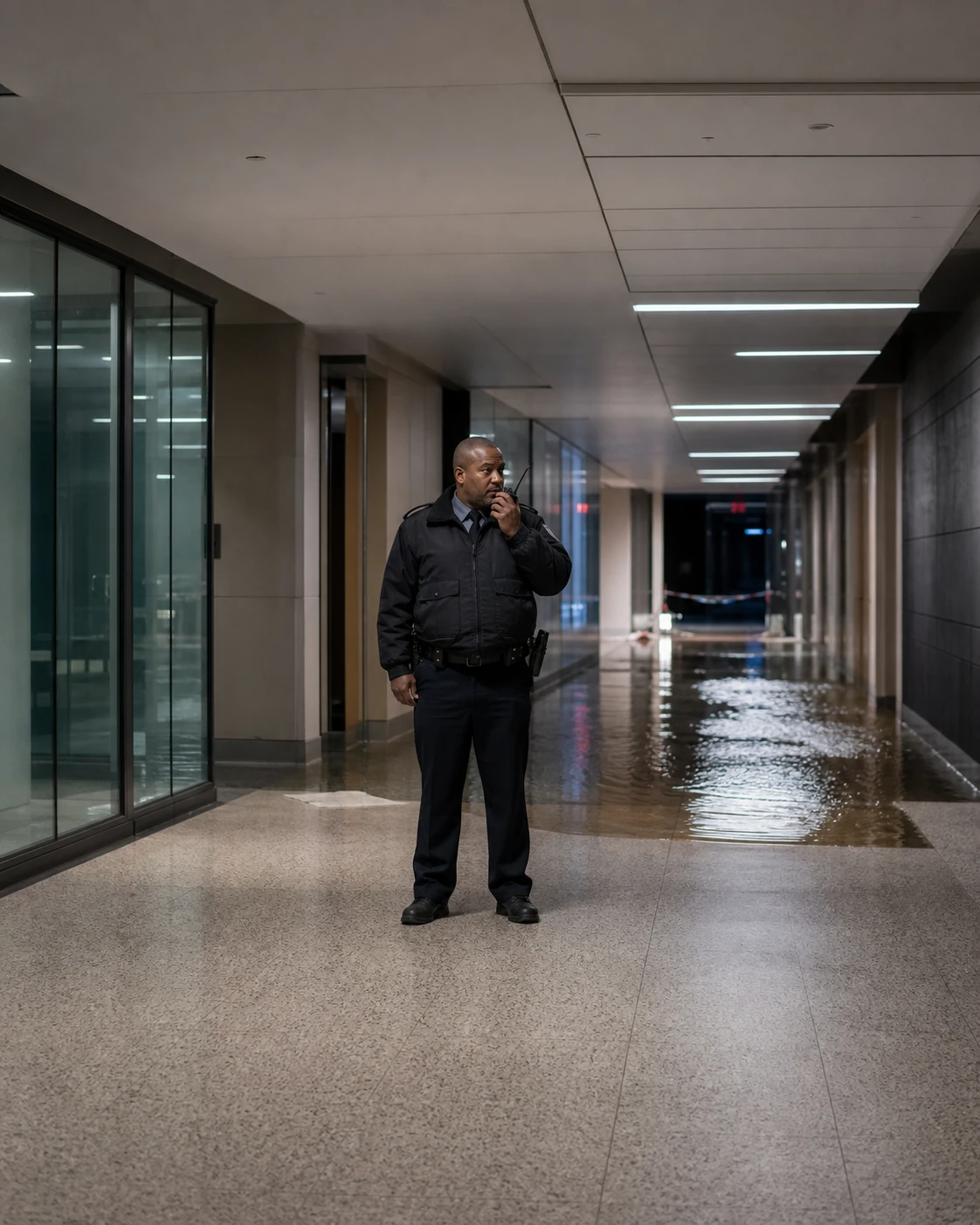
An overnight security officer hears running water behind a locked tenant door. A rover notices a ceiling tile beginning to sag. A lobby officer sees water approaching an elevator threshold.
These are not routine maintenance observations. In a New York City commercial building, a leak can quickly affect electrical rooms, elevators, fire protection equipment, tenant property, egress routes, and occupied floors below. The guard’s role is not to diagnose plumbing or perform repairs. It is to recognize the condition, protect people, notify the right responders, and preserve an accurate timeline.
Step 1: Stop and Assess From a Safe Position
The officer should not automatically enter the affected area. Before approaching, look for immediate hazards:
- Water near electrical panels, outlets, equipment, or exposed wiring
- A bulging ceiling or visible structural damage
- Slippery flooring on a stair, landing, or egress path
- Smoke, unusual odors, sparks, or alarm activation
- Water entering an elevator, machine room, fire command center, or critical building room
- People trapped or unable to leave safely
NYC guidance directs people to call 911 when a leak creates immediate danger. (portal.311.nyc.gov)
If danger is present, the officer should move people away, call 911, notify building management, and follow the property’s emergency procedures. The officer should not touch energized equipment or walk beneath a visibly compromised ceiling.
Step 2: Make the Initial Notification Specific
“Water leak on the sixth floor” is not enough. The first report should help engineering and management decide what resources are needed.
Use a concise format:
- Exact location: floor, room, tenant space, stair, corridor, or equipment area
- Observed source: ceiling, wall, pipe, fixture, door, or unknown
- Apparent volume: drip, steady flow, pooling, or rapidly spreading
- Direction of travel: toward elevators, electrical equipment, stairs, or lower floors
- People affected: occupants present, area vacant, or access unknown
- Immediate hazards: slipping, ceiling damage, electrical proximity, or blocked egress
- Actions taken: area isolated, 911 called, engineer notified, or patrol redirected
The officer should report what is visible without claiming to know the cause.
Step 3: Control Access Without Abandoning the Building
Where conditions permit, establish a safe boundary using available cones, barriers, or temporary signs. Do not create a barrier that blocks an exit or narrows an egress route.
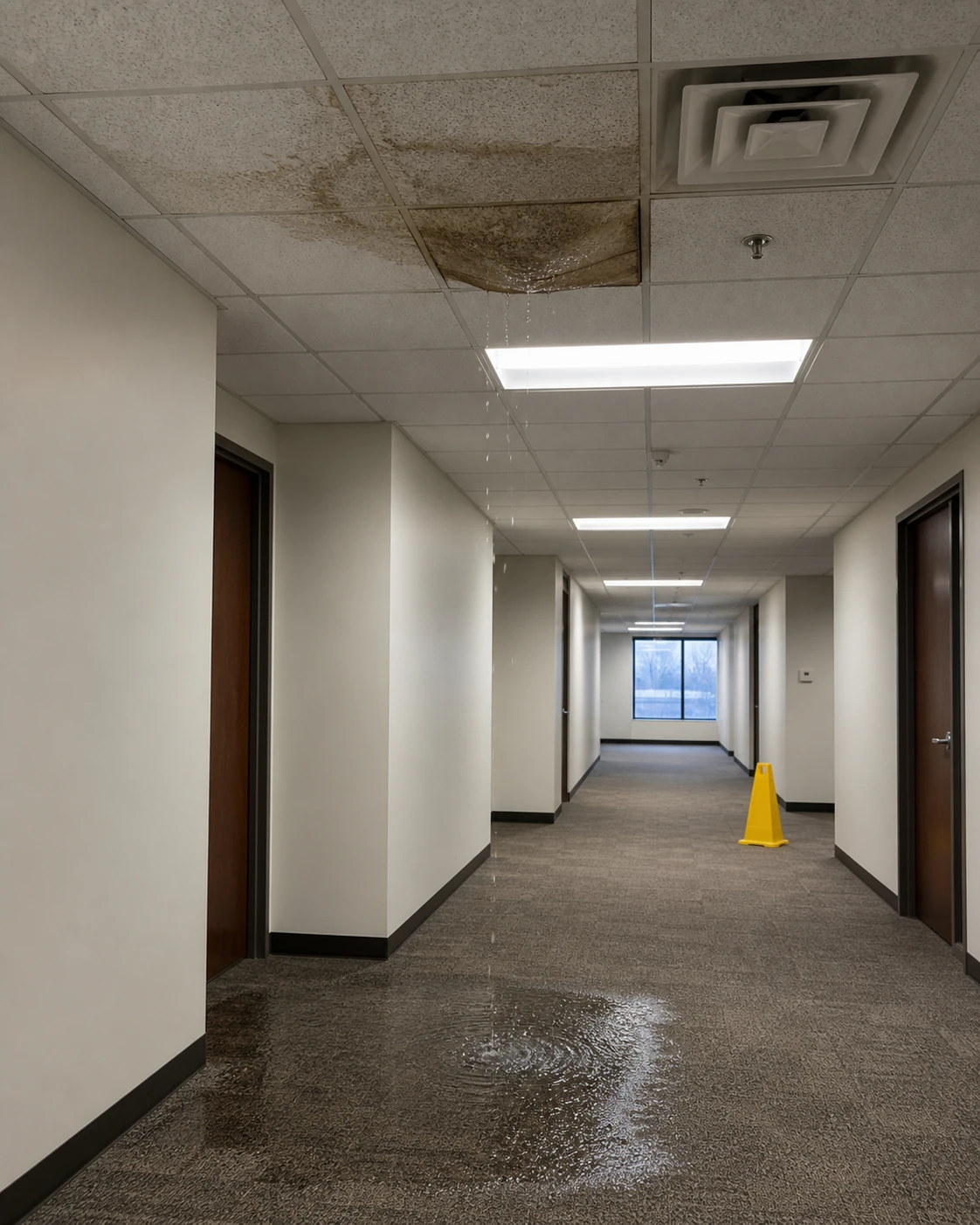
If the officer is the only person on duty, post orders should answer an important question: Who watches the lobby or primary access point while the officer remains near the leak?
Possible responses include:
- Calling an on-site engineer or porter to take control of the affected area
- Requesting a supervisor or relief officer
- Monitoring the location by camera after confirming the immediate area is clear
- Locking an affected non-egress room when authorized
- Increasing patrol frequency around nearby floors
An officer should not remain indefinitely at a maintenance condition while leaving the building entrance unsecured.
Step 4: Protect Evidence and Support Responders
Security can help engineering, contractors, and emergency responders by preserving the sequence of events.
When safe and permitted by site policy, document:
- The time the condition was discovered
- Photographs showing the spread and surrounding area
- The condition of doors when the officer arrived
- Names and arrival times of notified personnel
- Floors or rooms checked for migration
- Any alarms, shutdowns, or elevator changes observed
- Instructions received from management
Avoid moving tenant property unless necessary to protect life or prevent immediate damage and authorized by building procedures. If property must be moved, record who moved it, where it was placed, and why.
Step 5: Check Adjacent and Lower Areas
Water rarely respects the boundaries of the room where it first appears. Once another qualified employee takes control of the source area, security may be directed to inspect:
- The floor below
- Elevator lobbies and shafts, without entering restricted spaces
- Stair landings
- Electrical and telecommunications rooms
- Fire command or alarm equipment areas
- Vacant tenant suites
- Public corridors and restrooms
These checks should be assigned and recorded. A guard should not conduct an improvised building-wide search while the primary post is uncovered.
Step 6: Watch for Secondary Security Problems
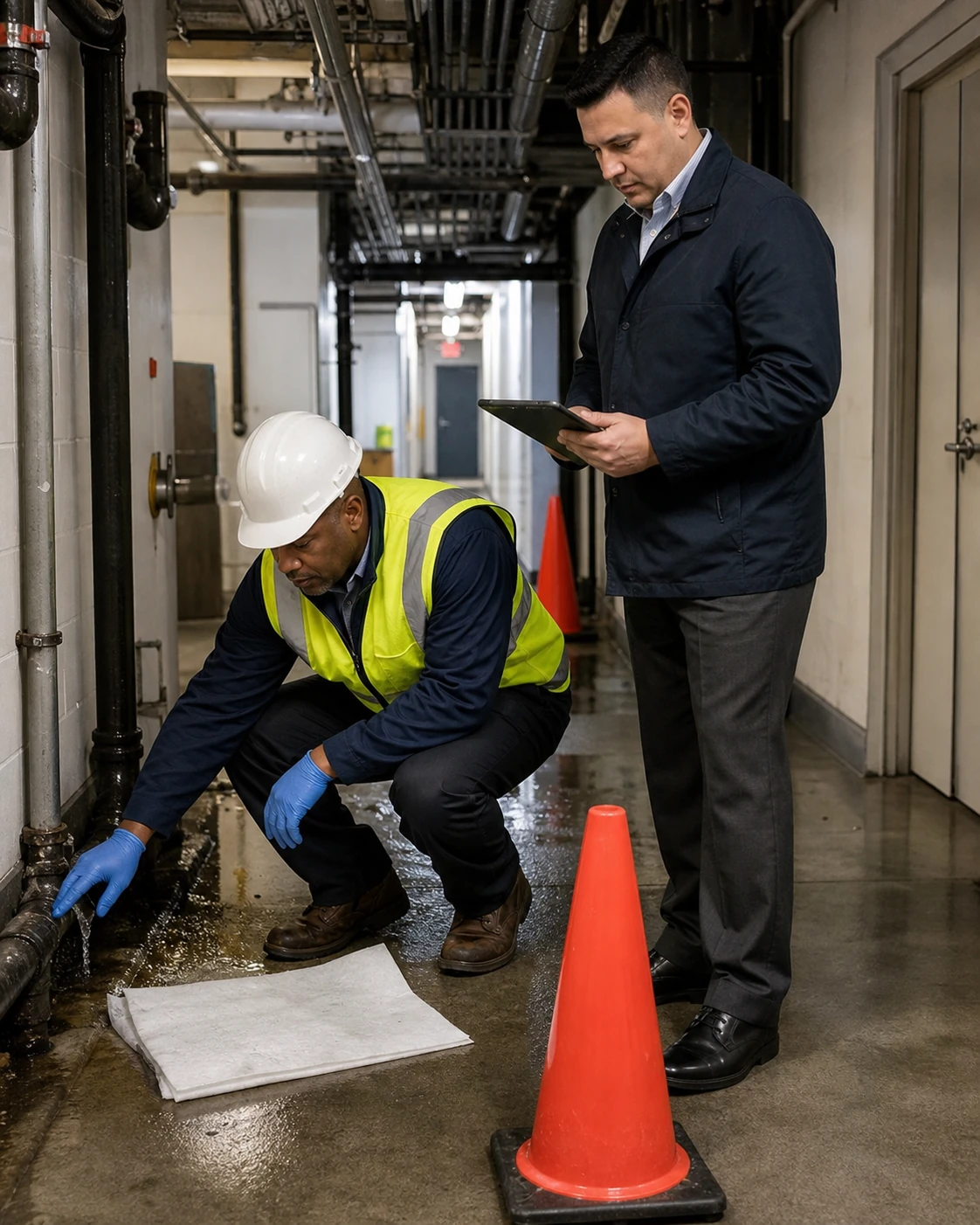
Leaks often require doors to remain open for engineers, plumbers, restoration crews, or tenant representatives. That creates temporary access-control risks.
Security should confirm:
- Who authorized each contractor or tenant representative
- Which doors may remain unlocked
- Whether workers require an escort
- Where equipment and removed materials will be stored
- Whether after-hours access will continue into the next shift
- Who will confirm that temporary access changes are reversed
A maintenance response should not quietly disable normal visitor and key-control procedures.
Step 7: Complete a Closeout, Not Just an Incident Report
The report should state the final known condition at the end of the officer’s involvement. Useful closeout questions include:
- Was the source stopped or only contained?
- Does water remain in any public or restricted area?
- Are any elevators, entrances, stairs, or rooms unavailable?
- Is a contractor still working?
- Does the next shift need a special patrol assignment?
- Did any fire protection or alarm equipment become affected?
- Who has responsibility for the next update?
If the incident continues across shifts, include it in the verbal and written handoff. “Engineering is handling it” is not an adequate transfer of responsibility.
Build the Procedure Before the Next Leak
Guardian ISI helps NYC property teams align patrol instructions, emergency contacts, access control, incident reporting, and supervisory response for after-hours building conditions.
Call or text (212) 602-1695, or request coverage.
Related Guardian services
Review Commercial Office Security for patrol and access responsibilities. If an incident creates an additional staffing need, discuss Emergency Security Coverage.
Frequently asked questions
Should a security guard try to stop a water leak?
A guard should not perform plumbing work unless separately qualified and authorized. The security role is to assess from a safe location, protect people, notify responders, control access, and document the incident.
When should the officer call 911 for a leak?
Call 911 when there is immediate danger, such as electrical involvement, a collapsing ceiling, trapped occupants, fire or smoke, or another life-threatening condition.
Should the patrol officer enter a locked tenant suite?
Only under the property’s authorized emergency-access procedure. The officer should document the reason for entry, who approved it, who was present, and the door’s condition afterward.
What details belong in the incident report?
Include discovery time, exact location, visible conditions, hazards, notifications, responder arrival times, access changes, photographs if permitted, actions taken, and the status at handoff or closeout.
What if the leak affects fire alarm or sprinkler equipment?
Immediately notify the impairment coordinator or designated building representative. The property must then evaluate and manage any out-of-service fire protection condition under its FDNY procedures.