
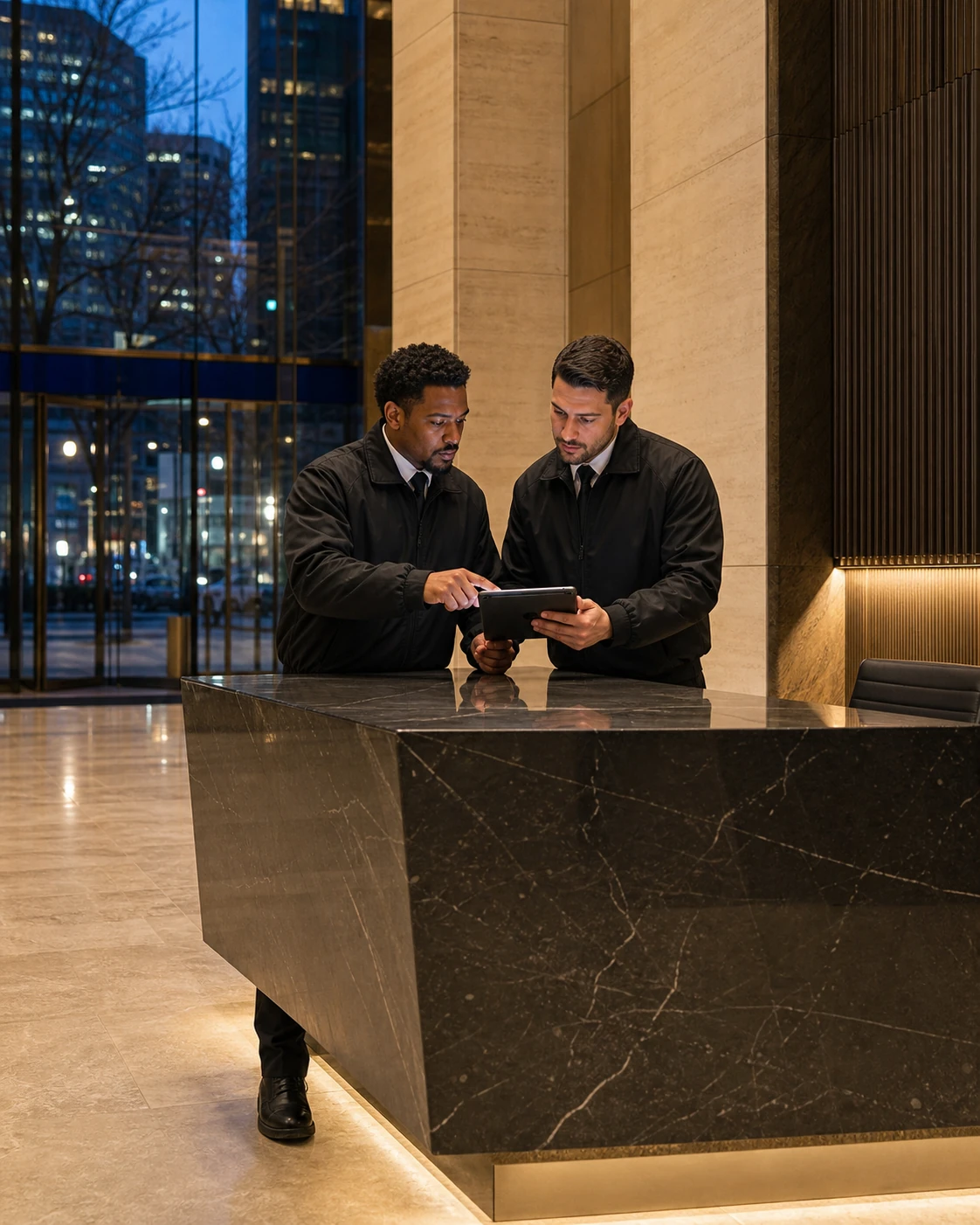
A patrol program can have good routes, reliable officers, and clear reporting requirements yet still fail at one predictable point: the shift change.
At a busy New York City property, conditions do not reset when one officer clocks out. A service door may still be malfunctioning. A vendor may remain upstairs. A water leak may be awaiting engineering. An individual previously asked to leave may return during the next tour.
A structured security patrol shift handoff helps the incoming team understand what changed, what remains unresolved, and what requires special attention.
Why Patrol Continuity Matters
Patrols create a moving picture of the property. Each tour adds observations about doors, occupants, equipment, contractors, public areas, and unusual conditions.
Without a handoff, the incoming officer receives only a snapshot. The officer may follow the normal route while missing a temporary problem that the outgoing shift had been monitoring for hours.
In Manhattan buildings, this can be especially important when the shift change overlaps with freight activity, cleaning crews, evening events, tenant departures, or overnight construction.
What the Outgoing Officer Should Transfer
A useful handoff should be concise but operationally specific.
Open access issues
Identify doors, gates, locks, elevators, turnstiles, or credentials that are not working normally. State whether the area is secured temporarily and who was notified.
“Service door problem” is too vague. A better entry explains which door, whether it closes, what temporary control is in place, and when engineering or a locksmith is expected.
People still on the property
The incoming shift should know about:
- Contractors working after normal hours
- Vendors waiting for pickup or equipment removal
- Visitors authorized to remain beyond the host's departure
- Employees working on normally vacant floors
- Individuals involved in earlier disturbances or access disputes
This does not require unnecessary personal detail. Officers need enough information to recognize the situation and apply the correct instructions.
Conditions requiring repeat checks
Some observations are not emergencies but should be revisited. Examples include a delivery temporarily staged near an exit, a roof door opened for authorized work, a vehicle awaiting removal, or a leak being monitored by engineering.
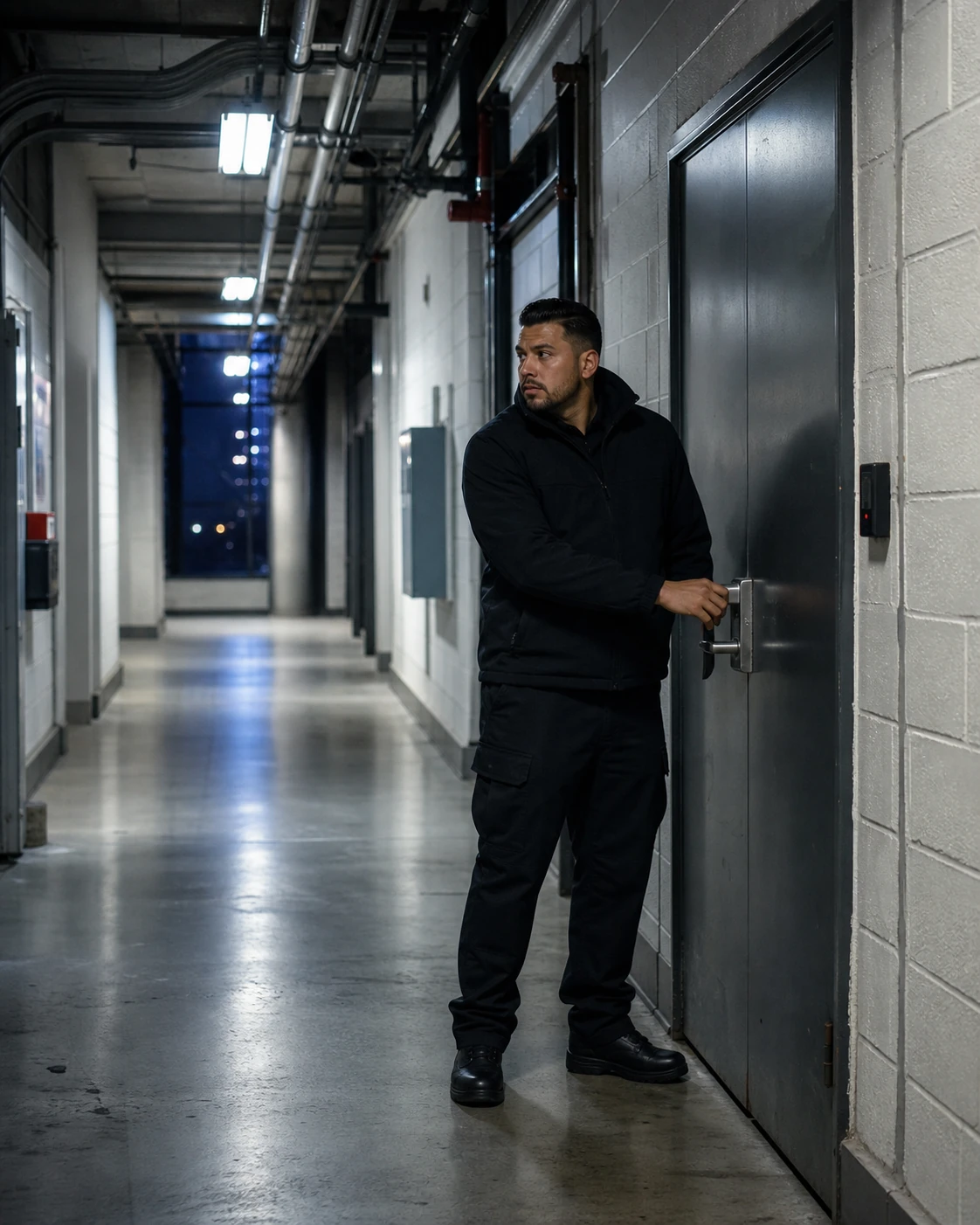
Each condition should include a next-check time or clear closure standard.
Use Three Layers of Handoff
The strongest process does not depend on memory alone.
1. Face-to-face briefing
Whenever staffing permits, outgoing and incoming officers should speak directly. The conversation should cover unresolved conditions, unusual visitors, altered patrol points, and management instructions received during the shift.
2. Written or electronic record
The incoming officer should be able to review time-stamped entries. The record creates continuity if the officers cannot meet or if a supervisor later needs to reconstruct events.
3. Supervisor review
A supervisor should review high-priority items and confirm who owns the next action. This prevents both shifts from assuming that management, engineering, or another department is handling the problem.
Create an Open-Item Standard
Every unresolved patrol issue should answer five questions:
- What was found?
- Where is it?
- What temporary action was taken?
- Who was notified?
- What must happen before the item can be closed?
This format is more useful than lengthy narrative reports. It also makes it easier for supervisors and property managers to separate active risks from routine completed tasks.
Adjust the First Patrol of the New Shift
The first patrol should not always follow the standard route mechanically. It should confirm the outgoing officer's open items first, provided doing so does not leave another required post uncovered.
For example, the incoming officer may need to verify that a loading-dock gate remains secured before beginning the rest of the tour. At another property, the priority may be checking whether contractors have left a vacant floor and returned their temporary credentials.
The normal patrol can then resume with better situational awareness.
Common Handoff Failures
Property managers should watch for these patterns:
- Verbal instructions with no written entry
- Logs stating only “all clear” despite open maintenance issues
- No record of who received a notification
- Temporary access instructions that never expire
- Incoming officers signing the log without reviewing it
- Reports completed at the end of the shift from memory
- Patrol devices showing checkpoint activity without explaining exceptions
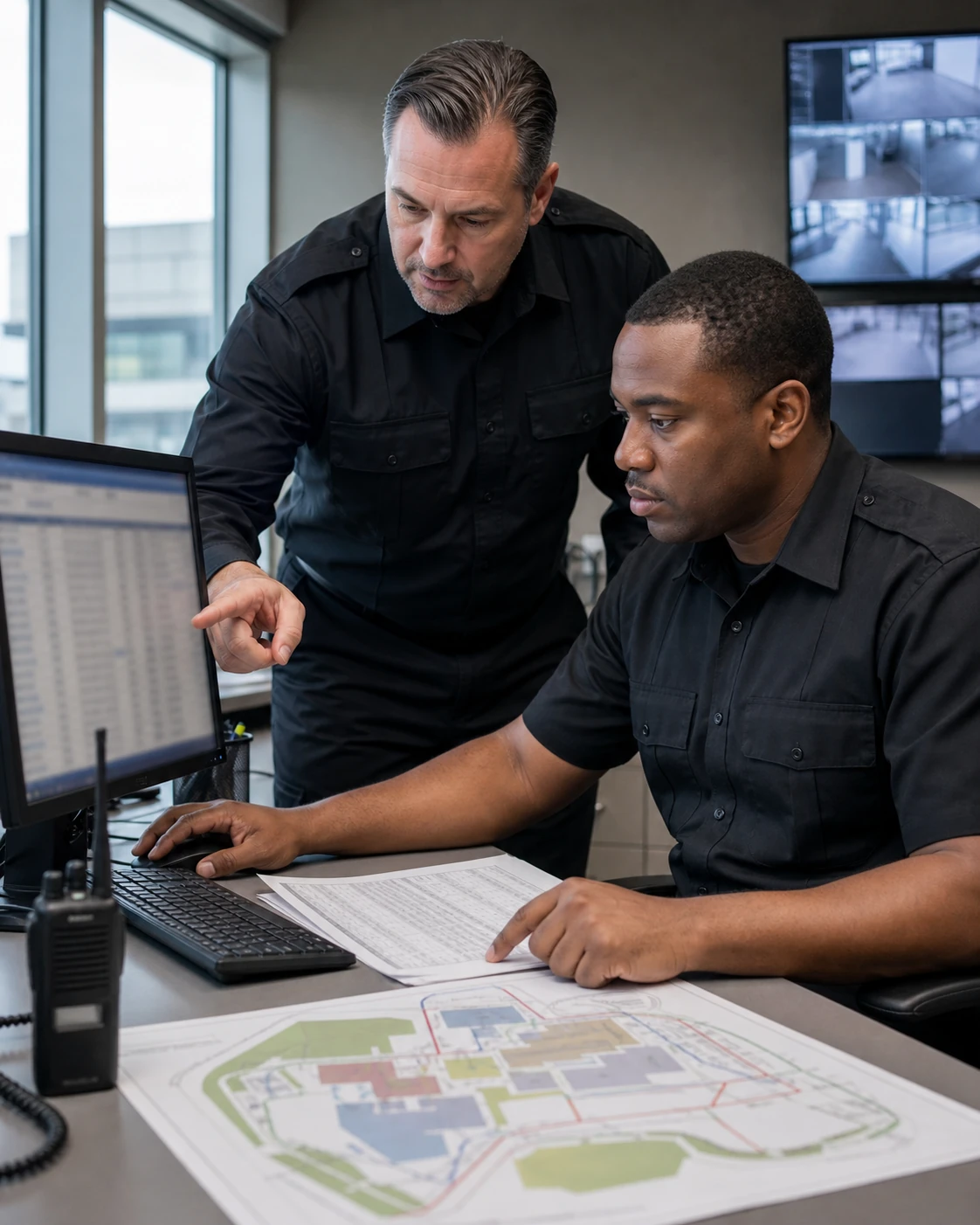
Technology can document when a checkpoint was visited, but it cannot replace a meaningful explanation of what the officer observed and what remains to be done.
A Simple Management Audit
Once a week, select one issue that crossed a shift boundary and trace it from discovery to closure. Ask:
- Did the first officer document it clearly?
- Did the incoming officer confirm it?
- Did a supervisor assign responsibility?
- Was management notified at the appropriate level?
- Does the record show when normal conditions were restored?
This small audit can reveal communication weaknesses before they contribute to a more serious response failure.
Make Every Shift Start Informed
Reliable security patrols depend on more than movement through checkpoints. They require continuity between the people observing the property at different times.
Guardian ISI can help NYC properties create practical patrol handoffs, open-item tracking, and escalation procedures. Call or text (212) 602-1695 or request coverage.
A handoff record that carries the next action
| Item | What the incoming officer needs |
|---|---|
| Open condition | Exact location and current status |
| Interim control | What is protecting the area now |
| Responsible contact | Who owns the repair or decision |
| Next check | When to revisit or escalate |
| Closure evidence | What must be verified before normal duties resume |
Related Guardian services
Review Security Guard Services for patrol continuity and supervision. Align building-specific handoffs with Commercial Office Security.
Frequently asked questions
How long should a security shift handoff take?
A routine handoff may take only a few minutes, but it should continue until all unresolved access, safety, contractor, and response issues are understood.
Should every patrol observation be discussed verbally?
No. The verbal briefing should prioritize exceptions and open items, while routine completed activity remains available in the written or electronic log.
What if outgoing and incoming officers cannot meet?
Use a standardized written handoff, require the incoming officer to acknowledge it, and have a supervisor communicate any high-priority condition directly.
Who closes an issue carried between shifts?
The handoff should identify an owner or closure condition. Security may monitor the issue, but engineering, management, a tenant, or a vendor may be responsible for the final correction.